
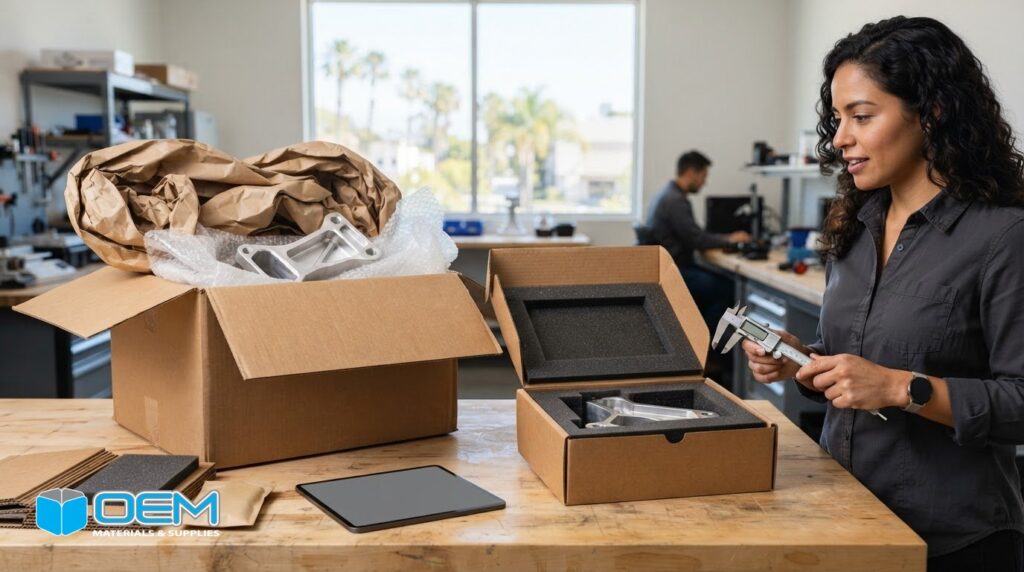
Packaging cost savings come from removing cost that doesn’t protect product function, not simply choosing cheaper materials. Packaging value analysis and engineering compares a package’s function, performance, and cost to identify practical design improvements. Value analysis reviews an existing package; value engineering considers value during development, before the design is established for production.
Material price matters, but so do product protection, handling, shipping, and how efficiently a package fits into the packing process. A lower-cost design adds value only if it continues to meet those operating requirements.
This article explains how value analysis works, how it differs from value engineering, and how digital tools can help compare packaging configurations. It also covers design and supply-chain factors that can reveal savings opportunities without compromising the package’s purpose.
Key Takeaways
- Use function and cost together to identify packaging expenses that may not contribute to product protection or efficient handling.
- Bring procurement, design, and supplier perspectives into the review to compare options against real operating requirements.
- Distinguish reviews of current packaging from value engineering during product development to focus improvement efforts at the right stage.
- Assess material, design, and process changes against product dimensions, shipping needs, and packing workflows before adopting a new configuration.
- Digital comparisons can help evaluate packaging configurations and surface candidates for further testing.
How does Value Analysis Work?
Value analysis reviews an existing package by linking its functions to their costs. A cross-functional team then develops and evaluates alternatives against performance needs, handling conditions, and shipping requirements.
Functional Analysis and Value-Cost Comparison
Functional analysis identifies what each packaging component must do and compares those functions with the component’s cost. For a fragile electronic assembly, a team might assess cushioning, enclosure, and closure separately rather than treating the package as a single unit. This helps purchasing, engineering, and operations focus on functions that protect the product or support efficient packing. Value is measured by function relative to cost, not by low material cost alone.
Identifying Unnecessary Costs and Functions
A cost or function is unnecessary if it adds expense without supporting a required performance or handling need. For example, a team could compare a package’s internal supports with the product’s contact points and shipping conditions. Removing a redundant support may reduce material use, while removing a necessary one could increase damage risk. Design expertise and operating feedback help distinguish the two before a change is approved.
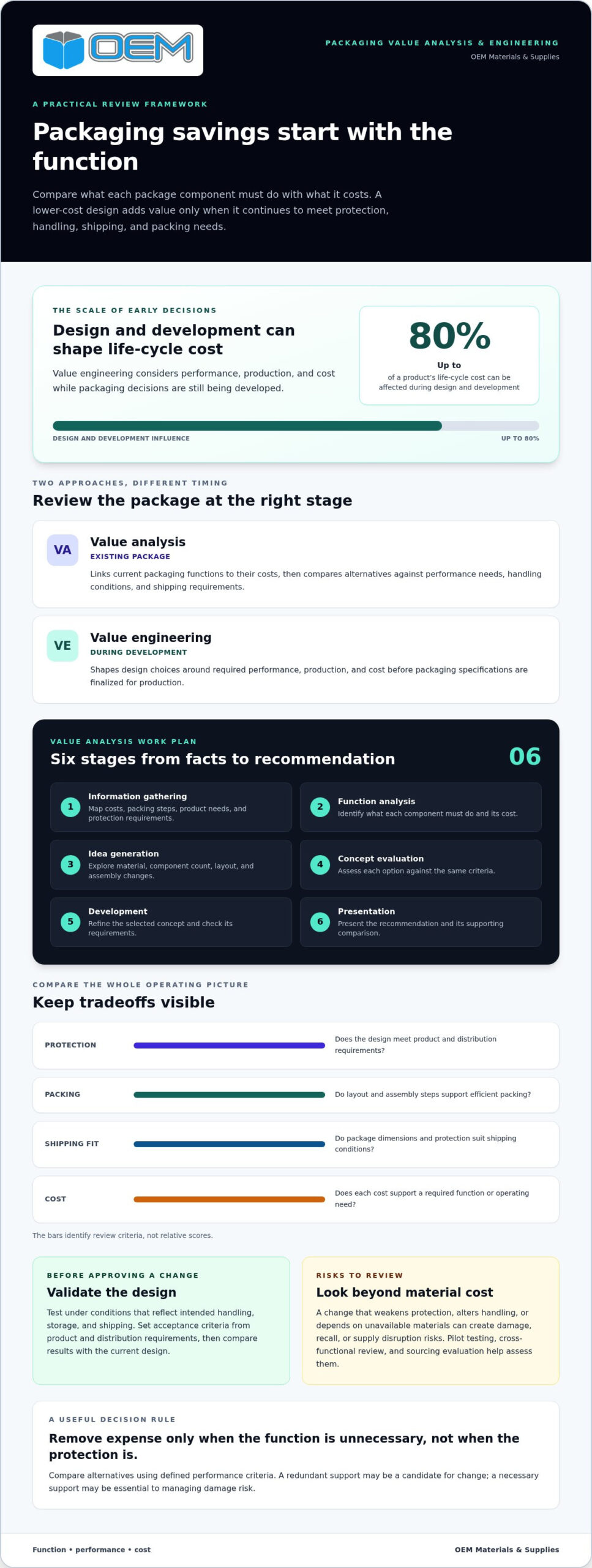
The work plan moves from information gathering to function analysis, idea generation, evaluation, development, and presentation. During information gathering, procurement can map material and purchasing costs, operations can document packing steps, and engineering can define product and protection requirements. A shared fact base helps prevent one department’s savings from creating extra labor or risk for another.
During brainstorming, the team generates alternatives before choosing one. It can compare changes to materials, component count, package layout, or assembly sequence. In concept evaluation, each option is assessed against the same criteria, such as protection, packing ease, shipping fit, and cost. This makes tradeoffs visible and keeps decisions tied to required functions.
Validate packaging performance with tests that reflect the package’s intended handling, storage, and shipping conditions. Define acceptance criteria from product and distribution requirements, then compare the results with the current design.
In the United States, applicable FDA requirements depend on the product and its packaging. Labeling and recycling obligations also vary by product, material, and market. Identify the requirements relevant to the package before approving design changes.
There is no single typical cost for packaging engineering or redesign. Scope, product dimensions, materials, testing needs, and shipping requirements all affect the work. A quote request establishes project-specific costs.
Common tools include value engineering, functional analysis, brainstorming, and design of experiments. Teams use them to generate options, compare functions and costs, and assess how design variables affect performance.
Redesign risks include product damage, recalls, and supply disruptions if a change weakens protection, alters handling, or relies on unavailable materials. Pilot testing, cross-functional review, and sourcing evaluation help identify these risks before a new design enters routine use.
For projects where cushioning or a coordinated set of package components is under review, foam packaging can be considered as part of the functional and cost comparison.
What Is Value Engineering (VE) and Why is it Important?
Value engineering improves a product’s value by shaping design decisions around required performance, production, and cost. For new packaging, early engineering can align the package with product geometry and manufacturing capabilities before specifications are finalized.
Design, Material, and Processing Improvements
Value engineering compares design, material, and processing choices to find ways to improve function or reduce avoidable expense. The design and development stage can affect up to 80% of a product’s cost throughout its life cycle. For a new assembly, engineers can assess component layout, material requirements, and assembly sequence together, rather than optimizing each decision in isolation.
Packaging decisions benefit from the same coordinated review. Product dimensions and vulnerable surfaces inform package geometry, while shipping conditions shape protection requirements. Engineers can compare internal layouts, materials, and packing steps against those needs. Because a close-fitting package can also affect storage and handling, the team should consider production and distribution requirements during design.
Value Engineering Across Product Types
Value engineering applies across product categories, but design criteria vary by application. Furniture teams might assess frame materials, joint construction, appearance, and assembly sequence. Packaging engineers focus on fit, protection, packing, and shipping. In both cases, the review connects intended functions with design choices and manufacturing methods.
During new product design, engineering can assess how proposed changes affect downstream production. A revised component shape, for example, may change tooling needs or the sequence operators follow. In packaging, a change to the internal layout can affect how quickly a product is positioned and secured. Reviewing these effects early gives design and manufacturing teams a basis for selecting workable concepts.
Value engineering helps teams assess whether a material specification matches the actual requirement. A design that calls for more material or tighter processing than its function requires can add unnecessary expense. Engineers can compare alternatives against defined performance criteria and document why the selected option meets them. Procurement contributes sourcing knowledge, while manufacturing identifies process constraints.
The goal is not cost reduction in isolation. A proposed change must preserve the product’s required strength, fit, appearance, and usability. For packaging, the design must still protect the item and support the intended packing and shipping process. Product dimensions, materials, and distribution conditions determine which choices are appropriate.
When teams assess the same requirements, they can evaluate tradeoffs before they are built into production. This supports clear decisions about design, materials, and processing, with product performance and manufacturing practicality considered together.
The approach originated in the 1940s, when General Electric Company engineers developed value analysis to address shortages of skilled labor, raw materials, and product parts.
Value analysis of existing products
Post-launch analysis uses operating records to find avoidable costs in a product or process. Useful inputs include material consumption, scrap, rework, packing time, damage reports, inventory adjustments, and service feedback. Purchasing can compare invoices with actual usage, while operations documents where packing or assembly slows down. Together, these records show where improvement may be worth investigating.
Start with a clearly defined product, process, or service, then gather comparable evidence. If a product ships in several configurations, separate the records by configuration to keep differences in damage or packing effort visible. Check whether product revisions, suppliers, or shipping routes changed during the review period. This context helps avoid blaming packaging for a change that another operating condition may explain.
Process observations can reveal costs that purchasing data alone misses. A warehouse team, for example, might find that operators repeatedly reposition an item because the package does not guide placement clearly. Document the steps, handling interruptions, and materials used. Then assess alternatives, such as a revised layout or more consistent packing sequence, for their effects on labor, product condition, and throughput.
Product quality and service records offer another useful perspective. If a component returns with a recurring type of damage, compare its condition on receipt with the package configuration and handling path. If service teams report difficult access or replacement, map the steps needed to reach the affected component. These observations can point to design or process changes that improve usability without adding unnecessary work elsewhere.
For a package line with many low-volume components, procurement can compare specifications and purchasing patterns across similar items. Manufacturers can begin with long-tail parts as potential cost-reduction candidates, but each part’s function, supply conditions, and production role must be considered before changing a specification.
Once a candidate is identified, record the current state and define what a successful change must preserve. A revised process might reduce handling steps, but it must still maintain product quality and repeatable results. Operations, quality, and procurement can review the proposed change together, then monitor the same measures after implementation. Comparing results shows whether the change addressed the original issue or shifted effort to another stage.
Value analysis also applies to services that support a product. Teams can examine order handling, assembly, or replenishment by tracking delays, errors, and unnecessary movements. A recurring mismatch between delivered components and production requirements, for example, may warrant a review of how orders are prepared and staged. Findings can guide process alternatives based on actual workflow rather than assumptions.
Differences between value analysis and value engineering
Value analysis and value engineering share the same goal: improve value by matching required function with cost. The main difference is timing. Value engineering shapes a product or package during development, while value analysis reviews an existing design or process.
For a new product, value engineering begins before specifications and manufacturing methods are fixed. A team can compare package layouts, material choices, and assembly methods while design alternatives remain open. Engineers developing a new instrument, for example, can assess how its shape, contact points, and shipping route affect the package concept. The team can select a design that meets protection needs before purchasing and production systems depend on a particular configuration.
Value analysis starts with a package already in use. The team examines its actual performance, material consumption, packing steps, damage records, and purchasing conditions. A current design might use several separate inserts, while a revised layout could combine the required supports. Any proposed change must still meet the package’s operating requirements. Existing data helps show whether it can reduce material use, simplify handling, or deliver another defined improvement.
The distinction is not simply “new” versus “old.” A launched product may still undergo value engineering as part of a major redesign. Likewise, a development team can use value-analysis methods to compare functions and costs. The practical question is where the design sits in its lifecycle and what evidence is available. Early concepts rely more on specifications and analysis, while established products offer operating and quality data.
Timing also affects which teams should participate. A new package under development may involve product design, manufacturing, and procurement before specifications are released. An existing package review can include warehouse and quality teams, who see packing delays, damage patterns, and inventory constraints firsthand. Their perspectives help prevent a material change from lowering purchase costs while increasing labor or disrupting supply.
Both approaches should define the functions that cannot be compromised. For an electronic assembly, these might include preventing movement during shipment and supporting repeatable packing. The team can then compare alternatives against those requirements rather than choosing the option with the lowest material cost alone. Increased efficiency counts as an improvement only when the package continues to perform its required role.
Use value engineering when a product or package is still being designed, or when a substantial redesign is planned. Use value analysis when production or shipping experience reveals a cost, quality, or process concern. A combined VAVE effort can connect both stages, carrying lessons from inventory use and operations into the next design cycle.
What is packaging value analysis and engineering?
Packaging value analysis and engineering applies structured evaluation to packaging materials, configurations, and supply-chain requirements. Digital analysis can help compare design options by linking customer value needs with simulations of packaging materials’ mechanical properties. The aim is to make tradeoffs more visible before a configuration advances for further evaluation.
A useful digital model starts with a clearly defined packaging question. The team might compare internal layouts for a product with vulnerable surfaces or assess how alternative materials respond to expected handling forces. Product geometry, package components, and intended distribution conditions shape the model’s assumptions. Clear inputs make comparisons more relevant to the actual application.
Simulation can help engineers examine how a material configuration behaves under modeled conditions. Results may indicate which concepts warrant closer review, but they depend on the model’s assumptions and represented properties. Interpret the output alongside product requirements and operating knowledge. A model supports decisions; it does not replace understanding how a package will be packed, moved, stored, and shipped.
Digital comparisons can also organize multiple design variables. A team may assess package geometry, cushioning placement, material selection, or how components work together. Comparing configurations against the same customer value criteria makes differences easier to evaluate. It can also narrow the options for physical assessment, focusing later work on concepts that address the defined need.
Evaluation extends beyond the package itself. Materials, processes, transportation, facilities, equipment, sourcing, and standards can all influence packaging value. A configuration that performs well in a modeled scenario may still create packing or handling constraints. Including relevant operational factors gives purchasing, engineering, and warehouse teams a broader basis for reviewing options.
For example, a team assessing protective packaging could compare cushioning arrangements against the product’s geometry and protection requirements. It could then consider how each option affects packing and material sourcing. A digital framework helps connect these factors to customer value instead of treating material properties as an isolated technical result.
Useful analysis depends on the quality of its inputs. Product dimensions, component layout, material properties, and distribution assumptions should reflect the application being evaluated. Teams can document the criteria behind each comparison, record why a concept advances, and carry those decisions into later evaluations. This creates a traceable basis for selecting and refining packaging configurations.
Digital tools are most effective when they help teams compare relevant options, clarify assumptions, and focus on important design variables. In packaging value analysis and engineering, that evidence can support deliberate decisions about configuration and material performance, while operational review keeps the evaluation grounded in the package’s actual role.
The best-value choice depends on product geometry and protection needs, expected distribution conditions, and the package’s effect on packing, handling, and sourcing. Compare material and design options against the same customer value criteria, then assess promising configurations against operational requirements.
OEM Materials & Supplies: Corrugated Boxes
OEM Materials & Supplies can help businesses assess corrugated boxes as part of a packaging cost review. Consider a box’s fit, protection requirements, packing steps, and shipping conditions together instead of comparing material costs alone. For products needing additional cushioning, foam packaging or packaging kits can also form part of the package configuration.
Share product dimensions, weight, annual usage, and shipping conditions to clarify the requirements for a packaging change. These details help frame a practical comparison of box options and supporting materials for your operation.
Contact OEM Materials & Supplies to discuss your packaging requirements.
Put the Next Packaging Review in Motion
A useful next step is to select one package with a clear operational issue, such as excess material, difficult packing, or recurring product damage. Set a baseline using details your team already tracks, including product dimensions, weight, annual usage, shipping conditions, and current packing steps. This gives engineering, procurement, and operations a shared starting point for evaluating alternatives.
Next, define the package functions that must remain intact and identify the change to assess. A focused review makes it easier to compare design options with actual production and distribution needs. It also helps distinguish a promising cost reduction from a change that shifts expense or effort elsewhere.
Use packaging value analysis and engineering to turn that review into a practical design decision. For support assessing your packaging requirements, contact OEM Materials & Supplies with the relevant product and usage details. A well-scoped evaluation can give your team a clear basis for its next packaging improvement.
Frequently Asked Questions
What are the main steps in packaging value analysis?
The main steps are information gathering, function analysis, idea generation, evaluation, development, and presentation. Begin by documenting the package configuration and operating concern, such as excess packing time or recurring damage. Then assess component functions, develop alternatives, and compare them against defined requirements. Develop the strongest candidate into a workable proposal, including its expected operational effects, before presenting the recommendation to decision-makers.
How do you evaluate packaging cost, performance, and total cost of ownership?
Evaluate cost alongside protection and the resources needed to pack, store, handle, and ship the product. For example, compare material use and packing labor with damage records, storage demands, and shipping conditions. Manufacturers operating across Orange County, Los Angeles, San Diego, and Riverside can also compare package performance across their facilities. Include costs that shift between departments so a material reduction does not conceal added labor or handling.
What packaging materials and designs offer the best value for different products?
The best-value option depends on the product’s dimensions, vulnerable surfaces, protection needs, shipping conditions, and packing workflow. Compare materials, package layout, and assembly steps against those requirements and their costs.
What tests and standards are used to validate packaging performance?
Choose tests that reflect the package’s intended handling, storage, and shipping conditions, then compare results with acceptance criteria based on product and distribution requirements. Identify applicable FDA, labeling, and recycling requirements according to the product, packaging, material, and market.