
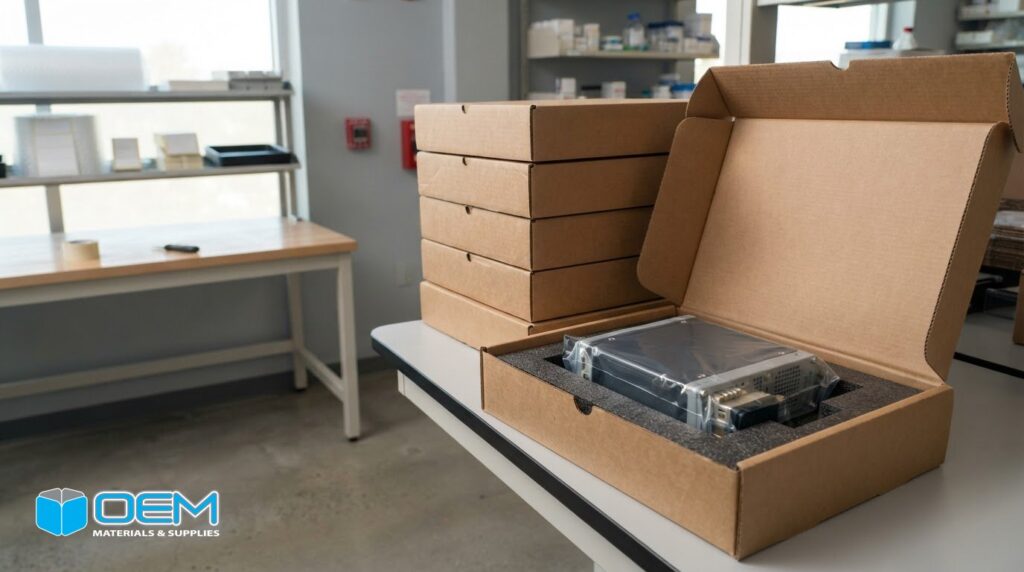
A packaging mismatch can put sensitive products at risk and complicate a shipment. Planning for Carlsbad life science custom packaging supplies starts by matching each package to the product, its handling needs, and its shipping route. Product dimensions, fragility, and packing methods all shape a workable design.
Packaging teams know protection is only part of the job. Packouts also need to suit biotech and medical device applications without adding unnecessary steps or complicating repeat orders. A consistent design should fit both the product and the shipping process.
This article explains how to assess packaging needs for sensitive products, choose cushioning and structural protection, and plan for shipping and recurring orders. It also covers how packaging design and kits can support a consistent supply program, helping purchasing, engineering, and operations teams define requirements before selecting a solution.
Key Takeaways
- Match packaging design to product dimensions, fragility, handling needs, and the shipping route.
- Choose cushioning and structural protection based on how sensitive or high-value products will be packed and transported.
- Consider how packaging needs differ across biotech and medical device applications before standardizing a packout.
- Use corrugated cartons to support shipping requirements, and assess how carton design affects packing and product protection.
- Plan recurring orders around usage patterns and packaging specifications; OEM Materials & Supplies offers corrugated boxes, foam packaging, packaging kits, and mailing tubes and cores.
Packaging for life science and medical device companies
Life science packaging starts with the product and the handling steps it must pass through. For a Carlsbad operation, match the package to its contents, assembly process, storage conditions, and shipping route.
Which Carlsbad, CA companies supply custom packaging for life science products? Look for industrial packaging suppliers that can tailor cushioning and outer packaging to product dimensions and packing workflows. For sterile barrier or cleanroom packaging, make sure the packaging requirements are specifically addressed. A shipping carton alone does not provide a sterile barrier.
What custom packaging materials are available for biotech and pharmaceutical companies in Carlsbad? Options include corrugated cartons, foam inserts, cushioning, and plastic components, selected to suit the product and shipping needs. For specimens, medicine, or vaccines, packaging choices must reflect the handling and temperature requirements established for that product.
Custom Materials for Biotech and Pharmaceutical Products
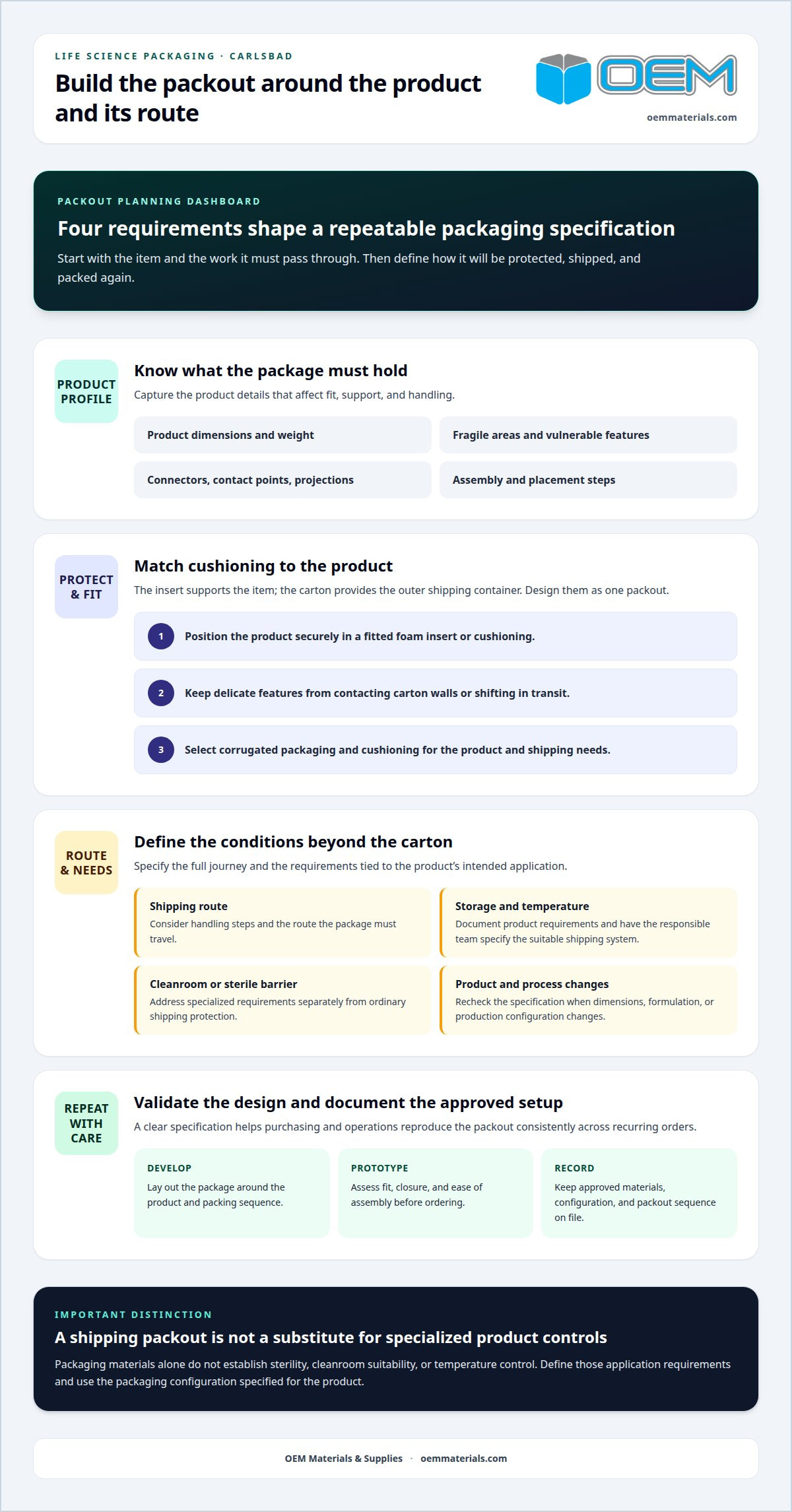
Material selection covers both the package’s protective structure and how the product sits inside it. A foam insert can separate a medical device from the carton walls, while corrugated packaging provides an outer shipping container. Match the insert shape to contact points, connectors, and other features that could be damaged by movement.
For specimens, medicine, and vaccines, distinguish the primary container from secondary protection and the shipping carton. Packaging materials alone do not establish sterility or temperature control. Document the product’s handling needs and use the packaging configuration specified for its intended application.
Custom Packaging Design and Ordering
What steps are involved in designing and ordering custom packaging for a life science product? Start with product dimensions, weight, fragile areas, and how staff place the item into its package. Then define the shipping route and any handling or storage requirements that affect the design.
Next, develop the package layout around the product and packing sequence. A prototype can help assess fit, closure, and ease of assembly before ordering. Record the approved materials and configuration so purchasing and operations can repeat the same setup. For a device with delicate projections, the insert should support stable placement without requiring staff to handle those parts.
Sustainable and Recyclable Options
Do Carlsbad packaging suppliers provide sustainable or recyclable custom packaging options? Packaging choices can include recyclable materials, but suitability depends on the product’s protection requirements and the package’s material mix. Corrugated outer packaging and custom foam packaging serve different functions, so evaluate them as parts of the full packout rather than interchangeable materials.
Specify which components are needed for protection, then consider whether the design can reduce unnecessary layers or mixed materials without compromising fit. For a medical device shipment, assess the carton, insert, and cushioning as one assembly. The resulting specification gives engineering and purchasing a clear basis for repeat orders.
For medical and pharmaceutical packaging supplies, distinguish routine shipping protection from specialized cleanroom or sterile barrier needs. Clear product requirements, a defined packout, and an agreed material specification help teams assess packaging proposals and maintain consistency across orders.
Packaging for sensitive and high-value products
Sensitive products need packaging matched to their specific exposure risks. A diagnostic instrument with a fragile sensor needs different support than sealed medicine vials. Start by identifying vulnerable components, handling steps, storage conditions, and the shipping route. These details help define cushioning, package fit, and the protection required in transit.
How can Carlsbad life science companies compare packaging suppliers by certifications and capabilities? Compare each supplier’s documented scope, materials, design support, and experience with the packaging application. For sterile barrier or cleanroom needs, distinguish specialized packaging capabilities from ordinary shipping protection. A certificate alone does not establish that a particular package suits a product or process.
Temperature-sensitive products require careful consideration of the full shipping configuration. Packaging materials do not, by themselves, maintain a required temperature. Define the product’s handling and temperature requirements, then have the responsible product team specify a suitable shipping system. For example, a vial shipment may need packaging designed around its container, protective separation, and temperature-control components.
Bulk production and product formulations also affect packaging decisions. A formulation change can alter container dimensions, handling sensitivity, or protection needs. Keep packaging specifications aligned with the current product and production configuration. For recurring batches, document the approved package, materials, and packout sequence so operations can reproduce the setup consistently.
GMP product services involve manufacturing or handling processes, not simply supplying a box or insert. Packaging suppliers can support product protection with components designed for a defined application, while the manufacturer’s quality procedures govern product handling and release. Keep those roles distinct. A foam insert may secure a device in transit, but it does not establish GMP compliance or product sterility.
How long do custom packaging design, prototyping, and production take locally? Timing depends on design complexity, material selection, prototype revisions, and production scheduling. A straightforward carton differs from a package requiring a fitted insert and multiple approval rounds. Providing dimensions, product weight, handling requirements, and expected order quantities helps establish a practical sequence from design through production.
Packaging risks include movement inside the carton, impact to delicate features, damaged closures, and handling that conflicts with the product’s specified process. For a sensitive instrument, unsupported connectors can strike the carton or insert during shipment. For sterile products, packaging damage or incorrect handling can undermine the intended protective system. Use product-specific procedures and approved packaging configurations to manage these risks.
Share the product’s dimensions, weight, sensitive features, and shipping conditions when planning a package. For a tailored discussion of protective packaging requirements, request packaging guidance.
Life sciences and biotech packaging applications
Biotech packaging must fit the product and the workflow around it. A reagent bottle, diagnostic assay kit, and benchtop instrument each present different packing needs. Start by mapping how staff handle, store, assemble, and ship each item. This helps identify where packaging materials should separate components, support a container, or organize several pieces.
For diagnostic kits, the package may need to keep collection components, instructions, and test materials arranged together. A defined layout helps packers place each component consistently and helps recipients identify the kit contents. For example, a formed insert can separate small tubes from a larger container. Design the packaging around the actual kit configuration, not an assumed standard assortment.
Laboratory equipment creates another packaging challenge. A sensor, control unit, or instrument with projecting connectors may need support at specific contact points. Map the product’s shape and identify features that should not bear the package load. Then align internal supports with those areas. A repeatable packout can reduce variation between operators and clarify how each unit sits in its container.
Production packaging also supports component handling inside a facility. Trays, dividers, and cushioning can organize parts moving between workstations or protect finished assemblies before shipment. A team packing glass vials, for example, may need individual separation to prevent contact. Design the packaging around container dimensions, line-side handling, and the quantity packed together.
Cleanroom and electronics-sensitive applications require clear boundaries between packaging functions. A shipping carton protects an outer load, while a controlled-area packaging process addresses handling requirements in that environment. ESD-sensitive electronics may call for packaging selected for electrostatic concerns. Specify the intended environment and product sensitivity so materials and procedures suit the application. An ordinary carton is not a substitute for process controls.
Packaging materials should also suit how an order is assembled. A kit with several components may benefit from a fixed arrangement, while a single instrument may need shaped internal support. Document component names, placement, and closure steps. Clear packing instructions help operators assemble the same configuration across shifts and production batches.
For Carlsbad life science operations, review packaging whenever a product, component, or packout changes. A new connector, revised kit contents, or different container can affect fit. Compare the revised item with the existing package, update the specification, and record the approved configuration before repeat production. This connects engineering changes to purchasing and packing instructions.
Keep the application record practical: identify the product, its components, handling sequence, and packaging arrangement. For a diagnostic kit, the record might list the tube, insert, instruction sheet, and carton as separate elements. A clearly defined packout gives engineering, operations, and procurement a shared reference for future production orders.
Shipping cartons and corrugated packaging
A shipping carton connects the product’s internal protection to the handling environment outside the package. For a life science shipment, size the carton around the packed contents, not just the product. An insert, paperwork, or secondary container changes the space required. Excess room can allow movement, while a close fit can complicate packing or closure.
Start with the packed configuration. Record the product’s dimensions and weight, then include inserts, cushioning, and any components shipped together. A carton for a diagnostic instrument, for example, may need room for the device, a fitted support, and an accessory compartment. These details help define the inside dimensions and make the packout easier to repeat.
Next, consider the shipping route and handling pattern. Parcel and palletized shipments create different constraints for carton dimensions, stacking, and consolidation. For a carton packed onto a pallet, consistent footprints can help organize the load. A small order shipped individually may need a different layout. The right configuration depends on the product and how it moves through distribution.
Internal protection and outer packaging work as a system. Foam or other cushioning can hold a device in position, while corrugated walls form the shipping container. For example, a unit with a delicate control panel may need clearance around that face and support at sturdier contact points. The corrugated box should accommodate the insert and the packer’s assembly sequence.
Closures and labels also affect the packout. Choose a closure method staff can apply consistently, and keep the labeling area accessible and unobstructed. If a carton contains several components, a packaging kit can group the carton and internal materials for a defined order. Documented packing steps help reduce variation between operators and simplify training.
Before standardizing a carton, assemble a representative package and review the fit. Check whether the product shifts, cushioning stays in place, and staff can close the carton without compressing sensitive features. A diagnostic device with cables, for instance, may need a separate space for the cables so they do not press against the instrument during packing.
Record the approved carton dimensions, insert arrangement, closure method, and packing sequence in one specification. When product dimensions or included components change, review that specification before repeat orders. This helps purchasing and operations work from the same packaging configuration and supports consistency across recurring shipments.
Bulk pricing and recurring supply
Bulk purchasing works best when packaging specifications and expected demand are clear. A purchasing team can group recurring items, such as cartons, inserts, and cushioning, then review how each component supports the approved packout. This provides a more useful basis for ordering than treating every packaging item as an unrelated purchase.
Packaging price depends on product dimensions, materials, order quantity, and shipping requirements. A larger run may affect unit economics, but can also increase storage needs and tie up inventory. Compare the quote with the full operational requirement, including space, handling, and how often production consumes each item. An order that looks efficient on paper may not suit available warehouse capacity.
Build a demand picture from actual usage. Purchasing and operations can review production schedules, shipment patterns, and packaging consumption for each product. For example, a recurring device shipment may use one carton and one insert per unit, while a kit order requires several packaging components. Separating those patterns helps prevent one estimate from obscuring different replenishment needs.
Maintain a controlled packaging specification for every recurring item. Include the approved dimensions, material description, insert configuration, and packout version. When engineering changes a device or kit, route the packaging revision through the same approval process. This prevents a redesign from becoming an unintended substitution that no longer fits the product or workflow.
Inventory planning should connect order quantities to storage capacity and replenishment timing. Vendor-managed inventory can coordinate stock levels and replenishment around an agreed usage pattern. Just-in-time replenishment can align packaging arrivals more closely with production needs. Both approaches require reliable consumption information and clear communication about schedule changes, not simply a larger purchase order.
For each packaging item, define who tracks usage, who approves specification changes, and how replenishment signals are shared. A simple inventory record can distinguish cartons from inserts and show which production area uses them. If several teams use the same material, assign a common item description so purchasing, receiving, and the warehouse record it consistently.
Review cost and supply performance together. Compare quoted quantities with actual consumption, then note excess stock, urgent replenishment, or recurring packing problems. Product dimensions, material choices, order volume, and shipping requirements all shape the right recommendation. Provide those details when requesting a quote, along with expected usage and the current packout configuration.
To discuss recurring packaging requirements and request project-specific pricing, request a packaging quote.
OEM Materials & Supplies
OEM Materials & Supplies helps Carlsbad life science operations match protective packaging to product and shipping needs. Its corrugated boxes, foam packaging, packaging kits, and mailing tubes and cores support different product formats and packout requirements. For example, a device shipment may combine a fitted foam insert with an outer carton, while a kit can organize multiple components for packing.
Bring product dimensions, weight, handling needs, and recurring usage into the discussion. These details help connect packaging choices to the application and replenishment plan. For Carlsbad life science custom packaging supplies, OEM Materials & Supplies can help assess which packaging categories suit the project.
Contact OEM Materials & Supplies to discuss your packaging requirements.
Set Up Your Next Packaging Review
Use the next packaging review to align engineering, procurement, and operations around one approved specification. A concise brief can capture product dimensions, weight, handling requirements, packout details, and expected usage. This gives the team a practical starting point for evaluating Carlsbad life science custom packaging supplies against production and shipping needs.
OEM Materials & Supplies offers corrugated boxes, foam packaging, and packaging kits for industrial packaging applications. Share the details that shape your requirements, including product changes or recurring order patterns. The discussion can focus on how the packaging configuration fits your workflow, rather than treating each material as an isolated purchase.
When you’re ready to discuss a project, contact OEM Materials & Supplies with your packaging requirements. A clear starting brief can help move your team toward a workable next step.
Frequently Asked Questions
What are typical prices and minimum order quantities for custom life science packaging?
Prices and minimum order quantities depend on the packaging design and order requirements. Cost factors include product dimensions, materials, design complexity, and shipping needs. OEM Materials & Supplies provides pricing after a quote request, based on project details. Share the packaging configuration and expected order volume to receive a project-specific quote and learn the applicable minimum quantity for your custom packaging.
Which Carlsbad, CA companies supply custom packaging for life science products?
Look for industrial packaging suppliers that can tailor cushioning and outer packaging to product dimensions and packing workflows. For sterile barrier or cleanroom packaging, make sure the supplier’s stated capabilities specifically cover those requirements.