
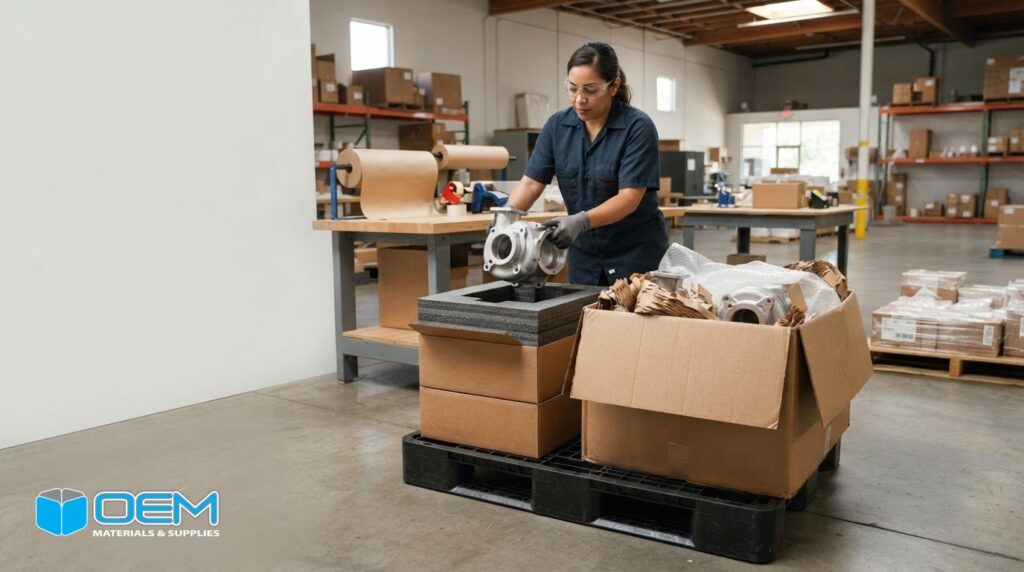
The lowest-priced packaging option can become the more expensive choice over its useful life. Calculating total cost of packaging ownership means adding the direct and indirect costs tied to a packaging option, including materials, labor, storage, freight, product damage, and disposal. Compare those costs over the same period and volume to see which option delivers stronger value.
Purchase price is an important starting point, but it does not show the full impact on warehouse work, shipping efficiency, or product protection. Packaging that takes longer to use or allows more damage can add costs elsewhere in the operation.
This guide explains how to compare packaging options over their useful life, account for labor and product protection, and assess return on investment. You’ll also learn how to establish a current-cost baseline and build a practical comparison using the costs your operation actually incurs.
Key Takeaways
- Compare packaging options across the same useful life and operating volume, not by purchase price alone.
- Include labor, storage, freight, damage, and disposal in the cost picture to expose expenses that material quotes can miss.
- Assess product protection alongside material use and shipping efficiency; packaging that reduces damage may justify a higher upfront cost.
- Account for packing time, changeovers, training, and downtime when estimating how a packaging choice affects daily operations.
- Set a current-cost baseline, document assumptions, and define how you’ll measure savings and return after a packaging change.
Balancing cost with product protection and brand identity
Packaging value depends on more than purchase price: protection, presentation, freight, and handling all affect total expenses. Compare options using the same product, shipment, and operating conditions for an accurate assessment.
Damage, Quality, and Rework Costs
Damage, quality issues, and rework add costs beyond the packaging purchase. A shipment that arrives damaged may require replacement product, another shipment, repacking, and customer-service time. Those expenses can outweigh a lower material price, especially when defects interrupt production or delay an order.
Match protection to the product and its handling conditions. Electronics need ESD packaging to prevent electrostatic discharges that could damage components. A fragile part may need a fitted protective structure, while a durable component may need less cushioning. Foam packaging can be considered for products that need shaped cushioning. Compare damage and rework records by product and packaging configuration to identify where protection needs adjustment.
Recycling, Disposal, and Producer Fees
Recycling, disposal, and extended producer responsibility (EPR) fees are end-of-life expenses that can affect the total cost of packaging. In the US, their impact depends on material, destination, and applicable fee arrangements. Include these costs in the comparison rather than treating disposal as separate from packaging procurement.
A packaging material that costs less to buy may create higher disposal expenses if it is difficult to recover or needs a different waste-handling route. Compare materials using each facility’s actual disposal process, and include any applicable recycling or EPR charges. This makes the comparison more complete without assuming every packaging type faces the same fees.
Reducing Costs Without Compromising Protection
Reduce packaging total cost by adjusting material, dimensions, and packing methods while preserving the protection the product requires. Oversized boxes may increase dimensional-weight charges, depending on carrier rules, shipment details, and package dimensions. Packaging dimensions also affect pallet and truck utilization and warehouse storage.
Start with accurate product measurements and shipping requirements, then test a right-sized design against the current pack. A cheaper single-wall box may not protect goods as effectively as a 275# double-wall corrugated box, so compare damage and rework alongside material use. For different products, select packaging around their specific risks rather than applying one design to every item. Right-size automation to production needs by weighing line volume, labor, changeovers, and utility use. Keep required handling and compliance criteria in the comparison; savings depend on product dimensions, materials, and shipping requirements.
Comparing packaging options over their useful life
A useful comparison measures each packaging option across the full program, not just at purchase. Include materials, equipment and labor, storage, repairs, downtime, and end-of-life handling. Apply the same product mix, shipment profile, and evaluation period to every option so the result reflects operational differences rather than mismatched assumptions.
Start by defining what each alternative must accomplish. A single-use carton and a reusable container may protect the same product but create different handling, return, cleaning, and storage demands. Compare cost per successfully packed and delivered unit, then account for the work between uses. A reusable option makes sense only when its return flow and handling process fit the operation.
Evaluate alternatives across the entire packaging program. A change to one component can affect line speed, assembly steps, pallet configuration, warehouse space, and freight planning. For example, a packaging kit that brings several components together may simplify packing at one station, but its value depends on how it is prepared, replenished, and used. Record these linked effects instead of treating each material as an isolated purchase.
Equipment choices need the same lifecycle view. A machine’s purchase price is only one part of ownership; electricity, operator wages, maintenance, repairs, and downtime also affect operating costs. Compare proposals using consistent assumptions about production needs, line integration, maintenance responsibilities, and expected use. This makes hidden costs easier to identify and shows whether a lower initial bid shifts work or expense elsewhere.
For machinery comparisons, use the same operating scenario for every vendor. Include the same product formats, throughput requirements, staffing assumptions, and maintenance plan. Separate one-time acquisition costs from recurring operational and repair costs. If a proposal excludes work handled by another party, record who owns that work and how it affects the total. A clear comparison helps procurement and operations evaluate the same trade-offs.
Packaging costs depend on product dimensions, materials, order volume, equipment needs, and shipping requirements. A quote for your specific case provides the relevant price. To make the comparison useful, align specifications and annual usage across alternatives, then document assumptions that could change during the program. The goal is an accurate view of total ownership, not a purchase-price ranking.
When packaging specifications or product requirements are changing, a tailored comparison can clarify material and design choices. Share the product dimensions, weight, and expected usage when you request a packaging quote.
Labor, changeovers, and internal coordination
Packaging TCO includes material purchases, labor, training, utilities, equipment operation, maintenance, repairs, downtime, storage, freight, damage, and disposal. For labor analysis, include time spent preparing packaging, loading and unloading products, changing formats, and correcting packing errors. These operational costs show how a packaging process affects actual output and profitability.
Labor costs extend beyond the person closing a carton. Include time to retrieve materials, prepare the work area, pack the product, move finished packages, and replenish supplies. The average hourly wage for U.S. packaging operators was $18.12 per hour in August 2026. Use the applicable wage and recorded task time to calculate labor per unit for your operation.
Training also affects the cost of a packaging process. New operators may need instruction on equipment settings, material handling, inspection steps, and changeover procedures. A well-trained packaging operations team can improve Overall Equipment Effectiveness by 3-7% without hardware changes. Include training time and recurring instruction in the comparison, especially when a new process requires different skills.
Changeovers affect labor and production when a line switches between product sizes, packaging formats, or order requirements. Record the tasks involved, such as adjusting guides, replacing materials, and checking the first packed unit. Recipe-based machine settings can preserve parameters for different weights, sizes, and volumes. Compare setup steps and operator involvement across the configurations used in production.
Review loading and unloading separately. A packaging design that requires repeated repositioning or awkward handling can add labor at the packing station and receiving area. Map the actual path from material storage to the workcell, then follow a finished package through staging and unloading. This reveals extra handling, waiting, or movement that a material quote alone will not show.
Coordination between purchasing, warehouse teams, production, and quality staff also influences operating efficiency. For example, a material substitution may require purchasing updates, revised work instructions, and quality review before use. Capture the time and responsibilities involved. On a 24/7 packaging operation, a 1% efficiency drop can translate into millions of dollars in annual revenue leakage.
Use observed performance rather than a target rate when comparing processes. Record packed units, labor hours, changeover tasks, and downtime under representative production conditions. Then calculate labor per finished unit and identify which costs shift between departments. This helps operations and finance assess whether a proposed change improves throughput, reduces handling, or simply moves work elsewhere.
Total cost of ownership and return on investment
Total cost of ownership (TCO) combines the costs of acquiring, operating, maintaining, and disposing of packaging materials or equipment. Return on investment (ROI) assesses whether measured benefits justify the investment. For a packaging change, compare both over the same operating period and production volume. A lower initial purchase cost alone cannot show the full financial effect.
For packaging equipment, a basic five-year estimate adds initial costs and expected maintenance, then subtracts the equipment’s remaining value after depreciation. Include acquisition, installation, operation, repair, and disposal costs where applicable. Operational costs can include electricity, operator wages, and downtime. For packaging materials, include purchase, storage, inventory carrying costs, obsolescence, replacement stock, and disposal. Use categories that match the decision being evaluated.
Separate capital, operational, and maintenance costs in the comparison. Capital costs may include design, shipping, installation, and acceptance testing. Maintenance estimates should account for scheduled work, replacement parts, and emergency repairs. Operational estimates should reflect actual staffing, utilities, and production needs. Identify one-time expenses, such as training or line modifications, separately so they are not treated as recurring costs throughout the evaluation period.
Inventory choices also affect TCO. A bulk purchase may reduce the unit price but increase storage needs, carrying costs, and exposure to obsolete packaging. For example, packaging held for twelve months to secure a discount can create a net loss if usage changes or designs are revised. Include minimum-order quantities, write-offs, and replacement packaging in the same comparison. This reveals costs that may sit outside the purchasing ledger.
To assess ROI, define the expected benefit before implementation and how it will be measured afterward. Benefits may include reduced material use, fewer damaged products, lower labor requirements, or less downtime. Compare measured gains with the investment and ongoing expenses needed to achieve them. Keep assumptions visible, including production volume, equipment utilization, and freight conditions, so finance and operations teams can interpret the result consistently.
A clear analysis also accounts for the useful life of materials and equipment. For example, a packaging change that reduces packing time may require an upfront investment or additional maintenance. Evaluate labor savings alongside those costs rather than treating the time reduction as a complete return. For equipment, include disposal costs and any remaining value at the end of the selected period.
Use the same scope for each alternative: equivalent product protection, production requirements, and shipment conditions. Record the baseline, one-time costs, recurring expenses, and expected savings. After implementation, compare actual results with those assumptions. This makes TCO a practical decision tool and clarifies the basis for an ROI assessment.
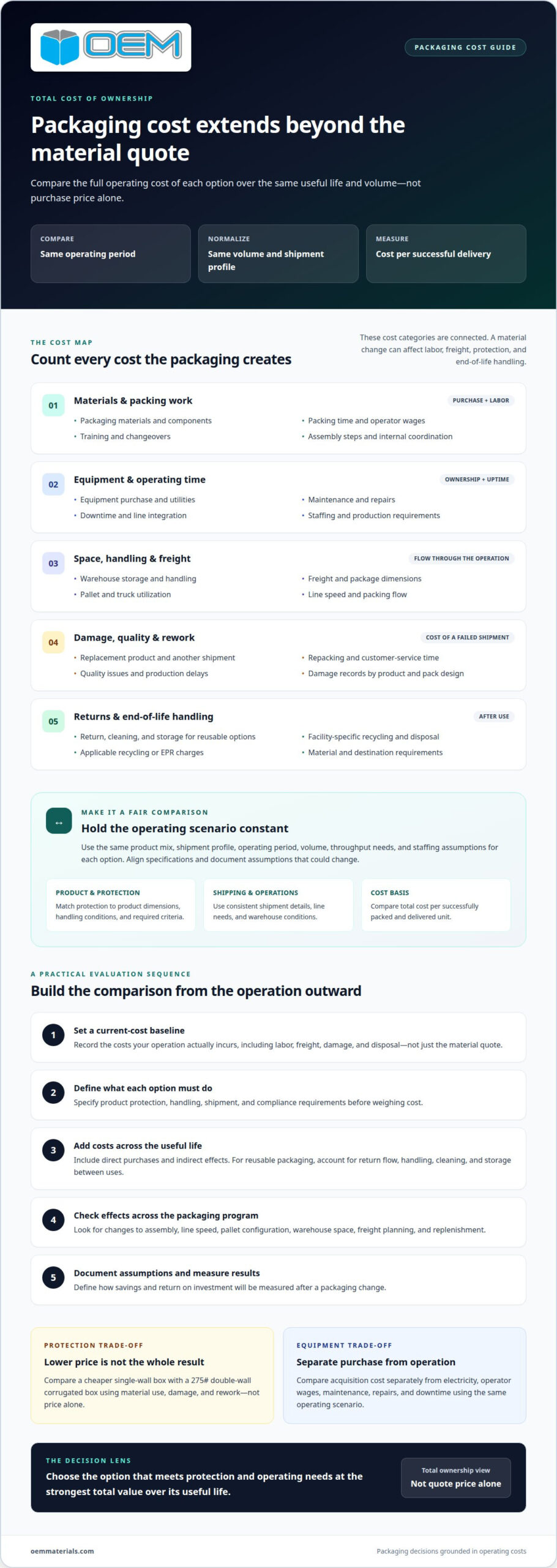
A five-step packaging TCO calculation
Build the calculation from a current baseline, then compare alternatives using the same volume and operating assumptions. Five steps help connect packaging expenses to the wider supply chain.
Design, Tooling, and Setup Costs
Design, tooling, and setup are initial costs associated with preparing a packaging option for production. Include them in TCO because lower recurring material costs may take time to offset those upfront expenses. Record design work, tooling, equipment changes, testing, and setup labor separately. This shows which costs occur once and which continue during production.
Packaging Cost Metrics and Benchmarks
Packaging metrics are consistent measures used to compare cost and performance across products, periods, and alternatives. Track material cost per packed unit, labor per unit, freight, damage, inventory levels, and disposal by product family. Use the same definitions and reporting period for each option. Compare results with your own baseline rather than applying a broad benchmark that may not reflect your product or supply chain.
- Establish the baseline. Gather current costs, volumes, specifications, quality performance, inventory, and freight characteristics. Review the previous 12 months of packaging invoices to establish material spend. Add operating records so the baseline covers more than purchases.
- Define the packaging requirement. Record product dimensions, weight, protection needs, shipment conditions, and packing method. Include the production volume and formats the packaging must support. These details keep alternatives comparable and make the later cost-per-unit calculation meaningful.
- Capture the full cost. Separate material purchases from labor, storage, freight, damage, rework, setup, and disposal. Mark design and tooling as one-time expenses where appropriate. Include the associated equipment or process changes, then document the source and period for each figure.
- Compare options on equal terms. Apply the same volume, useful life, product mix, and shipping assumptions to each alternative. Calculate total cost per packed unit and note differences in labor, protection, and inventory. Don’t treat a lower initial purchase price as a saving until other expenses are included.
- Measure results after implementation. Set a baseline and define how savings will be measured before changing the packaging. Track the same metrics afterward, including actual usage, damage, labor, and freight. Compare results with the original assumptions and investigate meaningful differences before updating the TCO.
Accurate comparisons depend on product dimensions, materials, usage, and shipping requirements. Request a packaging quote using those details to support an option-specific assessment.
OEM Materials & Supplies
OEM Materials & Supplies helps businesses connect packaging choices with the practical requirements behind their TCO comparisons. Its corrugated boxes, foam packaging, packaging kits, and mailing tubes and cores give purchasing and operations teams options to evaluate against product protection, packing methods, and shipping needs.
Bring product dimensions, weight, current packaging method, and usage information into the discussion. These details help focus the comparison on materials and formats relevant to your operation, rather than purchase price alone. The right fit depends on the product, handling requirements, and shipping conditions, so assess those factors together.
Contact OEM Materials & Supplies to discuss packaging options for your operation.
Put the Next Packaging Decision on a Stronger Footing
Make packaging part of product and process change control, not a decision revisited only after a problem appears. When engineering changes a product or operations adjusts a packing workflow, include packaging specifications in the review. This helps purchasing, engineering, and warehouse teams work from the same approved version instead of relying on outdated instructions.
Assign clear ownership for maintaining specifications and recording revisions. A controlled record can help teams identify which packaging configuration applies to each product and keep future sourcing decisions aligned with current operating requirements. That discipline supports consistent decisions as products, suppliers, and production processes evolve.
OEM Materials & Supplies can discuss packaging options that fit your operation. Contact OEM Materials & Supplies to start a conversation about your next packaging decision.
Build the review into your next change to give the team a stronger basis for moving forward.
Frequently Asked Questions
What Is Total Cost of Ownership (TCO), and Why Does It Matter?
Total cost of ownership is the combined cost of acquiring and using an asset or material over a defined period. It matters because purchase price alone can hide expenses that arise during operation, maintenance, storage, or disposal. For example, a lower-cost packaging material may require extra handling or create more waste. TCO gives purchasing, finance, and operations teams a shared basis for comparing choices.
Why Does TCO Matter in Packaging?
TCO matters in packaging because each choice affects more than the materials invoice. A carton, insert, or kit can influence packing time, freight use, warehouse space, and product condition on arrival. For example, a package that needs extra assembly may add work at a busy packing station. Evaluating these connected effects helps teams select packaging that fits the product and operating process.
Why Should You Consider TCO?
Consider TCO when a sourcing decision could shift costs between departments or supply-chain stages. A bulk buy may lower the unit purchase cost but increase storage needs or leave obsolete stock after a product revision. Businesses in Orange County, Los Angeles, San Diego, and Riverside can also compare how packaging choices fit their shipping routes and warehouse workflows.
What Is Total Cost of Ownership for Packaging?
Packaging TCO is the full cost of choosing, using, and disposing of packaging for a defined program. It can include materials, labor, setup, storage, freight, product damage, returns, and waste handling. For a product shipped in a box with a protective insert, the comparison should consider both components and the work needed to pack them. The scope depends on the decision and evaluation period.
How Do You Calculate Packaging Total Cost of Ownership?
Calculating total cost of packaging ownership starts with a consistent baseline and a defined comparison period. Gather invoices, usage, labor, freight, damage, inventory, and disposal information, then add one-time design or setup expenses. Apply the same product mix and shipping assumptions to each alternative. Divide the resulting total by the number of successfully packed units to compare options on a consistent basis.
How Do Labor, Equipment, and Packaging Line Speed Affect Packaging Costs?
Labor and equipment affect costs through operator time, machine utilities, maintenance, training, changeovers, and production interruptions. A line that packs faster may still require more staffing or frequent setup work, so compare finished output with the resources used. For example, track labor hours and packed units during a representative shift. This provides a useful operational comparison without relying only on a machine’s stated speed.
How Do Damage, Returns, and Product Loss Affect Packaging Total Cost?
Damage, returns, and product loss add costs through replacement product, return handling, inspection, repacking, and customer support. They can also delay delivery or leave inventory unavailable for sale or production. Track incidents by product and packaging configuration, then connect each event to the work and materials it generated. This helps distinguish a packaging issue from other causes and shows where protection changes may warrant evaluation.
How Can Reusable Packaging Costs Be Compared With Single-Use Packaging?
Compare reusable and single-use packaging by cost per completed shipment, including all handling between uses. For reusable packaging, account for return transport, cleaning, inspection, storage, and containers lost or damaged before their next use. For single-use packaging, include recurring material purchases and disposal. A reusable container’s economics depend on actual reuse frequency and reverse-logistics requirements, so model the circulation process alongside the container itself.