
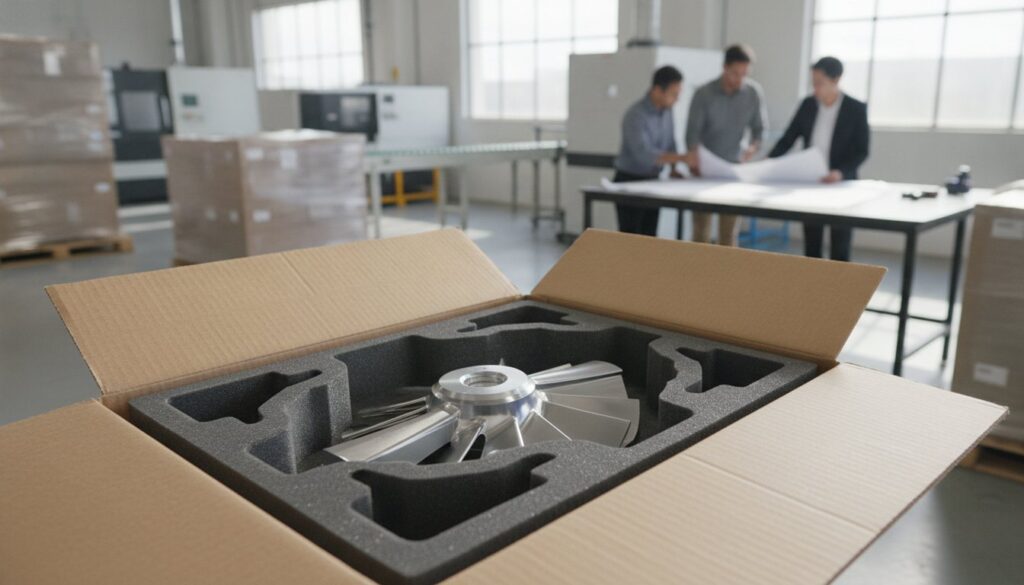
Treating your shipping materials as a mere commodity is a mistake that often leads to avoidable product damage and bloated logistics costs. For manufacturers in the aerospace and medical device sectors, industrial packaging must function as a precision-engineered system rather than an afterthought. You likely recognize that high rates of transit damage and inefficient warehouse layouts are symptoms of a packaging strategy that hasn’t kept pace with modern supply chain demands.
This guide provides an authoritative look at industrial packaging standards for 2026, offering a roadmap to reduce your total cost of ownership through better material engineering and streamlined inventory management. We will analyze the specific roles of custom corrugated solutions, protective foam inserts, and specialized crates in safeguarding sensitive equipment. You will also learn how integrating vendor-managed inventory can stabilize your supply chain and reduce the labor costs associated with complex kitting operations. By focusing on engineering-led designs, manufacturers in regions like Orange County and Los Angeles can improve protection for high-value goods while maximizing every square foot of storage space.
Key Takeaways
- Learn how custom-engineered foam and corrugated materials provide superior protection for fragile aerospace and medical components compared to generic containers.
- Discover how a strategic approach to industrial packaging reduces the total cost of ownership by minimizing transit damage and optimizing warehouse space usage.
- Understand the role of value-added services, such as vendor-managed inventory, in reducing labor costs and streamlining production for Southern California manufacturers.
- Identify the technical standards and prototyping capabilities required when selecting a long-term packaging partner for high-volume industrial applications.
Understanding Industrial Packaging and Its Role in Global Logistics
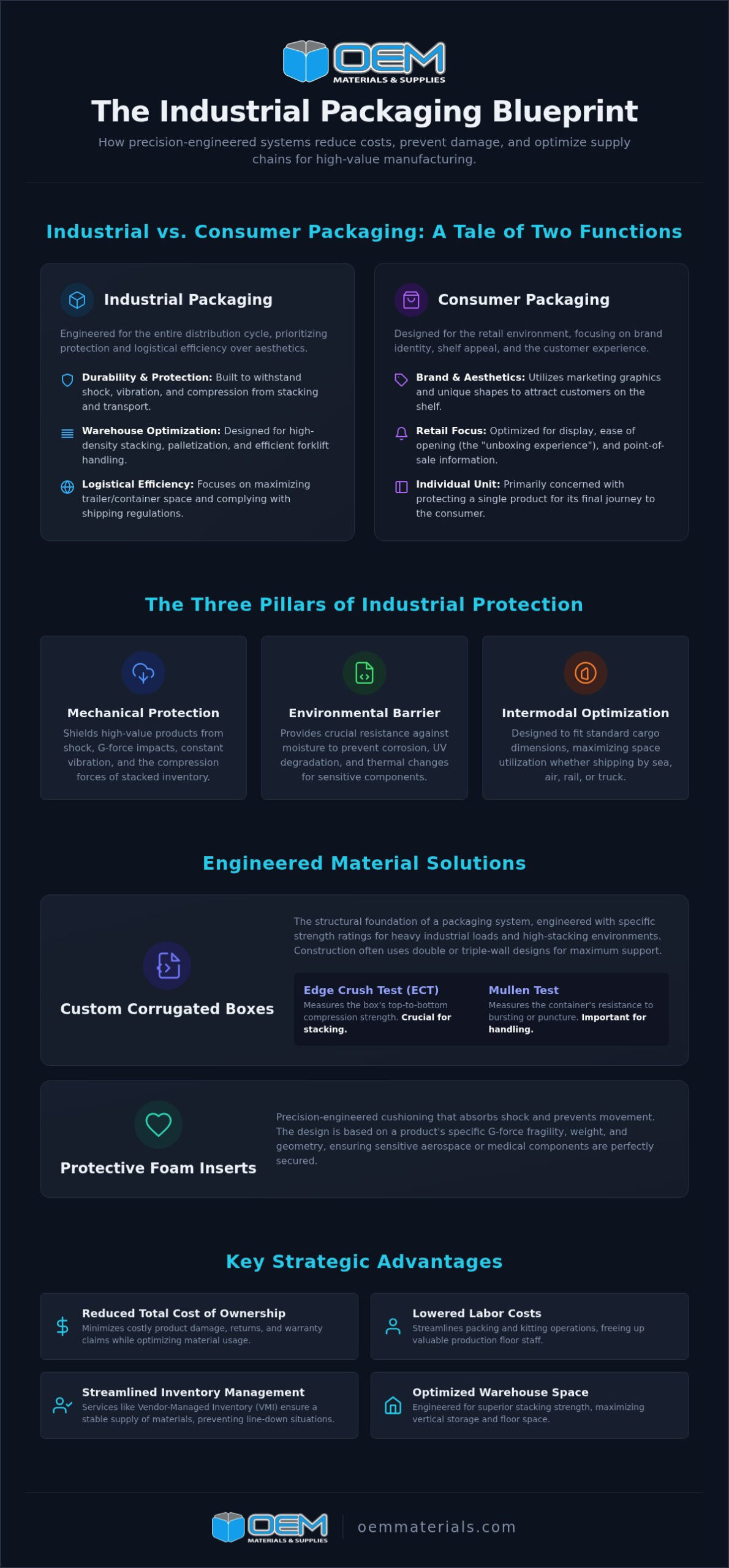
Industrial packaging is far more than a simple container; it’s a specialized, engineered system developed to protect high-value goods throughout the entire distribution cycle. While consumer packaging focuses on branding and retail aesthetics, industrial-grade solutions prioritize durability, structural integrity, and logistical efficiency. This approach ensures that sensitive components, such as aerospace parts or medical devices, arrive at their destination without compromising their functional tolerances. It’s a critical component of the manufacturing process that directly impacts the bottom line by preventing costly product loss.
The manufacturing supply chain relies on a hierarchical structure of packaging levels to maintain order. Secondary packaging, which includes custom corrugated boxes and foam packaging inserts, provides the immediate containment and organization for individual units. Tertiary packaging, such as pallets, stretch film, and edge protectors, creates a stable unit load for bulk transport. By applying rigorous Packaging engineering principles, manufacturers can optimize these layers to reduce material waste while maximizing protection. The primary objectives are clear: ensure product safety, facilitate ease of handling, and provide necessary identification through accurate labeling.
Industrial vs. Consumer Packaging: Key Distinctions
The differences between these two categories are foundational. Consumer packaging is designed for the unboxing experience and shelf appeal. In contrast, industrial packaging is built for the warehouse environment. It must withstand the mechanical stressors of palletization, high-density stacking, and repetitive forklift movements. Utility and protection always take precedence over marketing graphics. Additionally, industrial materials must often comply with strict regulatory requirements for hazardous materials or international shipping standards. This focus on functionality ensures that the packaging supports the speed and reliability of modern production lines without adding unnecessary bulk.
The Primary Functions of Industrial Grade Materials
Effective packaging must address several environmental and physical threats. Mechanical protection is the most obvious requirement. This involves shielding products from the shock of a drop, the constant vibration of a long-haul truck, and the compression forces of stacked inventory. Beyond physical impact, industrial grade materials provide a barrier against environmental factors. This includes moisture resistance to prevent corrosion, UV protection for sensitive polymers, and thermal insulation for temperature-sensitive medical supplies. Finally, these systems are optimized for intermodal transport. Whether a shipment moves by sea, air, or rail, the packaging must be designed to fit standard cargo dimensions to minimize shipping costs and maximize trailer utilization.
Engineering Protective Solutions: Corrugated, Foam, and Wood Crating
Engineering a protective system requires a deep understanding of a product’s G-force fragility and its static load requirements. Generic shipping containers often fail because they lack the specific tolerances needed for sensitive industrial equipment. Effective industrial packaging relies on a multi-material approach where each component serves a distinct protective function. By combining structural outer shells with precision-cut interior cushioning, manufacturers can significantly reduce the risk of transit damage while optimizing the total weight of the shipment. This engineered approach ensures that every material used adds measurable value to the supply chain.
Corrugated Box Engineering and Strength Ratings
Selecting the right grade of corrugated material is the first step in structural design. For heavy industrial loads, understanding the difference between Mullen and Edge Crush Test (ECT) ratings is vital. While the Mullen test measures a box’s resistance to bursting, the ECT rating determines its stacking strength. High-volume manufacturers often utilize custom corrugated boxes featuring double-wall or triple-wall construction to support heavy payloads without collapsing. These designs often follow government packaging standards to ensure reliability across global distribution networks. Die-cut configurations are particularly useful for complex geometries, providing a snug fit that prevents internal shifting during transit.
Custom Foam Inserts and Cushioning Materials
Sensitive electronics and medical devices require advanced shock absorption. Engineered foam packaging offers a repeatable solution for protecting fragile components from mechanical vibration. Polyethylene (PE) foam is ideal for heavier items due to its high load-bearing capacity and durability through multiple impacts. Conversely, Polyurethane (PU) foam is softer and better suited for lighter, highly delicate instruments. Fabricated foam inserts provide a higher level of precision than foam-in-place methods, allowing for exact nesting of components within a kit. If you are unsure which density is right for your application, you can request a packaging review to evaluate your specific fragility requirements.
Wood Crates and Heavy Duty Shipping Containers
When a payload exceeds the weight limits of even the strongest corrugated board, wood crates become the necessary standard. These are essential for large-scale automotive assemblies or heavy machinery. For international shipments, these crates must comply with ISPM-15 heat-treatment standards to prevent the spread of pests. In many cases, reinforcing a load with heavy duty shipping boxes and custom wood bases provides a hybrid solution that balances cost and durability. Modern industrial packaging also incorporates sustainable sourcing, using recyclable corrugated materials and biodegradable foam options where performance requirements allow. This ensures that your protection strategy meets both operational and environmental goals.
Specialized Requirements for Aerospace, Medical, and Automotive Sectors
Standardized shipping solutions often fail when applied to the rigorous demands of specialized manufacturing. In sectors like aerospace and medical device production, the stakes involve more than just shipping costs; they involve regulatory compliance and mission-critical safety. Developing an effective industrial packaging strategy for these fields requires a deep understanding of cleanroom standards, electrostatic discharge (ESD) protection, and the physical stressors of oversized logistics. Whether handling a single high-value prototype or managing a high-volume production run, the engineering must remain precise to ensure product integrity remains uncompromised from the factory floor to the end user.
Sterile Packaging and Compliance for Medical Devices
Medical device manufacturers face the unique challenge of maintaining microbial barriers until the point of use. This requires materials that are not only durable but also cleanroom-compatible to prevent particulate contamination. For specialized medical textiles or surgical components, utilizing high-quality mailing tubes and cores provides a rigid structure that prevents crushing while allowing for efficient sterilization processes. Validation and testing are essential components of this sector. Every packaging kit must be verified through rigorous protocols to ensure it meets the specific ASTM or ISTA standards required for medical grade distribution. This level of scrutiny prevents the high costs associated with compromised sterile barriers and product recalls.
Heavy Duty Protection for Aerospace Components
Aerospace logistics involves some of the most complex requirements in the industrial packaging sector. Flight hardware is often extremely fragile and susceptible to environmental damage. To protect sensitive avionics, packaging systems must incorporate anti-static materials that prevent static build-up during transit. Large-scale components, such as fuselage sections or engine assemblies, require custom crating solutions designed to handle uneven weight distribution and high centers of gravity. These crates often feature internal bracing and specialized foam inserts to isolate the component from the vibration inherent in intermodal transport. In Southern California hubs like Los Angeles and Orange County, manufacturers rely on these engineered solutions to move high-precision parts through global supply chains without risk.
The transition from prototype to production also presents a significant hurdle. During the R&D phase of automotive or aerospace development, packaging must be flexible enough to accommodate frequent design changes. Once production scales, the focus shifts to maximizing pallet density and reducing material waste. A seasoned partner understands these shifts and provides the engineering support necessary to adapt packaging designs as the product lifecycle matures. This ensures that protection remains constant even as volume and logistical requirements evolve. Manufacturers throughout the broader Southern California region, including those working with industrial packaging suppliers in Riverside serving the Inland Empire logistics corridor, face these same challenges and benefit from the same engineering-led approach.
Optimizing the Supply Chain with Value-Added Packaging Services
Efficiency in a modern manufacturing facility extends beyond the production line and into the logistical management of shipping materials. Viewing industrial packaging as a static expense is a missed opportunity for operational optimization. By shifting from a simple vendor-buyer relationship to an integrated logistics partnership, manufacturers can address the hidden costs associated with procurement, storage, and material handling. These optimizations directly influence freight and fuel expenses. Right-sized packaging reduces dimensional weight charges and maximizes pallet density, ensuring you aren’t paying to ship empty space. Engineering-led designs also allow for a significant reduction in waste. By creating solutions that use the minimum amount of material necessary for protection, companies can lower their environmental footprint while reducing disposal costs at the destination.
Implementing Vendor-Managed Inventory (VMI) for Packaging
Implementing packaging VMI programs is one of the most effective ways to stabilize a supply chain. In high-cost real estate markets like Orange County and Los Angeles, warehouse space is at a premium. Storing bulky corrugated inventory on-site consumes valuable square footage that could be used for production. A VMI model transfers the burden of inventory management to the partner. We utilize real-time usage tracking and automated replenishment to ensure materials are always available. This approach eliminates the need for emergency orders and prevents costly stockouts that can halt a production line. It’s a proactive strategy that ensures your industrial packaging supply is always aligned with actual production demand.
Kitting and Assembly to Streamline Production
Kitting and assembly services further streamline the manufacturing floor by reducing line-side labor requirements. Instead of workers spending time folding boxes or inserting foam, they receive ready-to-use packaging kits delivered just-in-time. This consolidation is particularly beneficial in electronics assembly, where multiple protective components must be integrated before a product can be shipped. Delivering pre-assembled kits allows your team to focus on their core competencies, which improves overall throughput and reduces total labor costs per unit. In one instance, a manufacturer improved assembly speed by delivering finished kits directly to the packing station, though specific results always depend on your unique product requirements and shipping methods. This methodical approach to logistics turns packaging from a commodity into a functional tool for production speed.
If you are looking to reclaim warehouse space and lower your operational overhead, you can request a quote for a custom VMI or kitting analysis to see how these services fit your current workflow.
Selecting an Industrial Packaging Partner in Southern California
Choosing a partner for your industrial packaging needs is a strategic decision that affects your entire production cycle. You shouldn’t settle for a commodity reseller that simply moves boxes. A true partner functions as a technical consultant, offering the engineering depth required to solve complex logistical problems. This begins with an evaluation of their quality control processes and their ability to meet specific industry standards, such as ASTM or ISTA testing protocols. In sectors like aerospace and medical device manufacturing, these certifications aren’t optional; they’re the foundation of product safety and regulatory compliance.
Evaluating Supplier Engineering and Design Capabilities
The core value of a packaging partner lies in their custom packaging design capabilities. Off-the-shelf solutions rarely provide the precision needed for high-value components. You need a partner capable of rapid prototyping, allowing your team to test fit and function before committing to high-volume production. In-house testing for mechanical shock, vibration, and compression is essential. This data-driven approach ensures that your protective system is neither under-engineered, leading to damage, nor over-engineered, leading to unnecessary material costs. Collaborating on a prototype ensures that the final kit integrates perfectly with your production line’s existing workflow.
Regional Advantages for Orange County and Los Angeles Manufacturers
For manufacturers in Orange County and Los Angeles, local proximity is a significant operational advantage. Sourcing from a regional partner reduces lead times and allows for more responsive just-in-time delivery schedules. This is critical for maintaining lean inventory levels and avoiding the storage of bulky industrial packaging materials on-site. Local partners also provide the benefit of on-site consultations. Having a packaging professional walk your production floor to conduct a formal audit can reveal inefficiencies in kitting or palletization that remote vendors would miss. By strategically sourcing industrial packaging supplies in Orange County, you also lower the freight costs associated with transporting empty packaging, further reducing your total cost of ownership.
The right partnership turns a logistical hurdle into a competitive advantage. If you’re ready to optimize your shipping strategy and reduce transit damage, contact OEM Materials & Supplies for a comprehensive packaging review or a quote. To help us provide the most accurate recommendation for your application, please provide your product dimensions, weight, fragility requirements, and estimated annual usage. We’re here to design a system that protects your products and your bottom line through engineering support and custom design.
Optimizing Your Manufacturing Distribution Strategy
Transitioning from generic shipping containers to engineered systems is the most effective way to protect high-value assets and stabilize logistics costs. By integrating specialized materials like custom foam inserts with value-added services such as kitting and vendor-managed inventory, manufacturers can reclaim warehouse space and reduce line-side labor. These improvements to your industrial packaging strategy ensure that your supply chain remains resilient against transit damage and rising material expenses.
OEM Materials & Supplies serves as a dedicated partner for the aerospace, medical, and automotive sectors, providing custom designs and local Southern California support. To receive a tailored recommendation that addresses your specific logistical challenges, please request a quote for your industrial packaging requirements. Providing specific data points, such as product dimensions, weight, fragility, and annual usage, allows our engineering team to develop a solution that maximizes both protection and efficiency. We’re ready to help you streamline your operations and lower your total cost of ownership through precision-engineered design.
Frequently Asked Questions
What is the difference between primary, secondary, and tertiary industrial packaging?
Primary packaging is the immediate container that touches the product. Secondary packaging, such as custom corrugated boxes, organizes and protects these primary units during transit. Tertiary packaging includes pallets, stretch film, and edge protectors used to create stable unit loads for bulk transport. This hierarchy ensures that industrial packaging systems provide comprehensive protection from the factory floor to the final destination.
How do I determine if my product requires custom foam inserts?
You should consider custom foam inserts if your product has high G-force fragility or sensitive surfaces that require vibration isolation. Sensitive electronics and medical instruments often need precision-cut polyethylene or polyurethane foam to prevent mechanical shock. A formal packaging review can help determine the exact density required to safeguard your components based on their weight and the anticipated shipping environment.
What are the common strength tests for industrial corrugated boxes?
The two most common tests are the Mullen Test and the Edge Crush Test (ECT). The Mullen Test measures the pressure required to burst the corrugated board, which is critical for heavy internal contents. The ECT measures the stacking strength of the box, which is more relevant for modern warehouse environments where palletized loads are stacked high to maximize vertical space.
How can vendor-managed inventory reduce my packaging costs?
Vendor-managed inventory reduces costs by eliminating the need for large on-site storage and preventing production halts caused by stockouts. By transferring inventory management to a partner, you reduce the administrative overhead of constant procurement. While actual savings depend on your specific volume and shipping frequency, VMI allows for better cash flow and more efficient use of warehouse square footage in high-cost areas like Los Angeles.
What are the shipping requirements for international wood crates?
Wood crates used for international export must comply with ISPM-15 standards, which require the lumber to be heat-treated to kill wood-boring pests. Every crate must carry the official IPPC mark to pass through customs without delay. This regulation applies to all solid wood packaging materials, though it typically excludes manufactured wood products like plywood or oriented strand board (OSB).
Can industrial packaging materials be recycled or reused?
Most industrial packaging materials, including corrugated board and wood crating, are fully recyclable through standard industrial waste streams. In many cases, businesses can optimize their waste management by engaging in Bulk Recyclable Material Resale to recover value from discarded shipping materials. Many foam materials can also be recycled or reused in closed-loop systems, depending on the polymer type. Choosing sustainable materials helps reduce disposal fees and supports corporate environmental goals without compromising the structural integrity required for heavy-duty protection.
What information should I provide for an accurate packaging quote?
To receive an accurate quote, you should provide the product’s exact dimensions, weight, and fragility rating. It is also helpful to include your estimated annual usage and details about the shipping method, such as whether the items will move via LTL freight or international air. This data allows engineers to select the most cost-effective materials that still meet your specific protection requirements.
How does industrial packaging impact overall shipping and freight costs?
Packaging design directly impacts freight costs through dimensional weight (DIM weight) calculations and pallet density. Over-sized boxes lead to higher shipping fees because carriers charge based on the space consumed rather than just the weight. Right-sizing your containers and optimizing pallet layouts ensures you don’t pay to ship empty space, which helps lower total fuel and transportation expenses over time. Manufacturers looking to address rising containerboard costs and California SB 54 compliance requirements can find additional guidance in this strategic sourcing guide for wholesale industrial packaging supplies in Orange County.