
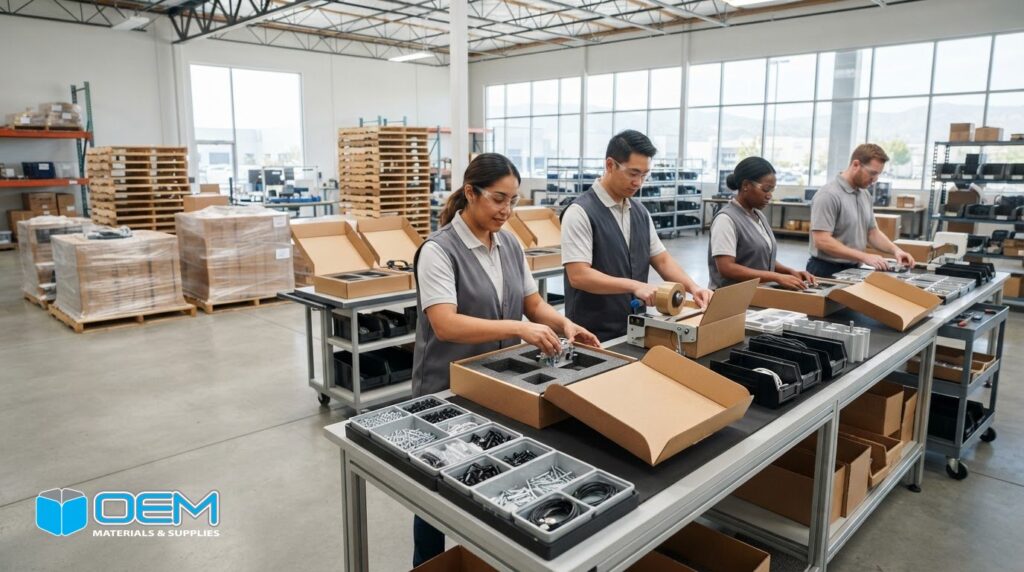
The biggest kitting bottleneck often isn’t labor. It’s a workflow that treats packaging, assembly, and inventory as separate jobs. For manufacturers evaluating packaging kitting and assembly services Los Angeles partners provide, the right fit depends on how well the process matches product requirements, packaging materials, and release schedules.
Manual kit preparation can pull employees away from production and warehouse priorities. Missing components, unclear instructions, or assembly errors can add delays and rework. An outside partner can take on kitting and assembly as part of a coordinated packaging workflow. Define the work, handoffs, and volume pattern clearly, whether the program involves prototypes, short runs, or higher-volume production.
This guide explains how to assess a partner’s capabilities against your packaging, labor, inventory, and production needs. You’ll learn what to document when coordinating components and packaging, setting assembly steps, and planning for changing volumes. The goal is a dependable process for complete, correctly packaged kits, supported by packaging design and supply coordination that work together.
Key Takeaways
- Define the difference between grouping components into a kit and assembling or preparing those components for use or shipment.
- Document each component, quantity, variant, packaging requirement, and assembly step to create clear, repeatable work instructions.
- Compare packaging kitting and assembly services los angeles manufacturers can use by packaging expertise, assembly scope, inventory coordination, and order visibility.
- Set clear ownership for components, packaging materials, instructions, and finished kits across facilities, suppliers, warehouse teams, and delivery destinations.
- Prepare product dimensions, weight, annual usage, kit variations, forecast patterns, and delivery locations to support a project-specific quote.
What Los Angeles Manufacturers Should Expect from Packaging Kitting and Assembly
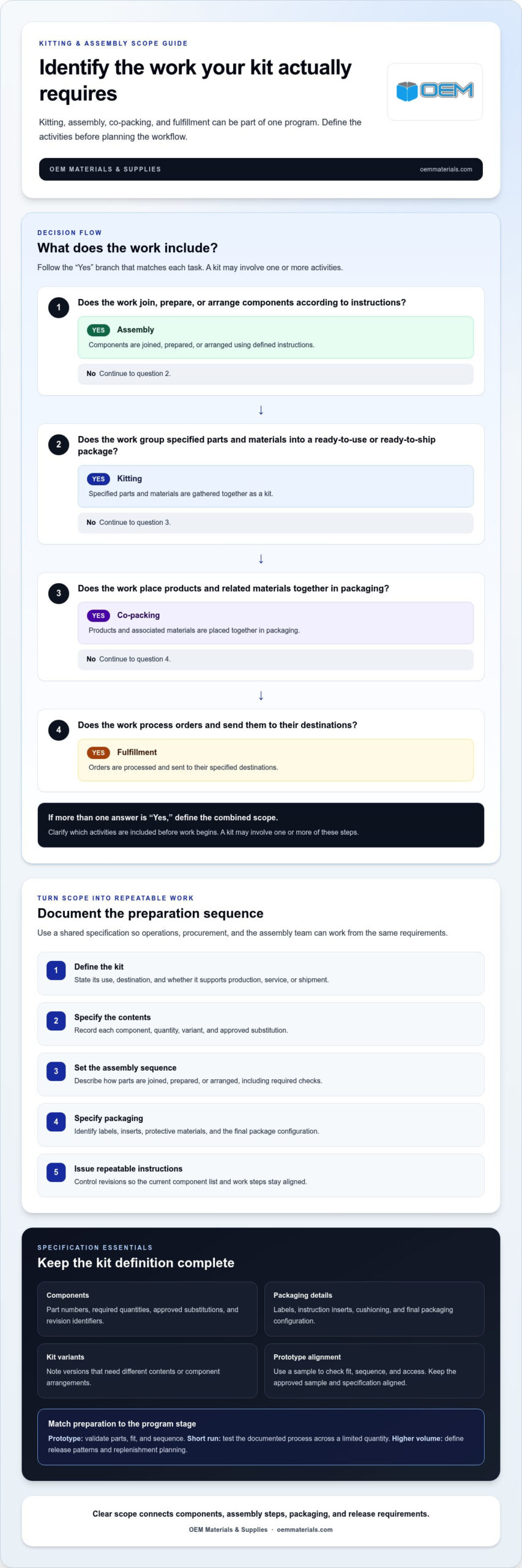
Kitting and assembly cover different steps in preparing components for production or shipment. Kitting groups specified parts and materials into a ready-to-use or ready-to-ship package. Assembly joins, prepares, or arranges components according to defined instructions. Co-packing places products and related materials together in packaging, while fulfillment covers processing and sending orders to their destinations. A kit may involve one or more of these activities, so define the scope before work begins.
The idea of a kit is straightforward, but manufacturing kits need precise component lists and packaging instructions. The general reference What is a Kit? describes the broader idea of items assembled for a particular purpose. In an industrial workflow, that purpose determines which parts belong together, how they are prepared, and how the finished package is handled.
Where kitting and assembly fit in an industrial workflow
Production kits can bring the parts needed for a work order together before they reach the production area. Service-parts kits group specified replacement components for maintenance or repair. Packaged product sets combine products and accompanying items for a particular shipment or customer requirement. In each case, a repeatable preparation process can move component gathering and packaging away from core production tasks.
Outsourcing can make sense when internal labor is needed elsewhere, floor or storage space is constrained, or kit preparation creates handoffs that interrupt the existing workflow. The right scope depends on the components, quantities and sequence, packaging, and destination. For manufacturers evaluating packaging kitting and assembly services Los Angeles companies provide, documenting these details helps define the actual work instead of treating it as a general labor requirement.
Why packaging design belongs in the conversation
Packaging affects how a kit is assembled, handled, stored, and shipped. Box dimensions determine how components fit together; cushioning helps control movement; and component arrangement can make parts easier to identify and access. A kit with several small components, for example, may need separated positions to keep items organized. A larger or more delicate assembly may call for fitted protective packaging. The right solution depends on the product and its handling and shipping needs.
Requirements also vary by industry and product. Aerospace components, medical products, electronics, and automotive parts can differ in shape, fragility, handling needs, and how they move through a facility. Packaging choices should account for those differences alongside the assembly sequence. OEM Materials & Supplies connects custom packaging design with material selection and kit preparation, including corrugated boxes and engineered foam. For operations coordinating packaging supply with production schedules, just-in-time packaging can also be part of the plan.
How to Scope Kitting and Assembly Around Los Angeles Production Needs
A well-scoped program turns a product requirement into repeatable work. Start with the kit’s purpose and finish with clear instructions for preparing, inspecting, packaging, and releasing completed kits. This gives operations, procurement, and the assembly team a shared reference, especially when components, schedules, or kit versions change.
Use a documented sequence to define the work:
- Define the kit. State its use, destination, and whether it supports production, service, or shipment.
- Specify the contents. Record each component, quantity, variant, and approved substitution.
- Set the assembly sequence. Describe how parts are joined, prepared, or arranged, including any required checks.
- Specify packaging. Identify labels, inserts, protective materials, and the final package configuration.
- Issue repeatable instructions. Control revisions so the current component list and work steps stay aligned.
A clear bill of materials reduces ambiguity during kit preparation. It also gives purchasing and operations a consistent basis for coordinating parts and packaging. The National Institute of Standards and Technology explains how supply chain management supports manufacturing efficiency and risk management in its Supply Chain Management in Manufacturing resource.
Build a complete kit specification
Include part numbers, required quantities, approved substitutions, and revision identifiers. Specify labels, instruction inserts, cushioning, and final packaging, and note any kit variants that require different contents or arrangements. A sample kit or prototype can reveal fit, sequencing, and access issues before work instructions are finalized. Keep the approved sample and specification aligned so changes to one are reflected in the other.
Separate expectations by project stage. A prototype can validate parts, fit, and sequence. A short run can test the documented process across a limited quantity, while a higher-volume program may call for defined release patterns and replenishment planning. For packaging kitting and assembly services Los Angeles manufacturers are scoping, describe expected quantities and variability so the work can be planned around the actual program.
Map the handoff from assembly to shipping
Define where inspection occurs, how the packing sequence is controlled, and how completed kits are identified. Include delivery destinations, release timing, and the replenishment trigger, such as a scheduled release or an agreed inventory signal. These details connect assembly with warehouse and production needs, reducing uncertainty at handoff.
For programs that need packaging materials coordinated with production schedules, just-in-time packaging services can be part of the supply plan. To scope a project, share the kit specification, volume pattern, packaging requirements, and delivery locations through the quote request form.
Compare Los Angeles Kitting Providers by Workflow, Packaging, and Inventory Fit
A useful comparison looks beyond the number of kits assembled. Assess how packaging materials, assembly steps, inventory responsibilities, and order information work together. The right fit is the service model that matches your product mix, volume pattern, delivery locations, and documentation needs. A program involving fragile components and several kit versions has different requirements from one with a stable parts list and a single destination.
Use a consistent set of criteria to compare the proposed workflow with your operating needs:
| Area | What to assess | Fit question |
|---|---|---|
| Packaging expertise | Coordination of boxes, cushioning, inserts, and assembled components. | Does the packaging plan suit the product, handling, and shipping requirements? |
| Assembly scope | Defined preparation steps, sequence, inspection points, and kit variations. | Does the scope cover the work your team needs to move out of its workflow? |
| Inventory coordination | Ownership of components and materials, replenishment triggers, and usage reporting. | Are responsibilities and inventory signals clear to both sides? |
| Order visibility | Agreed order details, release timing, destination, and finished-kit identification. | Can your teams access the information needed to coordinate receiving and use? |
Evaluate packaging and assembly capability together
Compare the packaging plan with the assembly sequence, not as separate line items. A corrugated box, cushioning, or insert should accommodate the finished kit and its components without complicating preparation. Product size, protection needs, and shipping method help determine whether the project calls for custom corrugated packaging, foam, crates, or another material. Review industrial corrugated packaging options as one part of that material decision.
Also distinguish kitting and assembly from automation. A service that groups or prepares components doesn’t automatically include automated equipment, so specify any automation requirement separately. Labor or material savings depend on product dimensions, materials, shipping requirements, and the workflow being replaced. Compare the complete process rather than assuming a particular saving or technology package.
Assess inventory and replenishment coordination
For recurring programs, define who owns each component and packaging material, how usage is reported, and what event triggers replenishment. Vendor-managed inventory may suit a program where packaging supply needs ongoing coordination with production demand. Set the operating details around actual usage patterns and agreed responsibilities. OEM Materials & Supplies supports packaging coordination through vendor-managed packaging inventory.
When assessing packaging kitting and assembly services Los Angeles manufacturers can use, map forecasts and destinations to the proposed release process. Variable demand across Los Angeles County and other Southern California locations, including Orange County, Riverside, and San Diego, may call for a different coordination plan than steady, single-location demand. Compare each option against your documentation requirements and internal handoffs, then select a scope that fits your operation without unnecessary process steps.
Plan a Practical Kitting and Assembly Program for Southern California Operations
A kitting program needs clear ownership at each handoff. Los Angeles production teams, suppliers, warehouse staff, and delivery locations should share an understanding of what is supplied, assembled, stored, and released. Define responsibility for components, packaging materials, current work instructions, and finished kits before routine production begins. This helps prevent gaps, such as a kit being ready for assembly while its protective packaging is still being sourced.
For packaging kitting and assembly services Los Angeles manufacturers use, a responsibility map can clarify the operating model:
- Components: Identify who supplies each part and how shortages or substitutions are handled.
- Packaging: Assign ownership for boxes, cushioning, inserts, and other materials, including forecast sharing.
- Instructions: Name the owner of assembly steps, inspection criteria, and approved revisions.
- Finished kits: Define where kits are held, how they are identified, and which location or team receives them.
Coordinate materials, schedules, and replenishment
Start with packaging items used repeatedly or needed before a kit can be released. Share demand expectations and schedule changes with the teams responsible for sourcing and assembly. Align planned kit releases with production needs or shipment schedules, and specify the destination for each release. Clear ownership and timing matter when materials or finished kits move between a Los Angeles facility, a supplier, and a Southern California warehouse or production site.
A sample workflow can connect these responsibilities: the manufacturer shares a production forecast, packaging and component requirements are coordinated, kits are prepared to an agreed release plan, and usage informs the next replenishment cycle. For recurring packaging needs, vendor-managed inventory can support packaging supply coordination. Just-in-time replenishment can also align packaging availability with scheduled production or shipments. Set the process around actual demand signals and agreed responsibilities, without assuming fixed delivery times or inventory reductions.
Control quality as volumes or kit configurations change
Documented component counts and assembly instructions give the team a consistent basis for preparing and checking kits. As volumes increase or configurations change, keep the approved bill of materials, labels, packaging details, and work instructions aligned. A product revision may affect more than the part list: it can change how components fit, how the kit is identified, or how it is protected for shipment.
Use prototype feedback to refine the workflow before extending it to recurring or higher-volume releases. Record fit or sequencing issues, update the relevant instructions, and identify which revision applies to each kit configuration. This creates a controlled transition from trial builds to regular preparation without relying on informal knowledge held by one operator.
Share your packaging program requirements, material responsibilities, release pattern, and delivery locations with OEM Materials & Supplies.
Request a Kitting and Assembly Quote That Reflects Your Los Angeles Project
A useful quote starts with a clear picture of the product and the work required. For manufacturers evaluating packaging kitting and assembly services Los Angeles projects need, details about components, packaging, forecast patterns, and destinations help define a scope that fits the operation. OEM Materials & Supplies brings kitting and assembly together with packaging and inventory coordination for manufacturers across Los Angeles and Southern California.
Prepare the information that makes a quote useful
Gather available product and process information before submitting a request. Drawings can describe product geometry, while dimensions and weight provide a practical starting point for reviewing package requirements. Component lists should identify quantities and kit variations, and assembly notes should describe the required sequence and preparation steps. Include shipping conditions and packaging preferences so material choices can be considered alongside the finished kit.
A project brief can include:
- Product details: dimensions, weight, drawings, and relevant handling or shipping conditions.
- Kit contents: components, quantities, variants, labels, inserts, and any approved substitutions.
- Work scope: assembly steps, inspection needs, protective materials, and finished-package requirements.
- Program profile: annual usage, order patterns, forecast variability, and known volume changes.
- Timing and delivery: prototype needs, target launch timing, and delivery locations across Los Angeles or Southern California.
Share the information available, even if some details are still being developed. A prototype request can identify what needs evaluation before a repeatable program is established. If demand varies, describe the expected pattern instead of relying on a single annual estimate. That context helps distinguish a steady release schedule from a program with changing order quantities or multiple kit configurations.
Move from project requirements to a defined next step
Before requesting a quote, summarize the proposed scope in one place. State which components and packaging materials are included, what assembly work is required, how inventory will be coordinated, and where finished kits need to go. Note open questions, such as a packaging preference that needs evaluation or a forecast that changes by production cycle. This gives the project team a practical basis for discussing the next step without assuming savings or delivery timing.
OEM Materials & Supplies supports industrial packaging programs from prototypes through higher-volume requirements, combining packaging materials with kitting, assembly, and inventory coordination. Los Angeles and Southern California manufacturers can share project details for a tailored recommendation. Request a packaging kitting and assembly quote.
Set Your Program Up for a Controlled Start
Choosing an outside partner is an operational decision, not simply a way to move tasks off-site. Consider how the proposed service fits your production priorities, purchasing process, and expectations for finished kits. A sound fit makes clear which work is handled and which responsibilities your organization retains.
For packaging kitting and assembly services in Los Angeles, assess a project-specific proposal against your operating requirements. This gives your team a practical basis for deciding whether the service model supports the program.
Request a project-specific packaging kitting and assembly quote to discuss your requirements with OEM Materials & Supplies.
Frequently Asked Questions
What information should I provide for a packaging kitting and assembly quote?
Provide the project details you have and distinguish confirmed requirements from items still under review. Use consistent units for measurements and identify which product or kit version each detail describes. If a specification is preliminary, label it as such rather than presenting it as approved. This clarifies what the quote should address and which decisions may affect the scope as the project develops.
Can kitting services include custom corrugated boxes and protective inserts?
Yes. Corrugated boxes and protective inserts can be part of the kit’s packaging plan. Along with protection, consider how the packed kit will be opened, unpacked, and handled at its destination. Components that need to be accessed in a particular order, for example, may benefit from an arrangement that keeps them distinct. OEM Materials & Supplies provides custom corrugated packaging and engineered foam inserts.
Can a kitting program start with prototypes or short runs?
Yes. Prototype and short-run work can help establish a reference for the approved finished kit. Once stakeholders accept a sample, retain its specifications and approval details so later builds can be compared with the intended result. This is useful when different teams review a project or production resumes after a gap. It creates a shared reference without automatically treating an early trial as the final standard.
How can packaging kitting help reduce internal labor?
Kitting may reduce the time internal employees spend on preparation tasks, but first identify which work is moving outside the facility. Separate component gathering and packing from tasks that remain with production, such as final installation or in-process checks. Then compare the complete handoff, including scheduling and receiving, with the current method. The operational effect depends on the product mix, materials, shipping requirements, and workflow.
How does vendor-managed inventory relate to kitting and assembly?
Vendor-managed inventory can be relevant when packaging materials are consumed regularly as kits are prepared. Before using this approach, determine how usage information will be recorded and reconciled, and how teams will handle discrepancies between reported and physical stock. These details keep inventory records useful for planning. VMI is a supply coordination option, not a substitute for clear data practices and material responsibilities.
What industries use industrial kitting and assembly services?
Kitting is used in manufacturing environments where components need to be organized for a specific build, maintenance task, or shipment. A production cell may need parts grouped by work order, while a service operation may organize replacement items around a repair task. The application and point of use shape the kit design. The key consideration is how components will be handled and used in that workflow.
Can packaging kitting support multiple product or kit configurations?
Yes. Make each configuration clear at the point where kits are ordered, prepared, and stored. Consider whether variants share packaging materials or require separate packouts, and how teams will distinguish similar kits before release. Clear identifiers and physical separation can help reduce mix-ups in a warehouse or staging area, particularly when more than one configuration is prepared during the same production period.
Does packaging automation consulting always require automated equipment?
No. Improving a packaging process doesn’t always mean adding equipment. A team may first examine how materials are staged, how far components move between steps, or whether the work area supports the packing sequence. Those observations can clarify the constraint before an equipment decision is made. Automation is one possible approach, but it should follow a defined operational need rather than serve as the default starting point.