
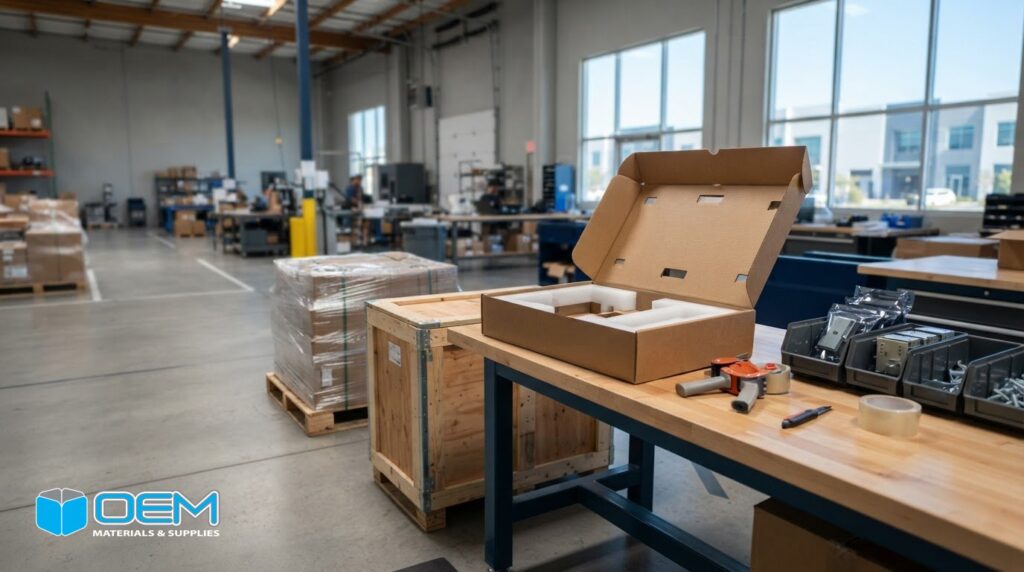
A standard carton may be easy to source, but a poor fit can complicate packing and leave a product less protected during handling and shipment. When dimensions, weight, or shipping conditions call for a different approach, packaging needs to be considered as part of the operation, not as a box alone. For teams searching for a “custom box company san diego,” the key question is how well a supplier can match packaging to both the product and production needs.
This guide explains how to define requirements before requesting a quote and compare suppliers on design support, protective features, materials, production scale, and prototype options. You’ll also consider how corrugated boxes may work alongside foam packaging, cushioning materials, crates, or packaging kits. By gathering product dimensions, weight, shipping conditions, and expected usage, you can make supplier conversations more specific and assess whether a potential partner can support a prototype or ongoing supply program.
Key Takeaways
- Document product dimensions, weight, orientation, and sensitive areas before exploring custom packaging options.
- Consider how shipment conditions and packing workflows affect box design and protective features.
- Compare each custom box company San Diego buyers consider using the same product and shipment details. Review design support, prototype capability, and production fit.
- Prepare expected usage and shipping information to help suppliers assess suitable packaging options for a quote.
- Look for an industrial packaging partner whose corrugated box capabilities and related products fit both prototype needs and ongoing supply requirements.
What San Diego Buyers Should Expect from a Custom Box Company
Standard cartons can create problems when a product has unusual dimensions, needs a specific orientation, or requires a packing sequence the box doesn’t accommodate. Excess space may call for more cushioning, while a tight fit can make packing awkward or leave sensitive areas without adequate separation. For industrial teams in San Diego, a custom box company should understand the product, shipment conditions, and work happening at the packing station.
Custom corrugated boxes are designed around product and shipment requirements rather than selected only from standard carton sizes. The right configuration depends on details such as the item’s shape, how it will be handled, and how it moves through distribution. A custom design can address a poor fit, but it doesn’t automatically prevent damage or lower total packaging costs. Those outcomes depend on the complete packaging system and operating requirements.
When a standard shipping box is not the right fit
Look for recurring problems in the packing process: excess void space, products that shift inside the carton, difficulty positioning an irregularly shaped item, or extra packing steps for each shipment. These observations help clarify what a new design should address. Record how the product is oriented, where it needs protection, and what handling or shipping conditions it encounters. A box that works for one product or route may not suit another.
What custom box support can include
Supplier capabilities can extend beyond manufacturing a specified carton. Design support turns product and shipping requirements into a proposed box configuration. Prototype support lets teams review fit and packing steps before moving into a production program. Production capabilities matter too, particularly when packaging needs to support repeat orders or changing volumes. Ask how a supplier handles each stage rather than assuming every box vendor offers the same support.
The corrugated box design process involves matching structural choices to functional needs. If the carton alone may not provide enough separation or cushioning, ask whether protective materials or inserts should be considered alongside it. OEM Materials & Supplies serves industrial buyers in San Diego, Orange County, Los Angeles, and Riverside with custom corrugated boxes and foam packaging. See its foam packaging options for a related protective material category.
A supplier conversation is more productive when you can describe the product, packing workflow, and shipment conditions together. This gives the supplier a clearer basis for discussing possible designs, prototype needs, and production fit without relying on assumptions about your operation.
How to Specify a Custom Corrugated Box for Your Product
A clear packaging brief helps a custom box company san diego assess product, shipment, and production requirements before recommending a box configuration. Separate confirmed requirements from open questions. For example, a measured product weight is a known input. An assumed stacking requirement should be identified for review, not presented as a verified condition.
Document product and shipment requirements
Gather the details below before requesting design input. Use consistent units and specify whether measurements describe the product alone or the product with any components that ship with it.
- Product dimensions and weight: Record length, width, height, and weight. Note irregular features that affect fit.
- Orientation and sensitive areas: Indicate how the product should sit in the box and identify fragile, exposed, or otherwise sensitive areas.
- Pack quantity: State how many items go in each carton and whether they’re individually wrapped, grouped, or packed with components.
- Shipment and handling: Describe how the package is handled, stored, stacked, and shipped. Share known conditions and flag anything that still needs confirmation.
- Visual references: Include a drawing or photographs when they clarify product geometry, orientation, or the current packing method.
For an assembly with a projecting feature, for instance, a photo can show why length, width, and height may not fully describe the space the carton needs to accommodate. Clear references help the supplier ask more focused questions.
Plan box design, prototypes, and production needs
Explain what the package must do at the packing station and during shipment. Note difficult loading steps, movement inside the current carton, or protection concerns. Mark each item as confirmed, estimated, or awaiting engineering review so assumptions don’t quietly become design requirements.
A prototype can help your team review fit, product orientation, and packing workflow before moving into a production program. Share anticipated order patterns, expected usage, and any known changes in product or demand. These details help a supplier discuss production needs without relying on an assumed order volume or schedule. For a reference on standardized distribution evaluation, see ASTM D4169 performance testing, and clarify with the supplier whether a particular evaluation is relevant to your application.
An actionable packaging brief includes measured product dimensions and weight, pack quantity, orientation, sensitive areas, shipment conditions, and expected production needs, with uncertainties clearly identified.
OEM Materials & Supplies supports packaging design, prototypes, and production programs for buyers in San Diego, Orange County, Los Angeles, and Riverside. Discuss your requirements with the team when you’re preparing a packaging brief.
Custom Box Company San Diego: How to Compare Suppliers
A useful comparison starts with a shared specification, not a general request for a “strong box.” Send each prospective supplier the same product and shipment information, then compare how clearly they address your requirements. For San Diego buyers, this makes it easier to assess supplier fit without assuming a nearby provider has local inventory or a particular delivery schedule.
Use the same questions for each supplier:
| Capability | What to ask | What to compare |
|---|---|---|
| Design support | How do you gather requirements and develop or review a box design? | Whether the response addresses your product, shipment, and packing workflow. |
| Prototype capability | Can we review a prototype before establishing a production program? | How prototype review would help assess product fit and packing steps. |
| Production scale | Can your production program accommodate our anticipated order patterns? | Whether the supplier discusses your expected usage and needs without relying on unstated assumptions. |
| Related packaging services | Can you discuss other packaging or operational support relevant to our program? | Whether services address a documented need rather than add unnecessary complexity. |
Evaluate technical and operational fit
Pay attention to how a supplier responds, not only which capabilities it lists. A useful discussion should clarify how product geometry, handling, and packing steps inform the proposed box design. Ask how prototypes fit into the process and how the supplier supports a move from design review to a production program. If corrugated board alone may not address a product’s protection needs, ask whether foam or other protective packaging should be considered alongside it.
For additional industry context, the Fibre Box Association provides resources on corrugated packaging. Keep performance criteria specific to your application, and ask suppliers to explain the basis for their recommendations.
Compare supply support beyond the box
Related services matter when they solve a stated operational problem. Kitting or assembly may be relevant if your process requires packaging components to be brought together. Vendor-managed inventory may merit discussion if supply coordination is a concern. Neither service is necessary for every program. Ask each supplier which services fit your requirements and what information they need to assess them. If inventory management is part of your evaluation, review packaging VMI services.
OEM Materials & Supplies serves San Diego, Orange County, Los Angeles, and Riverside, with custom packaging design, prototype, and production support. Compare its capabilities against the same documented requirements you share with other suppliers. A consistent brief helps your team identify a fit for both the product and the operation.
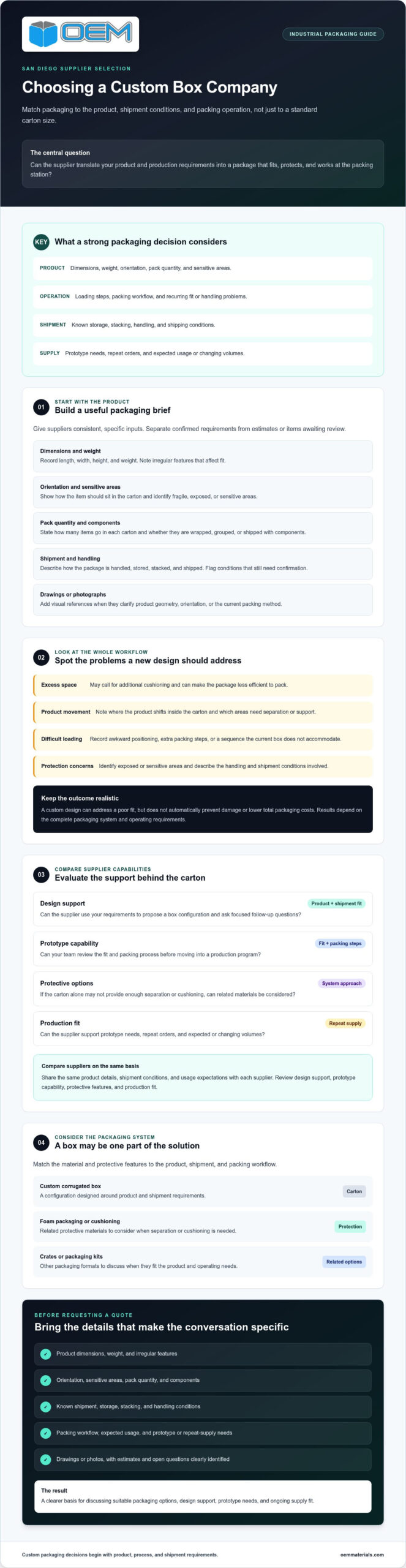
What to Prepare Before Requesting a Custom Box Quote
A complete request gives a supplier a clearer basis for assessing packaging options. Product details alone may not explain how a carton will be used. Shipment conditions, packing steps, and production plans also shape the discussion. Share what’s confirmed, and label estimates or open questions so they can be reviewed rather than treated as specifications.
Information that helps clarify the request
Gather the information below before contacting suppliers. If a detail isn’t available, note that rather than guessing.
- Product details: Provide dimensions, weight, orientation, and any fragile or sensitive areas that may need consideration.
- Pack quantity: Specify how many items or components are intended for each box.
- Shipping and handling context: Describe the shipment route or distribution context, along with known handling, storage, or stacking conditions.
- Current packaging references: Include a sample description, drawing, or photos of the product and its current packaging when available.
- Operational constraints: Note packing equipment, assembly steps, storage limits, or other workflow requirements that may affect the box design.
- Program outlook: Explain whether the request is for prototype review, repeat orders, or a continuing production program. Share anticipated order patterns or usage if known, without presenting estimates as commitments.
Questions to ask a prospective supplier
Use the initial discussion to understand how the supplier will evaluate your request. Ask how they assess box fit and protective needs, what information they need to develop or review a design, and whether a prototype can be considered before a production program. If your packing process includes special equipment or assembly steps, clarify how those constraints factor into the review.
Also confirm which related services are available for your specific program. Foam packaging, kitting, assembly, or vendor-managed inventory may be relevant to some requirements, but don’t assume they’re included with a box quote. Identify the operational issue you want addressed and ask the supplier to clarify the scope of its response.
With product dimensions, weight, shipment context, and usage information ready, San Diego-area teams can make the quote conversation more specific. Request a custom packaging quote or consultation with the details you’ve gathered.
Choose an Industrial Packaging Partner for Your San Diego Program
The right supplier is the one whose design, production, and service capabilities match your documented requirements. A company may be well suited to a prototype review but not to the production pattern your operation expects. Another may supply boxes without addressing related packing or replenishment needs. Compare actual capabilities with your product, workflow, and supply expectations rather than relying on a general claim of fit.
OEM Materials & Supplies serves industrial buyers in San Diego, Orange County, Los Angeles, and Riverside. Its packaging capabilities include corrugated boxes, packaging design, prototypes, and production programs, with related options such as foam packaging, kitting and assembly, and vendor-managed inventory. Not every program needs each service. The useful question is which capabilities align with a documented requirement.
When a broader packaging relationship makes sense
Coordinating a corrugated box with protective packaging may be worth exploring if the product needs additional cushioning or separation. Assembly support may be relevant when teams need packaging components prepared together as part of a defined workflow. For example, a manufacturer shipping several components as one pack may want to discuss whether assembly support fits its process. These are possibilities to assess, not assumed requirements or customer outcomes.
If replenishment coordination is a concern, ask how vendor-managed inventory could fit your program. OEM Materials & Supplies provides packaging logistics support; discuss your usage patterns and operational needs to determine whether the linked service is relevant. Vendor-managed inventory may also warrant discussion if inventory coordination is part of the challenge.
Make the next supplier conversation specific
Bring the information gathered during your evaluation: product dimensions and weight, shipment requirements, packing process, and expected usage. Add drawings or current packaging details if they help explain fit, orientation, or assembly. Distinguish measured facts from estimates, and identify any requirements that still need review.
Then ask about prototype support, production-program fit, and which related services apply to your situation. A clear brief helps both sides focus on the box and the operation it must serve. For packaging needs in San Diego, Orange County, Los Angeles, or Riverside, share your specifications with OEM Materials & Supplies to discuss options without assuming a particular design, production schedule, or service arrangement.
Request a quote or packaging consultation and include your product dimensions, weight, and expected usage to start a focused conversation.
Build a Packaging Program That Fits Your Operation
A sound packaging decision starts with clear product and shipment requirements, then matches them to a supplier’s design, prototype, and production capabilities. Comparing providers against the same criteria helps teams in San Diego, Orange County, Los Angeles, and Riverside assess practical fit instead of relying on broad claims. The right solution may also involve related support, but services should address a specific operational need.
OEM Materials & Supplies serves Southern California buyers and supports custom packaging from prototypes through high-volume programs. Capabilities include packaging design, corrugated boxes, kitting and assembly, and vendor-managed inventory. Share your product dimensions, weight, shipment requirements, and expected usage to start a focused conversation with a custom box company San Diego buyers can assess against their program needs.
Request a quote or packaging consultation and bring your requirements to the discussion. A clear brief is a practical first step toward packaging that aligns with your product and workflow.
Frequently Asked Questions
What should I look for in a custom box company in San Diego?
Look for a supplier whose design, prototype, and production capabilities match your product and operation. Ask how it gathers product and shipment requirements, evaluates box fit, and supports a move from prototype review to an ongoing program. A custom box company San Diego buyers consider should also clarify whether related packaging or services fit their needs. Compare suppliers using the same product details and expected usage rather than relying on broad claims.
How do I get a quote for custom corrugated boxes?
Share product dimensions, weight, pack quantity, orientation, and any fragile or sensitive areas. Include known shipment and handling conditions, current packaging examples or drawings, and constraints such as packing equipment or assembly steps. Note expected usage and whether you’re exploring a prototype, repeat orders, or a production program. Separate confirmed specifications from estimates so the supplier can assess the request without treating assumptions as requirements.
Can a custom box company make a prototype before production?
Yes. OEM Materials & Supplies supports packaging prototypes as well as production programs. A prototype can help your team review product fit, orientation, and packing steps before discussing production. Ask the supplier what product and shipment information it needs to assess the prototype and how your team can provide feedback. Prototype requirements and program fit depend on the specific packaging request, so confirm details directly with the supplier.
What information is needed to design a custom shipping box?
Start with accurate product dimensions and weight, then describe orientation, pack quantity, and areas that need special consideration. Add shipment conditions, handling and storage context, and the steps workers follow to pack the item. Photos or drawings can clarify unusual geometry or positioning. Include known constraints, such as packing equipment, and mark unknowns for review. This brief helps a supplier discuss suitable box options based on the actual application.
Are custom corrugated boxes suitable for industrial products?
Custom corrugated boxes can be considered for industrial products when their design is matched to the item, packing process, and shipment requirements. Product geometry, weight, handling, and any need for added cushioning all inform the packaging discussion. Corrugated board may be used with foam packaging or other protective materials when the box alone doesn’t address identified needs. A supplier should review the application before making design recommendations or performance claims.
Can a packaging supplier help with more than boxes?
Yes. OEM Materials & Supplies offers foam packaging, cushioning materials, crates, packaging kits, and other packaging products, along with services such as kitting, assembly, and vendor-managed inventory. Not every program needs these options. Assembly may be relevant when a workflow involves preparing multiple components together, while inventory support may matter when replenishment coordination is a concern. Ask which capabilities apply to your requirements.
Does OEM Materials & Supplies serve businesses in San Diego?
Yes. OEM Materials & Supplies serves businesses in San Diego, Orange County, Los Angeles, and Riverside. Its industrial packaging capabilities support needs from prototypes through high-volume production programs. Buyers can discuss custom corrugated boxes, packaging design, and relevant related services with the team. Share product dimensions, weight, shipment requirements, and expected usage to provide context for a focused conversation about your packaging program.