
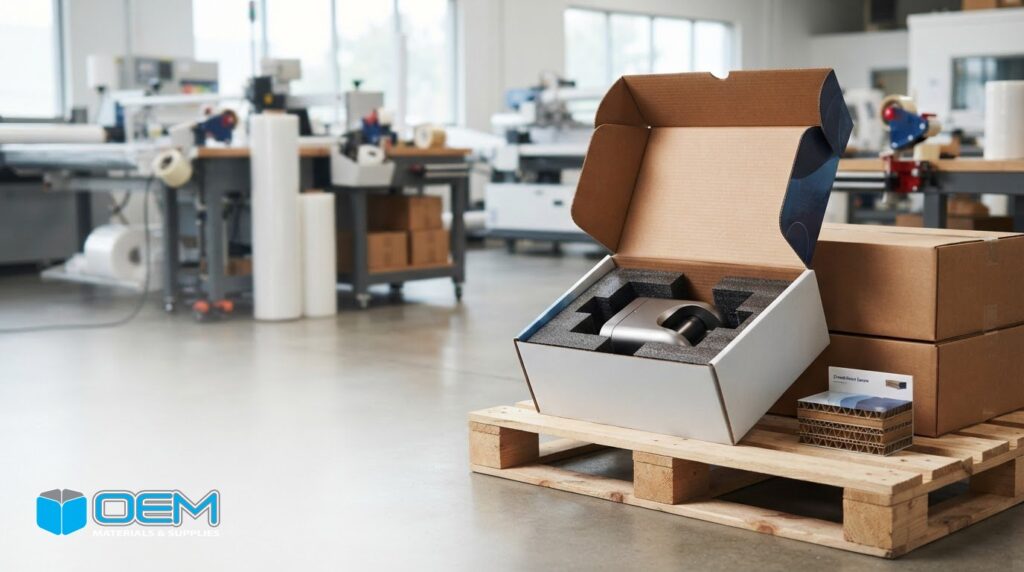
A shipping box can carry high-impact graphics and still fail its real test if its structure isn’t suited to the product and its journey. Deciding when to use litho-lamination for shipping boxes means weighing the value of a premium printed surface against order volume, handling, and shipping requirements.
Print quality can support brand presentation, but it shouldn’t distract from box strength or product protection. Litho-lamination may fit when detailed graphics matter and the production plan supports the process. For other applications, direct corrugated printing or simpler packaging may better suit the job.
This article explains how to compare these approaches, identify applications where a printed surface adds practical value, and keep structural requirements central to the decision. It also covers the project details that support a useful packaging recommendation, including product dimensions, weight, shipping conditions, expected volume, and graphic requirements.
Key Takeaways
- Use a printed surface to support detailed brand or product graphics when the box also serves a customer-facing presentation role.
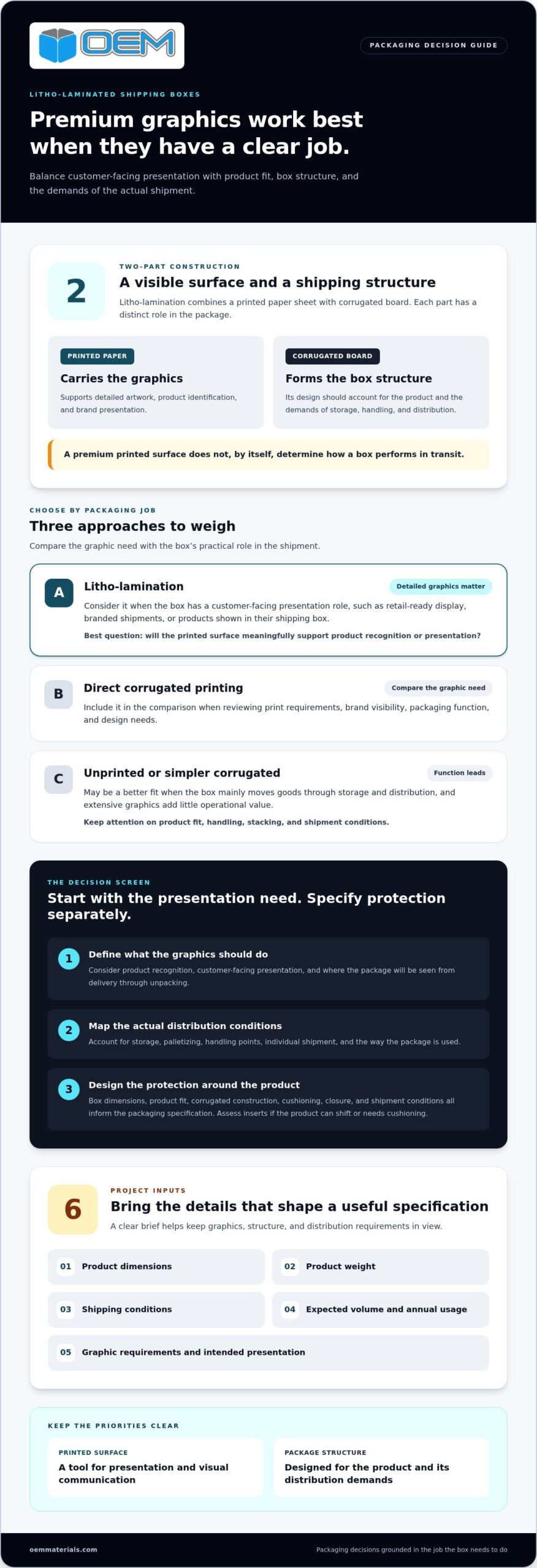
- Understand the two-part construction: printed paper carries the graphics, while corrugated board forms the shipping structure.
- Compare litho-lamination, direct corrugated printing, and unprinted packaging by graphic detail, brand visibility, packaging function, and design needs.
- To decide when to use litho-lamination for shipping boxes, assess presentation goals alongside product, shipment, design, and program requirements.
- Prepare product dimensions, weight, annual usage, shipment conditions, and graphic requirements to support a more useful custom packaging recommendation.
When to Use Litho-Lamination for Shipping Boxes: Start with the Job
A shipping box may need to do more than contain and protect a product. Litho-lamination mounts a printed paper surface to corrugated board, combining a graphic-facing layer with a shipping-box structure. The printing uses a lithography printing process before the printed sheet is applied to the corrugated material.
This approach is most relevant when prominent, detailed brand or product graphics have a defined purpose. A box used for retail-ready presentation, for example, may be seen by customers before and during unpacking. Consistent graphics can help identify the product and carry the brand presentation from delivery through opening. By contrast, a box that moves through a warehouse and is discarded after unpacking may have little need for a premium printed surface.
Graphics and protection are separate design considerations. A print treatment alone doesn’t determine how a box will perform in transit. Corrugated construction, box dimensions, product fit, cushioning, closure, and shipment conditions all contribute to the packaging specification. Start with the product and distribution requirements, then assess whether the printed surface adds enough value to the job.
Which shipping-box applications benefit from high-impact graphics?
Consider litho-lamination when a shipment is also part of the customer-facing presentation. That may include branded shipments, products displayed in their shipping box, or packages where clear visual identification supports receiving and handling. The graphics should serve a defined need, such as making the product easier to recognize or keeping presentation consistent from delivery to unpacking. Weigh visibility against how the package is actually used, since sales channels and handling workflows differ.
When is simpler corrugated packaging a better fit?
Simpler packaging can suit shipments where the box’s primary job is moving goods through storage and distribution, and extensive graphics add little operational value. In those cases, prioritize product fit, handling, stacking, and shipment conditions. A custom corrugated box design can address an application’s structural and dimensional needs without making a premium printed surface the deciding factor.
Consider what happens between packing and delivery. Boxes may be stored, palletized, handled at multiple points, or shipped individually. These conditions inform the packaging specification, but don’t by themselves determine whether litho-lamination is right. The choice depends on the balance between presentation requirements and the box’s practical role in distribution.
For a useful first screen, ask: Would detailed graphics materially improve product recognition or customer-facing presentation? If yes, assess litho-lamination alongside the box’s structural requirements. If not, simpler corrugated packaging may be more aligned with the job. That is the core of deciding when to use litho-lamination for shipping boxes: choose the print treatment for a clear presentation need, while specifying protection for the actual shipment.
How Litho-Lamination Combines Printed Paper and Corrugated Board
Litho-lamination brings together two components with different jobs. A printed paper sheet provides the visible surface for graphics, while corrugated board forms the box structure. The paper is printed first and then laminated to the board. This lets a corrugated package carry detailed artwork without making the printed surface responsible for its protective function.
Keep those functions distinct in the specification. The print-facing sheet supports visual communication, such as product identification, instructions, or brand presentation. Corrugated construction must be selected and designed around the product and its distribution demands. The Fibre Box Association provides industry information about corrugated packaging, a useful reference when discussing board materials and box design.
What does the litho-lamination process change about the box?
The process begins with printing on paper. That printed sheet is then laminated to corrugated board and incorporated into the box design. Because graphics are printed on a separate paper surface before it is joined to the corrugated material, the method can support detailed artwork on a corrugated package. The appropriate sheet, board construction, and any surface treatment depend on the project. Specify them for the intended design rather than assuming one construction fits every box.
In a project brief, describe what the printed surface needs to communicate and where the graphics will appear. Then define the box’s structural requirements separately. This helps prevent a strong visual concept from obscuring practical questions about dimensions, product fit, packing, and distribution. Packaging design can address these requirements together while keeping their roles clear.
How do printing and box protection work together?
Print appearance and shipping performance are related design considerations, but one does not establish the other. Box dimensions, product weight, and distribution conditions inform the corrugated structure and overall package design. For example, a box intended for palletized storage may face different handling and stacking demands than one shipped individually. Base the specification on the actual route and handling environment, not just the artwork.
Protective inserts address a separate need. If a product can shift, contact the box walls, or require cushioning, assess inserts as part of the protection design. Don’t treat the printed paper layer as a substitute for an insert, appropriate corrugated construction, or a suitable closure. Sheet grades, flute profiles, and coatings also need project-specific review. Avoid selecting them based on appearance alone.
When documenting a concept, note the product’s dimensions and weight, how it will be packed, and the conditions it will encounter in distribution. OEM Materials & Supplies supports custom corrugated packaging design around these project inputs. To discuss a project, share your packaging requirements so the complete box specification can be considered.
Litho-Lamination Compared with Other Shipping-Box Approaches
Choosing a print approach requires more than comparing how much artwork each method can show. The right choice depends on the role the box plays, the level of brand or product communication needed, and the shipment’s structural requirements. To decide when to use litho-lamination for shipping boxes, compare the visible surface and packaging function separately, then assess how the complete box will be designed for the product and distribution process.
The table provides a starting point. Printing capabilities vary by process and project, so use this comparison as a decision framework rather than a specification. Industry organizations such as AICC, The Independent Packaging Association offer resources on corrugated packaging, but project requirements should guide the final design.
| Approach | Graphic detail | Brand visibility | Packaging function and design needs |
|---|---|---|---|
| Litho-lamination | Printed paper surface can support detailed artwork. | Useful when the box has a prominent presentation role. | Design the printed surface and corrugated structure for their separate functions. |
| Direct corrugated printing | Graphics are printed directly on the corrugated board; suitability depends on artwork and process capabilities. | Can support identification or branding when the available print treatment meets the project’s needs. | Coordinate artwork with the box layout and structural specification. |
| Unprinted or minimally printed packaging | Limited graphics, with labels or simple markings available for identification needs. | Best aligned with applications where presentation is secondary to transport. | Prioritize product fit, handling, storage, and distribution requirements. |
Litho-lamination versus direct corrugated printing
The key distinction is where the image is printed: litho-lamination uses a printed paper surface mounted to corrugated board, while direct printing places graphics on the corrugated material. For artwork with detailed visual elements or a consistent brand treatment across several box panels, compare samples and project-specific capabilities. Don’t assume either approach will meet a particular color or image requirement without reviewing the actual design.
Consider how much of the box is visible during receiving, storage, and unpacking. A broad presentation surface may matter for a retail-ready package, while clear product identification may be enough for a box primarily handled by warehouse teams. The when is defined by the use case, not print appearance alone.
Litho-lamination versus unprinted or minimally printed boxes
For transport-focused packaging, labels or simpler markings may communicate the information warehouse staff need without making extensive graphics central to the design. If the box is customer-facing or supports product presentation, a more prominent printed surface may serve a clearer purpose. In either case, match the choice to handling and distribution conditions, then confirm box dimensions, materials, closure, and protection requirements as part of the complete specification.
No print method is a universal winner. Compare the graphic brief with product fit, shipment conditions, storage needs, and the box’s role after delivery. This keeps the decision grounded in overall packaging suitability, not graphics alone.
A Practical Checklist for Deciding Whether Litho-Lamination Fits
A consistent review keeps print decisions connected to packaging performance. Use these checks to assess when to use litho-lamination for shipping boxes rather than treating a premium printed surface as the default. A clear presentation benefit may support further evaluation, but the box still needs to meet product, shipment, and production requirements.
- Presentation: Would detailed graphics materially improve product recognition, brand consistency, or customer-facing presentation? Identify where the box will be seen, such as at retail, during receiving, or during unpacking. If the printed surface won’t change how the shipment is identified or experienced, consider whether simpler graphics can do the job.
- Product: Record the product’s dimensions and weight, and note its shape, fragility, and any areas that need protection. Determine whether it needs cushioning or an insert for a separate protection requirement. Graphics shouldn’t drive a box design that compromises fit or packing needs.
- Shipment: Document the shipping route, handling steps, storage conditions, and how the box will be distributed. These details inform the packaging specification, including its corrugated construction. A visually prominent box still needs to suit the physical demands of its journey.
- Design: Describe the graphics, the panels that need artwork, and whether the files are ready for production. Include labeling, identification, or packaging requirements. Clarify which visual elements are essential so the print approach can be assessed against the actual design rather than a general preference for high-impact graphics.
- Program: Estimate annual usage and identify expected changes in volume, artwork, or product configuration. Note whether the package supports a stable program or frequent revisions. Don’t assume a fixed order threshold determines fit. Production needs and project-specific economics depend on dimensions, materials, and shipping requirements.
Which project details determine application fit?
Bring product measurements, weight, shipping route, handling and storage conditions, artwork status, and expected usage into one project brief. Include product or packaging identification requirements, plus expected changes to the design or volume. These details give the packaging review a practical basis and help surface missing inputs before the box specification is finalized.
How can packaging design reduce specification gaps?
A design review connects product protection, box construction, print requirements, and the packing workflow. It can clarify whether cushioning is needed, how the box will be assembled, and which graphic elements must remain visible. OEM Materials & Supplies provides custom packaging design support to evaluate project inputs as part of a complete corrugated box specification.
Use the checklist to prepare a focused brief, then discuss your shipping-box requirements with product dimensions, weight, annual usage, shipment conditions, and graphic needs available.
Plan a Litho-Laminated Shipping-Box Project with the Right Inputs
A strong project handoff clarifies decisions that can otherwise slow design review or lead to avoidable revisions. Along with basic product and shipping information, identify who approves the graphics, which box panels need artwork, and whether one design must accommodate multiple products or versions. If a prototype is part of the program, note what the team needs to evaluate, such as packing sequence, fit, or visual presentation.
What should a useful packaging brief include?
Organize the brief so the packaging team can distinguish fixed requirements from open decisions. Mark artwork as approved, in progress, or conceptual, and flag elements that may change. Describe the pack-out sequence and any components that must be packed with the product. If the project includes several versions, clarify what varies and what should remain consistent. This makes review more focused and helps surface design questions early.
How does OEM Materials & Supplies support the packaging decision?
OEM Materials & Supplies supports manufacturers with custom corrugated packaging and packaging design. A project review can bring together box format, production workflow, and presentation objectives while accounting for the project’s materials and operating requirements. The custom corrugated box category is a starting point for defining the package format, not a substitute for specifying how the box will be used.
Once open design decisions and approvals are clear, the project can move into a more productive packaging discussion. Request a quote for your shipping-box project and share the brief, including prototype goals or artwork questions, to support a tailored recommendation.
Move Your Shipping-Box Decision Forward
Set a clear review point for the packaging program, not just the initial design. After shipments begin, gather feedback from the teams that pack, handle, receive, and unpack the boxes. Their observations can show whether the package supports the intended presentation and fits the actual workflow. If the product, artwork, or distribution conditions change, revisit the specification before those changes become routine.
This ongoing review keeps the decision about when to use litho-lamination for shipping boxes tied to real operating needs. Treat the print treatment as one part of a packaging system that may need to adapt as products and programs evolve. A practical project brief gives your packaging team a stronger basis for evaluating the next design or revision.
OEM Materials & Supplies supports custom corrugated packaging requirements and design work from prototypes through higher-volume programs. For manufacturers in Orange County, Los Angeles, Riverside, and San Diego, request a quote for your shipping-box project and include product dimensions, weight, annual usage, shipment conditions, and graphic requirements.
Frequently Asked Questions
Are litho-laminated shipping boxes waterproof?
No. Litho-lamination alone doesn’t make a box waterproof. If a package may be exposed to moisture, specify the type and duration of exposure, such as brief contact during loading or damp warehouse storage. That information helps determine whether the overall packaging design needs additional moisture protection. Don’t assume a printed surface or an unspecified coating will prevent water from reaching the corrugated material.
Can litho-laminated corrugated boxes be recycled?
Recycling acceptance depends on the box’s complete material construction and the recycling program that handles it. The printed paper, corrugated board, adhesives, and any coatings may affect local acceptance. For a packaging sustainability review, document the materials and check guidance for the locations where boxes are likely to be discarded. Avoid describing a package as recyclable without considering both its construction and the relevant collection program.
Does litho-lamination make a shipping box stronger?
No. Lamination is a print-facing treatment, not a box-strength rating. If your team needs to compare structural options, start with the box’s specified performance criteria and the loads it must support in its intended use. Keep print specifications separate in the project documentation so purchasing, packaging, and quality teams can evaluate appearance and structural requirements independently.
Can litho-laminated boxes be used for e-commerce shipments?
Yes, they can be considered for e-commerce programs where branded presentation is part of the customer experience. Before selecting the format, review how labels, carrier markings, and shipping information will fit alongside the artwork. Also consider whether the same design will serve multiple product variations or fulfillment locations. These details can affect artwork layout and help avoid conflicts between visual elements and day-to-day shipping identification.
Can a litho-laminated box resist scuffing during transit?
Scuff resistance isn’t guaranteed by litho-lamination alone. It depends on the surface materials, any specified finish, and contact during packing and handling. If visible surface wear is a concern, identify the areas most likely to rub against other packages or equipment. Then include appearance after handling as a review criterion for a representative sample, rather than assuming the finish will prevent marks.
Is litho-lamination suitable for short production runs?
It may be suitable, but the project’s setup needs and artwork plans affect the decision. For a prototype or limited release, account for the purpose of the run, how likely the graphics are to change, and whether the same design will continue into later production. Those factors help compare the process with other print approaches without relying on a universal order-size cutoff.