
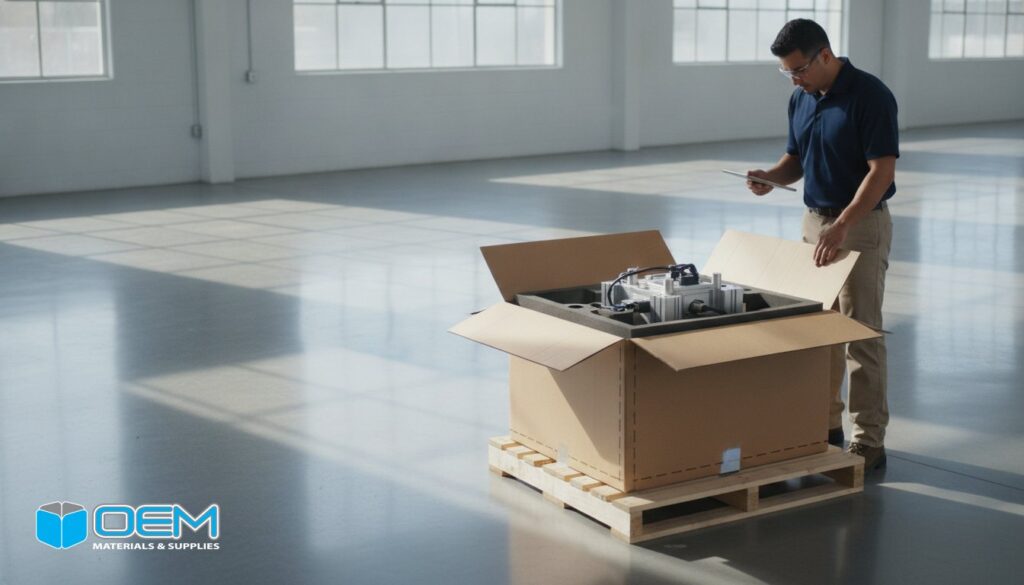
High rates of product damage and inefficient warehouse sorting aren’t just minor inconveniences; they’re direct threats to your bottom line. When high-value industrial components arrive compromised or improperly labeled, the resulting downtime and labor costs can quickly exceed the price of the packaging itself. You’ve likely experienced the complexity of meeting industry-specific shipping regulations while dealing with unreliable lead times from distant suppliers.
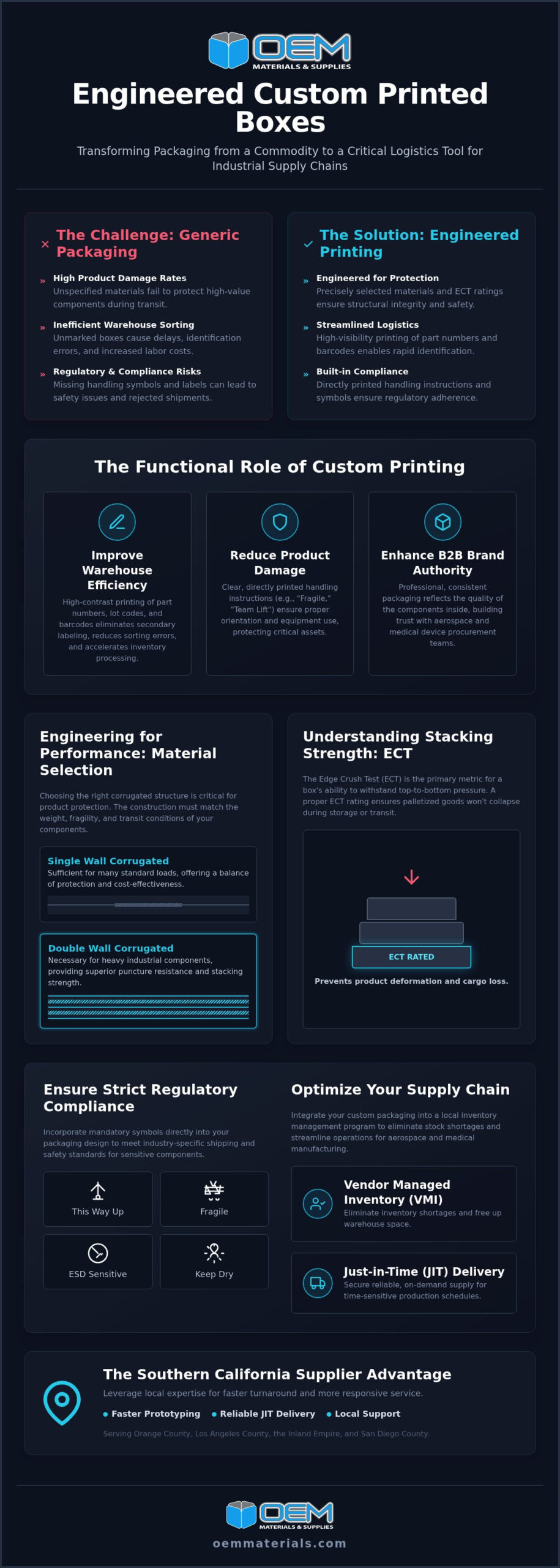
Transitioning to engineered custom printed boxes allows you to treat your packaging as a functional tool for logistics optimization rather than a simple commodity. This article explains how to leverage these specialized solutions to improve supply chain visibility and ensure strict regulatory compliance. We’ll explore how Southern California manufacturers can reduce labor costs through better kitting and integrate packaging seamlessly with local inventory management programs. By focusing on durability and precision, you can improve brand authority in the B2B sector while protecting your critical assets during transit. Our focus remains on practical remedies that address the rigorous standards of the aerospace, medical, and electronics industries.
Key Takeaways
- Utilize engineered custom printed boxes as functional tools to reduce warehouse sorting errors and improve product identification across the supply chain.
- Select specific corrugated material grades and Edge Crush Test (ECT) ratings to ensure your packaging provides the necessary stacking strength for high-value industrial components.
- Ensure strict regulatory compliance by incorporating mandatory shipping symbols and ESD labeling directly into your packaging design to protect sensitive electronics.
- Streamline your operations and eliminate inventory shortages by integrating packaging materials into a local Vendor Managed Inventory (VMI) program.
- Leverage the logistical benefits of partnering with a Southern California supplier to secure faster prototyping and reliable just-in-time delivery for aerospace and medical manufacturing.
The Functional Role of Custom Printed Boxes in Industrial Logistics
Industrial packaging serves a purpose far beyond simple containment. For manufacturers in Southern California, custom printed boxes act as a critical logistical tool that enhances safety and ensures accurate part identification throughout the supply chain. Unlike retail packaging designed for shelf appeal, industrial printing focuses on high-visibility data that prevents costly sorting errors in large-scale distribution centers. It’s a functional requirement for maintaining order in high-volume environments.
Clear handling instructions are essential when transporting heavy or fragile components. Printing these symbols directly onto the corrugated surface eliminates ambiguity. It ensures warehouse personnel use the correct equipment and orientation, which directly reduces the likelihood of product damage. When your packaging clearly states “Team Lift” or “Fragile: Sensitive Electronics,” you’re actively protecting your bottom line. These markings aren’t just suggestions; they’re vital safety protocols that prevent workplace injuries and cargo loss during transit.
Improving Warehouse Efficiency with Clear Labeling
Operational speed depends on clarity. Utilizing high-contrast printing on custom printed boxes allows for rapid barcode scanning and immediate visual confirmation. When part numbers and lot codes are integrated into the box design, you remove the need for secondary adhesive labels. This reduction in manual labor can lead to measurable operational savings depending on your specific production volume and labor rates. It streamlines the intake process for your customers.
Direct printing also minimizes the risk of label detachment during transit. In high-volume environments like those found in the Inland Empire or Los Angeles County, a missing label results in an unidentified package that stalls the workflow. By using high-quality labels and printing supplies or opting for direct-to-corrugated printing, you ensure every unit remains traceable from the factory floor to the end user. It’s a simple remedy for a complex logistical headache that often causes inventory discrepancies.
B2B Brand Authority and Professionalism
Professional packaging signals technical competence. For procurement professionals in the aerospace and medical device sectors, the quality of your exterior packaging reflects the precision of the components inside. It builds immediate trust. A consistent, professional appearance across all product lines reinforces your position as a stable, high-level industry partner rather than a mere commodity vendor. It shows you value accuracy as much as your customers do.
Implementing a cohesive design across different box sizes creates an organized warehouse environment for your clients. It simplifies their inventory management and strengthens your brand authority. When your packaging is as reliable as your parts, you establish a long-term reputation for excellence. Customers in San Diego and Orange County value this level of detail, as it simplifies their receiving processes and reduces internal friction. Your box becomes a silent representative of your company’s high standards and attention to detail.
Engineering Specifications for Custom Corrugated Packaging
Engineering a reliable shipping container starts with the substrate. For industrial applications, custom printed boxes must be built to withstand the physical rigors of the supply chain while maintaining the integrity of the printed data. Selecting the correct material grade is a technical decision based on the weight, fragility, and destination of your product. While single wall corrugated is sufficient for many standard loads, double wall construction is necessary for heavy industrial components that require superior puncture resistance and stacking strength.
Edge Crush Test (ECT) ratings are the primary metric for determining how much top-to-bottom pressure a box can support. Adhering to standards like ISO 3037 or TAPPI T 811 ensures that your palletized goods won’t collapse under the weight of overhead loads during long-term storage or transit. By using accurately rated corrugated boxes, you minimize the risk of product deformation. Custom sizing further optimizes this protection by ensuring a snug fit, which eliminates the need for excessive void fill and reduces dimensional weight shipping costs. If you need a technical assessment of your current material requirements, you can request a quote for a custom prototype tailored to your specific part dimensions.
Selecting the Right Flute Profile
The flute profile determines the thickness and vertical strength of the corrugated board. C-flute is the most common industrial standard, providing a versatile balance of cushioning and stacking strength. B-flute offers excellent crush resistance and a flatter surface for higher quality printing, making it ideal for smaller, denser parts. For maximum cushioning of sensitive equipment, A-flute provides the greatest vertical thickness. Conversely, E and F flutes are thin profiles used when high-density graphics are required for small electronic components or medical kits where space efficiency is a priority.
Integrating Custom Foam Inserts
High-value industrial goods often require more than just a sturdy exterior. There is a powerful synergy between a custom box and engineered foam packaging. Custom foam inserts are designed to absorb shock and vibration, keeping sensitive electronics or calibrated instruments stationary during rough handling. Beyond protection, these inserts improve operational efficiency on the assembly line. Industry data suggests that custom die-cut inserts can reduce packing time by up to 30 percent by removing the need for manual wrapping and loose-fill materials. This streamlined approach ensures consistency in every shipment while lowering labor costs in your warehouse.
Compliance and Safety Requirements in Industrial Printing
Regulatory compliance is a foundational requirement for industrial manufacturers. When shipping high-value components, custom printed boxes serve as more than just containers; they are the primary communication tool for safety and handling protocols. Integrating mandatory shipping symbols for hazardous materials or fragile goods directly into the box design ensures that critical information remains legible throughout the entire transit cycle. This approach eliminates the risk associated with adhesive labels that may peel or degrade in harsh environments.
For the electronics industry, ESD (Electrostatic Discharge) labeling is essential for protecting sensitive circuits. These markings alert handlers to follow specific grounding procedures, preventing latent damage that could lead to field failures. Similarly, medical device manufacturers must adhere to strict packaging requirements that prioritize sterile barrier integrity. By utilizing custom packaging design, companies can incorporate complex regulatory data, including UDI (Unique Device Identification) and expiration dates, without compromising the structural integrity of the corrugated material.
International Shipping and Export Compliance
Exporting industrial goods requires strict adherence to international standards. For manufacturers using hybrid packaging solutions, such as corrugated boxes paired with wood components, marking requirements for ISPM 15 compliance are mandatory to prevent the spread of timber pests. Standardized symbols for weight limits and stackability must be clear to ensure safe handling in foreign ports. We ensure print durability by selecting printing supplies that resist moisture and abrasion during long-haul global transit. This level of detail is particularly important for Southern California businesses shipping from the Port of Los Angeles or Long Beach.
Safety Markings for Heavy Machinery
Shipping heavy industrial machinery presents unique safety challenges. Clear indications of the center of gravity and specific lift points are vital for preventing tip-overs and equipment damage. Warning labels for heavy lift requirements help prevent workplace injuries by signaling when mechanical assistance is necessary. Utilizing color coding to identify different product categories or danger levels provides an additional layer of visual safety for warehouse teams in the Inland Empire and Orange County. When these markings are integrated into your crates or heavy-duty boxes, you create a safer, more efficient receiving process for your B2B partners.
Optimizing the Supply Chain with Custom Packaging Programs
Custom packaging programs transform a simple container into a strategic asset. For industrial manufacturers in Los Angeles and Orange County, managing the physical inventory of custom printed boxes can be as complex as managing the parts themselves. Integrating these materials into a broader logistics strategy ensures that your production lines never stall due to a lack of shipping supplies. By shifting from a transactional model to a solutions-based partnership, you gain greater control over your lead times and storage requirements. These programs are designed to solve real-world problems like inventory shortages and excessive material handling.
A primary tool for this optimization is a packaging VMI service. Under this program, we monitor your usage levels and replenish inventory automatically. This eliminates the administrative burden of tracking stock and placing frequent purchase orders. It also prevents the common problem of over-ordering, which ties up capital and occupies valuable floor space in your facility. For companies in Riverside or San Diego, this local oversight ensures that fluctuations in demand don’t result in shipping delays. It allows your procurement team to focus on core manufacturing needs rather than secondary supplies.
Implementing Just-in-Time (JIT) Delivery
Storing bulky corrugated inventory on-site is an inefficient use of premium warehouse space. Our just-in-time (JIT) delivery model allows you to reduce your warehouse footprint by storing materials at our local Southern California facilities. We sync packaging deliveries with your specific production schedules, ensuring custom printed boxes arrive exactly when they are needed for final assembly. This methodical approach prevents stockouts of critical shipping materials and allows you to repurpose your square footage for high-value manufacturing activities. It’s a functional remedy for growing companies with limited storage capacity.
Kitting and Assembly Services
Labor is often the highest cost in any packing operation. We offer kitting and assembly services to streamline your workflow and reduce internal handling. By pre-assembling boxes with custom foam inserts or edge protectors, we remove several manual steps from your packing line. This is particularly effective for medical or automotive sub-assemblies that require multiple protective components. Sourcing an integrated solution reduces the number of vendors you manage and ensures that every element of your kit fits perfectly. This consistency is vital for aerospace manufacturers who must meet rigorous quality standards. If you want to evaluate how an integrated program can improve your operational efficiency, contact us for a supply chain consultation today.
Sourcing Custom Printed Boxes in Southern California
Proximity to your packaging partner is a strategic advantage that directly impacts your operational speed. For manufacturers located in the industrial hubs of Los Angeles, Orange County, and San Diego, sourcing custom printed boxes from a local supplier provides a level of responsiveness that national vendors cannot replicate. Local facilities allow for on-site consultations where engineers can evaluate your specific components and design protective solutions in real time. This hands-on approach ensures that the final packaging meets the rigorous standards of the aerospace and medical device sectors without the delays associated with long-distance communication.
Rapid prototyping is another core benefit of a local partnership. When a new product is in development, waiting weeks for a sample is not an option. Local Southern California suppliers can produce and deliver physical prototypes quickly, allowing for immediate testing of fit and function. This agility is essential for maintaining production schedules and meeting market demands. For more detailed guidance on selecting a partner, you can read our article on choosing a wholesale industrial packaging supplier for regional manufacturing needs.
Reducing Freight Costs and Lead Times
Shipping empty corrugated boxes is a highly inefficient use of freight capital. Because boxes are bulky and primarily composed of air, the cost of transporting them from distant states often exceeds the value of the material itself. Sourcing locally in Southern California eliminates these excessive shipping fees and reduces your overall carbon footprint. Local production runs aren’t subject to the same transit risks and delays that plague cross-country logistics. Supporting the regional ecosystem ensures a more resilient supply chain while providing faster turnaround times for design revisions and high-volume production orders.
Direct Support and Custom Design
Working with local engineers allows for a collaborative design process that addresses complex protective challenges. Companies shipping heavy machinery from the Inland Empire or sensitive tech components from San Diego find that having a partner who can visit their facility for quality audits is invaluable. This direct access facilitates material testing and ensures that your custom printed boxes are optimized for both protection and assembly efficiency. We tailor our solutions to the unique requirements of Southern California’s diverse manufacturing landscape, providing the technical expertise needed to solve specific logistical problems on the factory floor. This level of personalized service builds long-term trust and ensures your packaging remains a high-performing component of your operation.
Strengthen Your Supply Chain with Engineered Packaging Solutions
Transitioning from generic containers to engineered custom printed boxes is a technical decision that improves every stage of your logistics operation. By integrating specific material grades and precise safety markings, you protect high-value components while ensuring strict regulatory compliance. These specialized solutions address the practical challenges of product damage and inefficient warehouse sorting that often stall production in the aerospace and medical sectors.
Partnering with a local Southern California supplier provides the added benefit of vendor-managed inventory and just-in-time delivery. We specialize in comprehensive kitting and assembly services to reduce your internal labor costs and warehouse footprint. For manufacturers in Los Angeles, Orange County, or San Diego, our team offers the technical expertise and local inventory management required to maintain a resilient supply chain. To receive a detailed recommendation based on your product dimensions, weight, and annual usage, contact OEM Materials & Supplies for a custom packaging consultation and quote. We look forward to helping you optimize your industrial packaging strategy.
Frequently Asked Questions
What is the minimum order quantity for custom printed boxes?
Minimum order quantities depend on the specific box dimensions, printing complexity, and material requirements of your project. For standard industrial runs, we typically accommodate orders that meet manufacturing efficiency thresholds. Smaller quantities may be possible for specialized aerospace or medical kits, though setup costs for custom plates and tooling are distributed over the total unit count. We recommend discussing your annual usage to determine the most cost-effective production volume for your operation.
How do I determine the correct ECT rating for my industrial product?
Determining the correct Edge Crush Test (ECT) rating requires calculating the total weight of the palletized load and the intended stacking height. For example, a 32 ECT box is standard for lighter goods, while 44 or 48 ECT is necessary for heavy machinery components. We analyze your product’s weight and shipping environment to ensure the board grade provides sufficient compression strength. This prevents box failure during long-term storage or transit in demanding supply chains.
Can you print high-resolution logos and technical diagrams on corrugated boxes?
Yes, we can print high-resolution logos, barcodes, and technical diagrams directly onto corrugated surfaces. Utilizing flexographic or digital printing allows for sharp, high-contrast markings that remain legible during rough handling. This is particularly important for warehouse sorting and compliance labeling in the medical and electronics sectors. Clear technical diagrams help end-users identify orientation and handling requirements, reducing the risk of improper installation or product damage upon arrival at the destination.
What information do I need to provide for a custom packaging quote?
To provide an accurate quote for custom printed boxes, we require the internal dimensions of the box, the weight of the product, and your estimated annual usage. Please specify if you require specialized inserts, such as custom foam packaging, or if the boxes must meet specific regulatory standards like ESD or cleanroom compliance. Providing a physical sample or CAD drawing of your part ensures the highest precision in our technical recommendation and pricing accuracy.
Do you offer eco-friendly or recyclable custom printed boxes?
Our corrugated boxes are manufactured using recyclable materials and are fully compatible with standard industrial recycling programs. We prioritize sustainable sourcing and offer various recycled content percentages based on the structural requirements of your application. While maintaining strength is the priority for industrial loads, we use water-based inks and adhesives that minimize environmental impact. This helps Southern California manufacturers meet corporate sustainability goals without sacrificing the protective integrity of their high-value shipments.
How long does it take to receive a prototype of a custom printed box?
Prototype lead times depend on the complexity of the design and the availability of specific material grades. For standard corrugated structures, we can often provide a physical sample within a few business days. If your project requires custom die-cut foam or specialized printing plates, the timeline may extend slightly. Rapid prototyping is a core part of our local service model in Southern California, allowing for quick design iterations and testing.
Can custom printed boxes be used for sterile medical device packaging?
Custom printed boxes typically serve as the secondary or tertiary packaging layer for medical devices, providing structural protection and regulatory identification. While the boxes themselves aren’t the primary sterile barrier, they’re designed to house sterile-wrapped components securely. We offer cleanroom-compatible materials and specialized labeling to ensure your medical kits meet all safety standards. This integration supports sterile barrier integrity by preventing punctures or excessive movement during the distribution process across the supply chain.
Do you provide design assistance for industrial packaging layouts?
We provide comprehensive design assistance to ensure your custom printed boxes are optimized for both protection and logistics. Our engineers work with your team to determine the most efficient box style, material grade, and printing placement for your specific application. This collaborative process helps solve complex problems like high labor costs or transit damage. By focusing on industrial functionality, we create layouts that improve warehouse sorting speed and reinforce your brand’s technical authority.