
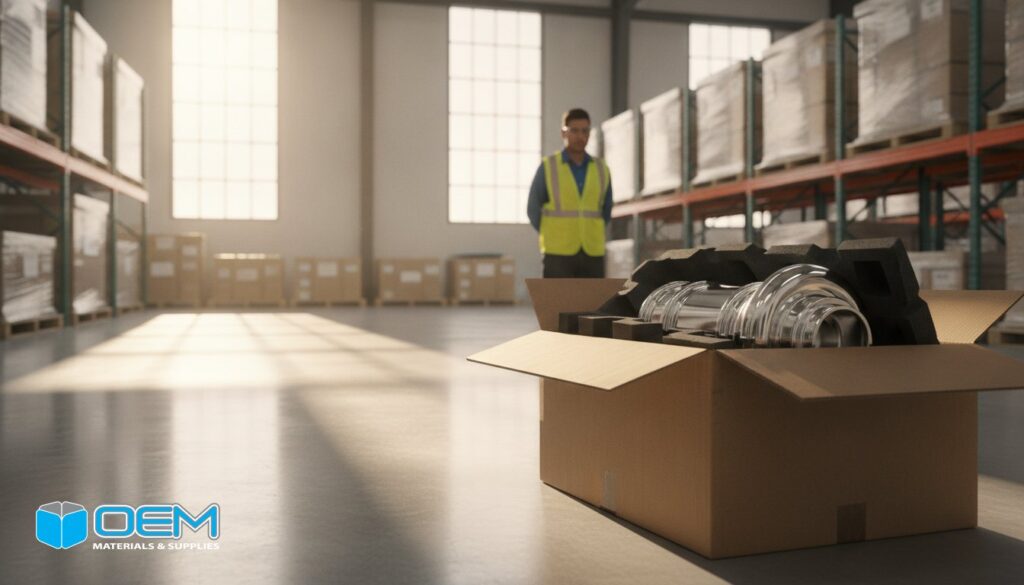
A shipping container that merely fits a part is often the most expensive component in a Southern California automotive supply chain. When packaging fails to account for vibration, stacking strength, or assembly line integration, the hidden costs of product damage and excessive labor quickly erode profit margins. You likely recognize that warehouse congestion and inefficient packing processes are bottlenecks that your operation can’t afford. Securing high-quality custom packaging for automotive parts los angeles is a strategic requirement for protecting sensitive electronic control units and heavy mechanical assemblies during transit.
This guide provides a technical roadmap for choosing engineered solutions that optimize your logistics from the Inland Empire to the San Pedro Bay ports. We will analyze how specialized materials like high-ECT corrugated and custom foam inserts prevent damage while exploring how vendor-managed inventory (VMI) programs can lower your total cost of ownership. You’ll learn how to select precision-engineered packaging that integrates directly with your assembly line racks to streamline production and minimize waste throughout the distribution cycle.
Key Takeaways
- Identify the specific material combinations required to protect complex part geometries, ranging from heavy engine components to sensitive electronic sensors.
- Compare the structural benefits of high-ECT heavy-duty corrugated against traditional wood crating to optimize shipping costs and regulatory compliance.
- Leverage Vendor-Managed Inventory and local JIT delivery to eliminate warehouse congestion and reduce labor costs in Southern California facilities.
- Utilize rapid prototyping and collaborative design to ensure your custom packaging for automotive parts los angeles integrates perfectly with assembly line racks.
- Evaluate the long-term cost benefits of transitioning to multi-wall corrugated systems that reduce tare weight and simplify disposal requirements.
Engineering Custom Packaging for Automotive Components in Los Angeles
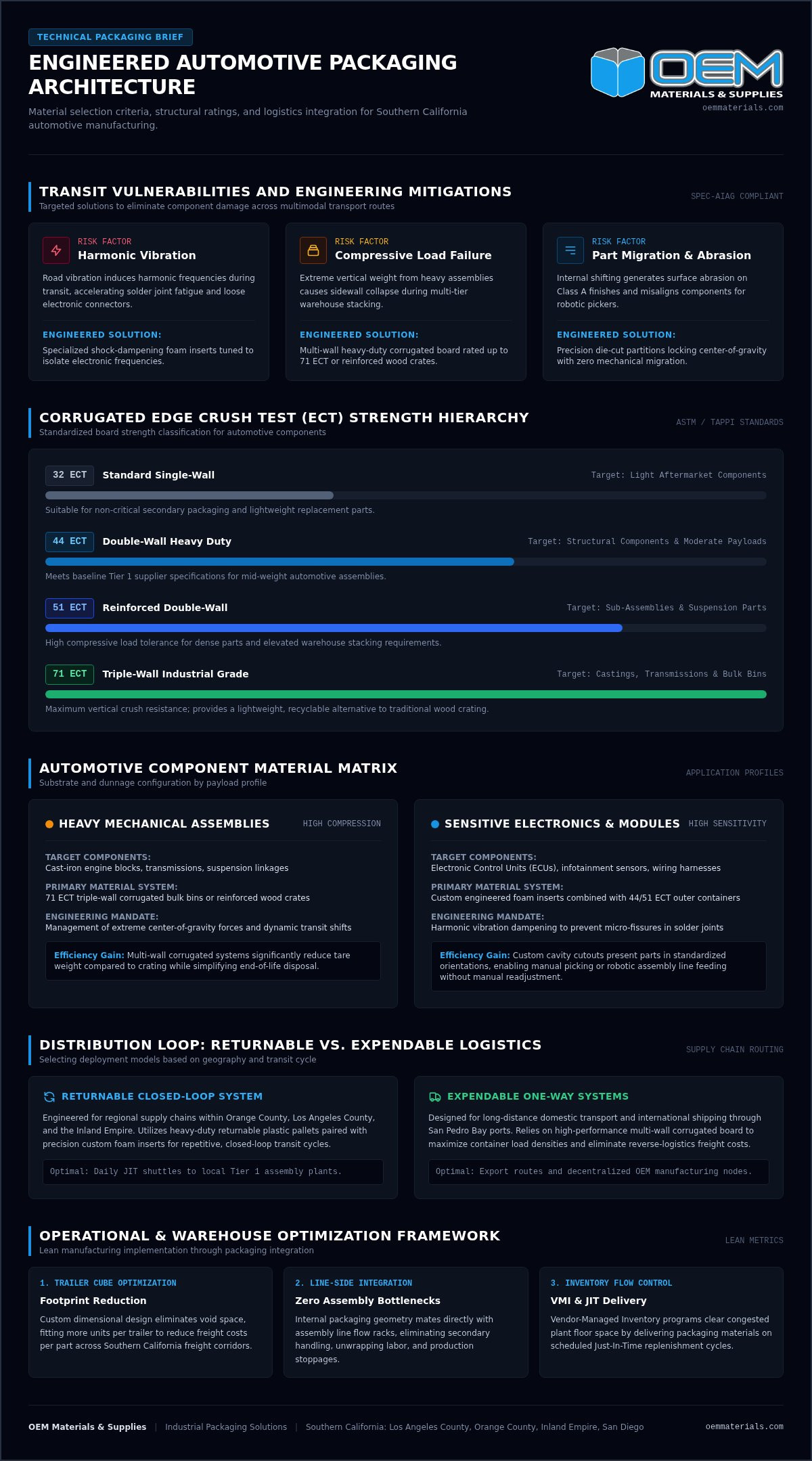
Custom automotive packaging is a multi-material system engineered to stabilize specific part geometries during transit. In the Los Angeles manufacturing sector, where logistics often involve multi-modal transport and tight delivery windows, a standard shipping container rarely suffices. Automotive components vary significantly; a heavy, cast-iron engine block requires high-ECT corrugated boxes or wood crates to manage extreme weight, while a delicate infotainment sensor needs specialized foam packaging to mitigate shock. Standard boxes often fail because they don’t account for the unique center of gravity or surface sensitivity of these parts. Precision is the baseline for success in Southern California logistics.
The Role of Precision Engineering in Part Protection
Applying foundational packaging engineering principles ensures that each material choice serves a specific protective function. Precision is vital because exact tolerances prevent part migration. When a component shifts inside its housing, the risk of cosmetic abrasion or structural failure increases. This is especially true for sensitive electronics. Road vibration can lead to solder joint fatigue or connector loosening if the packaging doesn’t dampen harmonic frequencies. Beyond protection, modern custom packaging for automotive parts los angeles must support efficient assembly. Whether your facility uses manual picking or robotic automation, the dunnage must present the part in a consistent orientation every time to prevent line stoppages.
Meeting Tier 1 and OEM Specifications
Tier 1 suppliers must adhere to rigorous OEM standards, such as those established by the Automotive Industry Action Group (AIAG). These specifications often dictate whether you utilize returnable systems or one-way expendable solutions. For domestic routes within Orange County or the Inland Empire, returnable plastic pallets and custom foam inserts often provide the best long-term value. For export or long-distance domestic shipping, high-performance corrugated systems are the industry standard.
Custom designs also focus on optimizing the shipping footprint. By reducing the overall dimensions of the unit load, manufacturers can fit more parts per trailer. This optimization directly impacts the bottom line by lowering freight costs per unit. It’s not just about the box; it’s about a calculated approach to the entire supply chain that respects the specific requirements of the automotive industry. Using custom inserts allows for denser packing without compromising the safety of the individual components.
Material Selection for Maximum Part Protection
Selecting materials for automotive packaging requires a balance between structural integrity and surface protection. When manufacturers source custom packaging for automotive parts los angeles, the material selection process must align with verified transit requirements to prevent costly damage claims. Heavy mechanical assemblies like transmissions or suspension components demand substrates that can withstand high compressive loads. For these applications, high-ECT corrugated boxes or reinforced wood crates are the primary options. The choice depends on the shipping destination and the duration of the storage cycle.
Corrugated Solutions for Automotive Supply Chains
Industrial-grade corrugated fiberboard is the most versatile material for Southern California manufacturing. We utilize Edge Crush Test (ECT) ratings to determine the appropriate board strength for specific part weights. While standard 32 ECT might suffice for light aftermarket parts, Tier 1 suppliers often require 44 ECT or 51 ECT double-wall board for structural components. For bulk bins and heavy castings, 71 ECT triple-wall corrugated provides the necessary stacking strength to prevent box failure in high-density warehouses. Precision die-cut designs are particularly effective because they create internal structures that lock the part in place, reducing the need for additional cushioning materials and labor-intensive tape applications.
Engineered Foam for Electronics and Class A Surfaces
High-value electronics and painted exterior parts require specialized foam packaging to prevent both impact damage and surface abrasion. Polyethylene (PE) is a durable, closed-cell foam used for heavy parts that require rigid blocking and bracing. In contrast, Polyurethane (PU) is a softer, open-cell foam designed to protect lighter, more fragile components. When packaging electronic control units or sensor arrays, using anti-static (ESD) foam is a critical requirement to prevent latent electrical damage.
Determining the correct foam density is an engineering process that references ASTM D4169 transit testing standards. Engineers calculate the static load by dividing the weight of the part by the square inches of foam contact. This ensures the foam is dense enough to absorb shock without bottoming out during a drop. This technical approach to custom packaging for automotive parts los angeles ensures your components arrive within OEM tolerances. If you’re managing a new part launch, you can request a technical packaging evaluation to identify the optimal material density for your specific fragility profile.
Comparing Heavy-Duty Corrugated and Wood Crating Solutions
Selecting the right substrate involves a detailed analysis of the component’s weight, the shipping destination, and the total cost of ownership. While corrugated fiberboard is often the preferred material for its weight and recyclability, wood provides the structural rigidity required for the heaviest mechanical assemblies. Manufacturers must establish a decision-making framework that balances these factors against the specific logistical challenges of the Southern California supply chain. A poorly chosen material leads either to excessive freight costs or, worse, catastrophic product failure during transit.
When to Choose Heavy-Duty Corrugated
Heavy-duty corrugated remains the most cost-effective choice for automotive components weighing up to approximately 500 pounds, depending on the stacking requirements. Triple-wall corrugated can often replace wood for large but relatively light parts like radiators, bumpers, or body panels. One of the primary advantages is inventory efficiency. Corrugated containers arrive flat-packed, which significantly reduces warehouse congestion compared to pre-assembled wood containers. This is a vital consideration for facilities in Los Angeles and Orange County where floor space is at a premium.
In the context of vendor-managed inventory arrangements, corrugated materials can be staged for rapid deployment without occupying excessive square footage. Sustainability is another significant driver for choosing corrugated. It’s easily recycled in most industrial facilities, often turning a waste stream into a minor revenue source through baling. For modern manufacturing environments focused on reducing their carbon footprint, the high recycled content of corrugated board provides a clear environmental advantage over single-use wood structures.
The Case for Custom Wood Crates and Pallets
For high-value engines, transmissions, and heavy castings, custom wood crates are often necessary. Wood offers superior stackability and resists the extreme compressive forces encountered in long-distance sea or rail transit. When shipping internationally from Southern California assembly plants to Mexico, Canada, or overseas, solid wood packaging must meet ISPM-15 standards. This requires heat treatment (HT) to a minimum core temperature of 56 degrees Celsius for at least 30 continuous minutes. Each crate must bear the official IPPC stamp to clear customs without delay.
Heavy assemblies also require specialized pallets engineered to integrate with assembly line racks. These pallets must support the static load of the part while facilitating safe movement via forklift or automated guided vehicles. This ensures that the custom packaging for automotive parts los angeles protects the component while streamlining movement through the factory floor. While wood involves higher initial material costs and potential disposal fees, its structural performance for oversized or exceptionally heavy parts remains unmatched. Utilizing engineered wood products like plywood can sometimes offer an exemption from ISPM-15 rules while maintaining high durability for domestic routes.
Optimizing Logistics with JIT and Vendor-Managed Inventory
Effective manufacturing in Southern California relies on high-velocity supply chains. For many Tier 1 suppliers, the bottleneck isn’t the production of the automotive part itself, but the availability of the materials required to ship it. A packaging VMI program transforms packaging from a variable expense into a predictable utility. By partnering with a local supplier that understands the specific requirements of custom packaging for automotive parts los angeles, manufacturers can shift the burden of inventory management to the vendor. This ensures that critical materials are always on hand without tying up capital in stagnant stock.
Reducing Warehouse Footprint in Los Angeles
Industrial real estate costs in Los Angeles County and the Inland Empire are among the highest in the country. Devoting thousands of square feet to bulky corrugated inventory or large foam inserts is an inefficient use of high-value floor space. A Just-In-Time (JIT) delivery model allows for smaller, more frequent shipments that align with daily production schedules. This lean approach improves operational cash flow and eliminates the risk of stockouts that cause line stoppages. Automated replenishment systems further reduce administrative overhead; procurement teams no longer need to manually track pallet counts or issue individual purchase orders for every shipment. Instead, the vendor monitors usage and replenishes stock based on pre-established minimum and maximum levels.
Kitting and Assembly Services for Faster Production
Speed on the assembly line is often dictated by the complexity of the packing process. When a worker has to source a box, a foam insert, and a label from different locations, labor costs increase and the potential for error rises. Packaging kits solve this problem by combining all necessary components into a single SKU. These services typically include:
- Pre-assembled corrugated boxes with foam inserts already installed
- Integrated edge protectors and custom-printed labels
- Kitting of specialized ESD materials for electronic modules
- Custom-cut cushioning materials staged for immediate use
These kits ensure that every component needed for a specific part is present at the packing station. By reducing the number of touchpoints, manufacturers can decrease the cycle time per unit and minimize the risk of missing components. This high level of integration is essential for maintaining the precision required in modern automotive manufacturing. If you’re looking to streamline your packing line, you can request a quote for a custom kitting evaluation to see how pre-assembly can reduce your labor requirements.
Custom Packaging Design and Prototyping in Southern California
Rapid prototyping is a strategic requirement for the automotive sector because model year transitions and mid-cycle refreshes occur on strict timelines. If the protective dunnage isn’t finalized when the first production parts roll off the line, the entire supply chain stalls. Effective custom packaging design relies on a collaborative engineering process between your part designers and our packaging specialists. This partnership ensures that every bracket, connector, and sensitive surface is accounted for before mass production begins. In the competitive Los Angeles manufacturing landscape, speed to market is often determined by the efficiency of this design phase.
The Prototyping Process for Automotive Parts
The transition from a concept to a functional shipping unit begins with CAD drawings. Using 3D modeling software allows us to visualize part fitment and identify potential interference points before a single sheet of material is cut. This digital validation phase saves time and reduces material waste. Once the digital model is verified, we move to physical prototyping. We produce die-cut corrugated samples and CNC-routed foam inserts to verify structural integrity and ease of packing on your production floor. It’s not enough for the part to fit; the package must also survive real-world shipping conditions. Testing these physical prototypes under simulated transit loads helps identify weaknesses that digital models might miss, ensuring the final custom packaging for automotive parts los angeles meets all OEM performance standards.
Selecting a Local Partner in the SoCal Region
Proximity is a significant advantage for manufacturers operating in the corridor between Los Angeles and San Diego. Selecting a local partner for custom packaging for automotive parts los angeles facilitates faster site visits and face-to-face design consultations. When an engineering change order (ECO) is issued, a local manufacturer can pivot quickly, often providing updated physical samples in a fraction of the time required by out-of-state vendors. This responsiveness is vital during the high-pressure weeks leading up to a new vehicle launch.
A local partner also understands the specific logistical nuances of the Inland Empire and Orange County distribution networks. To provide an accurate initial assessment and prototype, our engineering team requires specific project data. Please be prepared to provide part dimensions, component weight, surface sensitivity requirements, and estimated annual usage. This data allows us to recommend the most cost-effective material densities and structural designs tailored to your specific automotive application. Face-to-face collaboration ensures that the final packaging system integrates perfectly with your existing assembly line racks and automated picking systems.
Securing Your Automotive Supply Chain with Engineered Solutions
Optimizing a distribution network requires more than just buying containers. It demands a technical approach where material density and structural design align with the specific fragility of your components. By transitioning to high-ECT corrugated systems and integrated foam cushioning, you can significantly reduce shipping damage while lowering total freight costs. Leveraging local vendor-managed inventory (VMI) services also allows your facility to reclaim valuable floor space and eliminate the risk of stockouts in the Los Angeles and Orange County regions.
Choosing the right partner for custom packaging for automotive parts los angeles ensures that your logistics strategy supports both production goals and the bottom line. OEM Materials & Supplies serves as a technical consultant for aerospace and automotive manufacturers across Southern California, specializing in rapid prototyping and JIT replenishment. We provide the engineering expertise needed to protect sensitive sensors and heavy mechanical assemblies through every stage of transit.
Contact OEM Materials & Supplies for a custom automotive packaging consultation to evaluate your current specifications. Providing your part dimensions, weight, and annual usage will help us develop a prototype that integrates perfectly with your assembly line. We look forward to helping you streamline your packaging operations.
Frequently Asked Questions
How do custom foam inserts protect sensitive automotive electronics?
Foam inserts provide critical shock absorption and vibration dampening calculated for specific part weights and fragility profiles. For electronic components, we utilize anti-static (ESD) foam to prevent latent electrical damage while maintaining precise tolerances that stop part migration. This engineering approach ensures that delicate solder joints and connectors remain intact during rough transit through the Southern California distribution network. Using calculated densities prevents the part from bottoming out during impact.
What are the benefits of using a local Los Angeles packaging supplier for JIT manufacturing?
Proximity allows for faster turnaround times and reduced freight costs between production facilities in Los Angeles and Orange County. A local partner can provide daily deliveries that align with your assembly schedule, which eliminates the need to store months of bulky inventory on-site. This responsiveness is vital when engineering changes occur; physical samples and prototype adjustments can be handled during same-day site visits to prevent line stoppages.
Can custom corrugated boxes handle the weight of heavy engine components?
Yes, specifically engineered high-ECT triple-wall corrugated boxes can support loads exceeding 1,000 pounds for many applications. These heavy-duty containers often serve as a lighter and more recyclable alternative to traditional wood crates. By utilizing custom die-cut designs, we create internal structural supports that distribute weight evenly. This ensures that heavy castings or engine blocks remain stable throughout the multi-modal shipping process while reducing overall tare weight.
What is the difference between VMI and standard packaging procurement?
Standard procurement requires your team to monitor stock levels and issue individual purchase orders, which often leads to stockouts or overstocking. In a Vendor-Managed Inventory (VMI) program, we take full responsibility for monitoring your usage and replenishing supplies automatically. This proactive approach reduces administrative labor and ensures your facility in Riverside or San Diego always has the necessary materials for custom packaging for automotive parts los angeles.
Do you provide rapid prototyping for new automotive part designs?
We specialize in rapid prototyping to support the strict timelines of new vehicle launches and model year transitions. Our engineering team uses CAD data to create 3D models and physical samples, including CNC-routed foam and die-cut corrugated. This allows you to test part fitment and transit durability before committing to high-volume production tooling, ensuring that your packaging is ready the moment production begins on the factory floor.
How does custom packaging help reduce labor costs on the assembly line?
Custom packaging simplifies the packing process by reducing the number of components a worker must handle. We provide pre-assembled packaging kits that combine corrugated boxes, foam inserts, and labels into a single SKU. This eliminates the time spent searching for separate materials and ensures that every part is packed consistently. Faster cycle times and fewer packing errors directly translate into lower total labor costs per unit shipped.
What information is needed to get a quote for custom automotive packaging?
To provide an accurate recommendation, we require the exact dimensions and weight of the part, along with its surface sensitivity requirements. Information regarding your shipping method, stacking height, and estimated annual usage is also necessary for determining the most cost-effective material choices. This data allows our engineers to calculate the necessary ECT ratings for corrugated or the required density for foam packaging to meet your specific protection goals.
How do you ensure packaging compliance for international automotive shipping?
We provide ISPM-15 compliant wood crates and pallets that are heat-treated and stamped for cross-border transit. This is essential for Tier 1 suppliers shipping from Southern California to assembly plants in Mexico, Canada, or overseas. Additionally, our heavy-duty corrugated solutions are designed to meet international stacking and burst strength standards, ensuring your custom packaging for automotive parts los angeles clears customs without delays or structural failures during long-distance transport.