
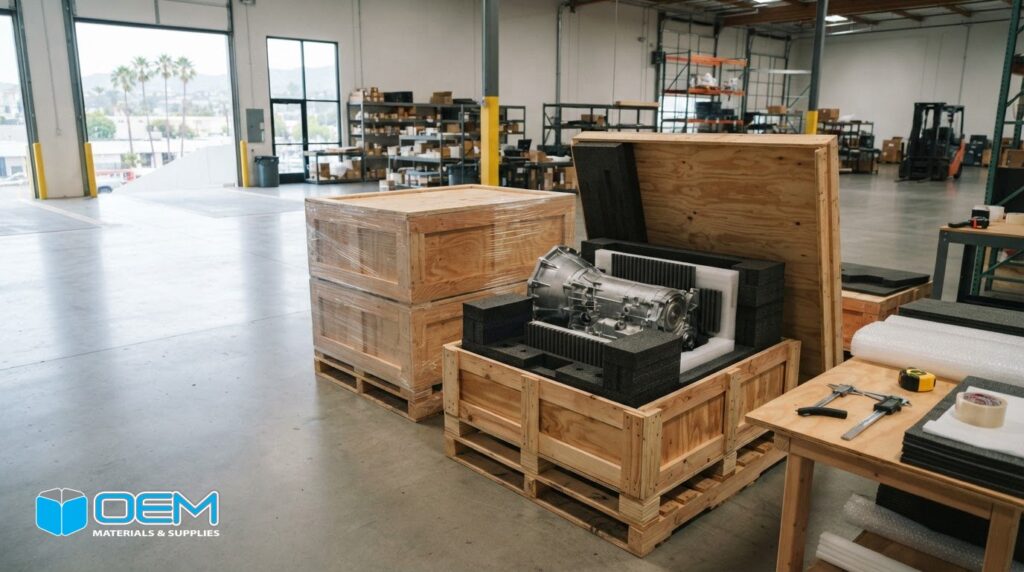
The strongest crate isn’t automatically the right crate. A package that protects a heavy automotive component may be inefficient for a delicate, finished part, while a poor fit can complicate warehouse handling or shipping. Specifying custom crates for automotive parts starts with the part’s geometry, weight, surface finish, and sensitivity, then accounts for how it will be packed, moved, and shipped.
Purchasing, engineering, and operations teams often need packaging that works across different parts and production stages. The right solution balances protection with practical packing and handling requirements instead of defaulting to a generic format.
This guide explains how to match crate construction and interior cushioning to the component, handling environment, and shipping route. It also covers the information needed for a useful packaging recommendation, including part dimensions, weight, orientation, quantities, and workflow requirements. With those details, teams can assess where a wood crate, corrugated packaging, or foam insert fits, then connect the design to procurement and supply-chain needs.
Key Takeaways
- Specify custom crates for automotive parts around the component and its shipping journey, rather than choosing a generic format.
- Assess how crate structure and interior supports can address restraint, cushioning, orientation, and access needs.
- Compare crates, shipping racks, and corrugated boxes by protection requirements, handling sequence, storage, and return flow.
- Prepare part and shipment details, including dimensions, weight, orientation, sensitive surfaces, and handling constraints, for a more useful packaging recommendation.
- Packaging design can support automotive programs from prototypes and short runs through high-volume production.
Why Custom Crates for Automotive Parts Start with the Part and Its Journey
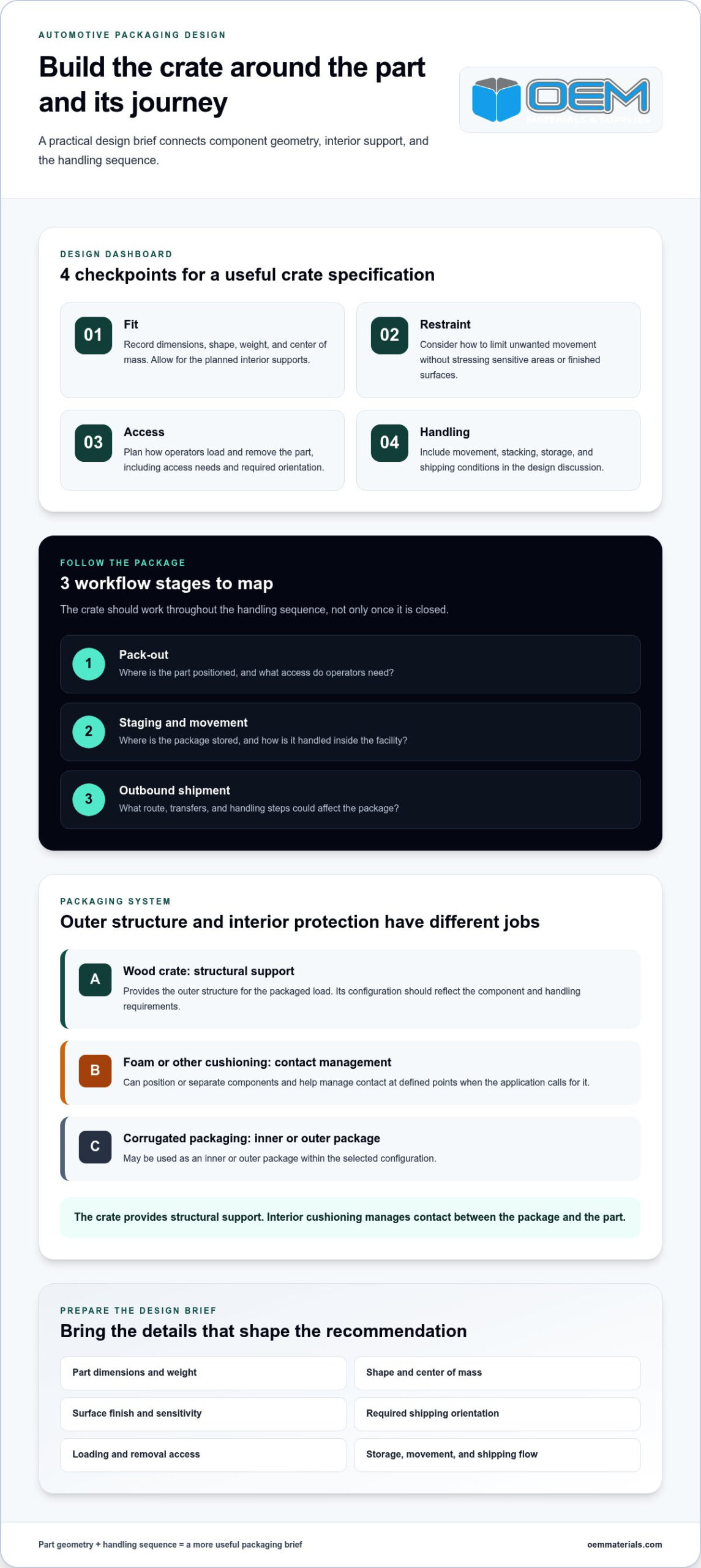
A crate should be designed around what it carries and how that component moves from pack-out to delivery. Custom crates for automotive parts account for the part’s dimensions, weight, shape, surface finish, and sensitivity, as well as the handling and shipping conditions it will encounter. That assessment helps determine the packaging configuration instead of simply scaling a standard container up or down.
A poor fit can leave room for a part to shift, require extra blocking or cushioning, or make packing slower and less consistent. An oversized container can also use more storage and shipping space than necessary. These are design risks to evaluate, not guaranteed outcomes: the right approach depends on the component and its actual shipping flow. Crate selection is only one part of the decision. Internal supports, loading access, warehouse movement, and outbound handling all affect how the complete package performs.
Which automotive parts may need a custom crate?
Large, irregular, or delicate components can be difficult to secure in standard packaging. Protruding features may create pressure points or interfere with loading, while finished surfaces may need separation from the crate or from other parts. Orientation matters as well. If a component must stay in a particular position, its supports need to hold it appropriately without obstructing packing or removal.
Base the design on the part’s actual route, including how it is packed, staged, moved, and transported. A wood crate can provide the outer structure, while foam or other cushioning materials can support specific contact areas. OEM Materials & Supplies’ wood crate packaging can be part of this configuration. Corrugated packaging may serve as an inner or outer package; Corrugated Box Design and Use in Shipping provides general background on the format.
What does custom crating solve in a manufacturing workflow?
Packaging has to work at the packing station, in the staging area, during warehouse handling, and at outbound shipping. A repeatable pack-out helps operators position and secure components consistently. Planned access can also make loading and removal more practical. The design should account for the full handling sequence, not just the moment the crate is closed.
Map the workflow before settling on a configuration:
- Pack-out: Identify where the part is positioned and what access operators need.
- Staging and movement: Note where the package is stored and how it is handled inside the facility.
- Outbound shipment: Describe the route and any transfers or handling steps that could affect the package.
A closer fit may reduce unnecessary packing steps or material use, depending on the part, materials, and shipping requirements. The aim is to protect the component without making routine handling harder. Packaging fit should follow part geometry and handling requirements, not a generic crate size. For manufacturers in Orange County, Los Angeles, Riverside, and San Diego, sharing the pack-out and shipping sequence alongside part details helps frame the design around daily operations.
How Crate Design Protects Automotive Parts During Handling and Shipping
A crate’s outer structure and interior supports do different jobs. The structure contains and supports the packaged load. Interior components position or separate parts and help manage contact. Both need to work together through loading, movement, unloading, and storage. Fit, orientation, restraint, cushioning, and access all matter.
The crate provides structural support; interior cushioning manages contact between the package and the part. This distinction helps teams assess the complete packaging system instead of assuming a strong exterior addresses every protection need.
Matching crate structure to component geometry
Start with the part’s dimensions, weight, center of mass, and likely support or contact points. These details help determine how to position and restrain the component without putting pressure on vulnerable areas. Protrusions, uneven shapes, and required shipping orientation can affect where supports sit and how operators reach the part.
Next, consider the handling sequence. How will the part be loaded and removed? Do workers need access from a particular side? Must the component keep its orientation during transfer? Include stacking and storage conditions in the design discussion, too. The answers guide the crate configuration, but construction details should reflect the project requirements rather than assumptions about a part category.
- Fit: Allow for the component’s shape and planned interior supports.
- Restraint: Consider how to limit unwanted movement without stressing sensitive areas.
- Access: Plan practical loading and removal in the intended orientation.
- Handling: Include movement, stacking, and storage conditions in the design brief.
Using foam and other interior protection appropriately
Engineered foam can position or separate components when the application calls for cushioning at defined contact points. It can help keep parts apart or limit direct contact with the crate, but the material and layout should reflect the component and shipping requirements. OEM Materials offers foam packaging as an option within an integrated packaging configuration.
Cushioning is not a one-size-fits-all insert. A finished surface, concentrated contact point, or unusual geometry may need a different support arrangement than a robust, regularly shaped component. Consider where contact occurs, the part’s orientation, and how the package will be handled. Teams can also review this automobile parts content labeling reference as a separate identification consideration. Labeling and physical protection serve distinct purposes.
For a project discussion, provide the part’s dimensions, weight, orientation, sensitive contact surfaces, and handling sequence through the packaging quote request. These details give crate and interior protection design a practical starting point.
Custom Crates vs. Shipping Racks and Corrugated Packaging for Car Parts
Choosing a shipping format means balancing the part’s protection needs with how it moves through the facility and supply chain. Crates, shipping racks, and corrugated boxes serve different roles. Compare them based on the component, handling sequence, storage space, and whether packaging returns for reuse. Custom crates for automotive parts can provide defined positioning and an enclosing structure, but size or weight alone doesn’t determine the best format.
| Consideration | Crate | Shipping rack | Corrugated box |
|---|---|---|---|
| Part geometry | Can be configured around irregular shapes or parts that need a defined position. | May suit repeatable placement of parts in an established handling flow. | May fit components that can be packed within a box and secured with suitable interior protection. |
| Handling sequence | Consider loading access, closure, movement, and removal at destination. | Consider how the rack enters the process, moves between locations, and is unloaded. | Consider how boxes are packed, staged, handled, and opened. |
| Protection needs | Provides an enclosing format; interior supports can be selected for the part. | Supports organized handling, but the protection approach depends on the operation. | Provides a packaging format that may be paired with cushioning or dividers. |
| Storage and return flow | Assess storage footprint and whether the crate is expendable or part of a return process. | Plan for storage, circulation, and return logistics if the operation uses a loop. | Consider storage before use and how packaging is handled after delivery. |
When a crate may be the better fit
A tailored enclosure may make sense when a component needs a defined position, controlled access, or protection on a particular shipping route. That doesn’t mean every large, heavy, or delicate part needs a crate. The decision depends on the part and the available information about warehouse movement, transfers, storage, and delivery conditions. These details help determine whether an enclosed package fits the actual process.
When racks or corrugated packaging may fit the process
A shipping rack may suit repeatable handling or a return flow when the operation is organized around moving and reusing that format. It remains distinct from a crate. Corrugated packaging may suit components with different size or protection needs. Custom corrugated boxes are an option when a box-based format fits the part and shipping process.
Formats can also work together. A component may use interior cushioning or dividers within a crate or corrugated package when the design calls for separation or support. Compare the full workflow, including packing, staging, outbound handling, access at the destination, and return logistics. This keeps the packaging choice tied to how parts actually move, rather than selecting a format by habit.
What to Prepare Before Requesting a Custom Automotive Crate Quote
A useful packaging discussion starts with clear details about the part and the process it needs to move through. For custom crates for automotive parts, incomplete measurements or shipping information can leave important design questions unanswered. Gather what you know before requesting a quote. If some details are still being developed, mark them as estimates so confirmed requirements are clear.
Gather the part and handling specifications
Begin with the component, then document how it is packed and handled. Include dimensions and weight where available, along with details that affect fit, support, and operator access. A drawing or photo can clarify irregular shapes or areas that need special attention.
- Identify the part. Note its name or internal identifier, overall dimensions, weight, and any available drawing or image. Include the quantity per shipment and whether parts ship individually or together.
- Describe its geometry and orientation. Record protrusions, uneven shapes, and the position the component needs to maintain during packing and transport. Note any required orientation for loading or removal.
- Flag sensitive areas. Identify finished surfaces, delicate features, and contact points that need particular care. Explain where the part can be supported and where contact should be avoided, if known.
- Map handling constraints. Describe the pack-out sequence, available loading equipment, and access limits. Note how the packaged component is moved, staged, and unloaded in your operation.
Describe shipping volume and procurement needs
Connect the part information to the shipment and purchasing pattern. A packaging design for a prototype or short run may involve different planning considerations from one used in a recurring production program. Expected volume helps frame the project without predetermining the crate design or quantity.
- Outline the shipping flow. Include destination patterns, shipment frequency, transfers or handling steps, and known storage conditions. Describe how the package is staged before dispatch and handled at its destination.
- Share usage estimates. Provide annual usage or expected program volume when available. Note whether demand is tied to a prototype, limited production run, or ongoing production, and mention relevant procurement or delivery planning needs.
These inputs connect the component to its pack-out, shipment, and usage pattern, giving the design discussion a more practical starting point. Buyers in Southern California can request a project quote with available dimensions, weight, handling details, shipping routes, and usage estimates. Partial information is useful when you clearly identify what remains to be determined.
How OEM Materials Supports Custom Crates for Automotive Parts
Automotive packaging has to serve both the component and the operation responsible for moving it. OEM Materials & Supplies works with manufacturers on custom crates for automotive parts as part of a broader packaging solution. Packaging design can connect the crate, interior protection, pack-out method, and supply needs to the part’s handling and shipping process.
Project requirements vary by program stage. A prototype may need an approach that supports evaluation and changes, while short runs and high-volume programs bring different planning and replenishment considerations. OEM Materials supports these project scopes with packaging design, crates, prototypes, short runs, and high-volume programs. The packaging approach is developed around the application and workflow, based on the project’s requirements.
Connecting crate design with related packaging needs
Crate design works best when it accounts for how the part is packed, secured, and accessed. OEM Materials’ custom packaging design can address the crate alongside the pack-out process. Depending on the application, foam inserts can position or separate parts, while corrugated components can provide an additional packaging layer. These elements complement the crate when they have a defined role in the design.
Packaging needs can extend beyond the physical design. Kitting and assembly can support preparation of packaging components or kits as part of a defined workflow. Vendor-managed inventory (VMI) can help coordinate packaging supply with ongoing operations. Consider these services alongside the packaging specification, usage pattern, and procurement requirements.
For manufacturers across Orange County, Los Angeles County, Riverside County, and San Diego County, coordinating packaging design with production and warehouse needs keeps project requirements connected across teams. Sharing how a crate will be packed, staged, replenished, and shipped gives purchasing, engineering, and operations a common basis for discussing the solution.
Moving from packaging requirements to the next step
A productive project conversation starts with the information available: part dimensions and weight, orientation, sensitive surfaces, handling constraints, shipping requirements, and estimated annual usage. Drawings or photos can illustrate unusual geometry, while shipment frequency and program stage provide useful context. Identify details that are still being established so the discussion distinguishes known requirements from assumptions.
Bring those inputs together with the pack-out method and procurement needs. To discuss a crate and related packaging approach for an automotive program, request a custom packaging quote and share the specifications available for your project.
Put Your Automotive Packaging Plan Into Motion
A packaging decision affects more than the shipment itself. It shapes how teams prepare parts, manage materials, and coordinate handoffs across the supply chain. Treat the packaging specification as part of production planning, and revisit it when part geometry, shipment patterns, or handling steps change. This keeps the solution aligned with the work it needs to support.
For custom crates for automotive parts, bring purchasing, engineering, and operations together around the project requirements. Share what’s known, identify open questions, and describe the intended shipping flow. Clear inputs give the packaging discussion a practical starting point and help teams move from a general need to a defined project.
OEM Materials & Supplies works with automotive manufacturers on packaging requirements across different program stages. Start your automotive packaging project by sharing available part dimensions, weight, shipping requirements, and annual usage.
Frequently Asked Questions
Are custom crates reusable for automotive parts?
They may be, depending on the crate’s construction, the part, handling conditions, and whether the packaging returns to the shipper. A recurring closed-loop program differs from a one-way shipment because return logistics become part of the packaging plan. For custom crates for automotive parts, describe how empty packaging will be collected, stored, and sent back. That information helps assess reuse for the actual operation without assuming a fixed service life.
Can one custom crate hold multiple automotive parts?
It can be considered when the parts can be arranged so each is supported and handled appropriately. Components packed together may need separation to prevent contact, along with a loading order that lets operators remove them without disturbing the others. The design discussion should consider how each part enters and leaves the package, not just whether everything fits within the same outer dimensions.
What information should I provide for a custom crate quote?
A representative part drawing or sample, when available, can make the quote discussion more specific by clarifying the application and areas that need attention. Explain whether the request is for a new program or a change to an existing packaging approach. Share the information your team has through the automotive packaging quote request, and identify any open questions as the project is scoped.
Does OEM Materials serve automotive manufacturers in Southern California?
Yes. OEM Materials & Supplies works with automotive manufacturers in Orange County, Los Angeles County, Riverside County, and San Diego County, and serves customers across the United States. The company supports packaging projects at different production stages, from early development through ongoing programs. Describe the project scope and supply-chain context to focus the discussion on your packaging needs.
How can packaging design help reduce packing labor?
A design that fits the operator’s actual sequence can make repeated pack-outs easier to perform consistently. For example, organizing components and packaging materials in the order they are used can reduce avoidable searching or repositioning. Kitting and assembly can support that workflow when they suit the program. Any labor effect depends on the part, materials, shipping requirements, and current process, so assess the pack-out before assuming a reduction.
Should automotive parts be protected from moisture inside a crate?
Moisture protection depends on the part and its exposure during storage and shipment. A component kept in a controlled indoor area may have different considerations from one exposed to changing conditions along its route. Include known environmental requirements in the packaging brief rather than selecting a barrier by default. To discuss the packaging approach for your parts, contact OEM Materials & Supplies with the conditions and handling context your team has identified.