
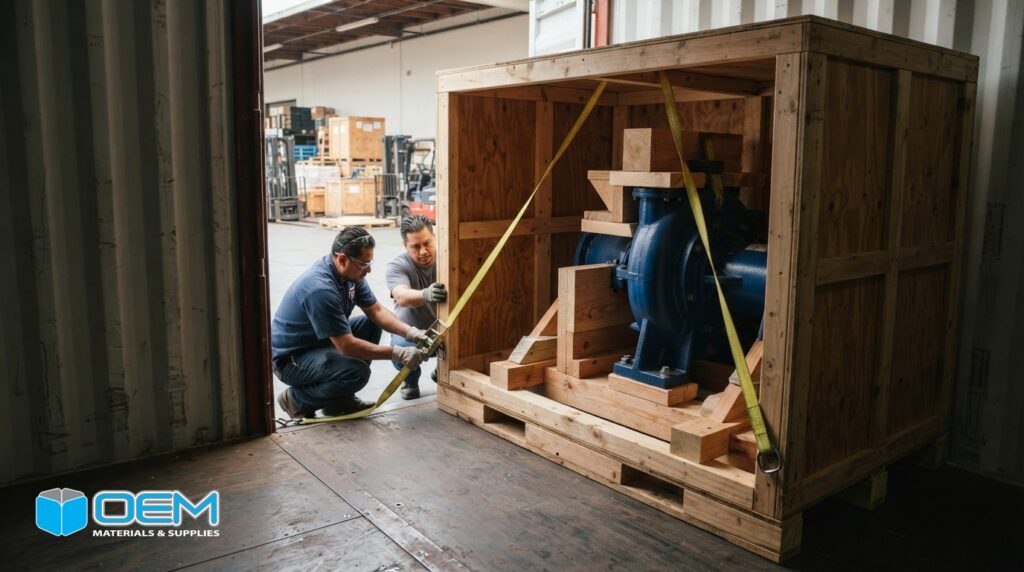
A crate can protect cargo and still delay a shipment if its wood treatment is overlooked. Bespoke export crates are designed around the product, route, and handling demands, while export packing combines restraint and cushioning with wood that meets applicable treatment requirements. ISPM 15 is the international standard for treating wood used in export crates to help prevent the spread of pests and diseases.
Protective packing involves more than building a stronger box. Cargo can shift, be stacked, encounter moisture, and pass through repeated transfers by air, road, and sea. Crate design and wood treatment therefore need to be considered together.
This guide explains how export packing protects cargo, what to consider about wood treatment for shipments from Los Angeles, and how a crate’s fit and internal support can help reduce shipping damage. It also covers the shipment details that shape the packing approach, from product dimensions and fragility to freight routes and handling conditions.
Key Takeaways
- Plan crate dimensions and internal support around the cargo and its air, road, or sea route.
- Understand how ISPM 15 treatment relates to wood packaging used for international shipments.
- Use bracing, blocking, and cushioning to limit cargo movement during handling and transit.
- Consider stacking, moisture exposure, and freight handling when selecting crate materials and design.
- Share product dimensions, weight, and shipping requirements to help shape a suitable crate and packaging approach.
Custom export crates for air, road, and sea freight
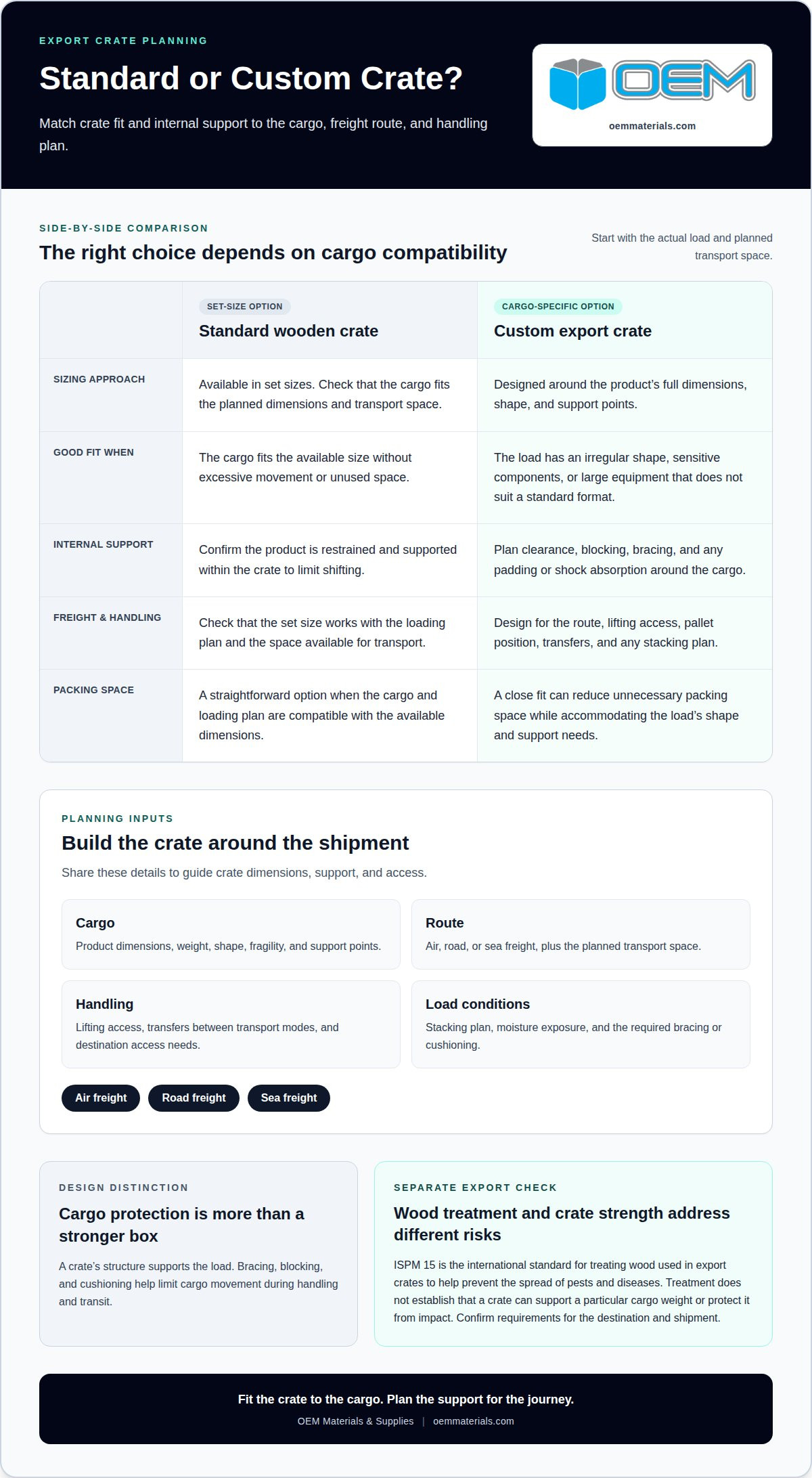
Crate design starts with the cargo and accounts for its route, handling, and loading space. Bespoke export crates can be sized for delicate items, heavy machinery, or loads requiring a specific pallet arrangement.
Custom Sizing and Wooden Construction
Rough measurements provide a starting point, but final specifications should account for the product’s full dimensions, shape, and support points. A machine with protruding components, for example, needs clearance around them, while a compact component may need internal restraints to prevent shifting.
Custom wooden crates and cases are designed around the load. The base, frame, and access points should support the cargo during lifting and transport. Review how the product sits on a pallet, where it can be braced, and whether it needs to be accessible at its destination.
Material and design choices depend on cargo weight, fragility, environmental exposure, and handling conditions. A delicate item may need padding or shock absorption; a large machine may require a substantial support structure and secure blocking.
Designing for Freight and Handling
Air, road, and sea freight involve different loading and transfer conditions. The crate should suit the planned route, how handlers will move it, and whether it must fit in a truck or shipping container alongside other freight.
Consider the stacking plan. A crate intended for a stacked load needs to accommodate the weight and contact points above it. For shipments transferred between transport modes, plan for lifting access and how the base will be positioned at each handoff.
For Los Angeles shipments, share the route, cargo dimensions, weight, and handling requirements during crate planning. These details guide the design and help determine where cushioning, bracing, or a pallet base is needed. Crate options can be considered in relation to those shipment requirements.
Bespoke and Standard Crate Options
Standard wooden crates are available in set sizes, which may suit cargo that fits the planned transport space. They can suit cargo that fits those dimensions without excessive movement or unused space, making them a straightforward option when the product and loading plan are compatible.
A custom crate is designed around the cargo’s dimensions and handling requirements. A close fit can reduce unnecessary packing space and accommodate irregular shapes, sensitive components, or large equipment that does not suit a standard format.
Shipping cases vary in construction and purpose, so compare their internal fit, protection, and loading method with the actual cargo. Start with rough measurements, then refine the specifications before construction. This helps align the crate’s size and support with the freight plan.
ISPM 15 heat-treated timber packaging
Wood packaging for export needs attention to pest risk as well as cargo protection. ISPM 15 sets the international standard cited for treating wood used in export crates.
ISPM 15 Heat Treatment
ISPM 15 treatment helps prevent the spread of pests and diseases through wood packaging. Heat treatment is one treatment method associated with the standard, but the applicable requirements depend on the shipment and destination. Do not assume that a crate’s weight, dimensions, or sturdy construction establishes treatment compliance.
If a shipment uses wood crates, identify the timber packaging early in the planning process. Coordinate the required treatment and supporting evidence with the export plan. This connects the packaging decision to the cargo, route, and destination instead of treating the crate as a separate item.
Treatment Certification and Export Requirements
ISPM 15 certification concerns evidence that export wood received the required treatment. An ISPM 15 stamp identifies treated wood packaging, helping communicate its status during shipment handling. The stamp is not a substitute for confirming which destination requirements apply to the particular consignment.
The International Plant Protection Convention (IPPC) describes phytosanitary measures for raw-wood packaging intended to reduce the risk of introducing and spreading quarantine pests. For export planning, distinguish raw-wood packaging from other materials, then establish the destination’s documentation and marking requirements.
Start the review with the destination and the crate’s construction. Determine whether the planned packaging contains wood covered by applicable phytosanitary measures. If it does, align timber selection, treatment, marking, and shipment records before packing. This provides a clear process rather than relying on assumptions about the word “certified.”
Certification and physical design address different risks. ISPM 15 treatment addresses pest risk associated with wood packaging; it does not establish that a crate can support a particular cargo weight or protect it from impact. A crate designed for heavy machinery still needs appropriate structural support, while sensitive equipment may require separate cushioning inside the treated wooden structure.
Keep shipment paperwork consistent with the packaging used. If a shipment includes a wooden base or bracing, for example, account for those components when determining treatment and marking needs. Clear records distinguish treated wood packaging from other materials and give freight handlers useful information about the crate.
ISPM 15 provides a recognized framework, but export requirements can depend on the destination and shipment details. Confirm those requirements as part of export preparation, before packaging is finalized. That timing supports smoother coordination and offers greater peace of mind without confusing cargo protection with treatment compliance.
Potential cost savings from reduced shipping damage
Damage prevention can affect more than the cargo’s condition. If engineering machinery shifts inside a crate, the result may include repairs, replacement parts, delayed installation, and additional transport coordination. A fitted packing plan helps limit movement, though savings depend on the product’s dimensions, materials, and shipping requirements.
Businesses can source export-crate manufacturing from industrial packaging suppliers serving the shipment’s origin. For cargo from Los Angeles, Orange County, San Diego, or Riverside, OEM Materials & Supplies designs crates around the product, route, and handling plan. Share the cargo dimensions, weight, fragility, destination, and freight mode to guide the design and quote.
Compare quotes by reviewing what each proposed crate includes, not just the crate itself. Timber, internal supports, cushioning, dimensions, and loading requirements all affect the design. Shipping costs also depend on the packed crate’s size and weight, as well as the transport method. A compact fit can reduce unused space, while an undersized crate may leave cargo exposed.
For valuable cargo, include insurance in shipment planning. Insurance can address financial exposure from unexpected loss or damage, while good packing aims to reduce the chance of damage. These serve different purposes. A secured crate for a machine component, for instance, can limit shifting but does not replace decisions about shipment coverage.
Crate markings and paperwork help handlers identify cargo and support customs checks. Put clear labels and handling instructions where they remain visible during transport, and prepare the necessary shipment documents. A crate containing machinery, for example, may need identification that matches its accompanying paperwork. Consistent information helps prevent confusion during transfers between road, air, and sea freight.
Dimensions affect both protection and freight efficiency. Record the product’s length, width, height, and weight, then account for the crate and internal packing when planning transport. Confirm how the packed unit will fit on a pallet or in a truck or shipping container. The crate’s capacity must suit the cargo and its support points, not merely enclose its outer dimensions.
International shipping readiness also depends on the destination and the crate materials. Wood packaging may involve ISPM 15 treatment requirements, while labels and documents help identify the shipment. Align these details before packing machinery or other export cargo. This avoids treating crate construction, freight planning, and paperwork as separate decisions.
To assess a design’s potential value, compare the damage exposure with the packing and freight requirements it addresses. Consider product dimensions, handling conditions, and route together. A crate that limits movement and uses shipping space efficiently may help control costs, but the result depends on the shipment.
Protection for bulky, irregular, or fragile products
Bespoke export crates are built around cargo shape, support points, and freight handling needs. They can suit delicate glass, irregular equipment, or bulky industrial machinery that needs restraint during transport.
Inadequate crating can allow cargo to shift, strike crate walls, or be exposed to moisture. Preventing damage starts with a fitted support plan using suitable blocking, bracing, and cushioning.
Product-Specific Dimensions and Protection
Measure the product’s outer dimensions, including protrusions, handles, and vulnerable components. For an irregular machine, identify stable support points before positioning timber blocking or mounting brackets. The crate should hold the load securely without pressing against delicate surfaces.
Fragile instruments and glass components may need foam lining or shaped inserts to limit movement. Bulky equipment may require timber bracing and banding to hold it in place during lifting and freight transfers. The cargo’s weight and geometry determine where supports belong.
Plan for access as well as protection. A crate designed for a delicate assembly should allow controlled packing and removal without handlers pulling against exposed connectors or edges. Clear placement instructions help keep the product aligned during packing.
Moisture and Corrosion Protection
Moisture can affect metal surfaces, electrical components, and other sensitive cargo in transit. For shipments bound for humid locations, consider water-resistant materials and protective barriers as part of the packing design. Match protection to the product’s sensitivity and expected environment.
Crate construction matters, too. The structure should support the cargo and be sealed to help keep out moisture and contaminants. Ventilation openings may suit some wooden crates, but their placement must meet the cargo’s protection needs without exposing vulnerable areas.
For corrosion-sensitive equipment, keep the product from direct contact with the crate and use suitable protective material around exposed surfaces. A machine with finished metal faces, for example, needs internal packing that prevents rubbing as well as moisture exposure.
Preventing Damage from Inadequate Crating
Excessive clearance can let cargo move, while a crate pressing against fragile components can cause damage during handling. Prevent both problems by matching internal supports to the product’s contact points and securing the load against shifting.
Export packing can combine timber blocking, bracing, banding, mounting brackets, foam lining, and inserts. Each serves a different purpose: blocking limits movement, while foam cushions delicate surfaces. Choose the combination to suit the cargo and freight route.
Before closing the crate, confirm that the product rests on its supports, restraints hold it in place, and protective materials cover exposed areas. Add clear handling instructions where they can be seen. These steps help bulky or delicate goods arrive in their intended condition; the right configuration depends on the cargo, materials, and shipment requirements.
Export requirements and wood treatment
Export readiness depends on the destination, crate materials, and cargo. Review custom wood packaging separately from the crate’s structural design. A valuable machine may be securely braced but still require attention to phytosanitary measures if its packaging uses raw wood.
The International Plant Protection Convention (IPPC) identifies phytosanitary measures for bespoke export crates made from raw wood. These measures aim to reduce the risk of introducing and spreading quarantine pests. Identify each wood component in the packaging plan, including crate boards, skids, and blocking, then determine which treatment requirements apply to the destination.
ISPM 15 is the international standard cited for treating wood used in export crates to help prevent pest and disease spread. Treatment planning should happen before custom crates are built and packed. This gives the shipment team time to align timber selection and treatment with export preparation, rather than discovering a wood-packaging issue after cargo is secured.
Destination and cargo type also shape the compliance review. For hazardous goods transported by air, IATA regulations apply; for hazardous goods transported by sea, IMDG regulations apply. These requirements concern hazardous goods, while ISPM 15 addresses wood packaging. Keep the two reviews distinct when a shipment contains both regulated cargo and timber packaging.
Semiconductor shipments involve another consideration. SEMI Standards regulate export-packing materials and processes for semiconductor tools and components. For shipments involving semiconductor equipment, include these standards in the packaging review alongside applicable wood-treatment requirements. Consider cargo specifications and packaging materials together, not as separate administrative tasks.
A practical export-readiness sequence is to identify the destination, list the shipment’s wood components, classify any hazardous goods, and identify industry-specific standards. Then coordinate required treatment and packaging records before packing. A wood crate carrying semiconductor equipment, for example, may need review for both timber treatment and SEMI Standards requirements.
Clear documentation helps the shipper, packing team, and freight handlers communicate. Keep crate details consistent across packing records and shipment documents, especially when the shipment includes treated wood or specialized equipment. This clarifies the packaging contents and the requirements considered during preparation.
The key decision is not simply whether a crate is custom-sized. Its materials and preparation must also suit the destination and cargo. Review those requirements before construction, then finalize the crate design and packing as one coordinated export process.
OEM Materials & Supplies: Crates
OEM Materials & Supplies provides crates for businesses preparing industrial shipments from Los Angeles, Orange County, San Diego, and Riverside. Choose a crate when cargo needs a protective outer structure for handling and transport, and account for its dimensions, weight, route, and wood-treatment requirements during planning.
Corrugated boxes, foam packaging, and packaging kits can complement crates in a complete packing plan. The right combination depends on the cargo and shipping method. When discussing your requirements with OEM Materials & Supplies, provide product measurements, weight, destination, and freight mode.
Contact OEM Materials & Supplies to discuss crate requirements for your shipment.
Prepare Your Next Export Shipment
Make packaging part of shipment planning, not a last-minute task before freight pickup. For operations in Los Angeles, Orange County, San Diego, and Riverside, connect crate design with internal protection, handling instructions, and the export schedule. A clear packaging specification also gives procurement, engineering, and warehouse teams a shared reference for repeat shipments.
OEM Materials & Supplies provides crates, corrugated boxes, foam packaging, and packaging kits. These options can support different parts of an industrial shipment, from the outer container to protective materials around the product. The right configuration depends on the cargo and its transport requirements.
For a project involving bespoke export crates, prepare the product dimensions, weight, destination, freight mode, and handling needs. Those details give the discussion a practical starting point. Contact OEM Materials & Supplies to discuss your export packaging requirements and plan the next shipment with a clear specification.
Frequently Asked Questions
What is export packing?
Export packing prepares a product and its shipment information for international transport. It involves decisions about how the item is positioned, protected, identified, and made accessible for handling. For a production-line component, the plan might coordinate multiple items in one shipment while keeping each part identifiable. Aligning packing instructions with warehouse procedures helps make the process repeatable across orders.
Why are wooden crates a good packaging solution for export?
Wooden crates are useful when a shipment needs a rigid enclosure designed for a demanding load. They may suit machinery or equipment with unusual footprints when the shipping unit must accommodate stable support points. They are not automatically right for every product. Compare the cargo’s handling needs with other packaging formats, including cases and cushioning, before choosing a shipping configuration.
What are the ISPM 15 requirements for wooden export crates?
For export planning, treat ISPM 15 as a wood-packaging requirement to address separately from crate strength and cargo protection. Ask the packaging team to identify which components contain regulated wood, how treatment will be documented, and what marking will appear on the completed package. This creates a clear handoff between packing, shipping, and compliance records without assuming that every material in a shipment is treated the same way.
How much do bespoke export crates cost in the United States?
The cost depends on the individual project specifications, so a useful estimate starts with a defined shipment, not a generic crate description. Include cargo dimensions, weight, destination, freight mode, and required internal protection in your quote request. If the product has a drawing or unusual geometry, include that, too. This lets the proposed scope reflect the actual package design and materials.
Which factors affect custom export crate pricing and lead times?
Pricing and production timing depend on the design and material preparation the order requires. A repeat shipment with a finalized drawing differs from a first-time project that needs its configuration developed. Changes to cargo dimensions, destination, or protection requirements can also affect the approved specification. Provide the expected order quantity and target shipment date along with technical details to clarify the project scope from the start.
How do you measure and order a custom export crate?
Start with a current product drawing or careful measurements, then identify features that affect placement, such as handles, connectors, or fragile surfaces. Clarify whether the dimensions describe the product alone or an existing assembly. Include photos to illustrate an irregular shape. Share the details with OEM Materials & Supplies and review the proposed crate drawing before approval, so the design reflects the correct product configuration.
How should export crates be labeled and documented for international shipping?
Keep package identification readable and consistent with shipment paperwork. Place labels on visible surfaces that remain accessible after loading, and make handling instructions clear to warehouse and freight teams. Before dispatch, compare the crate identification with the packing record and shipment documents, and correct any mismatches while the package is accessible. Let the destination’s documentation requirements guide which records accompany the shipment and how the cargo is identified.