
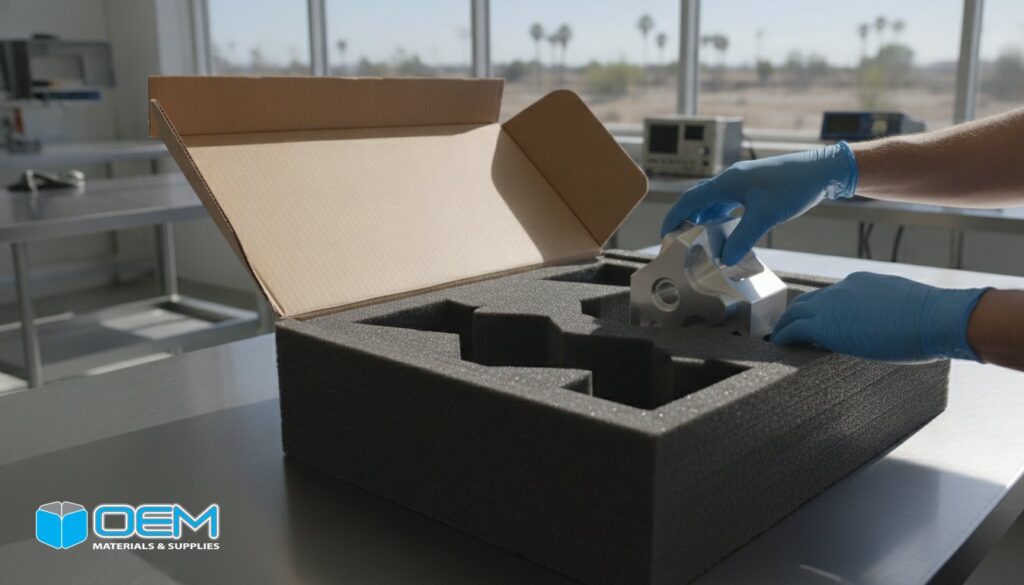
Selecting a protective material based on how soft it feels to the touch is a common mistake that leads to compromised shipments and inflated overhead. In industrial applications, effective foam selection is a function of engineering physics rather than subjective comfort. You likely recognize that high product damage rates and excessive material waste are not just logistical nuisances; they are direct threats to your bottom line and long term customer trust. Inefficient packing processes only compound these issues by driving up labor costs and slowing down your distribution cycle.
Choosing the right foam for packaging requires a deep understanding of technical specifications and material properties. This guide provides the framework necessary to select optimal cushioning for high value industrial components. We will examine the critical performance differences between polyethylene and polyurethane foams, referencing industry standards like ASTM D3575 and ASTM D3574 to ensure your selection meets rigorous durability requirements. Additionally, we will address how current regulatory requirements, specifically the California SB 54 regulations that became effective on May 1, 2026, influence material selection for manufacturers in Los Angeles, Orange County, and San Diego. You will learn how to leverage engineered design to reduce shipping damage and lower your total cost of ownership through a reliable Southern California supply partner.
Key Takeaways
- Identify the distinct performance differences between Polyethylene and Polyurethane to match material strength with product weight and fragility.
- Master technical metrics such as density and Indentation Load Deflection (ILD) to ensure your custom inserts provide consistent compression resistance and durability.
- Learn why choosing the right foam for packaging depends on a precise evaluation of product dimensions and the specific hazards of your shipping environment.
- Discover how engineered foam solutions and kitting services reduce labor costs and total cost of ownership by optimizing material volume and assembly speed.
- Understand the logistical advantages of partnering with a Southern California supplier for vendor-managed inventory and reliable just-in-time delivery.
Understanding the Role of Industrial Packaging Foam
Industrial packaging foam is a critical engineered component rather than a simple filler material. Its primary purpose is to safeguard high-value items through three main functions: shock absorption, vibration dampening, and surface protection. In precision sectors like aerospace and medical device manufacturing, the economic impact of a single failure is high. Improper selection leads to increased return rates and damaged brand reputations. While bubble wrap or paper void fill might suffice for lightweight retail goods, these materials lack the structural integrity required to protect heavy or sensitive industrial equipment. They often bottom out under pressure, leaving the product vulnerable to the very impacts the packaging was intended to prevent.
Effective packaging design requires a technical approach centered on a product’s fragility, often quantified as a “G-factor.” This metric represents the maximum acceleration an object can withstand before sustaining damage. Choosing the right foam for packaging involves calculating the precise thickness and density needed to keep impact forces below this threshold during a drop. For operations throughout Southern California, from the Inland Empire to San Diego County, understanding these physics is the first step toward reducing the total cost of ownership in the supply chain.
Shock vs. Vibration: Different Protective Requirements
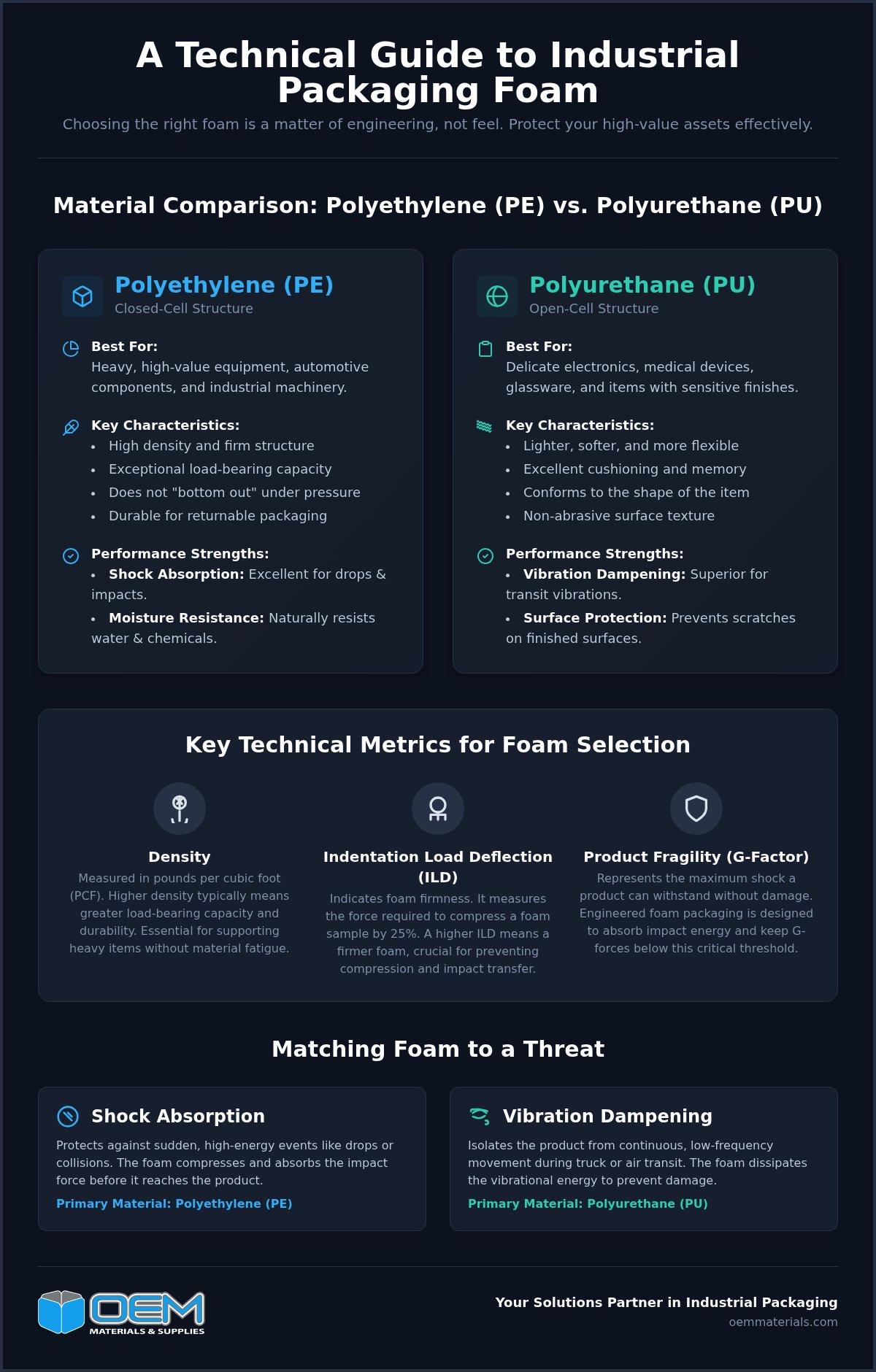
Shock and vibration represent two distinct physical threats. Shock occurs during sudden, high-energy events such as a box falling off a forklift or a collision during transit. Vibration is a continuous, low-frequency threat encountered during long-distance trucking or air freight. High-density materials like Expanded Polyethylene (EPE) are excellent for absorbing shock due to their closed-cell structure. Conversely, softer polyurethane options often excel at dampening the persistent vibrations that can loosen internal electronics or delicate fasteners. Identifying which threat is more prevalent in your specific shipping lane allows for a more targeted and cost-effective material choice.
Surface Protection and Abrasion Resistance
Cosmetic integrity is just as vital as structural safety for polished automotive parts and surgical instruments. Abrasive packaging materials can cause micro-scratches or “rub marks” during transit, leading to rejected parts upon arrival. Utilizing non-abrasive foam packaging ensures that sensitive finishes remain intact throughout the journey. Beyond physical texture, engineers must evaluate chemical compatibility. Certain foams may outgas or react with specific product coatings, causing permanent surface degradation. In this context, choosing the right foam for packaging is as much about chemistry as it is about mechanical protection.
Comparing Core Materials: Polyethylene vs. Polyurethane
Material selection is the most impactful decision in the design process. Choosing the right foam for packaging involves matching a material’s physical properties to the specific weight and fragility of the product. While many vendors offer generic solutions, a technical comparison of Polyethylene (PE) and Polyurethane (PU) reveals distinct performance profiles for different industrial loads. Understanding these differences prevents the costly mistake of over-packaging or, conversely, providing insufficient protection.
Closed-Cell Foam (Polyethylene) Performance
Polyethylene is the industry standard for heavy, high-value equipment. Its closed-cell structure consists of millions of tiny, sealed bubbles that provide exceptional load-bearing capacity. This material doesn’t bottom out under significant weight; it maintains its structural integrity even during rough handling. PE is naturally resistant to moisture and chemicals, making it ideal for the long-term storage of automotive components or heavy machinery transit. For returnable packaging systems, the durability of custom foam packaging made from PE ensures the inserts can withstand multiple shipping cycles without degrading.
Open-Cell Foam (Polyurethane) Versatility
Delicate electronics and intricate glassware often require the softer touch of Polyurethane (PU). As an open-cell foam, it acts like a sponge, allowing air to flow through the material to provide consistent cushioning. This flexibility allows it to conform to complex product geometries without the need for expensive custom tooling. According to this Polyurethane Foam Association Packaging Case Study, PU is particularly effective for energy dissipation, protecting fragile items from the cumulative effects of vibration. Its lightweight properties also help minimize overall shipping costs, which is a critical factor for high-volume distribution centers in Los Angeles and the Inland Empire.
Rigid Support and Specialty Applications
For high-volume, low-cost applications where rigid support is required, Expanded Polystyrene (EPS) remains a viable option. However, sensitive electronics often require specialty materials to manage specific environmental risks. Anti-static (ESD) foams are treated to prevent static discharge, while cross-linked polyethylene (XLPE) offers a finer cell structure for superior surface protection and aesthetic appeal. If you aren’t sure which material fits your load profile, you can request a quote for a prototype to test performance before a full production run. Ultimately, choosing the right foam for packaging ensures your high-value components arrive at their destination in factory-perfect condition.
Technical Factors: Density, ILD, and Cell Structure
Industrial packaging design relies on empirical data rather than guesswork. Choosing the right foam for packaging requires a precise analysis of density and Indentation Load Deflection (ILD). These metrics determine how a material reacts under the weight of your product and how it performs during the stresses of transit. Density, measured in pounds per cubic foot, serves as the primary indicator of a material’s structural strength. While often associated with firmness, density actually dictates the foam’s ability to withstand repeated impacts without losing its protective shape. ILD measures the force required to compress a foam sample by a specific percentage, usually 25 percent of its original height. This value tells you how firm the material feels and how it will support a static load over time.
Determining the Required Foam Density
Engineers calculate static loading to find the optimal density for a specific application. This is done by dividing the product’s weight by the surface area in contact with the foam. A common misconception is that higher density always provides better protection. In reality, over-specifying density can result in a material that is too rigid for lightweight, fragile components. This rigidity transfers impact energy directly to the part instead of absorbing it. Choosing the right foam for packaging involves matching density to the specific fragility level of the internal component to ensure the cushioning remains effective throughout the shipping cycle.
The Impact of Cell Structure on Resilience
Cell structure influences how a material recovers after compression and its suitability for specific environments. Closed-cell foams, like polyethylene, feature sealed cells that resist crushing under heavy loads. This makes them ideal for supporting automotive parts or heavy machinery during long-duration storage. Open-cell foams, such as polyurethane, allow air to move freely between cells, providing the soft cushioning necessary for delicate electronics. For specialized sectors like medical labs or aerospace cleanrooms, cross-linked polyethylene (XLPE) provides a high-purity, non-dusting solution. Unlike standard PE, XLPE undergoes a chemical process that creates permanent bonds between polymer chains, resulting in a smoother surface and superior resistance to chemicals.
Balancing material thickness with external dimensions is vital for cost control. Excessive foam thickness increases the size of corrugated boxes, which leads to higher dimensional weight fees from carriers. Precise custom packaging design optimizes the internal volume, ensuring maximum protection while minimizing the overall shipping footprint. This data-driven approach is essential for manufacturers in Orange County and the Inland Empire looking to maintain competitive margins while protecting high-value assets.
A Step-by-Step Selection Process for Custom Inserts
Choosing the right foam for packaging is a systematic process that moves from data collection to physical validation. It begins with a comprehensive audit of the product physical characteristics. You must identify the exact weight, dimensions, and fragility rating of the component. This data allows engineers to determine the static load and required G-factor protection. Next, define the shipping environment. A product moving via dedicated truck through Orange County faces different vibration hazards than one undergoing multiple transfers in international air freight. Defining these hazards early prevents over-engineering and keeps material costs manageable.
Once the hazards are defined, select the base material and density that align with the technical requirements established in previous steps. The design then moves to geometry. The goal is to create an insert that provides maximum support while using the minimum amount of material. Finally, the process concludes with prototyping and testing. Drop testing and computer simulations ensure the design performs as intended before you commit to a full production run. Manufacturers in Los Angeles County and the Inland Empire often face tight production schedules; a streamlined selection process prevents delays during new product launches.
Designing for Efficient Assembly
Labor costs often exceed material costs in high-volume packing operations. Designing for efficient assembly means reducing the number of individual foam pieces required to secure a product. Utilizing die-cutting for precision fits ensures consistent protection across every unit and eliminates the variability of manual packing. When foam inserts are engineered for speed, warehouse teams can process more shipments in less time. You can learn about custom packaging design strategies that prioritize both protection and throughput to improve your bottom line.
Testing and Validation Protocols
Validation is the final safeguard against shipping damage. Industrial shipments should adhere to ISTA testing standards to ensure the packaging can withstand the rigors of the global supply chain. Rapid prototyping allows you to validate foam performance and fit before investing in permanent tooling. If testing reveals a weakness, engineers can adjust the design based on empirical feedback from the logistics chain. This iterative approach ensures that the final custom foam packaging solution is both reliable and cost-effective. To begin this process for your next project, you can request a quote for a custom prototype and consultation today.
Optimizing the Supply Chain with Engineered Foam Solutions
Choosing the right foam for packaging extends beyond the engineering lab and onto the warehouse floor. While protection remains the primary objective, the physical design of an insert directly influences labor efficiency and storage requirements. High-value components often require complex protection, yet an overly complicated multi-piece foam assembly increases packing time and labor costs. By kitting custom foam inserts with corrugated boxes, manufacturers can streamline their assembly lines. This integrated approach ensures that all necessary components are available at the packing station simultaneously, reducing the time spent searching for separate materials and minimizing the risk of inventory shortages. It’s about creating a repeatable, friction-free process for the warehouse team.
Reducing Total Landed Cost
Total landed cost includes the purchase price of materials, shipping fees, and the expense of potential damage. Engineered foam solutions allow for a more compact internal layout, which often permits the use of smaller outer containers. This reduction in volume is critical for managing dimensional (DIM) weight charges from carriers. When you optimize the internal cushioning to the exact fragility of the part, you avoid the unnecessary bulk that drives up freight expenses. It’s a calculation where precision pays for itself through reduced return rates and lower shipping fees. Results depend on specific variables like product dimensions and shipping requirements, but the trend toward smaller footprints is a proven way to control costs.
Local Support for Southern California Manufacturers
Proximity to a manufacturing partner is a strategic advantage for lean operations in San Diego, Los Angeles, and the Inland Empire. Relying on a local Southern California supplier for just-in-time (JIT) delivery helps companies maintain high throughput without tying up capital in excessive safety stock. Implementing a Vendor Managed Inventory (VMI) program also optimizes the supply chain by shifting the burden of stock monitoring to the partner. This ensures that custom inserts are always available when production ramps up, preventing costly line shutdowns. You can explore our foam packaging products to find materials that integrate seamlessly into your existing VMI or kitting workflow. Choosing the right foam for packaging ultimately means choosing a partner that understands the logistical requirements of Orange County’s industrial sectors. Reliable local supply reduces lead times and provides the agility needed to respond to sudden shifts in market demand.
Securing Your Industrial Supply Chain with Engineered Protection
Choosing the right foam for packaging is a critical decision that impacts your product safety, your brand reputation, and your total landed cost. By prioritizing technical metrics like density and ILD over subjective feel, you ensure that high-value components arrive in factory-perfect condition. This engineered approach reduces damage rates and eliminates the waste associated with over-packaging. Precise material selection is the foundation of a reliable distribution cycle.
As a dedicated partner for aerospace and medical OEMs throughout Southern California, OEM Materials & Supplies provides the technical expertise required for precision die-cut inserts. Our local presence in Orange County, Los Angeles, and San Diego allows us to offer vendor-managed inventory (VMI) and just-in-time (JIT) delivery to keep your production lines moving without the burden of excessive safety stock. We focus on solving logistical challenges through superior material science and dependable local support.
Take the first step toward a more efficient supply chain. To receive a recommendation tailored to your specific product dimensions, weight, and annual usage, request a custom foam packaging quote and prototype today. We look forward to helping you optimize your protective strategy and reduce your operational overhead.
Frequently Asked Questions
What is the difference between open-cell and closed-cell foam for shipping?
Closed-cell foam, like polyethylene, features sealed bubbles that offer superior load-bearing strength and moisture resistance for heavy machinery. Open-cell foam, such as polyurethane, is breathable and sponge-like, making it the preferred choice for lightweight, highly fragile items that require significant energy dissipation. Choosing the right foam for packaging depends on whether your product needs rigid support or soft cushioning. Manufacturers in Los Angeles and Orange County often use a combination of both for complex industrial kits.
How do I determine the fragility of my product for foam selection?
Fragility is typically measured by a G-factor, which represents the maximum acceleration an object can withstand before sustaining damage. Engineers determine this rating through drop testing or historical data for similar components. A lower G-factor indicates a more delicate product, requiring thicker or softer cushioning to absorb impact energy. Understanding this metric is essential for procurement managers in San Diego who need to balance protection levels with material costs and shipping volume.
Can I use anti-static foam for non-electronic components?
You can use anti-static (ESD) foam for non-electronic components, but it’s generally not cost-effective unless those parts are sensitive to static discharge or will be integrated into electronic assemblies later. ESD foam is treated with chemical additives to prevent static buildup, which adds to the material price. If your product is a purely mechanical part, standard polyethylene or polyurethane provides the same level of physical protection without the added expense of anti-static properties.
How does foam density affect the cost of custom packaging inserts?
Foam density directly impacts material costs because higher-density foams contain more polymer per cubic foot. While high-density materials are more expensive, they often allow for thinner inserts due to their superior load-bearing capacity. This optimization can lead to smaller corrugated boxes and lower dimensional weight fees during transit. Choosing the right foam for packaging involves analyzing how density affects the total landed cost, including both material expenses and long-term shipping fees for your Riverside operations.
What are the most common foam types used in medical device packaging?
Medical device packaging frequently utilizes cross-linked polyethylene (XLPE) and medical-grade polyurethane. XLPE is favored because its fine cell structure is non-dusting and resistant to chemicals, which is vital for maintaining cleanroom standards. These materials provide the high-purity environment required for surgical instruments and diagnostic equipment. Many medical OEMs in Orange County specify these foams to ensure their products remain sterile and protected from both physical impact and particulate contamination during global distribution.
Is custom die-cut foam cost-effective for low-volume production runs?
Custom die-cut foam is highly cost-effective for low-volume runs when you account for reduced labor and lower damage rates. While there is an initial setup cost for tooling, the precision of a custom insert speeds up the packing process and eliminates the need for excessive secondary void fill. For manufacturers in the Inland Empire, short-run production programs allow for rapid prototyping and testing, ensuring the packaging design is fully validated before scaling to high-volume distribution.
How do temperature fluctuations in transit affect foam performance?
Extreme temperature fluctuations can alter the physical properties of packaging foam, potentially making it more brittle in cold or softer in heat. Closed-cell polyethylene remains relatively stable across a wide temperature range, while some polyurethane foams may lose their resilience in extreme conditions. If your shipping lanes involve significant environmental changes, it’s important to select a material that maintains its specified ILD and density to ensure consistent protection from the warehouse in San Diego to its final destination.
What information should I provide to get a custom foam quote?
To provide an accurate quote for custom inserts, we require the product’s exact dimensions, weight, and fragility rating. It’s also helpful to share your estimated annual usage and details about the shipping environment, such as whether the product moves via palletized freight or small parcel carriers. This information allows our engineering team in Southern California to recommend the most efficient material and geometry, ensuring your packaging kit provides optimal protection while minimizing total material waste and labor.