
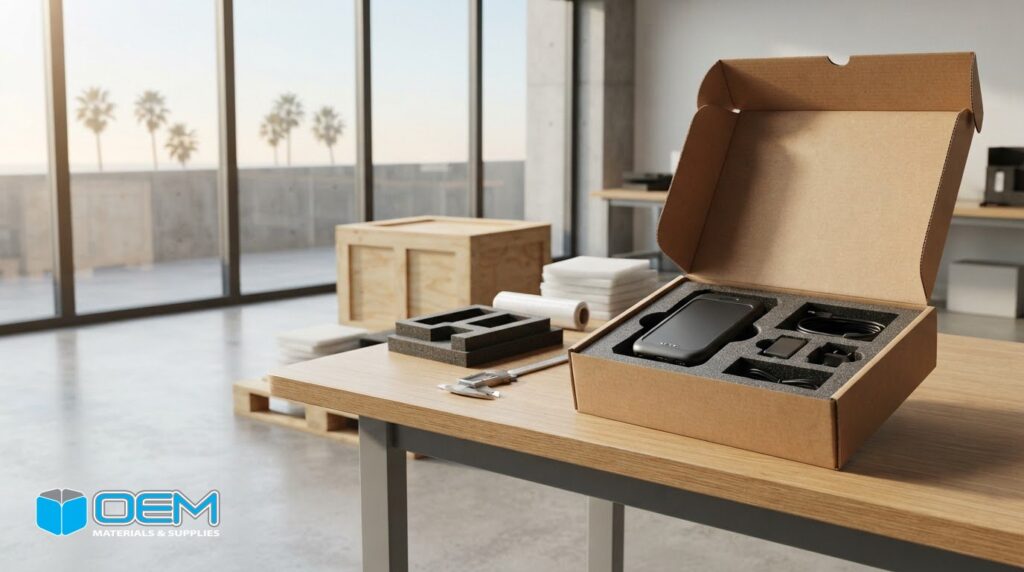
Protective performance starts with device-specific foam design, not foam thickness alone. Buyers searching “custom foam packaging for electronics los angeles” need an insert that locates the device, limits unwanted movement, and works with the complete shipping package. The design should reflect the product’s geometry, sensitive areas, accessories, and handling conditions.
More foam doesn’t automatically mean better protection. Insert shape, contact points, packing sequence, and exposure to shock or vibration all influence the design. Electronics may also require attention to electrostatic discharge, a separate risk from physical damage. Review material suitability for the specific device and application.
This guide helps electronics teams in Los Angeles, Orange County, San Diego, and Riverside assess custom foam packaging. It covers the product and shipment details to gather, design criteria to compare, and information to include in a quote request. It also explains how to review a sample before production. If you searched for “custom foam packaging for electronics los angeles,” use the steps below to prepare an application-specific request. OEM Materials & Supplies supports packaging design and programs from prototypes through high-volume production.
Key Takeaways
- Document device dimensions, weight, orientation, fragile areas, accessories, and pack-out requirements before requesting a foam insert recommendation.
- Compare designs by product fit, protection needs, packing workflow, and production readiness rather than foam thickness alone.
- Review a prototype or sample with the actual device to check fit, access, component separation, and packing consistency.
- When sourcing custom foam packaging for electronics in Los Angeles, share shipping conditions and expected production quantities to help scope the design.
- Compare custom inserts with stock cushioning against your product and workflow, then confirm material suitability for the application.
What custom foam packaging for electronics needs to protect
Custom foam packaging is an insert or cushioning system designed around a specific product to locate it, separate it from other components, and manage movement inside a larger package. The insert is not the protective case or shipping carton. It works with the outer packaging, which contains the shipment and contributes to the overall protection system. Loose cushioning can fill space or cushion a product, but a custom insert is shaped and arranged for a defined product and pack-out.
For buyers searching “custom foam packaging for electronics los angeles,” define the device and shipment before choosing an insert. The Package cushioning overview describes how cushioning design and material selection relate to the product and package. A suitable design depends on device geometry, expected handling and shipping conditions, and the complete package, not foam thickness alone. OEM Materials & Supplies provides custom foam packaging for industrial applications.
What does a custom foam insert do inside an electronics case?
A fitted cavity can locate a device and limit unwanted movement within a case or shipping carton. Its contact points and openings should reflect the product’s shape, including areas that need clearance for connectors, controls, or protruding parts. The insert is one part of the packaging system, not a replacement for the outer package. Establish protection requirements through application-specific review or testing rather than assuming performance from appearance.
Which electronics packaging risks should buyers assess first?
Start with the product. Note fragile surfaces, exposed connectors, vulnerable projections, and areas where contact could cause cosmetic damage. Then map the handling path from assembly and storage through packing and delivery. A device may be handled several times before reaching its destination, so the pack-out process matters as much as transit.
Review damage records, inspection findings, and operator feedback before settling on a design. Distinguish documented issues, such as scuffing or a displaced component, from suspected causes. This helps the packaging team target fit and contact points to observed risks instead of adding material without a clear purpose.
How to specify custom foam packaging for electronics
A useful specification connects the device to the way it will be packed, handled, and shipped. For buyers sourcing custom foam packaging for electronics in Los Angeles, clear product and shipment details help a packaging partner assess the insert layout and material suitability before finalizing a design.
What product and shipment information should you provide?
Gather the available product data first. A drawing or sample can clarify shapes and features that are difficult to capture in a basic dimension list. Include the product’s orientation in the package and anything workers need to access during packing or unpacking.
Before design begins, prepare the device dimensions and weight, drawings or a sample, orientation, fragile areas, accessories, pack-out configuration, handling and storage conditions, shipping methods, shipment frequency, and known damage concerns.
- Document the product. Provide accurate dimensions and weight, plus drawings or an available sample. Identify exposed surfaces, connectors, and vulnerable protrusions.
- Map the contents. List cables, accessories, and separate components. Specify which items need individual cavities or separation, and show their intended arrangement inside the package.
- Describe the workflow. Explain how the device moves from assembly and storage through packing, shipment, and unpacking. Note who packs it, how it is placed, and any handling steps that could affect fit or consistency.
- Define shipment conditions. Share shipping methods, frequency, and known damage patterns. If your team uses transit testing, identify the applicable procedure. The International Safe Transit Association (ISTA) develops package testing protocols that address shipping hazards.
- Plan review and production. Identify the sample or prototype review process, expected quantities, and production requirements. Confirm that the proposed material and cavity dimensions suit the actual device and package before committing to production.
How should buyers evaluate foam type, fit, and layout?
Material selection is application-specific. Compare candidate materials against the device, contact surfaces, shipment conditions, and complete package instead of assuming one foam type fits every electronics application. Review cavity dimensions, too: a loose fit may allow movement, while a layout that makes removal awkward can slow packing or lead to inconsistent handling.
Check whether the device seats in the intended orientation, whether workers can remove it without stressing connectors or other delicate areas, and whether accessories stay separated as specified. Walk through the actual pack-out sequence to confirm that the design can be used consistently. For additional design context, see this industrial guide to foam inserts.
Once you have assembled these details, you can share your packaging requirements for a quote and request a project-specific review.
How to compare electronics foam packaging designs and suppliers
A useful comparison looks beyond the foam itself. For custom foam packaging for electronics los angeles, assess how each design fits the product and how well the supplier can support review, revisions, and production planning. Compare options against the same requirements so purchasing, engineering, and operations can evaluate the trade-offs clearly.
| Criteria | What to assess |
|---|---|
| Fit | Does the design locate the device in the intended orientation and account for vulnerable areas and accessories? |
| Protection requirements | Does the proposed layout address the product’s known risks and shipment conditions? Confirm material suitability for the application. |
| Pack-out efficiency | Can workers load, secure, and remove the product consistently without awkward handling? |
| Design support | Can the supplier review product details, samples, and requested revisions with your team? |
| Production readiness | Can the supplier discuss sample review, short runs, and planning for changes in production volume? |
When might custom inserts be preferable to stock cushioning?
A custom insert may be worth evaluating when a product needs specific positioning, contains several components that must remain separated, or requires a repeatable pack-out sequence. Stock cushioning may suit an application if it holds the product as intended and works with the packing process. Neither approach is universally safer, cheaper, or more efficient. Compare actual fit and handling requirements before choosing.
Any material-efficiency or cost outcome depends on product dimensions, materials, and shipping requirements. Compare the complete pack-out, not just the insert.
What should Los Angeles-area buyers ask a packaging supplier?
Ask how the supplier gathers design requirements, reviews samples, manages revisions, and plans for short runs and potential volume changes. Confirm how approved specifications and revisions will be documented so repeat orders follow the agreed design. OEM Materials & Supplies supports packaging design, prototypes, short runs, and high-volume programs. Its custom packaging design information outlines that capability.
For a program in Los Angeles, Orange County, San Diego, or Riverside, discuss how your team and supplier will coordinate product samples, design feedback, and production planning. A clear review process helps stakeholders assess the same requirements before a design advances.
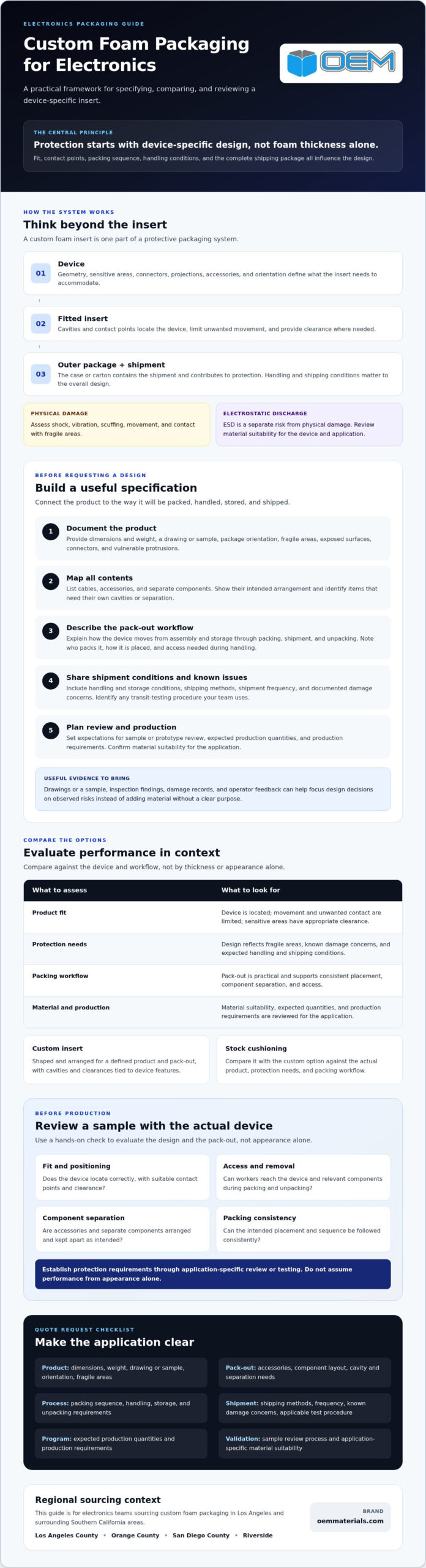
How to validate a foam packaging design before production
A drawing can show the intended layout, but it can’t confirm how the package works on the packing line. Before approving custom foam packaging for electronics in Los Angeles, review a prototype or sample with the actual device and intended pack-out sequence. This can reveal fit or handling issues while design changes are still under review.
What should a prototype review check?
Pack and unpack the product as workers will during regular operation. Check that the device seats in the intended position, stays located during normal handling, and can be removed without awkward movements or pressure on sensitive areas. Confirm there’s appropriate clearance around connectors and protruding components, and that accessories stay in their designated locations.
Inspect the contact points. Check for unwanted rubbing against exposed or cosmetic surfaces, and verify that separate components don’t shift into one another. Have more than one intended user follow the same pack-out sequence. Differences in how people load the package can reveal unclear placement or access issues.
Record feedback from engineering, purchasing, operations, and warehouse stakeholders. Separate required design changes from preferences, assign responsibility for open items, and review the revised sample before production approval. If transit or performance testing is needed, agree with the buyer and supplier on a method that matches the product and shipment. Don’t assume a particular test or standard applies without confirming it.
How can teams prepare for a repeatable production program?
Approval should cover more than the foam shape. Document the accepted design, the package components used with it, and clear pack-out instructions. Confirm the volume assumptions behind the production plan, including whether the program may move from a prototype or short run to higher volume. OEM Materials & Supplies supports programs across these stages, subject to confirming availability for the specific project.
Set a process for changes. A device revision, added accessory, new orientation, or different shipment profile may affect fit and require another review. Make sure stakeholders know how to flag changes before they affect repeat orders.
Kitting or inventory support may be worth discussing if the operation needs packaging components coordinated with its workflow. Tie the decision to actual requirements, such as how materials are staged and replenished, rather than adding services that don’t solve a production need.
For a project-specific review, request a quote for your foam packaging requirements with the device, intended pack-out, and expected order volumes.
Source custom foam packaging for electronics in Los Angeles
For electronics manufacturers, sourcing an insert involves more than placing an order. A packaging partner needs to understand the product, how it will be packed, and what the program requires as it moves from initial review toward production. OEM Materials & Supplies provides engineered foam inserts and custom packaging solutions for electronics, serving Los Angeles and other Southern California markets, including Orange County, San Diego, and Riverside.
OEM Materials & Supplies supports packaging design, prototypes, short runs, and high-volume programs. This range can help buyers evaluate a design before planning for repeat orders, while keeping the specification tied to product and shipment requirements. The company supplies custom foam packaging solutions, not protective cases. The foam insert is one component of the larger package, so review its fit and material suitability for the intended application.
What information helps an electronics packaging quote?
Provide details that let a supplier assess the product and packaging workflow. Include device dimensions and weight, product drawings, and an available sample if you have one. Describe the expected pack-out, including orientation, accessories, component separation, and any handling concerns your team has observed.
Shipment details matter as well. Share how the package will move, known handling conditions, and documented damage patterns. Include expected production volume or annual usage when available. Complete inputs help the supplier scope the project and identify any additional review needed. They don’t establish a specific design or performance outcome in advance.
When should you request a packaging design consultation?
Start a design discussion early if you’re launching a new product, addressing recurring damage, or working to make pack-out more consistent. Early coordination gives engineering, purchasing, and operations a chance to align on product requirements and production needs before finalizing the design. OEM Materials & Supplies describes its custom packaging design support for projects that need this type of collaboration.
For a useful first review, gather product dimensions, weight, drawings or a sample, shipment details, pack-out needs, known handling concerns, and annual usage if available. Then request a quote or packaging consultation to discuss your electronics packaging requirements with OEM Materials & Supplies.
Build a Packaging Specification That’s Ready for Review
Effective electronics packaging starts with the product and its shipping conditions, not an assumption about foam thickness. Document device dimensions, weight, fragile areas, accessories, and pack-out requirements, then compare designs for fit, protection needs, and consistent handling. Reviewing a sample with the actual device gives your team a chance to identify adjustments before production approval.
For custom foam packaging for electronics los angeles, a well-scoped request helps a supplier assess the application and recommend next steps. Include available drawings or a product sample, shipment details, expected volume, and known damage concerns. OEM Materials & Supplies provides custom foam packaging and packaging design, supporting projects from prototypes through high-volume production programs.
Request a quote for custom electronics packaging with your product dimensions, weight, shipment requirements, and annual usage when available. These details help start a practical discussion about the right packaging approach. A defined specification and reviewed design give your team a clearer basis for moving toward production.
Frequently Asked Questions
What is custom foam packaging for electronics?
Custom foam packaging for electronics is an insert or cushioning system designed around a specific device and its pack-out. The insert can locate the product, separate accessories, and help manage movement inside an outer case or shipping carton. It doesn’t replace the outer package. The design should reflect the device’s geometry, contact areas, handling process, and shipment conditions, with material suitability reviewed for the application.
How do I choose foam packaging for an electronic device?
Choose foam packaging by matching the insert design and material to the device and its shipping conditions. Start with the product’s dimensions, weight, shape, fragile surfaces, connectors, and accessories. Then assess how it’s handled, packed, stored, shipped, and unpacked. Compare insert layouts for fit, access, and packing consistency. Review a sample with the actual device before approving production, and confirm material suitability with the packaging supplier.
Can custom foam inserts fit inside an existing protective case?
Yes, a custom insert can be designed for an existing protective case if its interior dimensions and configuration support the required fit. Share the case’s internal measurements or provide a sample, along with the device and accessories. Check that the insert doesn’t interfere with closure, latches, or product access—whether outfitting rugged transit cases from ProX or standard equipment enclosures. Review the design with the actual case and intended pack-out before production. OEM Materials & Supplies provides foam packaging, not protective cases.
Which foam material is best for electronics packaging?
There isn’t one foam material that’s best for every electronic device. Selection depends on the product, contact surfaces, handling and shipping conditions, package design, and any electrostatic discharge requirements. Provide those details so the supplier can assess candidate materials for the application. Don’t assume a material is suitable based only on its name or general use. Confirm the proposed choice through design review and, where appropriate, sample evaluation.
When should a manufacturer choose custom foam instead of stock cushioning?
Consider a custom insert if the product needs defined positioning, multiple components require separation, or workers need a consistent pack-out sequence. Stock cushioning may suit an application if it fits the product and supports handling and shipping requirements. Compare both approaches using the actual package and workflow. Neither option is automatically safer, less expensive, or more efficient. Any cost or material-use outcome depends on product dimensions, materials, and shipment needs.
What information should I provide for a custom foam packaging quote?
Provide device dimensions and weight, drawings, and an available sample, if possible. Include product orientation, fragile areas, accessories, preferred pack-out, handling and shipment conditions, and known damage concerns. Describe the outer carton or case configuration, too. Expected production volume or annual usage helps the supplier understand the program. These inputs support a project-specific assessment, but the design and material recommendation still need to be confirmed for the application.
Does OEM Materials serve electronics manufacturers in Los Angeles?
Yes. OEM Materials & Supplies serves electronics manufacturers in Los Angeles and throughout Southern California, including Orange County, San Diego, and Riverside. The company provides custom foam packaging and packaging design, with support for projects from prototypes and short runs through high-volume production programs. Buyers can share product and shipment requirements for review. Confirm the availability of a specific prototype, quantity, or service arrangement for your project.
Request a quote from OEM Materials & Supplies with your product details, pack-out requirements, and shipment conditions to discuss custom foam packaging for your electronics program.