
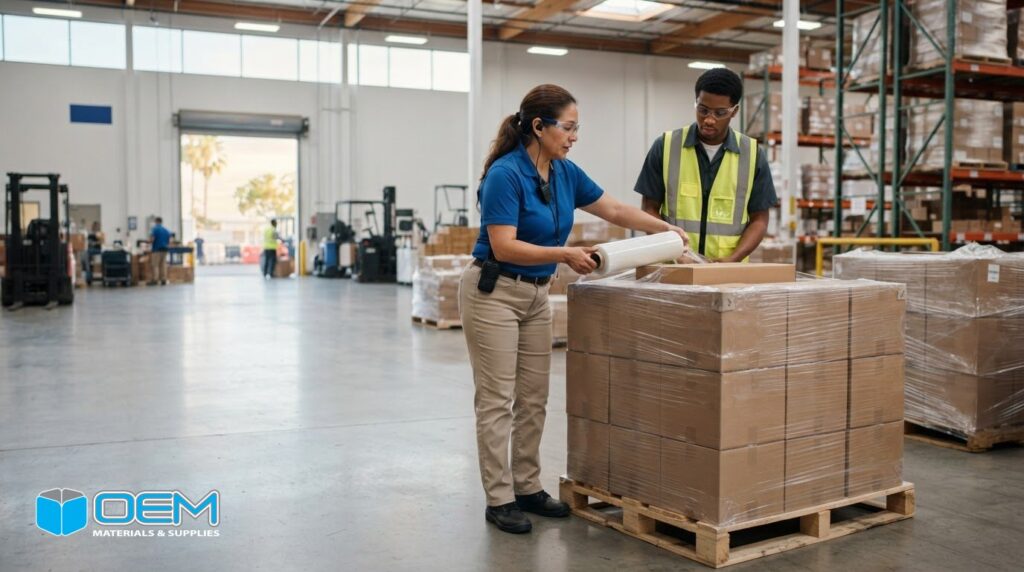
A pallet wrapped securely on one shift may shift in transit when another employee wraps the same load differently, or use more film than needed. For warehouse teams, that variation is a process issue as much as a material choice. Finding an industrial stretch film supplier in San Diego that understands operational needs can help teams review film requirements and supply, while a clear floor procedure helps make each wrap consistent.
This guide gives supervisors a repeatable pallet-wrapping training sequence, with practical checks for load containment, film application, and signs that a pallet needs correction or escalation. It also explains how to compare film options with load dimensions, weight, shipping conditions, and wrapping equipment, and what information to prepare when evaluating suppliers. The goal is to reduce avoidable variation and film waste without assuming one film or method suits every load. Results depend on the product, pallet, materials, and shipping requirements.
Key Takeaways
- Standardize pallet wrapping around a repeatable process and clear inspection checks, not a single recipe for every load.
- Before wrapping, check pallet condition, load stability, overhang, and protruding edges. Confirm film and equipment requirements against site procedures.
- Use a consistent demonstration sequence, with approved instructions for securing film and operating equipment.
- If a pallet looks unstable or wrapping is inconsistent, check whether the cause is film application, load arrangement, pallet condition, or packaging suitability.
- When evaluating an industrial stretch film supplier San Diego teams can work with, share load types, film and equipment details, usage, and delivery needs.
Why San Diego warehouse teams need a consistent pallet-wrapping process
One employee may secure a pallet firmly while another leaves loose film, uneven coverage, or a weak load base. The result can be an unstable load, damaged packaging, extra handling, or wasted material. A consistent process gives employees shared expectations and supervisors a reliable way to inspect finished pallets. The aim isn’t to use one wrapping recipe for every shipment. It’s to make the work repeatable, with clear points for checking and escalating concerns.
Stretch wrap or stretch film helps unitize items on a pallet, but the right application depends on the shipment. A tall load with weight concentrated near the top may need a different approach from a compact, evenly distributed stack. Box strength, overhang, exposed edges, and transport conditions can also affect how well a wrapped load holds together. A written procedure should explain which steps employees can apply consistently and which situations require supervisor review.
San Diego facilities should validate work instructions against their products, equipment, and shipping conditions. A process that works for stable cartons may not suit irregular shapes or packaging that can crush under pressure. Teams reviewing stretch film for San Diego operations can share actual load and equipment details with a supplier to discuss their needs instead of relying on a generic recommendation. Learn more about stretch film for pallet wrapping.
What pallet-wrapping training should standardize
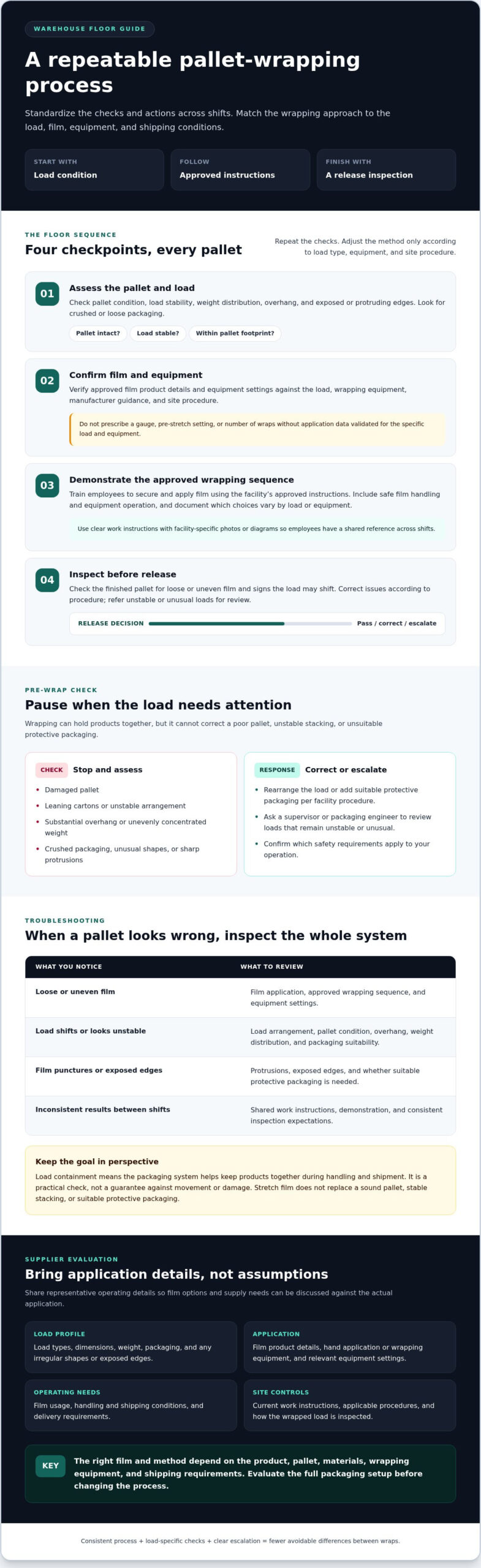
Standardize the checks and actions every employee must complete: prepare the load, handle film safely, follow the approved wrapping sequence, and inspect the pallet before release. Document which choices depend on load type or wrapping equipment, including the approved application method. A written work instruction with clear photos or diagrams from your facility can help employees follow the same process across shifts.
How inconsistent wrapping affects warehouse operations
Weak or uneven film application can allow products to shift during handling or transit. A moving load may arrive with damaged cartons or require additional inspection and handling. Stretch film isn’t a substitute for a sound pallet, stable stacking, or suitable protective packaging. Because results depend on load characteristics and shipping conditions, review the full packaging setup before changing the wrapping method.
Load containment is the ability of the packaging system to help keep products together on a pallet during handling and shipment. It’s a practical check, not a guarantee against movement or damage. Consistent application supports that goal, while a final inspection helps employees identify loads that need correction or escalation before dispatch.
Prepare the load, film, and equipment before training the wrapping sequence
Wrapping starts with an assessment, not with the film roll. Employees should check that the pallet is intact, the load is stable, weight is distributed appropriately, and cartons sit within the pallet footprint. Look for crushed or loose packaging and exposed edges that could puncture the film. Wrapping a poorly arranged load can hide the problem without correcting it.
Check the pallet and load before applying film
Pause before wrapping if the pallet is damaged, cartons are leaning, the load has substantial overhang, or weight is concentrated unevenly. Correct the arrangement or add suitable protective packaging according to facility procedures. Refer loads that remain unstable, have unusual shapes, or include sharp protrusions to a supervisor or packaging engineer before shipment.
OSHA’s cargo-stacking rule for covered marine-terminal operations requires cargo to be stacked stable and secure against sliding or collapse. Facilities should confirm which requirements apply to their operations and use their own safety procedures to assess each load.
Confirm film and wrapping equipment fit the application
Film selection depends on the load, its packaging, handling and shipping conditions, and whether employees apply the film by hand or use wrapping equipment. Supervisors should document the approved film product details and equipment settings, then verify compatibility with the film manufacturer and site procedure. Don’t prescribe a gauge, pre-stretch setting, or number of wraps without application data validated for the specific load and equipment.
For San Diego facilities comparing suppliers, sharing representative load dimensions and weights, packaging materials, handling conditions, and equipment details helps focus the discussion on actual operating needs. Teams looking for an industrial stretch film supplier in San Diego can review stretch film product information alongside their facility’s approved specifications. Confirm any proposed film or equipment change with the appropriate technical source before implementation.
Once the load and materials are confirmed, supervisors can train employees on the site-approved wrapping sequence. If film requirements or replenishment needs warrant review, share load and equipment details for a quote to support a more informed discussion.
Train employees with a repeatable pallet-wrapping sequence
A demonstration gives employees a shared method to follow, while the facility’s written procedure controls technical settings. The sequence below is a training framework, not a universal wrapping specification. Supervisors should adapt it to approved film, load types, equipment, and site safety practices. Manual and machine wrapping require different operating steps, so demonstrate each method only with the applicable equipment instructions in place.
Demonstrate the wrapping sequence at the workstation
Demonstrate the process at the actual workstation using a representative load. Explain each action, then have employees repeat it under observation. Keep the film start point and finish method consistent with the facility’s approved procedure.
- Prepare the film and workstation. Confirm the load has passed its pre-wrap inspection. Check the film roll and wrapping equipment against the site’s approved instructions.
- Secure the film start. Demonstrate the approved safe method for attaching film near the pallet base. Avoid improvised knots or methods that put hands near moving equipment.
- Wrap the lower load. Begin near the base and apply film according to the site sequence so the load is connected to the pallet as intended.
- Move around the load consistently. Maintain the specified overlap and controlled application. Follow the facility’s directions for tension and coverage. Don’t substitute personal judgment for validated settings.
- Cover and finish. Continue through the approved top coverage, then secure or cut the film using the method specified for the workstation.
For machine wrapping, employees should follow equipment-specific operating and safety instructions rather than applying manual techniques at the turntable. OSHA’s guidance on OSHA pallet wrapping hazards addresses risks associated with manual pallet wrapping, including cuts and back injuries. Include safe film handling and equipment use in the demonstration.
Check the finished pallet before release
Inspection completes the sequence. Have employees look for loose film or tails, uncovered areas, damaged packaging, and visible movement or instability. If something looks wrong, stop and notify a supervisor. Adding more film without identifying the cause may hide a poor load arrangement, damaged pallet, or packaging problem instead of correcting it.
Record inspection findings when the facility’s quality process requires documentation. A short, repeatable check helps supervisors identify recurring issues and determine whether the cause is technique, equipment, film selection, or load preparation.
A repeatable sequence makes pallet wrapping more consistent by giving each employee the same approved actions and checks to follow. If your team is reviewing film requirements, an industrial stretch film supplier serving San Diego operations can discuss material needs using load and equipment details. You can also share your stretch film requirements for review.
Evaluate wrapping quality and troubleshoot common pallet problems
A finished pallet needs more than a quick visual check. Look for loose film, breaks, uneven coverage, cartons that have shifted, and signs that the pallet or packaging is damaged. These symptoms can have several causes. Employees should note what they see and follow a consistent escalation process rather than automatically adding more film.
Recognize common wrapping and load-stability issues
Use a troubleshooting guide to connect observations with possible causes and safe next steps. The examples below are starting points, not definitive diagnoses. Load design, film, equipment, and handling conditions can all affect the result.
| Visible symptom | Possible causes to check | Next safe action |
|---|---|---|
| Loose or shifting load | Unstable stacking, poor weight distribution, damaged pallet, or insufficient containment | Hold the pallet for review. Check load arrangement and pallet condition before changing film application. |
| Film breaks during application | Exposed edges, damaged film, or an issue with application or equipment | Stop and inspect the load, film, and equipment under site procedure. Escalate recurring breaks. |
| Uneven or uncovered areas | Inconsistent application, load shape, or a mismatch between the approved method and the load | Compare the pallet with the approved sequence and ask a supervisor to assess unusual loads. |
| Cartons shift or appear damaged | Weak load arrangement, unsuitable packaging, handling impacts, or wrapping concerns | Stop release and request review of the full packaging system, not just the film. |
Stop work and request a supervisor’s assessment if the pallet is visibly unstable, the load has shifted, packaging is compromised, or equipment appears unsafe. Film can help hold a properly prepared load together, but it can’t correct a damaged pallet or unsuitable packaging.
Use quality checks to improve training
Where records are available, review defects by shift, product type, and wrapping method. Track film use against a consistent facility baseline, comparing similar loads and documenting changes in equipment, materials, or shipping conditions. This can help identify patterns and guide process reviews, but it doesn’t guarantee reduced material use or improved performance.
Update work instructions when approved film, equipment, or load requirements change. For supply reviews, compare recorded needs with the stretch film product details. A packaging supplier can use load dimensions, weight, packaging, equipment, and usage information to discuss suitable options. San Diego buyers evaluating an industrial stretch film supplier in San Diego can request a quote using their load and usage details to support a more relevant recommendation.
Maintain pallet-wrapping skills and stretch film supply in San Diego
Wrapping skills need ongoing attention. Include a hands-on demonstration during onboarding, observe employees using the approved process, and schedule refreshers when products, packaging, equipment, or shipping requirements change. Assign a qualified internal trainer and keep current, facility-approved work instructions accessible at the workstation. Coach employees on the specific steps you observe rather than treating training attendance as proof that the process is being followed.
Create a practical refresher and documentation plan
Use routine observations to check whether employees follow the work instruction and recognize when a load needs review. If a process changes, explain what changed and update the instruction before relying on the new method. Keep records in line with your facility’s quality process, including recurring defects that should inform future coaching.
Prepare a useful supplier inquiry for San Diego operations
Purchasing teams can make a supplier discussion more productive by gathering details that connect film selection to actual use. Include representative load types, dimensions, approximate weight, packaging, handling and shipping conditions, and current film details. Add the wrapping equipment type, usage patterns, delivery location, and any documented application problems.
Ask which recommendations are based on the information provided and which require testing or technical confirmation before implementation. Film compatibility and application depend on the load and equipment, so verify proposed changes against site procedures and manufacturer guidance. OEM Materials & Supplies provides stretch film to manufacturers in San Diego and other Southern California areas. For teams evaluating an industrial stretch film supplier San Diego operations can work with, discuss how replenishment needs align with usage patterns. Vendor-managed inventory can support replenishment coordination.
- Load profile: Common load dimensions, approximate weights, packaging, and any unusual shapes or edges.
- Film and application: Current film details, wrapping method, equipment type, and documented issues.
- Usage and delivery: Typical consumption patterns, delivery location, and replenishment needs.
- Validation: Questions about what should be tested or confirmed before changing materials or process instructions.
Share these details when you request a stretch film quote. Accurate load, equipment, and usage information helps frame a recommendation around your operation rather than assumptions.
Make pallet wrapping a consistent part of your operation
Reliable pallet wrapping starts with a sound load, a site-approved process, and a final inspection. Train employees to follow the same sequence, recognize when a pallet needs correction, and escalate problems instead of masking them with extra film. Review inspection records and update instructions when products, equipment, or shipping requirements change.
Purchasing teams can support that process by matching film requirements to actual loads and equipment, then planning replenishment around usage. OEM Materials & Supplies lists stretch film among its industrial packaging supplies and serves San Diego, Orange County, Los Angeles, and Riverside. If you’re evaluating an industrial stretch film supplier San Diego operations can work with, share load dimensions, approximate weight, current film details, equipment type, and usage patterns to help guide the discussion.
Request a stretch film quote for your San Diego operation with the details available to your team. A clear process and an informed supply review can help you identify a practical next step for your warehouse.
Frequently Asked Questions
How do you train warehouse staff to wrap pallets consistently?
Train staff with a demonstration, written site-approved steps, supervised practice, and a final inspection. The goal is consistent execution of your facility’s process, not one wrapping recipe for every load. Ask employees to explain when they should stop and request help, such as when a pallet is damaged or the load appears unstable. Confirm readiness by observing their work, and refresh training when approved materials, equipment, or load requirements change.
What should employees check before wrapping a pallet?
Before wrapping, employees should inspect the pallet’s condition, load stability, weight distribution, overhang, and protruding edges. Correct load arrangement or packaging problems first, since additional film won’t repair a damaged pallet or stabilize a poorly stacked load. Staff should also have the approved film and equipment instructions available. Escalate damaged pallets, unstable loads, or unusual products to a supervisor rather than attempting to solve the issue with extra film.
How many layers of stretch film should be used on a pallet?
There’s no reliable universal layer count for every pallet. The appropriate application depends on load dimensions, weight distribution, film, wrapping equipment, handling, and shipping conditions. Follow your facility’s validated procedure, and confirm proposed changes through appropriate testing before adopting them. If coverage looks inadequate or a load seems unstable, investigate the cause first. Automatically adding film may not address an issue with load arrangement, pallet condition, packaging, or equipment.
How can warehouse staff tell if a pallet is wrapped correctly?
Staff should check for consistent coverage, secure film application, visible load movement, damaged packaging, and pallet damage. A visual inspection helps identify concerns, but it doesn’t replace a site-approved performance requirement. If cartons shift, film breaks, or coverage appears inadequate, hold the pallet for review. Identify whether the issue involves film application, load arrangement, packaging, or the pallet before rewrapping or releasing it for shipment.
Does stretch film choice affect pallet stability?
Yes. Film is one factor in pallet stability, along with load arrangement, pallet condition, application method, equipment, and transport conditions. Don’t assume a film is suitable based only on a general product description. Confirm its fit for the specific application using facility procedures and appropriate technical guidance. Buyers evaluating an industrial stretch film supplier in San Diego should share representative load and equipment details to support a relevant materials discussion.
How often should warehouse staff receive pallet-wrapping refresher training?
There’s no universal refresher schedule for every warehouse. Provide training when employees are new to the task and review the process when approved film, equipment, products, or procedures change. Supervisors can use observed work and inspection records to identify where coaching is needed, such as inconsistent coverage or recurring film breaks. Set a review cadence that fits the facility’s operations and quality requirements, and keep work instructions current and accessible.
How can San Diego warehouses keep stretch film available without overstocking?
Review usage patterns, storage capacity, delivery needs, and the operational impact of a shortage before setting replenishment levels. Avoid assuming a particular inventory reduction is achievable without analyzing actual demand. For teams searching “industrial stretch film supplier San Diego,” sharing reliable usage and delivery information can make a supplier discussion more specific. OEM Materials & Supplies serves San Diego, Orange County, Los Angeles, and Riverside, and its vendor-managed inventory offering may help coordinate replenishment.