
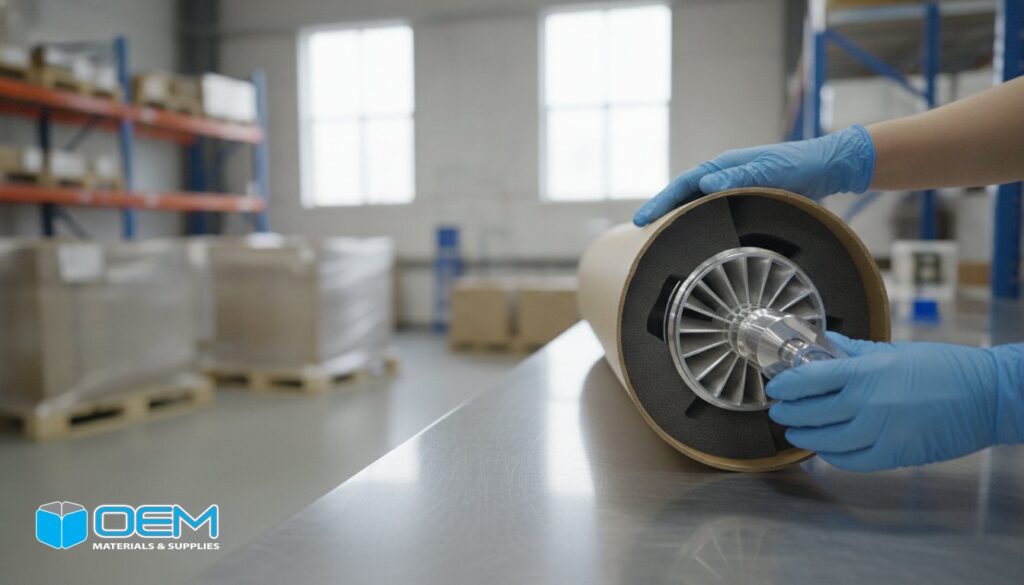
A standard shipping tube is often the weakest link in an otherwise sophisticated industrial supply chain. When you’re transporting high-value aerospace components or delicate medical instruments across Southern California, a generic container isn’t a packaging strategy; it’s a liability. Poorly fitted packaging leads to product movement and transit damage, while oversized tubes inflate your shipping costs through unnecessary dimensional weight charges. Utilizing precision-engineered custom mailing tubes ensures that every component fits securely, maintaining its integrity from the warehouse floor to the final destination.
You recognize that consistent protection is vital for maintaining lean manufacturing schedules and avoiding costly returns. This guide demonstrates how custom mailing tubes protect critical industrial components and optimize supply chain efficiency for manufacturers in Los Angeles and the surrounding counties. We will explore the technical benefits of specialized crush strengths, the logistical advantages of right-sized packaging, and how integrated services like vendor-managed inventory help your facility avoid production-halting stockouts. By focusing on precision and durability, you can streamline your operations and ensure your products arrive in perfect condition every time.
Key Takeaways
- Custom mailing tubes provide superior crush resistance compared to standard stock options, ensuring high-value components remain secure during transit.
- Precision engineering of wall thickness and internal diameters is critical to achieving a secure fit for specialized manufacturing parts.
- Southern California manufacturers in the aerospace and medical sectors can reduce damage rates by utilizing packaging designed for their specific technical constraints.
- Integrating Vendor Managed Inventory (VMI) into your supply chain helps stabilize material availability and prevents production delays.
- Rapid prototyping and professional design services allow for the seamless integration of mailing tubes with custom foam and other protective materials.
The Role of Custom Mailing Tubes in Industrial Protection
In a manufacturing environment, packaging is a functional extension of the product itself. Industrial custom mailing tubes are not merely shipping containers; they are high-strength paperboard cylinders engineered to meet exact dimensional tolerances. While retail tubes often prioritize cost over structural integrity, industrial versions utilize dense Kraft paperboard and specific adhesives to withstand the rigors of heavy-duty transport and warehouse stacking.
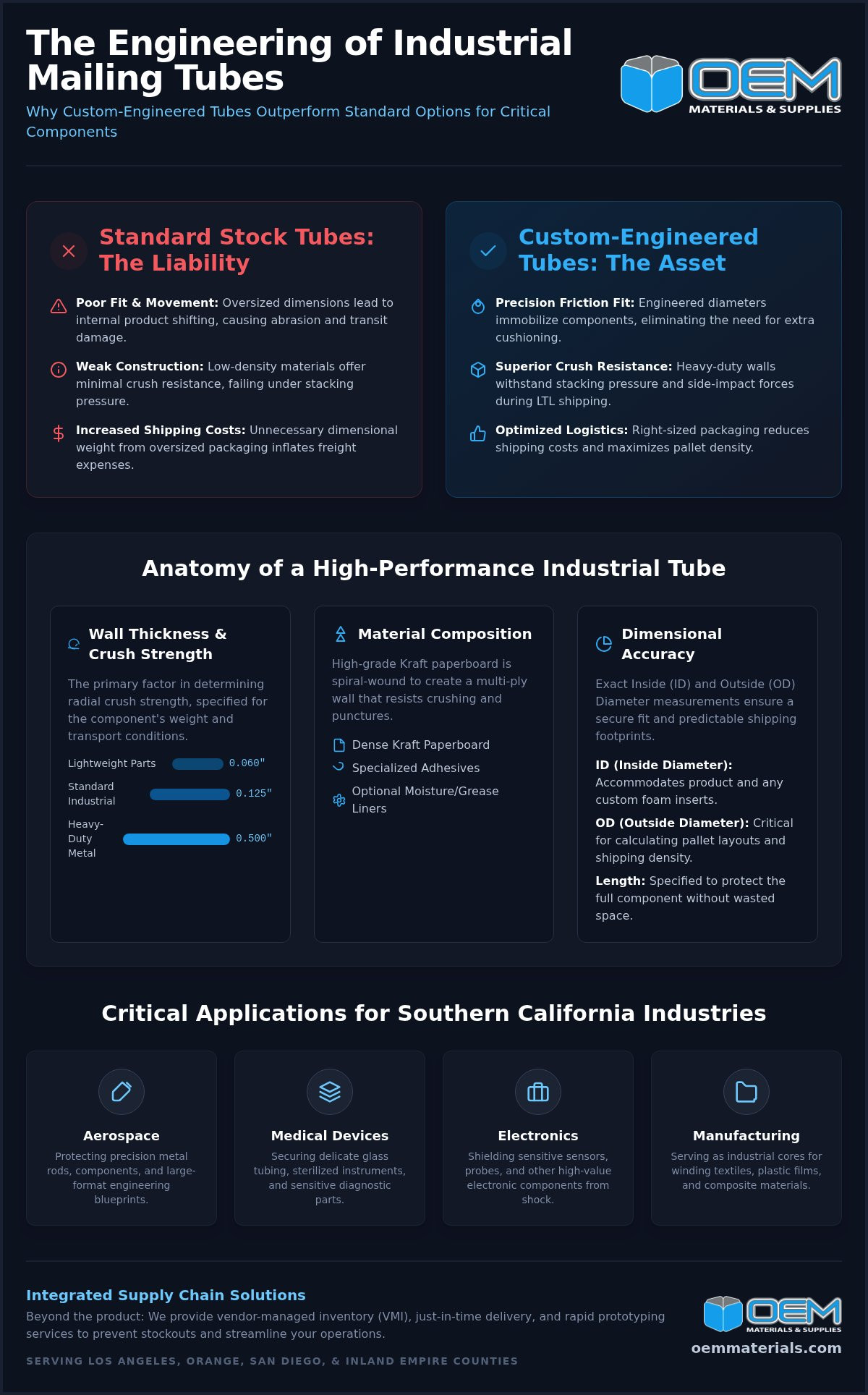
Standard stock sizes frequently fail to protect specialized components. If a tube is even slightly oversized, the internal item can shift during transit. This movement creates kinetic energy that can breach the end caps or cause surface abrasion on polished metal and glass. By specifying exact lengths and diameters, engineers ensure a friction fit that immobilizes the product, often eliminating the need for secondary cushioning materials. Beyond shipping, these tubes serve as essential internal cores for industrial textiles, plastic films, and composite materials, providing the necessary rigidity for high-speed winding and unwinding processes.
Beyond Documents: Protecting Industrial Components
Modern manufacturing in Southern California requires more than just document storage. Heavy-duty custom mailing tubes provide a protective shell for high-value items such as precision metal rods, delicate glass tubing, and sensitive electronic sensors. When these items are secured in a tube with a precise diameter, the risk of bending or shattering is significantly reduced. This approach is also superior for protecting critical engineering schematics and aerospace blueprints, where a single crease or tear can compromise the legibility of technical data.
Material Composition and Durability
The strength of an industrial tube comes from its construction. High-grade Kraft paperboard layers are spiral-wound around a mandrel, creating a multi-ply wall that resists crushing and punctures. The winding process is a precise operation that determines the final strength of the cylinder. For specific environments, manufacturers can specify specialized exterior plys. These include moisture-resistant barriers to protect against coastal humidity or grease-resistant liners for oily mechanical parts. This level of customization ensures the packaging performs reliably in the diverse climates found across Los Angeles and Orange County.
Engineering Specifications for Custom Paper Tubes
Precision engineering is the difference between a successful delivery and a costly insurance claim. When specifying custom mailing tubes, engineers must look beyond basic length and width to evaluate the structural physics of the cylinder. The performance of a tube under load is dictated by its wall thickness, the quality of the ply bonding, and the type of closure system used. Understanding these variables allows procurement teams to balance material costs with the necessary protection levels for high-value industrial goods.
Achieving a precise fit requires an accurate measurement of the inside diameter (ID) versus the outside diameter (OD). The ID must be calculated to accommodate the product and any necessary custom foam packaging or internal cushioning. Meanwhile, the OD is a critical metric for logistics managers who need to calculate pallet footprints and shipping densities. If you are unsure about the exact tolerances required for your components, you can request a technical consultation to review your specific dimensions and weights.
Wall Thickness and Crush Resistance
Wall thickness is the primary factor in determining radial crush strength. Common industrial specifications range from 0.060 inches for lightweight parts to heavy-duty 0.500-inch walls for high-density metal components. Thicker walls are essential for stacking in warehouse environments, where the tubes at the bottom of a pallet must support significant vertical pressure. In Less-than-Truckload (LTL) shipping, these reinforced walls also protect against side-impact forces and shifting cargo that can easily collapse standard retail-grade packaging.
Closure Systems and End Caps
The method of sealing a tube must align with the weight and fragility of the contents. Plastic plug caps are sufficient for lightweight sensors or schematics, providing a secure friction fit. However, heavy industrial parts require metal end caps that are often stapled or taped for additional security. For extreme applications, such as heavy machinery shafts, wood or molded end stops provide the highest level of impact resistance. Conversely, high-volume shipping of low-weight items may utilize crimped ends, which eliminate the need for separate caps and reduce labor costs during the packing process.
Customizable Exterior Options
Functional customization extends to the outer ply of the tube. Colored outer wraps allow for immediate inventory identification in large distribution centers across the Inland Empire and Los Angeles. Custom labeling and printing can be applied directly to the tube to ensure compliance with aerospace or medical shipping regulations. Additionally, specialized internal liners can be specified to prevent chemical reactions or corrosion when sensitive metal parts are stored for extended periods. These engineering choices transform a simple cylinder into a specialized industrial tool.
Industry-Specific Applications in Southern California
Southern California is a global hub for specialized manufacturing. From the aerospace clusters in Los Angeles and Orange County to the life science corridors in San Diego, the demand for high-performance custom mailing tubes is driven by the technical nature of the products being shipped. Generic packaging cannot meet the rigorous standards of these sectors. Each industry faces unique logistical challenges that require specific engineering choices to ensure product safety and operational efficiency.
In the aerospace and defense sectors, protection is non-negotiable. Manufacturers often need to transport long-form composite materials and metal extrusions that are susceptible to bending or surface damage. Precision-engineered tubes ensure these flight-ready components maintain their exact dimensional tolerances throughout the supply chain. Additionally, heavy-duty tubes are used for the secure transport of classified technical documents and large-format engineering schematics where legibility and physical integrity are critical. This same level of protection is vital for high-end commercial graphics; for example, Banner 4 Sale utilizes these durable containers to ensure that large-format banners and signs arrive at their destination in pristine condition.
The medical device industry in San Diego requires packaging that balances protection with cleanliness. Specialized tubes protect delicate catheters and surgical instruments from physical impact during transit. These tubes are often integrated with custom foam packaging to create organized, multi-component kits that are easy for medical professionals to use. Because medical manufacturing environments are highly controlled, the packaging materials must be clean and free from excess dust or particulate matter that could contaminate a sterile field.
Automotive and Industrial Textiles
Automotive suppliers in the Inland Empire utilize industrial tubes for shipping specialized interior trim and long mechanical parts. By using a tube with a precise fit, they reduce the risk of surface scratches on high-finish components. Similarly, for companies producing industrial fabrics and specialized films, the requirements shift toward the performance of mailing tubes and cores as winding foundations. These cores must exhibit high torque resistance to withstand the forces of automated winding processes without collapsing or deforming. Proper core selection prevents material deformation, ensuring that the film or textile remains flat and usable when it reaches the end user.
Every industry has unique constraints. For manufacturers facing complex logistical challenges, seeking custom packaging design support is the most effective way to engineer a solution that fits both the product and the production line. This collaborative approach ensures that the packaging serves as a reliable asset rather than a logistical hurdle.
Logistical Advantages of Custom Sourcing and VMI
Packaging efficiency is a critical driver of overall supply chain performance. For manufacturers in Southern California, the decision to use custom mailing tubes over generic stock options often results in significant operational improvements. It is important to clarify that specific cost savings and performance results depend on variables such as product dimensions, material choice, and your specific shipping requirements. While the per-unit price of a stock tube might appear lower on a spreadsheet, the total cost of ownership often reveals hidden expenses related to excess material and higher damage rates.
Local sourcing provides a distinct advantage for facilities in Los Angeles, San Diego, and Riverside. Working with a regional partner reduces lead times and minimizes the freight costs associated with transporting bulky packaging materials. Additionally, labor costs are reduced when tubes arrive pre-assembled with caps or specialized internal inserts, allowing your team to move products through the packing station with greater speed and consistency.
Stock versus Custom: A Logistical Comparison
Procurement teams often overlook the hidden costs of using oversized stock tubes. When a tube does not fit the product precisely, the resulting empty space must be filled with dunnage, increasing both material use and packing time. More importantly, oversized packaging triggers higher dimensional (DIM) weight charges from carriers. Custom-engineered solutions eliminate this waste by matching the packaging to the product dimensions exactly, though actual freight savings will vary based on carrier contracts and shipping zones.
| Logistical Metric | Stock Solutions | Custom-Engineered Tubes |
|---|---|---|
| Dimensional Accuracy | Fixed increments only | Precision-cut to exact spec |
| Shipping Efficiency | Higher DIM weight fees | Optimized for lower rates |
| Transit Protection | Higher risk of movement | Secure friction fit |
| Labor Requirement | Manual dunnage required | Rapid, dunnage-free packing |
Implementing VMI for Packaging Supplies
Managing high-volume packaging requirements requires a strategic approach to inventory. Implementing Vendor Managed Inventory (VMI) ensures that your production line never halts due to a packaging stockout. Under this model, OEM Materials & Supplies monitors your usage and replenishes stock automatically, maintaining optimal levels based on your real-time demand. This system frees up valuable floor space in your warehouse, as you no longer need to store bulk quantities of empty tubes on-site.
This service integrates seamlessly with just-in-time (JIT) delivery protocols, supporting lean manufacturing principles across your operation. By shifting the burden of inventory management to a trusted partner, your team can focus on core manufacturing tasks while maintaining the confidence that your custom mailing tubes will be available exactly when needed. To see how these logistical services can be tailored to your specific annual usage and production cycles, request a quote for a comprehensive packaging evaluation.
Selecting an Industrial Partner for Custom Packaging
Choosing a supplier for custom mailing tubes is a strategic decision that impacts your entire production timeline. A reliable partner doesn’t just sell cylinders; they understand the specific mechanical stresses your products face during transit and storage. For manufacturers in Southern California, proximity to a supplier who can provide rapid prototyping is a significant advantage. This capability is especially critical for new product launches in the medical or electronics sectors, where a precise fit must be verified through physical testing before a high-volume order is placed.
Reliability is built on technical transparency. You should evaluate potential partners based on their ability to provide documented material specifications and crush strength data. A supplier that functions as a consultant will help you navigate trade-offs between wall thickness and material costs, ensuring you don’t over-engineer the packaging while still maintaining a zero-damage goal. This level of collaboration transforms packaging from a commodity expense into a controlled variable in your quality assurance process.
Evaluating Technical Expertise
Purchasing managers should look beyond the price per unit and ask detailed questions about quality control and material sourcing. It’s essential to know how a supplier maintains consistent tolerances across thousands of units, as even a minor deviation in internal diameter can compromise a friction fit. Understanding the end-use environment is equally important. A tube destined for long-term storage in a humid warehouse in Los Angeles County requires different material properties than one used for a single cross-country shipment. Consistent quality ensures that your packing lines run without interruption or manual adjustments.
Integrated Packaging Solutions
The most efficient supply chains often rely on a single partner for a full suite of materials. Sourcing your custom mailing tubes alongside corrugated boxes and pallets streamlines your procurement and reduces administrative overhead. This integrated approach allows for the design of comprehensive packaging kits where the tube is perfectly nested within custom foam or secondary containers. By combining tubes with specialized cushioning materials, you create a multi-layered defense against impact and vibration. Working with a full-service provider in the Inland Empire or Orange County simplifies logistics and ensures all components of your packaging system are engineered to work together seamlessly.
Optimizing Your Industrial Supply Chain with Precision Packaging
Precision packaging is a technical requirement for modern manufacturing. By prioritizing specific engineering tolerances and wall thicknesses, you ensure that high-value components remain secure from the production floor to the end user. Transitioning to custom mailing tubes eliminates the inefficiencies of oversized stock containers and reduces the risk of transit damage that can disrupt lean production schedules. This approach ensures operational stability across your entire distribution network.
Beyond the physical container, your operation’s success depends on logistical reliability. Implementing vendor-managed inventory and just-in-time delivery ensures that your facility maintains consistent stock levels without sacrificing valuable warehouse space. As a dedicated partner for Southern California manufacturers, OEM Materials & Supplies provides the local support and prototyping services necessary to solve your most complex packaging challenges.
We are ready to help you optimize your shipping density and protection protocols. To facilitate an accurate recommendation and quote, please provide your product dimensions, weight, and estimated annual usage when you contact us. Request a custom quote for industrial mailing tubes to begin engineering a more efficient shipping solution for your facility.
Frequently Asked Questions
What is the standard lead time for custom mailing tube production?
Lead times for custom mailing tubes typically depend on the complexity of the engineering specifications and current production volumes. While stock items are often available for immediate dispatch, custom runs require a period for setup, winding, and curing of the adhesives. For manufacturers in Los Angeles and Orange County, local production often facilitates faster turnaround compared to out-of-state sourcing. You should consult with your representative for a specific timeline based on your order volume.
How do I determine the correct wall thickness for heavy industrial parts?
Determining the appropriate wall thickness requires an analysis of the product’s weight and the anticipated stacking height in your warehouse. Heavier metal components or precision tools usually require walls ranging from 0.125 to 0.500 inches to ensure radial crush resistance. The goal is to prevent the tube from deforming under the weight of other pallets during transit. Providing the exact weight and dimensions of your parts allows for a more accurate engineering recommendation.
Can custom mailing tubes be reused in a closed-loop manufacturing process?
High-strength industrial tubes are often suitable for multiple uses within a closed-loop supply chain, provided they aren’t subjected to extreme moisture or structural damage. Heavy-duty spiral-wound construction maintains its integrity over several transit cycles between regional facilities in San Diego and the Inland Empire. Reusing these materials can help reduce overall packaging costs and minimize waste, though you should inspect the end closures and wall rigidity before each subsequent shipment to ensure performance.
What are the most common end cap materials for industrial shipping tubes?
The most common end cap materials include plastic, metal, and wood. Plastic plug caps are the standard for lightweight items and provide a secure friction fit for most applications. For heavier industrial parts that might shift and impact the ends, metal caps offer superior puncture resistance. Wood or molded end stops are reserved for extreme weights or high-value machinery shafts where the highest level of containment and structural support is required.
Are there eco-friendly or recyclable options for custom paper tubes?
Most industrial paper tubes are inherently eco-friendly because they’re constructed from recycled Kraft paperboard and are fully recyclable at the end of their service life. The adhesives used in the spiral-winding process are generally water-based, making the tubes compatible with standard paper recycling streams in most Southern California municipalities. Choosing a local supplier also reduces the carbon footprint associated with long-distance freight, supporting the sustainability goals of many modern manufacturing organizations.
How does Vendor Managed Inventory work for packaging supplies?
Vendor Managed Inventory (VMI) is a collaborative system where your supplier monitors your stock levels and automatically triggers replenishment orders. Instead of your team manually tracking inventory of custom mailing tubes, the supplier uses your usage data to ensure a consistent supply is always on-site. This proactive approach eliminates the risk of production delays caused by packaging shortages and allows your warehouse team to focus on higher-value operational tasks instead of procurement.
Can I get custom-printed tubes for part identification in my warehouse?
Just as VMI streamlines your supply chain, professional facility services can streamline your breakroom management; many regional businesses utilize Vending SoCal to provide hassle-free vending solutions for their industrial and commercial teams.
Custom printing and labeling are standard options for industrial tubes to aid in inventory management and shipping compliance. You can specify part numbers, barcodes, or branding to be printed directly onto the outer Kraft ply or an applied wrap. This level of identification is particularly useful in large distribution centers across Riverside and Los Angeles, where rapid visual sorting of different components is necessary to maintain high-velocity fulfillment and production schedules.
What is the difference between a mailing tube and an industrial core?
While both are spiral-wound cylinders, a mailing tube is designed for protection during transit, whereas an industrial core serves as a structural foundation for winding materials. Cores are engineered with specific torque resistance and surface finishes to support films, textiles, or foils during high-speed manufacturing processes. A mailing tube includes a closure system like an end cap to secure contents, while a core is typically open-ended and built for internal mechanical support.