
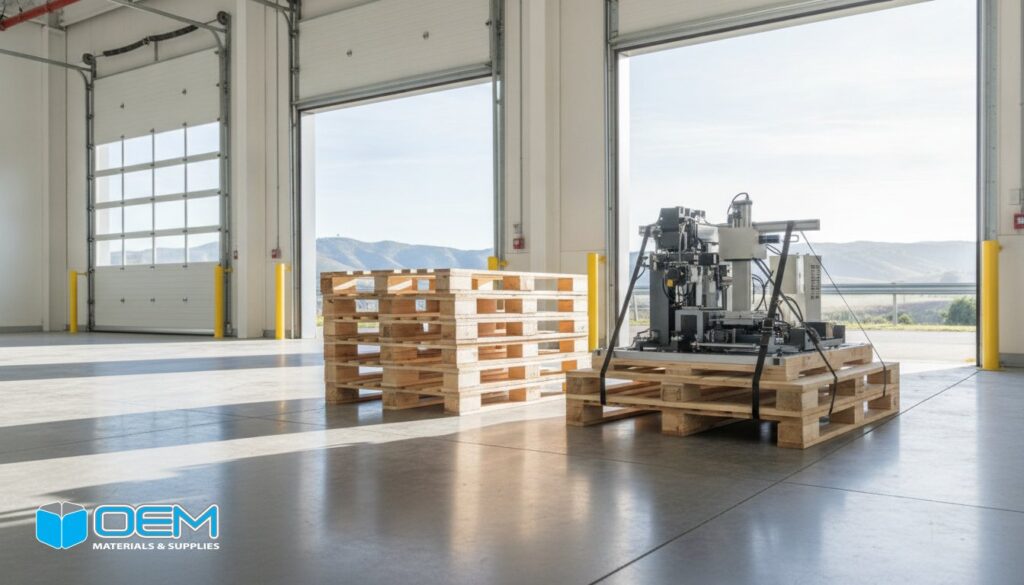
A standard shipping platform is often the weakest link in an otherwise sophisticated supply chain. While a commodity pallet might seem cost effective initially, it frequently leads to expensive product damage or inefficient container loading that drives up freight costs. Partnering with a specialized custom pallet manufacturer allows you to move beyond one size fits all solutions. By engineering a platform specifically for your product dimensions and weight requirements, you ensure that high value equipment remains secure from the warehouse floor in Los Angeles to its final destination.
Logistics professionals understand that a single regulatory delay can derail an entire production schedule. You need a partner who ensures every piece of wood packaging meets ISPM 15 standards for international transit. This article details how custom pallets optimize industrial supply chains, ensure export compliance, and protect sensitive equipment during transit. We will also explore how local services like vendor managed inventory and just in time delivery help manufacturers in Orange County and the Inland Empire reduce overhead while maintaining a seamless flow of goods.
Key Takeaways
- Identify why standard 48×40 pallets cause product damage and how custom sizing protects high value equipment.
- Evaluate the structural benefits of hardwood, softwood, and plastic materials based on your specific industrial application.
- Verify ISPM 15 compliance standards to prevent costly shipping delays and port rejections during international transit.
- Partner with a custom pallet manufacturer that offers vendor managed inventory to optimize warehouse space and ensure just in time delivery.
- Select a Southern California supplier with the technical design capabilities required for rapid prototyping and aerospace grade precision.
Why Standard Pallets Fail Specialized Industrial Loads
Standard 48×40 GMA pallets are the industry workhorse for consumer goods, but they are often inadequate for heavy industrial assets. When manufacturers in Southern California ship aerospace components or complex medical machinery, the “standard” platform often becomes a liability. A custom pallet manufacturer engineers solutions that account for the unique footprint and weight of the cargo rather than forcing the product to fit a generic template. This technical approach addresses the structural vulnerabilities that lead to transit failures.
The Risk of Product Overhang and Damage
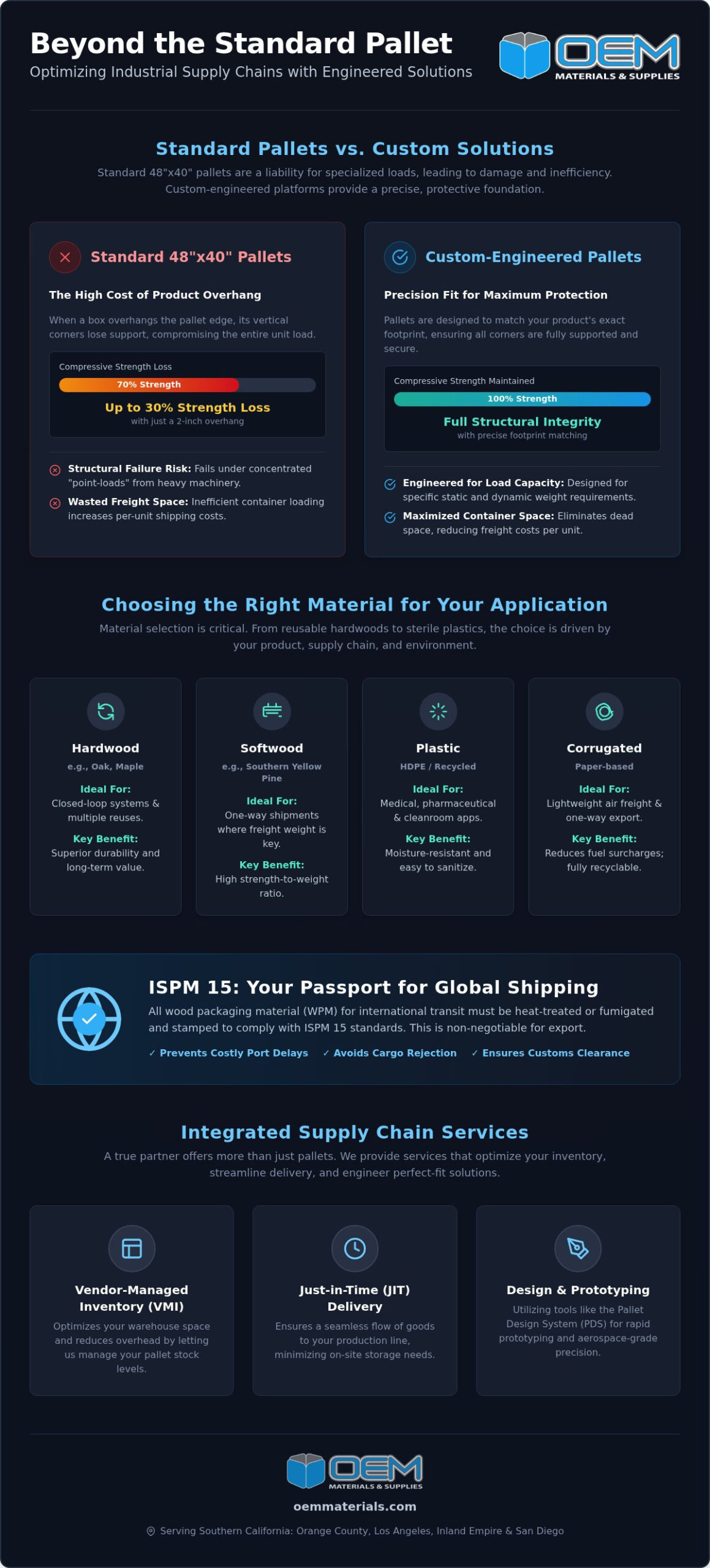
Even a slight misalignment on a shipping platform can be catastrophic. If a corrugated box overhangs the pallet edge by just two inches, it can lose up to 30 percent of its compressive strength. This occurs because the vertical corners of the container, which provide the majority of the structural support, are no longer resting on the pallet deck. During long-haul transit, constant vibration and shifting cause these unsupported edges to buckle or collapse. By utilizing precise footprint matching, operations managers can significantly reduce insurance claims and ensure that high-value equipment arrives without cosmetic or functional damage.
Weight Distribution and Structural Integrity
Industrial loads frequently involve heavy machinery that creates “point-loading” rather than an even weight distribution. While standard pallet materials and designs are sufficient for uniform loads, a heavy engine or specialized medical device might place thousands of pounds of pressure on a single square foot. This concentrated stress requires reinforced deck boards or custom stringer placement to prevent the platform from splintering or collapsing.
We evaluate both static and dynamic load capacities to ensure structural integrity during every stage of the supply chain. Static capacity refers to the weight the pallet can support while stationary, whereas dynamic capacity accounts for the stresses of being lifted by a forklift or moved in a trailer. Selecting materials based on the specific PSI requirements of the industrial load is essential for safety. Beyond wood, plastic pallets are often utilized in medical environments to prevent chemical reactions or contamination, providing a sterile and durable alternative for cleanroom applications.
Custom dimensions also allow for maximum container and trailer space utilization. By eliminating the dead space caused by oversized standard pallets, companies can often increase the number of units per shipment, directly lowering the total cost of freight per item. This level of optimization is particularly valuable for businesses operating in high-rent regions like Orange County and Los Angeles, where every square foot of warehouse and trailer space must be utilized efficiently.
Engineering the Right Custom Pallet: Materials and Design Specs
Designing an industrial platform requires more than just measuring the base of a machine. It involves a technical evaluation of material physics and load dynamics. A custom pallet manufacturer utilizes the Pallet Design System (PDS) to simulate how specific load patterns affect structural integrity before a single nail is driven. This engineering phase ensures that the selected materials can withstand the rigors of your specific supply chain without over-engineering the solution and incurring unnecessary costs.
Material Selection for Industrial Applications
The choice between hardwood and softwood is driven by the intended use of the pallet. Hardwoods like oak or maple provide superior durability for closed-loop systems where pallets are reused multiple times. Conversely, softwoods such as southern yellow pine offer a high strength to weight ratio, making them ideal for one-way shipments where reducing freight weight is a priority. For international transit, all wood materials must meet international shipping standards (ISPM 15) to ensure the cargo clears customs without biological contamination risks.
For specialized environments, wood may not be the optimal choice. In medical and pharmaceutical sectors, heavy duty plastic pallets are specified for their moisture resistance and ease of sanitization. These units are essential for cleanroom applications where wood fibers or dust could compromise sensitive equipment. Additionally, for lightweight air freight, corrugated pallets provide a recyclable alternative that reduces fuel surcharges while still maintaining surprising structural rigidity for uniform loads.
Advanced Design and Prototyping
Custom engineering allows for functional features that standard pallets lack. We design stringer and block configurations that facilitate 4-way forklift entry, which is critical for maneuvering in tight warehouse spaces in Los Angeles or Orange County. Adding chamfered edges to bottom lead boards prevents damage from pallet jack wheels, while wing decks can be integrated to accommodate specialized lifting slings or to provide a wider footprint for oversized wood crates.
One of the most significant advantages of a local partner is the ability to perform rapid prototyping. For aerospace and automotive components with complex geometries, we can quickly develop a prototype that integrates the pallet with custom foam packaging. This holistic approach ensures that the cushioning and the base platform work together to absorb shock and vibration. If you are developing a new product line, you can request a design consultation to verify that your packaging is optimized for both protection and shipping efficiency.
Compliance and Standards for International Shipping
For Southern California manufacturers, the Port of Los Angeles and the Port of Long Beach serve as the primary gateways to the global market. However, these high-volume transit hubs are subject to rigorous inspections by U.S. Customs and Border Protection. Compliance with international regulations is mandatory to prevent shipments from being quarantined or refused entry. A specialized custom pallet manufacturer ensures that every load-bearing platform meets these strict legal requirements before your goods ever reach the terminal.
ISPM-15 and Heat Treatment Protocols
The International Standards for Phytosanitary Measures No. 15 (ISPM 15) is the global benchmark for wood packaging. This regulation requires all solid wood materials thicker than 6mm to be debarked and heat treated to eliminate wood-boring pests. The heat treatment process involves heating the wood’s core to a minimum of 56°C (132.8°F) for at least 30 continuous minutes. Once treated, the wood must be marked with a permanent, legible IPPC stamp. This stamp acts as a passport for your wood crates and pallets, verifying compliance to customs officials in over 180 countries.
Using non-compliant wood is a high-risk gamble. If a single pallet in a container lacks the proper IPPC mark, authorities may order the entire shipment to be heat treated at the port, returned to the origin, or destroyed at the shipper’s expense. These delays disrupt just-in-time production schedules and result in significant demurrage fees. Working with an experienced partner eliminates these variables by providing fully documented, compliant wood packaging solutions.
Export Standards for High-Growth Markets
Different regions often have specific pallet preferences beyond basic phytosanitary rules. For example, the European Pallet Association (EPAL) maintains strict standards for the 800x1200mm Euro-pallet, while the chemical industry often specifies CP pallets. When exporting automotive or electronic components to Asian markets, dimensional consistency is critical for integration with automated storage and retrieval systems (AS/RS). We design custom units that mirror these international specifications while maintaining the structural integrity required for transoceanic transit.
One effective strategy to bypass ISPM-15 regulations entirely is the use of alternative materials. Since the standard only applies to solid wood, plastic pallets and processed wood materials like plywood or OSB are exempt from heat treatment requirements. Plastic units are particularly advantageous for high-growth medical and food sectors where hygiene and regulatory speed are prioritized. Whether you utilize heat-treated lumber or synthetic materials, ensuring your documentation matches the physical markings on your pallets is essential for seamless customs clearance.
Optimizing Supply Chains with Pallet Management and VMI
Efficient supply chain management requires more than just high-quality packaging materials. It demands a logistical strategy that reduces overhead and prevents production bottlenecks. When you work with a custom pallet manufacturer that understands the complexities of Southern California logistics, you gain access to value-added services that streamline operations. Consolidating your procurement by sourcing pallets, wood crates, and corrugated boxes from a single partner simplifies the billing process and ensures design consistency across your entire packaging suite.
Vendor Managed Inventory (VMI) Benefits
Implementing a Vendor Managed Inventory program transforms your pallet supply from a reactive purchase into an automated process. Under this model, we monitor your pallet usage and maintain agreed-upon stock levels at your facility or our local warehouse. This eliminates the administrative burden of generating frequent purchase orders and prevents the risk of stockouts during peak production cycles. Additionally, VMI improves cash flow by allowing you to pay for inventory as it’s consumed rather than tying up capital in large bulk orders. It’s a practical solution for manufacturers in sectors like aerospace or medical devices where inventory precision is mandatory.
Just-In-Time (JIT) Delivery for SoCal Manufacturers
Warehouse space in Los Angeles, Orange County, and the Inland Empire is a premium asset. Storing stacks of empty pallets on the factory floor is an inefficient use of square footage that could be dedicated to production. Our just-in-time delivery services allow you to coordinate shipments with your specific production schedules. By receiving smaller, frequent deliveries of custom units, you reduce the physical footprint required for packaging storage. This flexibility is essential for scaling operations based on seasonal demand or sudden shifts in manufacturing requirements.
Beyond inventory management, we focus on reducing your internal labor costs. We provide pre-assembled packaging kits that integrate pallets with custom foam packaging and crates. Delivering these units ready for immediate use eliminates the time your staff spends on assembly, allowing them to focus on core manufacturing tasks. If you’re looking to audit your current inventory levels and storage efficiency, you can request a supply chain consultation to identify specific areas for cost reduction.
Selecting a Custom Pallet Manufacturer in Southern California
Choosing a partner for industrial packaging requires looking beyond the price per unit. A reliable custom pallet manufacturer acts as a technical consultant rather than a simple vendor. You must verify that a potential partner has the engineering capabilities to handle the specific requirements of your industry, whether that involves aerospace tolerances or medical-grade hygiene standards. This selection process is about finding a long-term solutions partner who understands the intricacies of your supply chain.
Key Questions for Pallet Suppliers
When vetting a supplier, start with their technical documentation. Can the manufacturer provide detailed engineering drawings or load simulations before production? Understanding the lead times for custom prototypes is also critical, especially for R&D projects in the automotive or electronics sectors. Ask if they offer onsite consultations for complex packaging challenges. A partner who visits your facility can identify specific logistical hurdles, such as narrow warehouse aisles or specialized loading docks, that a generic supplier would miss. You can learn more about this process through our custom packaging design services.
The Advantage of Southern California Proximity
Sourcing from local facilities in Orange County or Los Angeles County provides a distinct logistical advantage. Proximity significantly lowers freight costs, which is a major factor given the bulk and weight of industrial pallets. Local manufacturing also ensures rapid lead times for design adjustments or emergency replenishment. For manufacturers serving the aerospace and medical hubs in San Diego and the Inland Empire, a local partner offers immediate support for troubleshooting packaging failures. This geographical alignment is essential for maintaining the just-in-time schedules discussed in previous sections.
Finally, ensure the manufacturer can provide integrated solutions. A pallet is rarely a standalone component; it must work in tandem with custom foam packaging and wood crates to provide comprehensive protection. Verify that their facility is certified for ISPM 15 compliance to avoid the international shipping delays that occur at the Port of Long Beach. Selecting a custom pallet manufacturer with a broad capability set allows you to consolidate your supply chain and maintain consistent quality across all your material requirements.
Building a Resilient Supply Chain with Engineered Pallets
Transitioning from commodity platforms to engineered solutions is a critical step in protecting industrial assets and reducing the total cost of ownership. Aligning pallet dimensions with specific load requirements eliminates the structural failures and product overhang that lead to costly damage. This technical precision also ensures compliance with ISPM 15 standards, which is vital for seamless transit through the Port of Los Angeles and Port of Long Beach. Integrating these platforms with custom foam and crates provides a comprehensive protection strategy for the aerospace, medical, and automotive sectors.
Partnering with an experienced custom pallet manufacturer provides more than just materials; it delivers logistical stability. We offer expert design and rapid prototyping while serving Los Angeles, Orange County, San Diego, and Riverside with reliable local delivery. Our vendor managed inventory and just-in-time delivery services allow you to optimize warehouse space and focus on production rather than packaging procurement. We are ready to support your operations with reliable, high-performance packaging solutions that meet rigorous industry standards.
Contact OEM Materials & Supplies for a Custom Pallet Quote and request a consultation for your specific load dimensions and weight requirements. We look forward to helping you streamline your distribution process.
Frequently Asked Questions
What is the standard lead time for a custom pallet design?
Lead times for custom designs vary based on the complexity of the load requirements and current material availability. Rapid prototyping can often be completed within a few business days for manufacturers in Los Angeles and Orange County. Larger production runs typically require longer windows depending on the total volume. We recommend sharing your specific production schedule and annual usage so we can align our manufacturing timeline with your logistical needs.
How do I determine if I need hardwood or softwood for my pallets?
Material selection depends on whether your supply chain is a closed-loop or one-way system. Hardwoods like oak provide the durability required for multiple reuses and high-stress industrial environments. Softwoods offer a superior strength-to-weight ratio, which is ideal for reducing freight costs in one-way shipping. As a custom pallet manufacturer, we analyze your specific PSI requirements and transit conditions to recommend the most efficient wood species for your specific industrial application.
Are custom pallets more cost effective than standard GMA pallets in the long run?
Custom pallets are often more cost-effective over time because they minimize product damage and optimize freight efficiency. While a standard GMA pallet has a lower upfront price, it may lead to expensive overhang damage or wasted container space. By engineering a platform that matches your product footprint exactly, you reduce insurance claims and maximize the number of units per shipment. The total cost of ownership is generally lower when the packaging is designed for the product.
What is the difference between a pallet and a skid?
The primary structural difference is the bottom deck board. A pallet features both top and bottom deck boards, which provide greater stability for stacking and heavy industrial loads. A skid lacks the bottom deck, making it easier to maneuver with certain pallet jacks but less stable when tiered in a warehouse. We typically recommend pallets for high-value equipment transit to ensure maximum structural integrity and weight distribution during handling and storage in your facility.
Do plastic pallets require ISPM-15 certification for export?
Plastic pallets do not require ISPM-15 heat treatment or IPPC stamping for international export. Because they are made from synthetic materials, they are naturally exempt from the phytosanitary regulations that apply to solid wood packaging. This makes them an excellent choice for manufacturers in San Diego or Riverside who need to bypass the risks of customs delays. They are also preferred in medical and food sectors due to their moisture resistance and hygiene.
Can custom pallets be integrated with protective foam inserts?
Custom pallets can be integrated with protective foam inserts for high-value or sensitive cargo. We design these hybrid solutions to ensure that the cushioning material and the base platform work as a single unit to absorb transit shocks. This approach is common in the aerospace and electronics industries where internal components require precise vibration dampening. Our engineering team can provide prototypes that include both the wood structure and the engineered foam to protect your assets.
How does Vendor Managed Inventory work for industrial packaging supplies?
Vendor Managed Inventory (VMI) allows us to take responsibility for maintaining your packaging stock levels. We monitor your pallet and box usage at your facility and automate replenishment before a stockout occurs. This service reduces the administrative burden on your purchasing department and frees up capital by allowing you to pay for inventory as it is used. It is an efficient model for manufacturers in Southern California looking to streamline their internal logistics and warehouse space.
What weight capacity can a custom engineered pallet support?
The weight capacity of a custom engineered pallet is determined by its specific design and material composition. By utilizing Pallet Design System (PDS) software, we can simulate static and dynamic loads to ensure the platform supports your machinery without failure. Whether you need to move a 500-pound medical device or a 10,000-pound aerospace component, the stringer placement and deck board thickness are adjusted to meet the specific PSI requirements of your industrial application.