
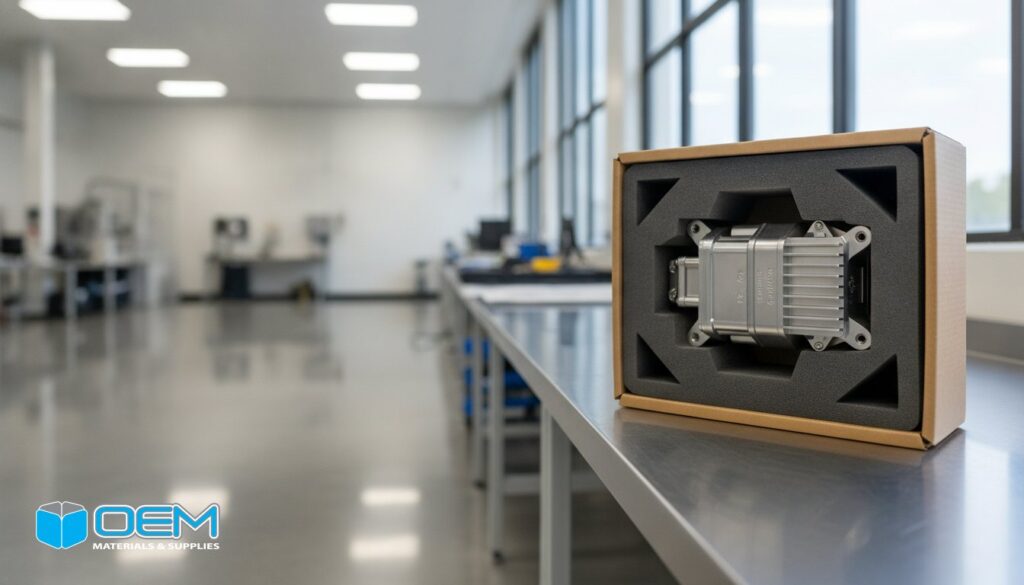
Shipping damage is often accepted as an unavoidable line item, yet it is almost always a failure of engineering rather than bad luck. If you’re managing a production line in Los Angeles or Orange County, you know that high damage rates and inefficient packing labor can erode your margins faster than almost any other logistical hurdle. Custom polyethylene foam packaging provides a technical solution to these challenges, but only when the material density and design are matched precisely to the fragility of your components. You deserve a packaging strategy that protects your products while streamlining your warehouse operations.
This article will explain how to select and engineer polyethylene foam solutions to eliminate product damage and optimize your industrial supply chain. We will preview how to identify the correct foam density for your specific product weight, reduce your overall shipping footprint, and leverage services like kitting and vendor managed inventory to prevent stockouts. By the end, you’ll understand why a custom-engineered approach is the most reliable way to secure your goods and your bottom line.
Key Takeaways
- Learn how to match product weight and surface area to specific foam densities to prevent shock and vibration damage during transit.
- Discover why engineered polyethylene foam packaging is superior to generic cushioning for protecting high-value components in the aerospace and medical sectors.
- Identify the critical data points needed during the prototyping phase to create a custom foam insert that fits your specific shipping requirements.
- Explore how local Southern California logistics solutions like VMI and kitting can reduce labor costs and eliminate inventory stockouts.
Understanding Polyethylene Foam Properties for Industrial Protection
Industrial protection requires more than just a soft barrier. It demands a material that can withstand the rigors of the supply chain without failing. Polyethylene foam packaging is a high-performance solution for these demanding environments. It’s a closed-cell, chemically cross-linked material that offers superior durability and resilience. Engineers often specify Expanded polyethylene (EPE) because it maintains its shape and protective qualities over long distances and multiple impacts.
The high strength-to-weight ratio of this material is a major benefit for logistics managers. It provides maximum impact resistance without adding significant weight to the shipment. This helps keep freight costs manageable while ensuring the product remains secure inside its container. Because the material is so efficient, you can often use thinner profiles of foam packaging to achieve the same level of protection as bulkier, less sophisticated alternatives.
Chemical inertness and moisture resistance are also critical factors. PE foam won’t react with the specialized finishes of your products or absorb oils and water. This makes it ideal for the aerospace and medical device sectors where material purity is paramount. It also excels at vibration dampening and shock absorption. These properties are essential for transit through the complex shipping lanes of Southern California, where road vibrations and handling shocks are constant threats to product integrity.
Closed-Cell vs Open-Cell Foam in Packaging
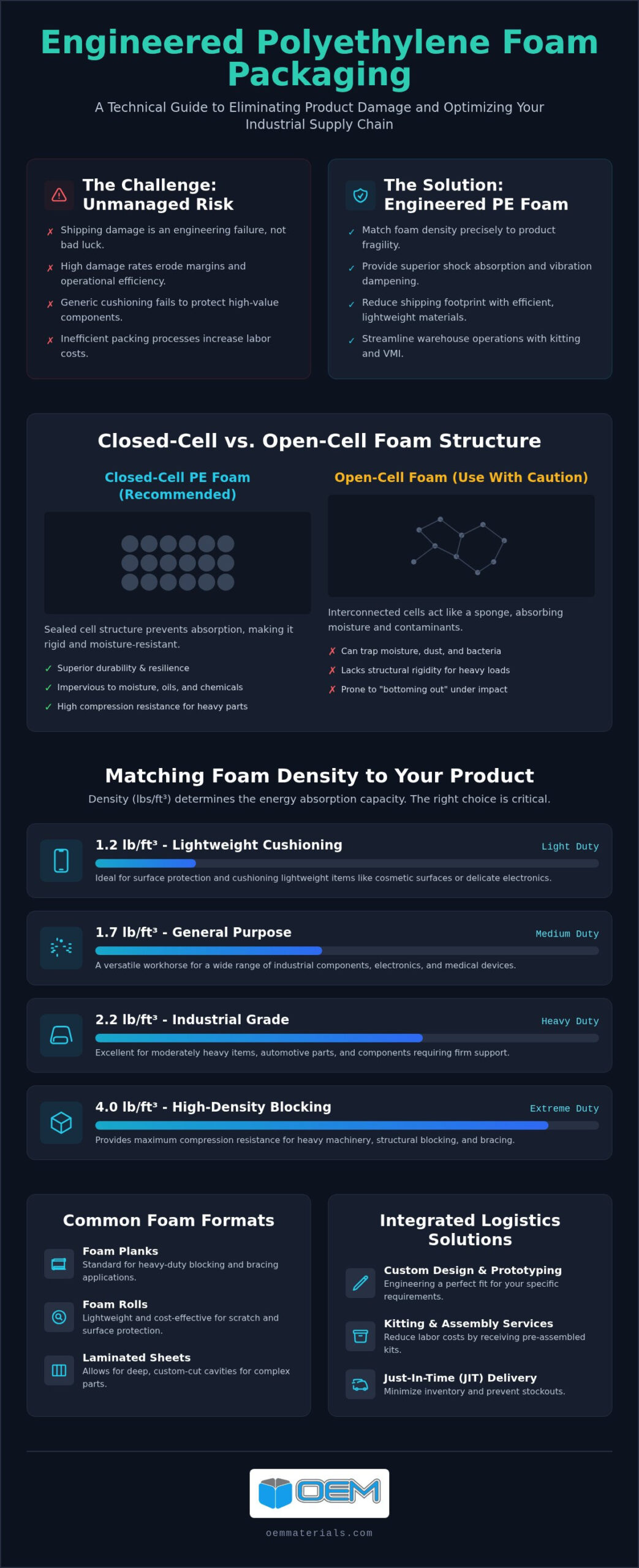
The fundamental difference between these materials lies in the cell structure. Closed-cell foam consists of tiny, interconnected bubbles that are sealed off from each other. This prevents the foam from acting like a sponge. Unlike open-cell foams, it doesn’t trap moisture, dust, or bacterial contaminants. This structural rigidity is necessary when you’re shipping heavy components. While softer polyurethane options might feel better to the touch, they often lack the compression resistance needed to prevent heavy parts from bottoming out during a drop.
Environmental Impact and Recyclability of PE Foam
Sustainability is a growing priority for manufacturers in Orange County and Los Angeles. Most PE foam is classified as #4 low-density polyethylene (LDPE) for recycling purposes. Because the material is so durable, it’s an excellent candidate for multi-trip or reusable packaging systems. Unlike one-way cushioning materials that end up in landfills after a single use, polyethylene can be integrated into a circular supply chain. Many modern formulations also include high-recycled content to help businesses meet their specific environmental and regulatory goals.
Selecting the Right Foam Density and Format for Manufacturing
Selecting the right polyethylene foam packaging depends on two primary variables: product weight and surface area. Foam density is the weight per cubic foot of material. This metric determines how much energy the foam can absorb before it reaches its compression limit. If you use a density that is too low for a heavy part, the material will bottom out and transfer the impact directly to your product. Conversely, using a density that is too high for a lightweight item creates a surface that is too rigid, which fails to provide the necessary deceleration during a drop.
Standard industrial densities generally range from 1.2lb to 4.0lb. A 1.2lb foam is often used for lightweight cushioning or as a protective wrap for delicate surfaces. The 1.7lb and 2.2lb variations are the workhorses of the industry. They offer the versatility needed for most electronics and industrial components. For exceptionally heavy machinery or structural blocking, a 4.0lb high-density foam provides the necessary compression resistance. Our engineering team can help you determine the optimal density based on your specific product fragility and static load requirements.
Common Foam Formats for Industrial Use
The physical format of the material is just as important as its density. Foam planks are the standard for heavy-duty blocking and bracing applications because they offer consistent structural integrity across the entire surface. When scratch prevention is the primary goal for sensitive finishes, thin foam rolls provide a lightweight and cost-effective barrier. For complex parts that require deep, multi-level protection, laminated sheets are the preferred choice. These sheets allow for the creation of deep custom cavities that cradle the product securely. Manufacturers in the Inland Empire and Orange County often utilize these formats within foam packaging inserts to maximize protection while minimizing material waste.
Specialty Formats for Sensitive Environments
Certain industries require more than just physical protection. In electronics manufacturing, anti-static (ESD) polyethylene foam is essential to prevent electrostatic discharge from damaging sensitive circuits. This material is typically pink-tinted to signify its anti-static properties, allowing warehouse staff to quickly identify the correct supplies. For the medical device and aerospace sectors in San Diego and Irvine, cleanroom-compatible foam is required. This specialized polyethylene foam packaging is manufactured and processed to ensure it does not introduce particulates or outgassing into controlled environments. Using the correct specialty format ensures that sensitive components arrive without latent failures or contamination.
Application Standards Across Southern California Industrial Sectors
Southern California’s manufacturing landscape is highly specialized, requiring tailored protection strategies for different vertical markets. From the aerospace corridors of Los Angeles to the medical device labs in San Diego, the choice of polyethylene foam packaging is driven by specific industry standards and logistical requirements. Standardized cushioning is rarely sufficient for the high-value, precision-engineered products coming out of this region. Effective protection requires a deep understanding of how specific materials react to the stressors of the local supply chain.
The aerospace and defense sectors concentrated in Los Angeles and Orange County often deal with heavy metal components and sensitive avionics. These parts require high-density foam inserts to prevent shifting and to maintain structural integrity under high static loads. Military applications also demand long-term storage stability. The material must not degrade, crumble, or off-gas when stored in climate-controlled or field depots for years. For these rigorous specifications, manufacturers rely on custom packaging design to ensure every tolerance is met and every critical surface is shielded from impact.
Medical Device and Life Science Logistics
Medical device and life science logistics in San Diego and Irvine present a different set of challenges. Here, the focus shifts to non-abrasive protection and organizational efficiency. Closed-cell foam is essential to protect sterile medical surfaces from scratches or particulate contamination during transit between labs and hospitals. Diagnostic equipment and laboratory instruments often consist of multiple fragile components that must arrive as a complete unit. Custom kitting services allow these items to be organized into a single, secure foam insert. This reduces assembly labor at the destination and ensures that every sensor and cable is accounted for upon arrival. Maintaining this level of organization is vital for compliance and operational speed.
Electronics and Automotive Distribution
Electronics manufacturing and automotive distribution hubs across the Inland Empire require protection against vibration and mechanical shock. High-value electronic components are susceptible to micro-fractures if they aren’t properly isolated from road vibrations. Polyethylene foam packaging provides the necessary dampening to protect these sensitive internal architectures. In the automotive sector, regional distribution centers use custom foam to protect Class-A surfaces on body panels and interior trim pieces. These parts are often large and awkwardly shaped, requiring engineered foam blocks that provide stable support inside corrugated containers or wood crates. By matching foam properties to the specific stressors of these SoCal industries, businesses can significantly reduce the risk of costly field failures.
Engineering Custom Foam Inserts: From Prototyping to Production
Generic cushioning materials like loose fill or standard bubble wrap often fail to meet the rigorous demands of industrial supply chains. For manufacturers in Los Angeles and Orange County, transitioning to engineered polyethylene foam packaging is a strategic move toward repeatable, validated protection. This transition begins with a data-driven approach. To design an effective insert, we require the product’s precise dimensions, total weight, and fragility rating, often expressed as a G-factor. Without these specifications, packaging is merely guesswork.
Precision manufacturing ensures that the final product matches the engineering intent. We utilize die-cutting for high-volume production runs where consistency and speed are paramount. For complex components with varied depths or smaller production volumes, CNC routing provides the ability to create intricate cavities without the cost of custom tooling. These methods allow us to maintain tight tolerances, ensuring that sensitive parts remain stationary throughout the transit cycle.
The Design Process for Custom Inserts
CAD modeling is the foundation of our design process. It allows engineers to visualize multi-part kits and identify potential failure points before production begins. This digital environment is where we optimize material usage. By nesting cavities efficiently, we reduce material waste and lower the overall cost per unit. Most custom inserts are designed for direct integration with foam packaging and custom corrugated boxes. This creates a unified system where the outer container and the internal foam work together to dissipate energy.
Testing and Validation
Rapid prototyping is a critical step that allows you to verify fit and function before committing to a full production run. We recommend drop testing and vibration testing for any fragile instrumentation or high-value components. These tests simulate the actual stressors found in Southern California’s shipping lanes. You must select foam thickness based on the expected G-force of your specific shipping environment. A thicker foam profile provides a longer deceleration distance, which is vital for protecting components with low fragility ratings. Proper validation ensures that your polyethylene foam packaging performs as expected when it encounters real-world impacts.
If you have a complex component that requires a precision-fit solution, request a quote for a custom prototype to begin the engineering process.
Optimizing Logistics with Integrated Foam Packaging Solutions
Polyethylene foam packaging is a critical asset for protection, but managing the logistics of bulky foam components can strain your warehouse operations. Material selection is only half the battle; the other half is how that material moves through your facility. Sourcing your corrugated boxes, foam inserts, and plastic pallets from a single partner reduces the complexity of your supply chain. This integrated approach eliminates the administrative friction of managing multiple vendors and ensures that all packaging components are engineered to work together seamlessly.
For high-volume manufacturers, the physical space required to store foam can be a major hurdle. Industrial real estate in Los Angeles and Orange County is at a premium, making it inefficient to use floor space for months of packaging inventory. Utilizing just-in-time (JIT) delivery allows you to receive exactly what you need for the week’s production, freeing up valuable square footage for revenue-generating manufacturing activities. This logistical precision is essential for maintaining a lean operation in a competitive regional market.
Reducing Labor and Assembly Costs
Kitting services provide a direct remedy for high labor costs on the assembly line. Instead of requiring your staff to manually insert foam into corrugated boxes, we can provide pre-assembled packaging kits. This allows your team to focus on the core task of product assembly rather than secondary packaging chores. In complex sectors like medical device manufacturing or electronics, kitting ensures that every specialized insert and component is present and accounted for before the box reaches the shipping dock. Reducing the number of touches per package directly improves your throughput and minimizes the risk of packing errors.
Inventory Management Strategies
Production shutdowns due to packaging shortages are an avoidable failure. Implementing vendor-managed inventory (VMI) allows us to monitor your usage levels and replenish stock automatically. This proactive strategy ensures that you never run out of critical polyethylene foam packaging during peak production cycles. It also shifts the burden of inventory tracking from your purchasing department to your supplier, providing a more reliable flow of materials.
Coordinating foam deliveries with production schedules in San Diego and Riverside requires a partner who understands the local logistical landscape. We help you balance the cost-benefit of bulk ordering against your specific warehouse constraints. By aligning our delivery cadence with your manufacturing output, we help you maintain a stable supply chain that supports growth without overwhelming your facility’s capacity. This level of support transforms packaging from a commodity purchase into a managed logistical advantage.
Secure Your Supply Chain with Engineered Foam Solutions
Transitioning from generic protection to engineered polyethylene foam packaging is a fundamental step toward reducing shipping damage and operational overhead. By matching specific foam densities to your product’s fragility and weight, you ensure reliable performance throughout the Southern California logistics network. Integrating these solutions with vendor-managed inventory and kitting services also optimizes your warehouse efficiency, allowing your team to focus on production rather than packaging assembly.
OEM Materials & Supplies has served manufacturers across Orange County, Los Angeles, and the Inland Empire for over 20 years. We specialize in rapid prototyping for aerospace and medical OEMs, providing the technical expertise required to meet rigorous industry standards. If you’re ready to eliminate product damage and streamline your distribution, contact us today for a custom foam packaging consultation and prototype. Please provide your product dimensions, weight, and annual usage so our engineering team can develop an accurate recommendation for your specific application. We look forward to helping you build a more resilient and efficient industrial supply chain.
Frequently Asked Questions
What is the most common density for polyethylene foam packaging?
The most common densities for industrial polyethylene foam packaging are 1.7lb and 2.2lb. These variations offer a balanced ratio of cushioning performance to material cost, making them suitable for most electronics and manufactured components. While 1.2lb foam is used for light surface protection, 1.7lb is often the baseline for custom inserts. Heavier items or structural blocking applications typically require 4.0lb high-density foam to prevent the material from bottoming out during transit.
Is polyethylene foam safe for sensitive electronics?
Polyethylene foam is safe and highly effective for sensitive electronics when specified with anti-static additives. Standard foam can generate static electricity, which risks damaging delicate circuitry. Anti-static polyethylene foam packaging is chemically treated to dissipate electrical charges, protecting components from electrostatic discharge (ESD). This material is usually pink to distinguish it from standard foam. It’s also chemically inert, meaning it won’t react with or corrode the specialized finishes of electronic hardware.
How do I determine if I need custom foam inserts or standard sheets?
The choice depends on your product’s fragility and shipping volume. Standard sheets are cost-effective for basic blocking and bracing or surface protection for simple, flat items. However, if your product has complex dimensions or high fragility, custom foam inserts are necessary to provide 360-degree protection. Custom inserts ensure the part remains stationary and properly decelerates during an impact. For high-volume production, custom inserts also reduce labor costs by speeding up the packing process.
Can polyethylene foam be recycled in Southern California?
Polyethylene foam is recyclable and classified as #4 low-density polyethylene (LDPE). In Southern California, manufacturers must stay compliant with regulations like SB 54, which emphasizes producer responsibility for packaging waste. Many regional industrial recycling centers accept clean PE foam scraps. Because the material is exceptionally durable, it’s also a prime candidate for reusable packaging systems. This allows businesses to reduce their environmental impact by circulating containers multiple times before the material finally requires recycling.
What information do I need to provide for a custom foam quote?
To receive an accurate quote, you must provide the product’s exact dimensions, total weight, and fragility rating, often called the G-factor. We also need to know your expected annual usage and the type of outer container you plan to use, such as a corrugated box or wood crate. If you have CAD files or a physical sample, our engineers can use that data to create a precision-fit prototype that optimizes material usage.
What is the difference between polyethylene and polyurethane foam?
The primary difference is the cell structure and rigidity. Polyethylene is a closed-cell foam, meaning it’s more rigid, moisture-resistant, and better for heavy-duty protection. It won’t absorb water or oils. Polyurethane is an open-cell foam, which is much softer and more flexible, similar to a sponge. While polyurethane is excellent for very light, delicate items, it lacks the structural strength needed for heavy industrial parts or the durability required for multiple shipping cycles.
Does polyethylene foam provide protection against moisture?
Yes, polyethylene foam provides excellent protection against moisture due to its closed-cell structure. The individual cells are sealed off from one another, which prevents the material from absorbing liquids, oils, or humidity. This makes it an ideal choice for products that might be exposed to the elements during transit or stored in non-climate-controlled warehouses. Its moisture resistance also prevents the growth of mold and bacteria, ensuring the product remains clean and uncontaminated upon arrival.
How does anti-static foam work for industrial shipping?
Anti-static foam works by incorporating chemical additives during the manufacturing process that reduce the material’s surface resistance. This allows the foam to dissipate static charges safely rather than allowing them to build up and discharge into sensitive components. It’s an essential requirement for circuit boards and microelectronics. By using anti-static polyethylene foam packaging, you eliminate the risk of latent failures caused by ESD, which often go undetected during the initial quality control phase.