
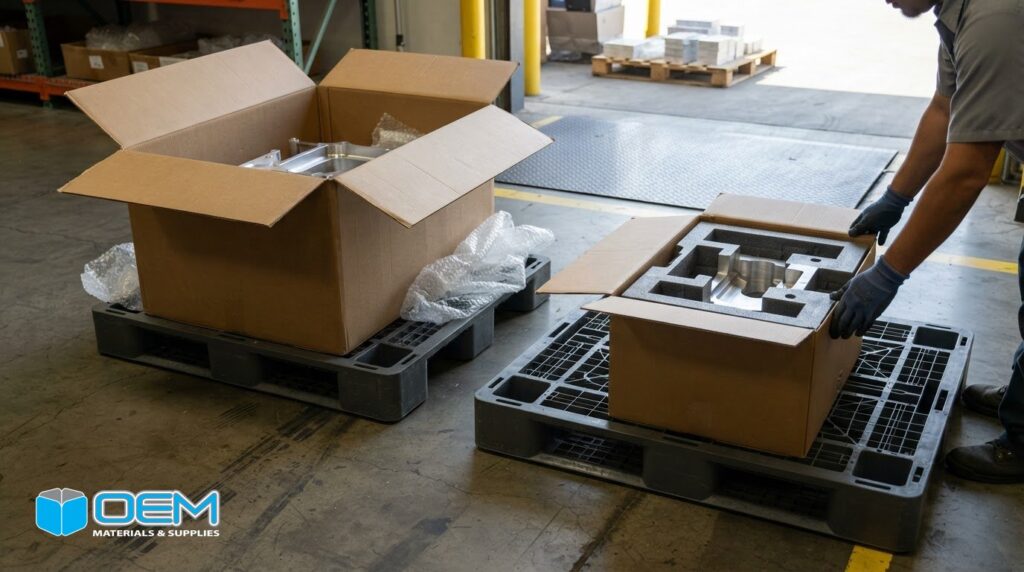
The supplier with the lower unit price may not deliver the lower total order cost. In a Grainger vs. local packaging supplier comparison, the better-value choice depends on the full order: packaging fit, shipping charges, order requirements, and delivery needs. Neither option is automatically less expensive.
It’s reasonable to start with the quoted price, especially when managing repeat purchases or tight operating budgets. But packaging that does not fit the product or shipment can add costs through inefficient packing, product damage, excess material, or freight. A fair comparison looks beyond the line-item price.
This article explains how broad catalog pricing differs from packaging-focused sourcing, when packaging requirements affect order value, and how freight can change the calculation. It also offers a practical comparison and decision guide to help you weigh total order cost, product fit, sourcing support, and delivery needs.
Key Takeaways
- Compare the full order cost, including freight, surcharges, order requirements, and the cost of packaging that does not fit the product.
- Use catalog sourcing for broad purchasing needs, and assess specialized sourcing when packaging performance and product fit matter.
- Match the supplier to your specifications, delivery needs, and purchasing process rather than relying on unit price alone.
- Review minimum quantities and bulk terms for their effect on cash flow, storage, and the risk of holding excess packaging inventory.
- For corrugated boxes, foam packaging, packaging kits, or mailing tubes and cores, OEM Materials & Supplies can help address specific packaging needs.
Packaging and shipping suppliers
A Grainger vs. local packaging supplier comparison starts with what the order needs to accomplish. Grainger serves broad industrial purchasing needs, while packaging suppliers focus on shipping materials and package design. A warehouse replenishing tape and general supplies has different requirements from a manufacturer shipping fragile assemblies. Compare the application before weighing delivery or product selection.
Packaging supplies include more than boxes. An outbound order might need cushioning, a fitted carton, and materials that keep products stable in transit. Foam Packaging can help protect a fragile component, while Packaging Kits can group materials for recurring shipments. The right combination depends on product dimensions, weight, handling, and shipping method. A low-cost material that fails to protect an item can increase damage and rework.
Shipping times depend on inventory, order processing, delivery distance, and shipment size. A small parcel order and a pallet order may follow different handling and freight processes. For example, a receiving team expecting palletized packaging should coordinate dock access, unloading equipment, and storage space. Confirm the delivery window and receiving requirements to avoid an arrival when the site cannot accept the shipment.
| Supplier option | Product scope | Order type | Delivery considerations |
|---|---|---|---|
| Grainger | Broad industrial purchasing | Mixed supply orders | Shipment size and freight method |
| Local packaging supplier | Packaging-focused sourcing | Packaging-specific orders | Local delivery and receiving needs |
Choose the option that fits the order’s product scope, packaging requirements, and delivery process.
For buyers in Orange County, Los Angeles, San Diego, and Riverside, local delivery may help align packaging replenishment with warehouse schedules, but distance alone does not determine the best choice. Match the shipment to receiving hours, unloading capacity, and storage location. A business receiving full pallet loads should account for floor space and pallet movement. Smaller, more frequent orders may need a different delivery plan.
Pallet orders require attention to load configuration and site handling. Plastic Pallets may suit operations that need palletized materials, while the receiving team must plan for safe unloading and storage. Compare the complete order, not only the item quantity. Freight charges, pallet handling, and delivery coordination can affect which supplier best supports the operation.
For operations coordinating packaging replenishment with production, just-in-time packaging connects delivery planning to usage needs. The appropriate schedule depends on order patterns, receiving capacity, and the materials required for each shipment.
Choosing the right supplier offers better value overall. Compare total order cost, including shipping and freight charges, minimum order quantities, case pack requirements, lead times, brand and material specifications, customer service responsiveness, and comparable alternatives. These factors help distinguish a low item price from an order that fits purchasing needs. Reviewing them together supports a balanced supplier choice rather than judging packaging materials or delivery in isolation.
Generalist catalog pricing versus specialized sourcing
Grainger’s broad industrial catalog supports purchasing across product categories, while specialized sourcing centers on packaging requirements. Compare what each offer includes before judging value. The same product label can refer to different dimensions, materials, or pack quantities. Start with the specification and intended application, then consider the order terms.
Minimum Orders and Bulk Discounts
Minimum quantities and volume discounts depend on the item and supplier’s terms. Grainger and local suppliers can have different case packs, order thresholds, and discount structures, so there is no single rule for either. Compare the quantity needed with the quantity quoted. A larger purchase makes sense only if usage, storage capacity, and purchasing plans support it.
For example, compare stretch film quotes at equivalent quantities and delivery terms. Record the pack size and any volume condition alongside the item cost. If a discount applies only above a threshold, assess whether that quantity matches planned usage. This keeps the discount from obscuring the actual purchasing commitment.
Packaging Quality and Product Selection
Grainger’s broad catalog offers packaging alongside other industrial products, while a packaging-focused supplier centers its selection on packaging applications. Judge packaging quality against the product and shipment requirements, not the number of listings. Compare material descriptions, dimensions, and intended use. A carton selected for a lightweight part, for example, may not suit a product that needs more internal support.
A wide selection helps only when it leads to an appropriate match. If a component moves inside its carton, assess the complete packaging configuration and how it holds the product. Similar product names do not establish equivalent performance. Compare specifications and application details before treating two options as substitutes.
Customization Options
Local packaging suppliers may offer a path to discuss project-specific dimensions, inserts, or configurations. Grainger’s catalog emphasizes listed items, so distinguish standard products from custom packaging needs. For example, a product with an unusual shape may need a carton sized to its footprint or an insert that holds it securely. The available design approach depends on the supplier and the project.
Customization can change the purchasing comparison. Share the product dimensions, weight, and shipping conditions when defining the required configuration. Then compare proposals against the same application. This helps determine whether a standard catalog item meets the need or a tailored design better supports the packing process.
Specialized sourcing can differ from catalog purchasing in scope, specification, and order structure. That does not mean one route always costs less. Consider how closely the proposed packaging matches the product, what each order includes, and how the material fits the operation. Keep those criteria consistent when comparing Grainger with a local packaging supplier.
Before selecting an option, align the required material, dimensions, quantity, and delivery conditions. A quote for a standard item and one for a project-specific configuration may cover different scopes. Compare equivalent requirements, then weigh order terms and packaging design. The best purchasing choice meets the defined application without adding unnecessary materials or complexity.
Choosing a supplier by purchasing needs
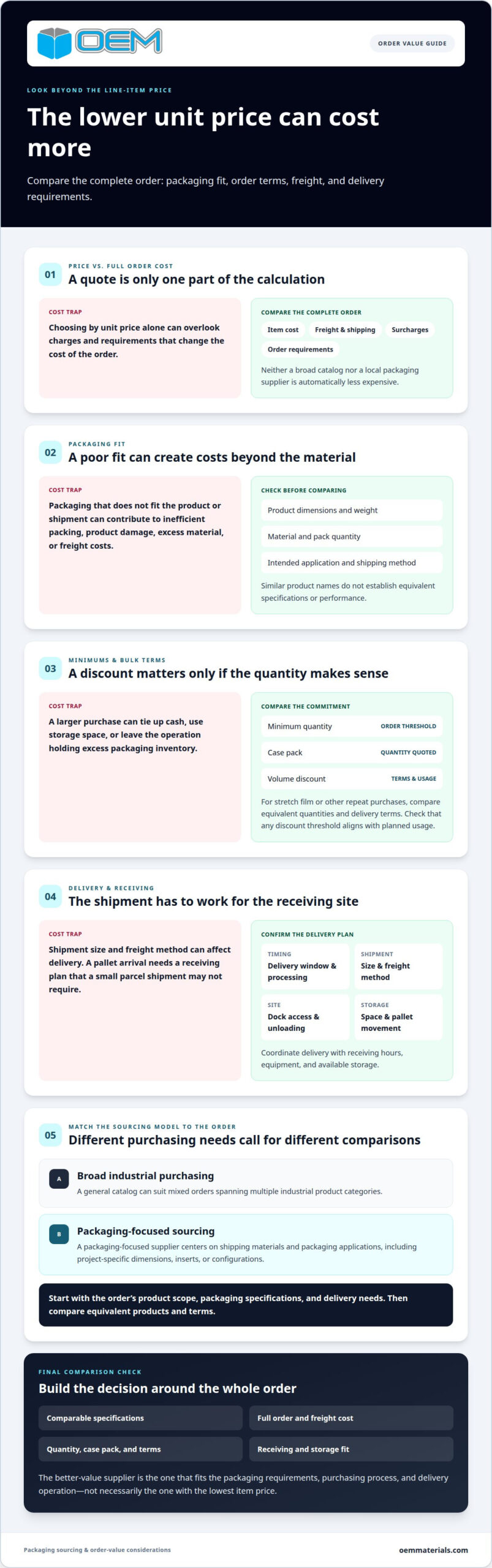
Choose based on the job each order must support, not supplier familiarity alone. For a Grainger vs. local packaging supplier comparison, align specifications, quantities, and delivery requirements first. Then assess complete order cost, including shipping and freight. This prevents unlike offers from appearing comparable simply because both list packaging materials.
Start with the packaging specification. Record product dimensions, weight, material requirements, and handling needs. For example, a fragile electronic assembly may need different cushioning from a durable replacement part. Compare quoted materials against the same requirements. A suitable specification may serve the operation better than a lower-priced item that does not match the shipment.
Next, map the purchase to actual usage. Minimum order quantities and case-pack requirements affect how much inventory arrives and how it fits available storage. A case pack larger than current demand can tie up space and purchasing funds. Compare the required quantity with expected use, then include freight charges. This is more useful than comparing unit prices alone.
Lead times should fit the production and shipping schedule. A replenishment order needed before a planned shipment has different timing needs from routine stock. Compare supplier lead times with the date materials must reach the packing area, not just the order date. Arrivals that are too early create storage needs; arrivals that are too late can disrupt packing or dispatch.
Customer service responsiveness matters when specifications change or an order needs clarification. Compare how each supplier handles questions about material, dimensions, case packs, and delivery details. For example, a revised product dimension can affect carton fit and cushioning requirements. A clear response helps purchasing and operations resolve the specification before releasing the order.
- Total cost: Include item cost, shipping, and freight charges.
- Order terms: Compare minimum quantities and case pack requirements.
- Timing: Match lead times to the production or dispatch schedule.
- Specification: Align brand, material, dimensions, and product requirements.
- Support: Consider responsiveness and comparable alternatives.
Use the same checklist for Grainger and each local supplier under consideration. Compare equivalent quantities of the same material delivered to the same receiving location. If an offer differs in case pack, lead time, or specification, record that difference rather than treating the quotes as equal. This reveals tradeoffs without assuming either supplier category always costs less.
The right choice follows the purchasing need. Grainger may suit a broader order that combines packaging with other industrial purchases. A local packaging supplier may be a better fit when specifications and delivery coordination drive the decision. Either way, select the option that meets the material specification and schedule at the best total order value.
Price comparison limitations
A quoted unit price captures only part of a packaging purchase. In a Grainger vs. local packaging supplier comparison, the same product name may not represent the same dimensions, material, quantity, or delivery terms. Start a useful price review by defining what the order must include. Otherwise, a lower figure may reflect a smaller pack, different construction, or excluded freight.
Consider two quotes for cartons. One may cover a standard size, while another includes different dimensions or a different packaging configuration. The offers are not equivalent if the product shifts inside one carton but fits securely in the other. Compare intended use, material description, dimensions, and pack quantity before treating unit costs as interchangeable.
Freight can also change the order total. A quote may list product charges separately from shipping, while another combines the charges. Compare delivery destination, shipment size, and freight terms alongside item cost. A pallet shipment to a warehouse, for example, may involve different handling from parcels sent to a receiving desk. Include any stated surcharge in the comparison.
Packaging fit creates another limitation. A carton that leaves excess space may need additional cushioning, packing labor, or shipping-process adjustments. A smaller carton may not suit the product or its protective materials. Compare the complete packing configuration, including the cushioning and other materials needed to prepare the same item for shipment. Unit cost alone misses these operational differences.
Use a consistent review sequence for each quote:
- Match product specifications, dimensions, and material descriptions.
- Align order quantity, case pack, and minimum order requirements.
- Add shipping, freight, and any stated surcharges.
- Compare delivery terms and the timing required by the operation.
- Assess whether each option supports the same packing process.
This sequence helps distinguish a genuine price difference from a difference in scope. If one supplier quotes packaging only and another includes a related material, separate the line items before comparing. If pack quantities differ, calculate order totals for the quantity the operation actually needs. Keep assumptions visible so purchasing and warehouse teams know what each quote covers.
Cost effects also depend on product dimensions, materials, and shipping requirements. A protective configuration for a delicate assembly may differ from one used for a durable part. A shipment’s destination and handling needs can affect delivery charges. Compare offers against a real product and shipment rather than relying on a broad claim that one supplier category always costs less.
The final comparison should show both purchase cost and operational fit. Record the specification, quantity, delivery terms, and included materials beside each quote. Then identify unresolved differences, such as an alternate carton size or freight charge. This gives procurement a clear basis for selecting an order that meets packaging needs without mistaking an incomplete quote for a lower total cost.
Catalog packaging prices may be 20% to 30% higher than specialized direct sourcing, though that estimate does not replace matching specifications, quantities, freight, and service terms.
What minimum order quantities and bulk discounts do Grainger and local suppliers offer?
Grainger and local suppliers set order terms by product, so buyers should plan around the actual purchasing schedule. An item’s minimum quantity or discount threshold can affect when procurement places an order and how it fits approval cycles. Compare terms for the specific packaging item rather than assuming either supplier type follows one standard policy.
Start with the replenishment calendar. If a production line uses packaging steadily, a planned order cadence can make purchasing more predictable. If demand changes with customer orders, a large commitment may be harder to align with the forecast. Map expected requirements to upcoming purchasing periods, then identify which supplier terms fit that timing.
Volume discounts also affect how procurement structures orders. A threshold may encourage combining demand across departments or shipment programs, but consolidated purchasing requires coordination. For example, two facilities using the same packaging material could plan a shared order if their specifications and schedules align. If their requirements differ, combining purchases may complicate allocation and receiving.
Approval workflows matter, too. A bulk purchase may require a different internal review from routine replenishment. Before comparing Grainger and local supplier terms, clarify how purchasing approvals work and which documentation finance needs. This prevents a discount threshold from driving an order that does not fit the company’s purchasing process.
- Forecast timing: Match order placement to planned demand and procurement periods.
- Department coordination: Identify compatible requirements before consolidating orders.
- Approval path: Account for internal review requirements for larger purchases.
- Supplier terms: Record item-specific thresholds and conditions for each offer.
- Reorder planning: Set a review point for updating the next purchase against current demand.
For changing demand, review the purchasing plan when production schedules or customer requirements shift. A quantity that suited the previous forecast may no longer fit current operations. With steady demand, planned purchasing periods can help coordinate releases with receiving and production teams. These choices depend on the business’s workflow, not simply the supplier’s discount structure.
Keep the assumptions behind each quote with the purchasing record. Note the product specification, applicable order terms, and forecast period used to estimate demand. This gives the next buyer a clear basis for reviewing the order instead of relying on an old discount condition. It also helps teams distinguish a change in supplier terms from a change in operational requirements.
When preparing a packaging order, include the specification, expected usage pattern, and preferred purchasing schedule. Request a packaging quote to discuss how those requirements fit the order plan.
OEM Materials & Supplies
OEM Materials & Supplies helps industrial buyers match packaging to product and shipping requirements. Turn to the team when standard catalog options do not align with your specifications or when you need to compare components for a recurring order. Corrugated Boxes, Foam Packaging, Packaging Kits, Mailing Tubes & Cores, and Cushioning Materials support different product and shipment needs. The right selection depends on dimensions, weight, protection requirements, quantities, and delivery needs. Share those details to clarify which materials fit your operation. Contact OEM Materials & Supplies to discuss your packaging requirements.
Make Your Next Packaging Decision Work Harder
Use your next purchasing cycle to refine packaging requirements. Product changes, revised shipping methods, or new order patterns can make an old specification less useful. A fresh review can align packaging with current operations. The Grainger vs. local packaging supplier decision should support that practical goal, not simply preserve an established buying routine.
OEM Materials & Supplies provides Corrugated Boxes, Foam Packaging, and Packaging Kits for industrial packaging needs. Share the product dimensions, weight, annual usage, and shipping requirements that shape your order. Those details help define the application and support a relevant recommendation.
Request a packaging quote from OEM Materials & Supplies to discuss your requirements. A clear specification is a practical starting point for a better-fit packaging plan.
Frequently Asked Questions
Which Supplier Should You Choose?
Choose the supplier whose ordering model fits the purchase. Grainger can suit a buyer combining packaging with other industrial items. A packaging-focused supplier can be a stronger fit when an order needs packaging-specific guidance. Procurement teams managing several product lines may value a consolidated order, while an engineer specifying protection for a delicate part may prioritize packaging expertise.
Can local packaging suppliers offer same-day delivery or pickup?
Delivery timing depends on the supplier’s arrangements, order details, and destination. Do not assume same-day delivery or pickup based only on a supplier’s location. For a shipment going to Los Angeles, the contents, processing requirements, and delivery route all affect timing. Include the needed arrival date in order planning to align purchasing with receiving operations.
What should a business consider when choosing between Grainger and a local packaging supplier?
Consider how the purchase fits your organization’s procurement workflow. A buyer using centralized purchasing may value consistent ordering across departments, while an engineering team may need packaging decisions closely tied to product design. Consider who will coordinate specifications, approvals, and receiving. Assigning one owner to gather input from procurement and operations can make the supplier decision easier to implement.