
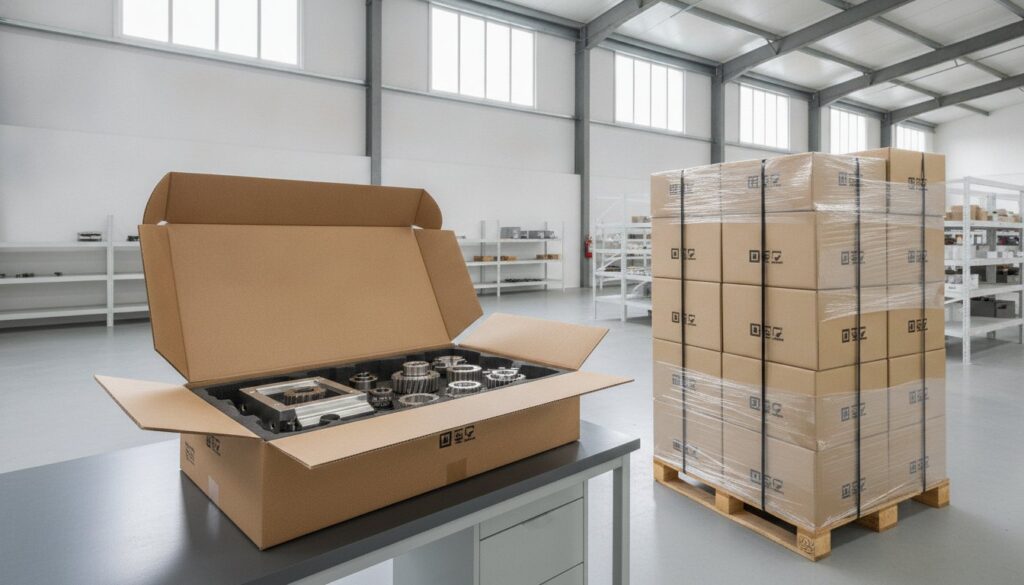
Efficiency in industrial manufacturing is often won or lost in the warehouse long before a product reaches the shipping dock. While many operations focus strictly on throughput, the logistical friction caused by poorly planned bulk packaging can quietly erode per-unit margins through excessive labor costs and wasted floor space. You likely recognize the frustration of managing high-volume transit while facing frequent product damage or unexpected inventory stockouts that halt production. These challenges require a shift from viewing packaging as a commodity to treating it as a critical engineering component.
This article provides a roadmap to reduce operational costs and optimize supply chain efficiency through strategic material selection and advanced logistics management. You will learn how to transition from reactive purchasing to a proactive strategy that leverages custom corrugated boxes, protective foam, and specialized kitting services. We also examine how manufacturers in Orange County, San Diego, and across Southern California use vendor-managed inventory to reclaim warehouse space and ensure a consistent supply of materials. This guide provides the technical insights needed to streamline your warehouse operations and improve your bottom line.
Key Takeaways
- Learn how to shift from simple volume purchasing to a strategic material engineering approach that protects per-unit margins.
- Identify technical requirements for durability, such as specific Edge Crush Test (ECT) ratings, to prevent product damage during high-volume transit.
- Reclaim warehouse floor space by prioritizing flat-packed corrugated materials and optimizing vertical storage configurations.
- Discover how to integrate your bulk packaging strategy with Vendor Managed Inventory (VMI) to eliminate stockouts and streamline supply chain logistics.
- Start with a comprehensive usage audit and custom packaging design to ensure your materials are perfectly sized for your specific shipping requirements.
Defining Bulk Packaging for Industrial Manufacturing
Bulk packaging in an industrial environment is far more than a simple high-volume purchase of shipping supplies. It represents a systematic framework for the procurement and utilization of large-scale materials designed to protect high-value components throughout the supply chain. While retail-focused buyers might prioritize the lowest price per unit, industrial professionals in the aerospace and medical device sectors focus on the total cost of ownership. This includes material durability, packing process efficiency, and the reliability of the logistics cycle. Effective bulk packaging strategies move beyond simple volume discounts to address standardized dimensions and engineered durability.
For many operations, this strategy involves a mix of specialized formats. For example, Intermediate bulk containers are often utilized for transporting liquids or granulated solids, while custom-engineered corrugated solutions are the standard for finished industrial goods. The goal is to create a predictable, repeatable process that minimizes the risk of product damage during high-volume transit. It’s critical to understand that the specific results of these programs depend on variables such as product dimensions, material selection, and unique shipping requirements.
The Role of Standardization in Bulk Logistics
Standardization is the foundation of any efficient high-volume program. When you standardize your corrugated boxes and internal cushioning, you significantly reduce palletizing complexity. Uniform dimensions allow warehouse teams to build stable, predictable pallet loads that maximize every inch of trailer space. In automated assembly lines, consistent packaging dimensions are critical for sensor accuracy and robotic handling. By reducing SKU proliferation, you simplify your inventory management and ensure that your team always has the correct materials on hand without the clutter of redundant sizes.
Economic Benefits of Scaling Packaging Programs
Scaling your packaging program provides immediate material cost advantages, but the long-term savings often come from logistical optimization. High-volume procurement allows for more aggressive material pricing, yet the real value lies in lowering freight costs through optimized pallet configurations. When materials are designed to fit perfectly within a shipping footprint, you eliminate the shipping air that drives up dimensional weight charges. Additionally, transitioning to a centralized strategy reduces the labor required for procurement by consolidating multiple small orders into a single, managed stream. Utilizing custom packaging design ensures that every component is optimized for its specific weight and dimensions. However, it’s important to clarify that total cost savings are not fixed; they depend on variables like product dimensions, material choices, and carrier shipping requirements.
Engineering Bulk Solutions: Material Selection and Durability
Industrial durability is a non-negotiable requirement when scaling production. Standard shipping supplies often fail under the compression of high-volume stacking or the vibration of long-haul logistics. Engineering a reliable bulk packaging solution starts with material data, specifically the Edge Crush Test (ECT) rating. For heavy industrial components, relying on standard single-wall corrugated is a risk that leads to crushed corners and compromised product integrity. Operations handling specialized substances must also adhere to federal regulations regarding bulk packaging for hazardous materials to ensure safety and compliance throughout the supply chain.
Selecting the right pallets is equally critical for load integrity. Plastic pallets offer consistency in dimensions and are ideal for cleanroom environments, while heavy-duty wood options support the weight of dense metal parts. For sensitive electronics, integrating custom-cut foam packaging provides the necessary vibration dampening that standard dunnage cannot achieve.
Heavy-Duty Corrugated and Wood Crating
When standard packaging reaches its physical limit, you must transition to heavy duty shipping boxes. Double-wall and triple-wall corrugated construction provide the stacking strength required for high-density warehouse environments. For high-value machinery or oversized aerospace components, wood crates offer the ultimate structural shell. These crates are often engineered with internal blocking and bracing to prevent any movement during transit. If you are unsure which material grade fits your specific weight requirements, you can request a technical consultation to review your product specifications.
Protective Inserts and Load Stabilization
A durable outer shell is only half of the solution. Internal cushioning materials are essential to prevent product-on-product contact within the box. In bulk packaging configurations, the stability of the entire pallet is what prevents catastrophic failure. High-volume loads are prone to shifting, which is why edge and corner protectors are utilized to reinforce the vertical strength of a pallet stack. Finally, high-performance stretch film acts as the final containment layer, ensuring that the entire load remains a single, cohesive unit from your Southern California facility to its final destination.
How to Optimize Warehouse Space with Bulk Configurations
While bulk purchasing lowers per-unit costs, the physical footprint of these materials can become a liability if not managed with precision. In Southern California hubs like the Inland Empire and Orange County, where industrial square footage is at a premium, managing the storage of bulk packaging is as critical as the procurement itself. Many operations lose efficiency by allowing packaging materials to clutter active production zones. To reclaim this space, you must prioritize flat-packed corrugated boxes. Unlike pre-assembled containers, flat sheets can be stacked high in racking systems, significantly increasing the storage density of your facility.
Effective space management also requires a first-in, first-out (FIFO) inventory system. This ensures that older materials are used before they degrade or accumulate industrial dust. By coordinating delivery schedules to match your production cycles through just-in-time delivery, you prevent the common issue of packaging bloat, where excess materials sit idle and consume valuable floor space for months.
Strategic Storage of Flat-Packed Materials
Organizing corrugated sheets and boxes requires dedicated, clean zones. In industrial environments, moisture and dust are constant threats to the structural integrity of paper-based products. Storing your bulk materials on plastic pallets keeps them off the floor and away from potential spills or dampness. To maintain peak warehouse space utilization, operations managers should calculate the exact square footage required for a 30-day supply based on average daily throughput. This calculation prevents over-ordering and ensures that your primary floor space remains available for finished goods rather than empty containers.
Maximizing Pallet Efficiency for Storage
Density is the primary metric for warehouse storage efficiency. Utilizing specific stacking patterns, such as columnar or interlocking methods, improves load stability and allows for higher vertical stacks in your racking. Uniform pallet heights are essential for optimizing these systems, as irregular heights create dead space between the top of the load and the next rack beam. Higher pallet density directly reduces warehouse overhead by decreasing the total square footage required to house necessary consumables. Integrating edge protectors during the storage phase can also prevent the bottom layers of stacked corrugated from buckling under the weight of the materials above.
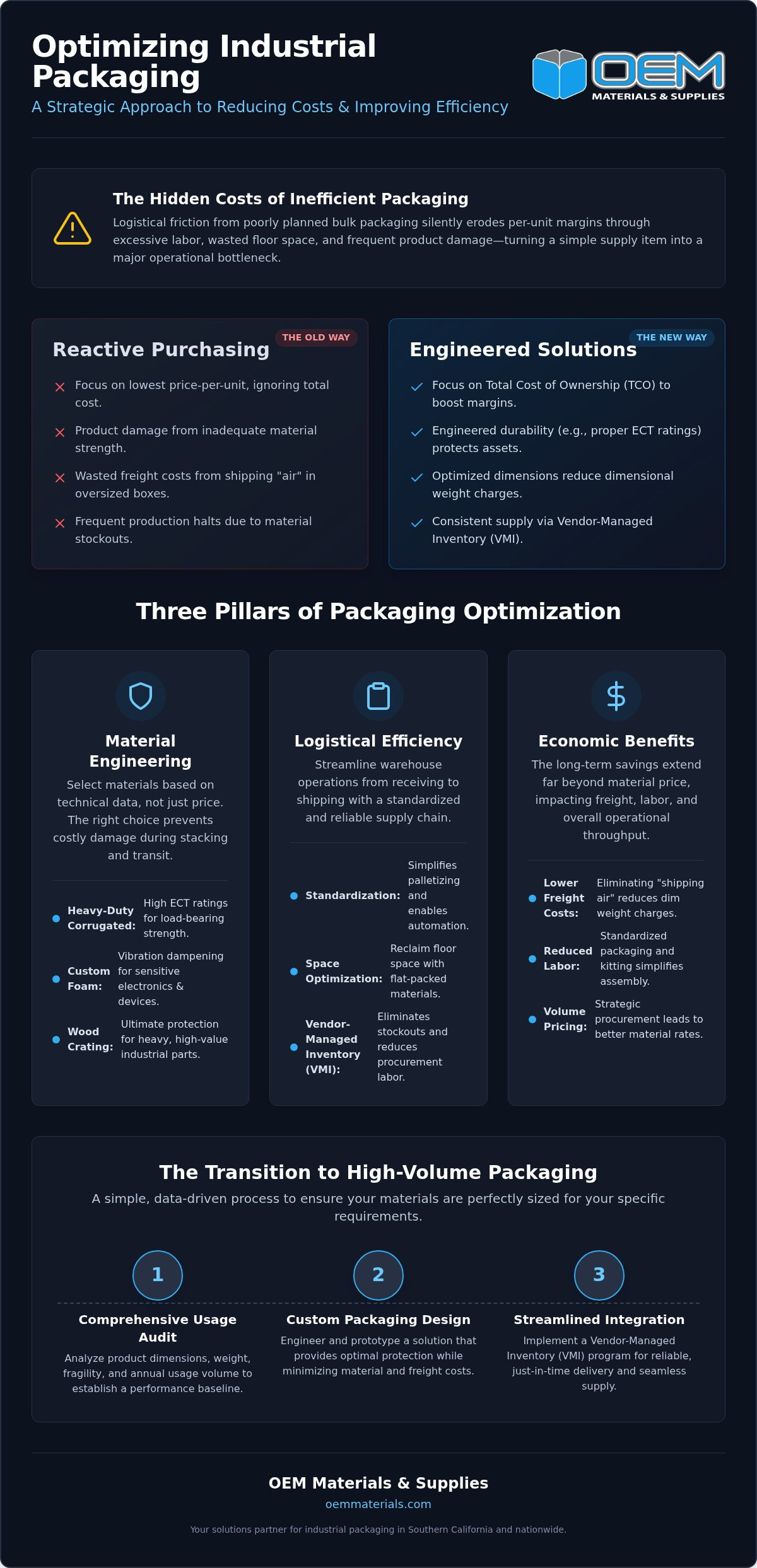
Streamlining Logistics through Vendor Managed Inventory (VMI)
Managing the procurement of bulk packaging often introduces significant administrative friction. Traditional purchasing models require procurement teams to monitor stock levels constantly, issue frequent purchase orders, and manage lead times that may not align with production spikes. Vendor Managed Inventory (VMI) eliminates these inefficiencies by shifting the responsibility of stock tracking and replenishment to your packaging partner. This model ensures that critical materials, such as custom corrugated boxes or foam inserts, are always available when needed without requiring your team to manually verify every pallet on the floor.
By delegating inventory oversight, manufacturers can focus on core production activities rather than logistical minutiae. This partnership approach transforms the supplier from a simple vendor into a strategic ally that understands your production rhythm. It’s a fundamental shift that supports lean manufacturing goals by removing the “safety stock” buffer that often clutters warehouse aisles.
The Mechanics of Packaging VMI
A successful packaging VMI program functions as an extension of your own operations. By establishing min/max inventory levels based on your historical usage and production forecasts, your supplier monitors stock levels and triggers automated replenishment. This proactive approach prevents the risk of stockouts that can halt a high-volume manufacturing run. This system also reduces the administrative burden on your purchasing department. Instead of managing dozens of small transactions, you move toward a consolidated, predictable supply stream that lowers total procurement costs over time.
Integrating JIT Delivery for SoCal Manufacturers
For manufacturers in high-cost real estate areas like Orange County and San Diego, warehouse floor space is too valuable to be used for long-term storage of empty containers. Implementing JIT packaging allows you to receive only the materials needed for the immediate production cycle. This strategy significantly reduces the capital tied up in inventory and frees up square footage for revenue-generating equipment. Because OEM Materials & Supplies operates locally within Southern California, we can respond quickly to production fluctuations that would otherwise lead to bottlenecks.
By integrating these logistics services, you transform your bulk packaging strategy from a storage challenge into a competitive advantage. You gain the agility to scale production up or down without the typical constraints of material availability or warehouse capacity. To see how a managed inventory program can streamline your specific workflow, you can request a quote and provide your average monthly usage data for a tailored recommendation.
Transitioning to High-Volume Packaging Programs
Successfully scaling a bulk packaging program requires a transition from transactional purchasing to engineered logistics. It’s a structured process that begins with a data-driven assessment of your current workflow. Manufacturers often discover that their existing packaging is either over-engineered, leading to wasted material costs, or under-engineered, resulting in expensive product damage during transit. Establishing clear Key Performance Indicators (KPIs) for cost reduction and warehouse throughput ensures that the transition yields measurable results. However, it is critical to understand that the actual financial impact and operational gains depend on specific variables like product dimensions, material selection, and unique shipping requirements.
Once the initial assessment is complete, the next phase involves custom packaging design to optimize material consumption. This stage includes prototyping and rigorous testing to ensure that new bulk packaging configurations can withstand the specific stresses of your supply chain. By testing these designs before full-scale implementation, you eliminate the risk of failure in the field and confirm that the new configurations meet your durability requirements. This proactive approach prevents the costly trial-and-error cycle often associated with switching large-scale providers.
Auditing Current Packaging Efficiency
The first step in any transition is a comprehensive audit of your current material usage. You should identify oversized corrugated boxes that increase dimensional weight charges and evaluate the labor time required for complex assembly processes. Reviewing damage reports is equally critical; it allows you to identify structural weaknesses where product-on-product contact occurs. This audit provides the baseline data needed to justify the shift toward more efficient solutions. Keep in mind that the potential for cost savings identified in an audit will vary based on your specific product dimensions and materials.
Partnering with a Southern California Specialist
Choosing a local wholesale industrial packaging supplier provides significant advantages for manufacturers in Orange County, San Diego, and the Inland Empire. Proximity allows for rapid prototyping and face-to-face design consultations that are difficult to manage with distant vendors. A local partner understands the regional logistics landscape and can offer the JIT and VMI services necessary to help you reclaim floor space. When you’re ready to modernize your procurement, we recommend a full review of your annual usage and product specifications. To begin this process, you can request a quote. Please include your product dimensions, weight, and estimated annual volume so we can provide an accurate technical recommendation, as results depend on these specific variables.
Advancing Your Industrial Packaging Strategy
Optimizing your supply chain requires a transition from viewing shipping supplies as a commodity to treating them as a critical engineering component. By implementing a strategic high-volume material framework, you can significantly reduce per-unit shipping costs and minimize the risk of transit damage. Successful operations in Orange County and San Diego achieve these results by combining custom material selection with specialized Vendor Managed Inventory (VMI) programs. This approach ensures you maintain a consistent supply of protective materials without the burden of excessive on-site storage.
Our team specializes in custom engineering for the aerospace and medical sectors, providing the technical expertise needed to streamline your warehouse flow. It’s a partnership that prioritizes reliability and precision through local inventory and JIT delivery across Southern California. We invite you to request a custom quote for your bulk packaging needs today. Providing your specific product dimensions, weight, and annual usage data will help us facilitate an accurate recommendation tailored to your production goals. We look forward to supporting your operational growth.
Frequently Asked Questions
What is the difference between wholesale and bulk packaging?
Wholesale packaging typically refers to a pricing tier for purchasing large quantities of standard shipping supplies. In contrast, bulk packaging is a comprehensive logistical strategy where materials are engineered for high-volume production cycles. While wholesale focuses on transaction volume, a bulk strategy prioritizes material durability, standardized dimensions, and integrated inventory management to reduce the total cost of ownership across your entire supply chain.
How can bulk packaging reduce my overall shipping costs?
A strategic approach reduces costs by optimizing dimensional weight and increasing pallet density. When you use custom-engineered boxes that fit your product precisely, you eliminate the “shipping air” that leads to carrier surcharges. Additionally, standardized configurations allow for more stable, higher stacks on each pallet. This maximizes trailer space and reduces the total number of shipments required to move your annual inventory from Southern California facilities to their final destination.
Can I customize bulk packaging for sensitive medical equipment?
Yes, customization is standard for high-value sectors like medical device manufacturing. This often involves integrating custom-cut foam packaging for vibration dampening and using ESD-compliant materials to protect sensitive electronics. We design these configurations to meet rigorous cleanliness standards while ensuring the outer corrugated or wood crating provides the structural integrity needed for high-volume transit without risking internal component failure or contamination.
What industries benefit most from bulk packaging strategies?
Industries with high-volume throughput and strict protection requirements see the greatest return on investment. This includes the aerospace, automotive, medical device, and electronics sectors. These manufacturers often deal with complex assemblies that require specialized kitting or heavy-duty protection. By using a bulk packaging framework, these companies can streamline their assembly lines and reduce the labor costs associated with packing diverse product lines into non-standardized containers.
How does Vendor Managed Inventory work for packaging supplies?
Vendor Managed Inventory (VMI) shifts the responsibility of stock tracking to your supplier. Your partner monitors your on-site levels and triggers automated replenishment based on pre-set minimum and maximum thresholds. This system is essential for lean manufacturing because it prevents stockouts during critical production runs. It also frees up warehouse floor space in areas like Orange County and San Diego by ensuring you only store what you immediately need.
What is the minimum volume required for a bulk packaging program?
Minimum requirements are not fixed numbers but depend on the complexity of your packaging design and your annual material usage. Generally, a program becomes viable when the cost savings from material optimization and labor efficiency outweigh the initial engineering and prototyping expenses. We typically review your specific product dimensions, weight, and monthly throughput to determine if a specialized high-volume program is the right financial move for your operation.
How do I determine the right ECT rating for bulk corrugated boxes?
The Edge Crush Test (ECT) rating is determined by the total weight of the loaded box and the height of your warehouse stacks. You must calculate the compression strength required for the bottom box in a stack to support the weight of all layers above it. For heavy industrial parts, we often recommend double-wall or triple-wall construction with higher ECT ratings to prevent box fatigue and pallet collapse during long-term storage or transit.
Is custom bulk packaging more expensive than stock options?
While custom designs may have higher initial engineering costs, they are often more cost-effective over the long term. Stock boxes frequently require excessive internal dunnage to fill empty space, which increases material waste and labor time. Custom solutions reduce dimensional weight and significantly lower the rate of product damage. When you factor in the reduced shipping fees and lower labor requirements, custom configurations often provide a better per-unit margin than generic alternatives.