
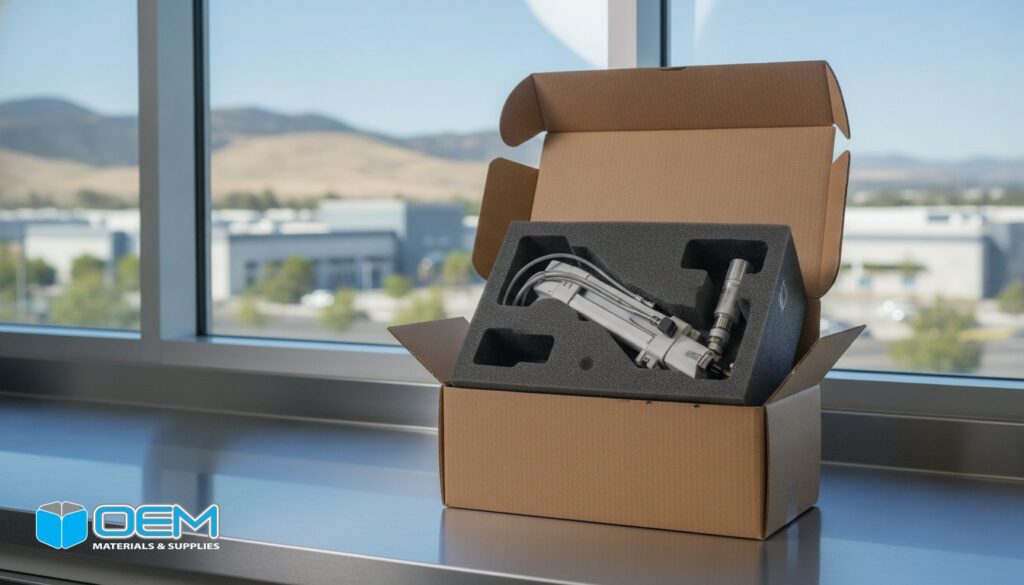
A single compromised sterile barrier can halt a surgical procedure and jeopardize patient safety. In the precision-driven world of healthcare manufacturing, the stakes for your shipping and storage solutions could not be higher. For operations managers and engineers, ensuring that sensitive instruments arrive intact and fully compliant with regulatory standards is a primary concern. You understand that standard off-the-shelf containers often fail to provide the necessary protection or documentation required for high-value medical equipment.
Optimizing your medical device packaging in Los Angeles requires a strategic blend of material science and local supply chain agility. This industrial guide provides a clear roadmap for identifying the right protective materials and sterile barriers for your specific applications. You will learn how local engineering can reduce shipping damage through custom foam and corrugated solutions. We also examine how Southern California manufacturers use vendor-managed inventory and just-in-time delivery to streamline operations and prevent inventory shortages. By the end of this article, you will have the practical knowledge needed to build a more resilient and efficient packaging strategy.
Key Takeaways
- Identify the specific material properties, such as Edge Crush Test ratings and foam density, required to protect sensitive medical instruments from mechanical shock.
- Learn how to integrate secondary packaging with sterile barrier systems to meet rigorous ISO 11607 standards and ensure regulatory compliance.
- Explore how partnering with a local supplier for medical device packaging in Los Angeles can reduce lead times and improve supply chain agility through custom design.
- Evaluate the total cost of ownership between stock and custom packaging, focusing on how engineered kits reduce labor costs and material waste.
- Implement local vendor-managed inventory programs to streamline your warehouse operations and eliminate the risk of inventory shortages.
The Landscape of Medical Device Packaging in Los Angeles
Southern California, specifically Los Angeles and Orange County, serves as one of the largest medical device manufacturing clusters in the United States. This dense network of OEMs requires a sophisticated approach to logistics and material handling. For these companies, packaging is not just a shipping container; it’s a critical component of the product’s regulatory compliance and functional success. Effective medical device packaging in Los Angeles must address the high-velocity nature of local distribution while meeting strict medical device packaging standards.
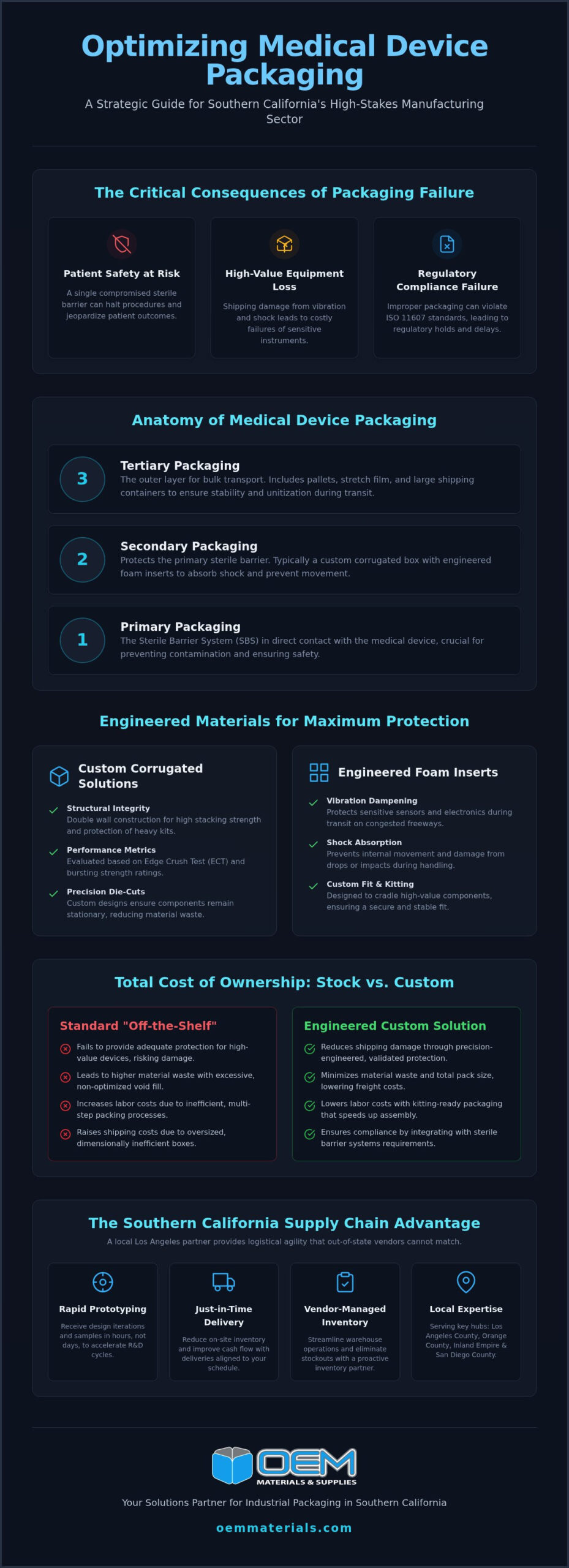
It is essential to distinguish between the three layers of protection used in the industry. Primary packaging is the sterile barrier in direct contact with the device. Secondary packaging, often involving custom corrugated boxes, protects the primary barrier during handling. Tertiary packaging includes the bulk shipping containers, pallets, and stretch film used for stable transport. For many firms, securing high-quality medical device packaging in Los Angeles is a logistical necessity to avoid the risks associated with long-distance transit.
The Stakes of Packaging Failure in Healthcare
Failure in this sector carries consequences far beyond simple product loss. If a medical container is compromised, the sterility of the instrument is lost, rendering it useless and potentially dangerous. Common causes of damage in the Los Angeles distribution network include vibration during transit on congested freeways and mechanical shock during warehouse handling. Standard corrugated boxes often lack the structural integrity to withstand these forces. Sensitive electronics and precision tools require engineered foam packaging to dampen vibrations and prevent internal movement that leads to catastrophic failure.
SoCal Manufacturing Hub Requirements
Local OEMs face unique logistical pressures that demand more than just a vendor relationship. The proximity of a supplier in Los Angeles County or the Inland Empire is vital for rapid prototyping. When an engineer needs to test a new device fit, waiting days for a sample from an out-of-state vendor is not an option. A local partner can provide immediate design iterations and just-in-time delivery to keep production lines moving. This region’s manufacturing base often overlaps with the aerospace sector, meaning packaging must meet extreme durability and precision standards. High-volume production requires a partner that understands the specific demands of the Southern California supply chain, from managing inventory to ensuring every box meets exact dimensional specifications.
Primary Materials for Protective Medical Device Packaging
Selecting the right materials for medical device packaging in Los Angeles requires an understanding of both material engineering and regional shipping hazards. While the primary sterile barrier prevents contamination, the secondary packaging must provide the structural integrity required to survive handling. Procurement professionals often evaluate materials based on bursting strength and Edge Crush Test (ECT) ratings to ensure the outer container doesn’t fail under pressure. This technical approach distinguishes high-performance medical containers from generic shipping supplies.
Custom Corrugated Solutions
Choosing the correct grade of corrugated material is essential for protecting medical kits. Single wall corrugated is often sufficient for lightweight diagnostic components, but heavier surgical kits or sensitive electronics typically require double wall construction for added stacking strength. Using corrugated boxes tailored to specific device dimensions reduces dimensional weight and minimizes the need for extra cushioning. Custom die-cut packaging provides precise stability, ensuring that components remain stationary during transit. This precision reduces total material waste and lowers shipping costs by optimizing every cubic inch of the container.
Engineered Foam Packaging Inserts
Sensitive sensors and electronics require more than just basic cushioning. Engineered foam packaging inserts provide the necessary shock absorption to prevent mechanical failure. Polyethylene (PE) foam is a durable, closed-cell option frequently used for heavier medical instruments because of its chemical resistance and structural strength. In contrast, polyurethane (PU) foam offers an open-cell structure that provides a softer cushion for lightweight, highly fragile components. Foam density for sensitive medical sensors must be precisely calculated to match the product’s fragility rating and total weight to ensure optimal deceleration during a drop event.
Cleanroom compatibility is another critical factor in material selection. Materials must be chosen to minimize particulate shedding, ensuring they align with FDA medical device regulations regarding manufacturing and packaging cleanliness. High-quality liners and low-dust foams help prevent contamination in controlled environments. If you need assistance determining the right material blend for your specific instrument, you can request a quote for a custom prototype design and material analysis.
Custom vs Standard Packaging for Specialized Medical Supplies
Many procurement managers prioritize unit price when selecting medical device packaging in Los Angeles. However, focusing solely on the cost per box often ignores the higher expenses associated with labor and shipping inefficiencies. A custom engineered solution might have a higher upfront price; however, it frequently results in a lower total cost of ownership by reducing damaged goods and optimizing warehouse space. Note that specific cost reductions and efficiency gains are not fixed. Actual results depend on variables such as product dimensions, material selection, and unique shipping requirements.
Precision is the baseline for medical manufacturing. Custom designed containers ensure that every component remains secured during high velocity transport. This level of control is essential for adhering to FDA’s Quality Management System Regulation, which mandates consistent quality and documentation throughout the packaging and labeling process. When a device has unique dimensions or high sensitivity to vibration, a standard box simply cannot provide the necessary security.
The Case for Custom Medical Kits
Pre-assembled packaging kits allow manufacturing teams to streamline their packing lines. Instead of sourcing multiple components from different vendors, workers use a single, unified kit that reduces assembly time and minimizes labor costs. This approach also improves the end user experience in clinical settings. Healthcare professionals benefit from organized, easy to open containers that reduce the footprint in crowded hospital storage areas. By reducing the overall dimensions of the package, you also lower freight costs by avoiding dimensional weight surcharges.
Standard Supplies for Non-Critical Components
Not every medical product requires a custom molded solution. For medical textiles, bandages, or non-sterile bulk components, utilizing standard mailing tubes and cores can be a highly efficient choice. These stock items provide reliable protection for rolled materials without the need for custom tooling. Similarly, selecting generic cushioning materials for secondary shipping containers helps balance protection and cost for non-sensitive items. The goal is to apply engineering where it provides the most value while maintaining cost effective standards for bulk logistics throughout Southern California.
Compliance and Regulatory Requirements for Medical Containers
Compliance in the medical sector is non-negotiable. For manufacturers, medical device packaging in Los Angeles must adhere to rigorous standards to ensure patient safety and product efficacy. ISO 11607 is the primary standard governing terminal sterilized medical devices. While many focus solely on the primary pouch or tray, the standard actually encompasses the entire packaging system. This includes the secondary corrugated boxes and protective inserts. Failure to protect the sterile barrier during transit is a failure in regulatory compliance.
Labeling and identification are equally critical components of the regulatory landscape. Every shipping container must clearly display Unique Device Identification (UDI) information and specific handling instructions to prevent errors within the supply chain. Accurate labeling ensures traceability from the manufacturing floor in Southern California to the end user in a clinical environment.
Sterile Barrier Protection
Maintaining the integrity of a sterile seal requires a multi-layered approach. Engineered foam packaging inserts do more than just prevent breakage; they stabilize the primary packaging to prevent friction and punctures. If a sterile pouch is allowed to shift within a box, constant movement can cause microscopic tears or seal failures. It is also critical to ensure that secondary materials don’t interfere with sterilization processes, such as Ethylene Oxide (EtO) or Gamma radiation. The interaction between the primary barrier and the secondary container must be validated to ensure no chemical or physical degradation occurs during these cycles.
Testing and Validation Standards
Regulatory submissions require documented proof that your packaging can withstand the rigors of the distribution cycle. Transit testing protocols, such as those established by the International Safe Transit Association (ISTA), simulate the shocks, vibrations, and atmospheric changes a package faces during transit. For companies shipping from a Los Angeles hub to nationwide facilities, these tests are vital. They confirm that the cushioning materials and outer containers provide sufficient protection under real-world conditions. Documenting these performance results is a necessary step for FDA approval and long-term risk management.
Environmental considerations are also influencing material selection for medical device packaging in Los Angeles. Manufacturers are increasingly seeking sustainable options, such as recyclable corrugated materials and low-impact foams, to meet corporate social responsibility goals. These materials must still meet all safety and durability requirements. If you are developing a new product and need a partner to assist with compliance-ready prototypes, request a quote for a technical consultation and material analysis today.
Optimizing the Supply Chain with Local Los Angeles Partners
Proximity is a strategic asset for medical device manufacturers in Southern California. While national vendors might offer standard catalogs, they often lack the responsiveness required for high-stakes medical production. Working with a local partner for medical device packaging in Los Angeles allows for real-time design adjustments and immediate responses to supply chain disruptions. This regional focus ensures that your packaging is not just a commodity but a functional part of your operational efficiency. Localized manufacturing in Orange County or the Inland Empire means shorter lead times and reduced freight costs.
Vendor-Managed Inventory for Medical OEMs
Managing inventory for complex medical kits can consume significant warehouse space and administrative labor. Implementing a packaging VMI program allows you to transfer these burdens to your supplier. Under this model, the supplier monitors your stock levels and replenishes materials automatically, preventing stockouts of critical items like custom foam inserts or sterile-barrier-supporting corrugated boxes. This system frees up your facility’s floor space for more manufacturing capacity. It also improves cash flow because you pay for materials as they are used rather than carrying months of capital-intensive inventory on your books.
Just-In-Time Delivery Strategies
High-mix, low-volume medical manufacturing requires extreme flexibility. JIT packaging strategies synchronize the arrival of shipping materials with your specific production schedules. This eliminates the need for large-scale storage of bulky items like plastic pallets or custom crates. For manufacturers in Los Angeles County, local JIT delivery reduces the risk of material obsolescence. When a device design or labeling requirement changes, you aren’t left with thousands of unusable boxes. Instead, your local partner adjusts the next production run to match the new specifications immediately.
Supply chain resilience is built on agility. A local partner can produce prototypes in hours rather than weeks, allowing your engineering team to validate designs faster. This proximity is essential for maintaining the high standards of medical device packaging in Los Angeles. Whether you need a small run for clinical trials or high-volume production for global distribution, a Southern California partner provides the stability and technical expertise required to keep your supply chain moving without friction. By integrating these value-added services, you transform your packaging from a logistical hurdle into a competitive advantage.
Advancing Your Medical Device Packaging Strategy
Securing the integrity of sensitive medical instruments requires a technical approach to material selection and logistical planning. As discussed, engineered foam inserts and high-strength corrugated boxes form a critical defense against transit damage. Compliance with sterile barrier standards remains the foundation of patient safety. Precision is non-negotiable. By integrating custom packaging designs with local supply chain strategies, manufacturers can reduce operational overhead and eliminate inventory shortages.
Optimizing your medical device packaging in Los Angeles is a continuous process that benefits from local expertise. OEM Materials & Supplies supports manufacturers across Los Angeles, Orange County, and San Diego with specialized engineering and value-added services. Our teams provide custom corrugated manufacturing and just-in-time (JIT) delivery programs to keep your production lines moving efficiently. We focus on solving complex logistical challenges through technical precision and reliability.
Contact OEM Materials & Supplies today for a custom medical packaging consultation to discuss your specific requirements. Providing data such as product dimensions and annual usage allows our engineers to develop the most accurate prototypes for your operation. We look forward to partnering with you to build a more resilient supply chain.
Frequently Asked Questions
What is the most common material for medical device packaging?
The most common materials for medical device packaging in Los Angeles include corrugated boxes for secondary containment and specialized foam for internal protection. Primary packaging usually consists of sterile pouches or thermoformed trays. High-density polyethylene and Tyvek are frequent choices for sterile barriers. Using a combination of these materials ensures that the device remains protected from both environmental contaminants and physical impacts during the distribution cycle.
How does custom foam protect medical instruments differently than bubble wrap?
Custom foam provides engineered deceleration and vibration damping tailored to a product’s specific fragility. Unlike generic bubble wrap, which offers inconsistent protection, custom foam inserts are designed to fit the exact contours of an instrument. This precision prevents internal movement and absorbs mechanical shock more effectively. For sensitive electronics or surgical tools, engineered foam ensures that the device arrives in calibration and ready for immediate clinical use.
Can custom corrugated boxes be used in cleanroom environments?
Custom corrugated boxes can be used in cleanroom settings if they are designed with low-particulate liners or utilized in a double-boxing strategy. In many medical facilities, the outer corrugated container is removed in a staging area before the inner, cleanroom-compatible packaging enters the sterile environment. Some manufacturers also specify dust-free coatings or plastic corrugated options to minimize shedding and maintain the rigorous cleanliness standards required for medical device production.
What are the benefits of sourcing medical device packaging in Los Angeles?
Sourcing medical device packaging in Los Angeles provides significant advantages in lead times and supply chain agility. Local proximity allows for rapid prototyping and same-day design iterations that national vendors cannot match. Manufacturers in Orange County and the Inland Empire also benefit from lower freight costs and the ability to implement just-in-time delivery. This local presence ensures that your packaging partner understands the specific logistical challenges of the Southern California manufacturing hub.
How much can a VMI program save a medical device manufacturer?
A vendor-managed inventory program reduces overhead by shifting the burden of stock management to your supplier. While specific savings depend on your production volume and material costs, most manufacturers see improvements in cash flow and warehouse space utilization. By storing materials off-site and paying only as they are used, you eliminate the risk of inventory shortages and reduce the administrative labor required to manage multiple packaging SKUs.
Is custom medical packaging necessary for non-sterile devices?
Custom packaging is often necessary for non-sterile devices to prevent mechanical failure and ensure product integrity. Sensitive diagnostic equipment or electronic components require precise cushioning to survive the vibrations of transit. Even if a device doesn’t require a sterile barrier, it must still arrive in perfect working condition. Custom-engineered foam and corrugated solutions provide a level of protection that stock boxes simply cannot offer for high-value medical instruments.
What information is needed to get a quote for custom medical device kits?
To receive an accurate quote for custom medical device kits, you should provide the exact dimensions, weight, and fragility rating of your components. It is also helpful to include your estimated annual usage and any specific sterilization methods you use, such as Ethylene Oxide or Gamma radiation. This data allows engineers to select compatible materials and design a kit that optimizes both protection and assembly labor for your specific production run.
What happens if medical device packaging fails during transit?
Packaging failure during transit can lead to catastrophic sterility loss or irreparable physical damage to the device. If a sterile barrier is punctured or a seal fails, the product must be discarded or reprocessed, leading to significant financial losses and surgical delays. Beyond the immediate costs, repeated failures can trigger regulatory audits and damage your reputation with healthcare providers. Implementing validated secondary packaging is essential for mitigating these high-stakes risks.