
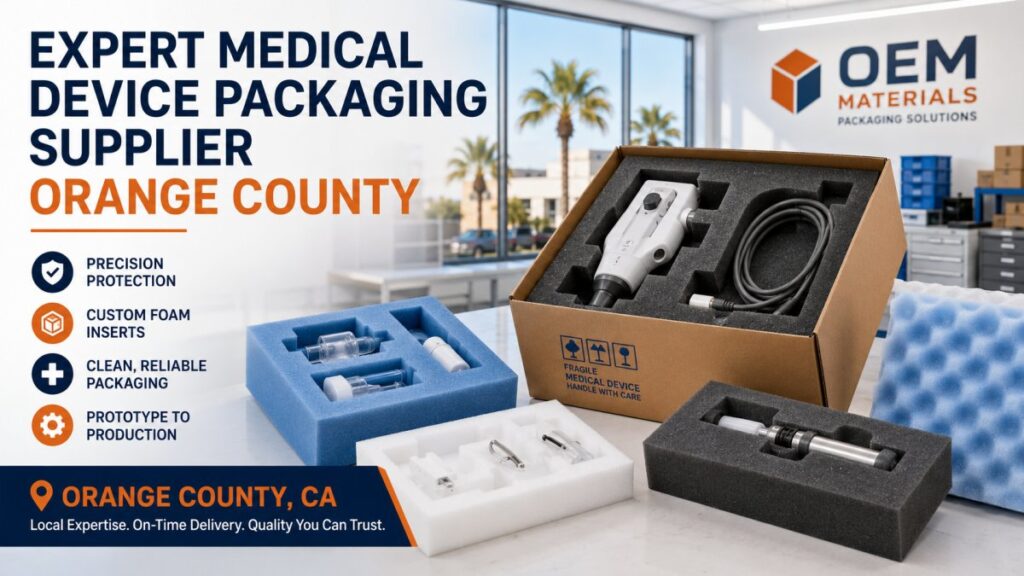
Could a single packaging failure during transit jeopardize months of research and development or thousands of dollars in sensitive instrumentation? For many OEMs, the answer is a costly yes. Finding a specialized medical device packaging supplier in Orange County is about more than just sourcing materials; it is about securing a partner that understands the high stakes of sterile barrier integrity and the technical demands of high value shipping. You likely already know that a minor oversight in foam density or a stockout of custom corrugated components can disrupt your entire production schedule and delay critical shipments.
This guide provides a practical framework for selecting a packaging partner that aligns with the new FDA Quality Management System Regulation (QMSR) effective February 2, 2026. You will learn how to verify compliance with ISO 11607 standards while simultaneously optimizing your internal logistics and warehouse space. We will explore how local vendor managed inventory and custom engineering support can eliminate transit damage and significantly reduce your lead times. By focusing on technical precision and local supply chain synchronization, you can protect your bottom line and ensure your devices reach the point of care in perfect condition.
Key Takeaways
- Identify how the shift to FDA QMSR and ISO 11607 standards impacts material selection and validation requirements for sterile barrier systems.
- Discover why custom-engineered foam packaging and corrugated shells are essential for protecting high-value instrumentation from transit damage.
- Learn how to leverage a medical device packaging supplier in Orange County to implement vendor-managed inventory (VMI) and eliminate critical supply chain stockouts.
- Evaluate the logistical advantages of local just-in-time (JIT) programs that reduce warehouse overhead and lower the total cost of ownership.
- Understand the importance of professional prototyping and CAD design in streamlining the transition from packaging concept to full-scale production.
Navigating Medical Device Packaging Requirements in Orange County
The medical technology corridor in Southern California, particularly the dense cluster of manufacturers in Irvine and Laguna Hills, represents a global epicenter for life science innovation. In this high-stakes environment, packaging is never an afterthought. It is a critical component of the device’s technical specifications. High-performance packaging protects sensitive instrumentation from the physical rigors of the global supply chain, ensuring that a device arrives at a surgical suite in the exact condition it left the cleanroom. For local OEMs, a specialized medical device packaging supplier in Orange County provides the technical expertise necessary to bridge the gap between engineering requirements and logistical reality.
Understanding the distinction between sterile barrier systems and protective secondary packaging is fundamental to a successful launch. While the primary sterile barrier maintains the device’s aseptic condition, the secondary packaging, often consisting of custom corrugated boxes and precision-cut foam inserts, provides the structural integrity required to prevent punctures or seal failures. Adhering to established medical device packaging standards ensures that these two systems work in tandem to mitigate risks during transit. Secondary packaging must be engineered to withstand vibration, compression, and impact, especially as devices become increasingly complex and fragile.
The Logistical Landscape of SoCal Med-Tech
Operating within the Orange County tech corridor requires an agile supply chain. Proximity to major research hubs in Irvine means that OEMs often operate on lean manufacturing schedules where warehouse space is at a premium. Local sourcing is not just a convenience; it’s a strategic necessity. A nearby supplier can provide rapid prototyping services, allowing engineers to test physical samples against CAD models in real time. This local presence minimizes the friction of the R&D phase and ensures that packaging designs are optimized for the specific vibration profiles of Southern California’s transportation infrastructure.
Regulatory Considerations for Secondary Packaging
Compliance is a moving target. With the FDA’s Quality Management System Regulation (QMSR) taking effect on February 2, 2026, the alignment with ISO 13485:2016 places even greater emphasis on risk management throughout the product lifecycle. Secondary packaging plays a vital role here by protecting the validated sterile barrier. Standardizing your materials through a single medical device packaging supplier in Orange County simplifies procurement and quality control. By using consistent grades of corrugated material and cushioning, OEMs can maintain tighter control over their technical files and ensure that every shipment meets the rigorous durability requirements demanded by modern healthcare providers.
Selecting High-Performance Materials for Sensitive Medical Instrumentation
Sensitive devices like robotic surgical arms or diagnostic imaging components demand more than off-the-shelf containers. Protection is an engineering discipline. A reputable medical device packaging supplier in Orange County works with OEMs to develop a unified system where the outer corrugated shell and internal cushioning work as one. This synergy is vital. If the box is too rigid but the foam is too soft, the device may bottom out during a drop. Conversely, overly dense foam can transmit too much shock directly to delicate sensors.
When selecting packaging materials, engineers must account for chemical compatibility, outgassing, and particulate generation. Using custom corrugated boxes allows for precise dimensional control, which reduces the overall footprint of the shipment. This reduction in size often leads to lower dimensional weight charges and decreased freight costs. If you aren’t sure which material grade fits your specific fragility rating, you can request a technical packaging review to evaluate your current specifications and material performance.
Engineered Foam Packaging Solutions
Not all foam is created equal. Polyethylene (PE) is a closed-cell material known for its excellent repeat-impact protection and moisture resistance. It’s often the standard for heavier instrumentation. Polyurethane (PU) is an open-cell, softer foam ideal for very light, highly fragile components that require gentle deceleration. Choosing the right engineered foam packaging involves calculating the static loading of the device to ensure the material performs within its optimal cushioning range. This is especially critical for multi-component kits where different parts have varying fragility levels within the same container.
Cushioning and Edge Protection
Palletized shipments face unique risks. Structural failure at the bottom of a stack can crush primary sterile barriers. Integrating edge protectors distributes the vertical compression load of stacked pallets, preventing box deformation. In high-vibration transit environments, such as long-haul trucking or air freight, additional cushioning materials like bubble wrap or air pillows fill internal voids. This prevents the device from shifting within the box; shifting is a leading cause of abrasion and technical calibration loss during transit.
Custom Design and Prototyping for OEM Manufacturers
Generic packaging often represents a false economy. While a standard stock box might appear cheaper on a purchase order, the long-term costs of product damage and labor inefficiency quickly erode those savings. For high-value instrumentation, a one-size-fits-all approach is a liability. Custom engineering ensures that every corrugated box and foam insert is tailored to the specific center of gravity and fragility of the device. This precision is not just about protection; it is a regulatory requirement. According to FDA Device Packaging Regulations, packaging must be designed and constructed to protect the device from damage during the entire distribution cycle.
The transition from a CAD drawing to a physical prototype is where technical expertise becomes visible. A specialized medical device packaging supplier in Orange County uses advanced structural design software to translate device dimensions into functional protective systems. This process identifies potential failure points before a single production run begins. By utilizing custom packaging design, OEMs can optimize the internal layout to reduce material volume. This directly lowers the total cost of ownership through reduced shipping weights and storage requirements, though actual savings depend on the specific dimensions and shipping methods used.
Prototyping for Rapid Product Launches
Speed to market is a competitive advantage in the Southern California med-tech corridor. Rapid prototyping allows engineers to conduct drop tests and vibration analysis during the early R&D phases. These physical samples provide a tangible way to evaluate box strength and foam compression. Refining a design at the prototype stage prevents expensive mid-production changes and ensures that the final packaging system minimizes material waste while maximizing protection. It allows for a seamless transition from the lab to high-volume manufacturing.
Kitting and Assembly Services
Efficiency on the production floor is often determined by the simplicity of the packing station. Managing dozens of individual SKUs for boxes, foam inserts, and labels creates procurement friction and slows down assembly. Pre-assembled packaging kits solve this problem by delivering all necessary components as a single unit. For example, a manufacturer of diagnostic consoles can reduce assembly time by receiving a kit where the foam is already bonded to the corrugated shell. This approach simplifies inventory management and allows the assembly team to focus on the device rather than the package.
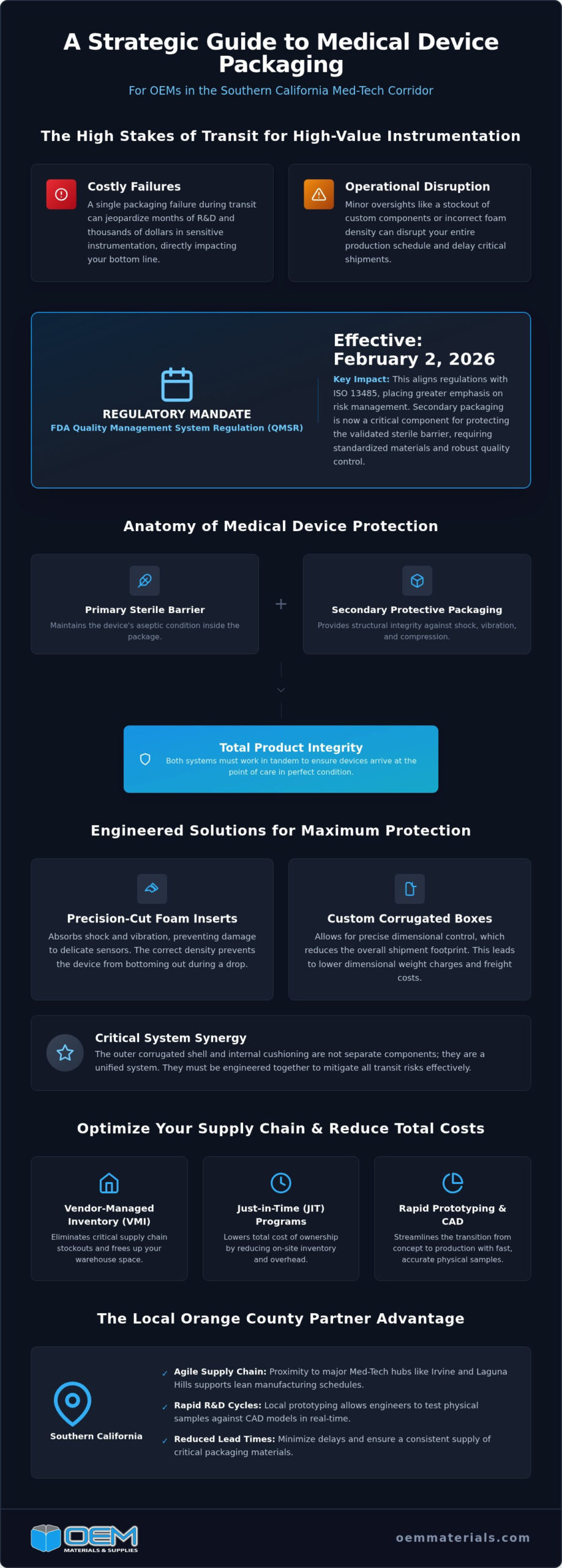
Optimizing Supply Chain Efficiency with VMI and JIT Programs
Managing the inventory of bulky materials like corrugated boxes and foam inserts often consumes valuable floor space that should be dedicated to manufacturing. For high-growth OEMs, the risk of a critical stockout is a constant threat to production continuity. Partnering with a medical device packaging supplier in Orange County that offers integrated inventory management allows you to shift the burden of stock monitoring to the vendor. This transition ensures that packaging components are always available when a device is ready for final assembly, eliminating the downtime associated with delayed supply deliveries.
Implementing a vendor-managed inventory (VMI) program creates a more predictable supply chain. By granting your supplier visibility into your consumption rates, they can proactively manage stock levels at their local warehouse. This local proximity is essential for rapid response; it allows for the immediate adjustment of delivery frequencies based on real-time production surges. Shifting this responsibility reduces the administrative overhead of manual cycle counts and frequent purchase order generation, allowing your team to focus on higher-value engineering tasks.
The Mechanics of JIT Packaging
Success in lean manufacturing depends on synchronizing deliveries with your specific production schedule. Utilizing just-in-time (JIT) packaging allows you to reclaim significant floor space that would otherwise be occupied by stacks of pallets. Instead of storing months of inventory, you receive only what is needed for the current production run. This model significantly improves cash flow because capital is no longer tied up in stagnant inventory sitting on a warehouse shelf. You pay for the materials only as they are consumed, which provides more financial flexibility for R&D and equipment upgrades.
Lowering Total Cost of Ownership
A narrow focus on unit price often obscures the true cost of packaging. To calculate the total cost of ownership, purchasing managers must account for the cost of warehouse space, the labor required for inventory management, and the risk of material obsolescence. Consolidating your requirements with a single medical device packaging supplier in Orange County improves your purchasing power and simplifies your logistics. Vendor-managed inventory streamlines the procurement cycle by allowing the supplier to monitor stock levels and trigger replenishment automatically, removing the daily burden of manual purchase orders from the buyer. If you’re looking to reduce your overhead and improve manufacturing throughput, you can request a supply chain efficiency review to see how localized inventory management can benefit your operation.
Partnering with a Local Orange County Industrial Packaging Supplier
Choosing a medical device packaging supplier in Orange County provides distinct advantages that national distributors cannot match. For manufacturers located in the Irvine tech corridor or near Lake Forest, proximity translates directly into operational speed. A local partner understands the specific logistical challenges of the Southern California landscape, from traffic-impacted delivery windows to the high cost of industrial floor space. By maintaining local warehousing and a dedicated delivery fleet, a regional supplier ensures that your production lines never stall due to a missed shipment or a carrier delay. Reliability in this sector isn’t just about shipping on time; it’s about having the agility to respond to a sudden production surge with same-day or next-day support.
This relationship goes beyond simple transactions. Complex medical devices often require iterative design cycles that benefit from face-to-face collaboration. Having an engineer visit your facility in Santa Ana or Costa Mesa allows for a more accurate assessment of your packing line. You can physicalize the interaction between the device and the foam packaging in real time, making adjustments to prototypes on the spot rather than waiting days for samples to arrive by mail. OEM Materials positions itself as this type of strategic guide, offering the technical depth of a large-scale manufacturer with the responsiveness of a local neighbor.
Evaluating Your Current Packaging Provider
If your current supplier treats your requirements as a commodity, you’re likely leaving money on the table. It’s vital to ask specific questions about their lead times and design support capabilities. A red flag is a supplier that cannot provide rapid prototypes or lacks a transparent vendor-managed inventory program. Your partner must be able to scale with you, transitioning from small-batch R&D prototypes to high-volume production without sacrificing quality. If they don’t offer specialized custom packaging design, they aren’t solving your damage or labor problems; they’re just selling you materials.
Next Steps for Packaging Optimization
Optimizing your supply chain begins with a comprehensive packaging review. This audit identifies hidden costs in your current process, such as excessive material usage or high labor requirements at the packing bench. When preparing for a consultation with a medical device packaging supplier in Orange County, gather specific data points including product dimensions, weight, fragility ratings, and annual usage. This information allows for a more accurate recommendation and a precise quote. Moving to an engineered solution with edge protectors or custom wood crates can significantly improve your shipping outcomes and reduce the total cost of ownership over time.
Securing Your Medical Device Supply Chain
Protecting sensitive medical instrumentation requires a shift from commodity sourcing to technical partnership. By prioritizing the engineering synergy between custom corrugated shells and precision foam cushioning, OEMs can eliminate the high costs associated with transit damage and regulatory non-compliance. Partnering with an experienced medical device packaging supplier in Orange County ensures that your distribution materials meet the rigorous standards of the new FDA Quality Management System Regulation while maintaining the agility needed for rapid product launches.
Operational efficiency is achieved through localized support. Implementing proven VMI and JIT inventory programs allows you to reclaim valuable manufacturing floor space and improve cash flow by paying for materials only as they are consumed. These programs, backed by local engineering support and a dedicated delivery fleet, provide the stability required to scale production without the risk of critical stockouts.
It’s time to transition to a packaging system that works as hard as your devices do. Contact OEM Materials & Supplies today for a custom packaging review and quote to identify cost saving opportunities in your current process. When you reach out, please provide your product dimensions, weight, fragility, and annual usage so we can provide a tailored recommendation. We look forward to helping you build a more resilient and efficient supply chain.
Frequently Asked Questions
What are the most common materials used for medical device packaging in Orange County?
Manufacturers typically utilize a combination of double-wall corrugated boxes and engineered foam inserts made from polyethylene or polyurethane. Polyethylene is preferred for heavier instrumentation due to its high impact resistance, while polyurethane protects delicate sensors with softer cushioning. Other essential components include edge protectors to stabilize palletized loads and high-performance stretch film to secure bulk shipments during transit.
How does a Vendor Managed Inventory (VMI) program benefit a medical device manufacturer?
A VMI program eliminates the risk of stockouts by shifting the responsibility of inventory monitoring to your medical device packaging supplier in Orange County. This arrangement allows you to reclaim valuable warehouse floor space for production while reducing the administrative burden of manual purchase orders. Because the supplier monitors real-time consumption, they can proactively replenish stock at their local facility to meet your production surges.
What information is needed to get an accurate quote for custom medical packaging?
To provide a precise technical recommendation, we require the physical dimensions, total weight, and fragility rating of your device. It is also helpful to provide your expected annual usage and the specific shipping methods you intend to use. This data allows engineers to calculate the correct foam density and corrugated strength required to protect your instrumentation while optimizing for dimensional weight costs.
Can custom foam inserts be designed for multi-component medical kits?
We specialize in designing custom foam packaging kits that organize and protect multiple components within a single corrugated shell. These pre-assembled kits simplify the assembly line process by reducing the number of individual parts a packer must manage. Each cavity is precision-cut to match the specific geometry of the components, ensuring they remain secure and organized for the end user.
What is the typical lead time for custom corrugated box prototypes in Southern California?
Local sourcing allows for significantly faster prototyping cycles compared to national distributors. Because our engineering and production teams are located within the region, we can often provide physical samples for drop testing and fitment evaluation shortly after your CAD designs are finalized. This rapid response is critical for OEMs in the Irvine and Laguna Hills tech corridor who need to meet tight R&D deadlines.
How do you ensure packaging materials comply with medical industry standards?
We standardize our material grades to support your compliance with ISO 11607 and the upcoming FDA Quality Management System Regulation. Every material we supply includes technical data sheets that detail performance specifications such as burst strength and compression resistance. This documentation is essential for your technical files and ensures that the secondary packaging provides a consistent level of protection for the primary sterile barrier.
Is it possible to reduce shipping costs by redesigning current packaging?
Redesigning your packaging can lower total shipping costs by optimizing the dimensional weight of your parcels. By engineering a more compact footprint and using higher-efficiency cushioning materials, you can often fit more units per pallet or reduce the surcharges associated with oversized containers. Actual savings depend on your specific product requirements and carrier contracts, but engineering support is a proven way to identify these logistical efficiencies.
Do you provide local delivery to manufacturing facilities in Irvine and Laguna Hills?
We maintain a dedicated delivery fleet to serve manufacturing hubs throughout Southern California, including Irvine, Laguna Hills, and Santa Ana. This local presence is the foundation of our just-in-time (JIT) programs, allowing us to synchronize deliveries with your production schedule. Our drivers understand the specific access requirements of industrial parks in the region, ensuring that your medical device packaging supplier orange county provides reliable, door-to-door service.