

A packaging redesign proposal should translate brand values into specific design criteria, then define scope, investment, timeline, presentation, and mockup testing. A practical packaging redesign proposal example also specifies two rounds of refinement for the selected direction, so review expectations are clear before production files are prepared. Brand fit is more than visual preference: materials, structure, messaging, and product protection should support the same positioning.
A strong visual concept matters, but it must also meet manufacturing and operational requirements. A packaging redesign proposal example should show how those requirements work alongside brand goals, giving stakeholders consistent criteria for evaluating the design.
This guide explains how to write a brief, define scope and investment, plan a workable timeline, and prepare a focused presentation. It also covers mockup testing and practical ways to organize feedback, helping teams assess brand alignment and packaging performance before approving a direction.
Key Takeaways
- Translate brand values into clear packaging requirements, including product protection, materials, structure, and on-pack messaging.
- Define project scope and approval expectations in the brief so stakeholders understand what the redesign includes.
- Organize investment and timing around decision milestones, with each phase tied to a clear deliverable.
- Use a concise presentation template to connect the design direction to business goals and make feedback easier to consolidate.
- Test mockups against practical handling and packing needs before approving the final direction.
Packaging proposal scope and client brief
A useful brief connects brand intent with packaging performance. Start with the product, its user, and its shipping environment. A fragile electronic component, for example, may need cushioning, clear identification, and an efficient packout. A retail item may also need shelf visibility and brand recognition. Record each requirement separately so every design decision has a clear purpose.
Define the redesign’s boundaries before developing concepts. Name the products and package components included, and identify what will stay unchanged, such as product labels or shipping cartons. Set expected deliverables, including concept visuals, structural drawings, and mockups. Clarify who approves copy, artwork, materials, and production files. Clear ownership helps prevent scope changes and approval delays.
Answer this question directly: What U.S. packaging labeling and sustainability rules affect redesigns? Label requirements depend on product category and how quantity is declared. For packages containing less than 4 pounds or 1 gallon and labeled by weight or fluid measure, the quantity declaration must be expressed in ounces, according to the Office of the Federal Register, National Archives and Records Administration. Sustainability statements should match documented material attributes and realistic recovery options. Treat “100% recyclable” as a claim requiring evidence, not default package copy.
Use these tools to organize the brief and compare concepts:
- Packaging dieline: Maps panels, folds, and copy placement for review.
- Brand asset library: Keeps approved logos, colors, fonts, and product images accessible.
- Requirements matrix: Connects each design choice to an operational or brand need.
- Adobe Illustrator: Supports artwork layout against a supplied dieline.
- Physical mockup: Helps teams assess handling, fit, opening, and packout.
Include measurable acceptance criteria without inventing performance targets. Specify the product dimensions, orientation, and protection concerns. Note how operators pack the item and how customers open it. If Foam Packaging is under consideration, review how its fit and placement relate to product protection in the foam packaging overview.
What are the risks of a packaging redesign? A changed structure can affect product fit, packing steps, shipping protection, and production compatibility. Unclear copy ownership or unsupported environmental claims can also delay approval. Log each risk with an owner, a test, and a decision point. For example, test a mockup during a representative packout before approving final artwork.
Timeline and investment section
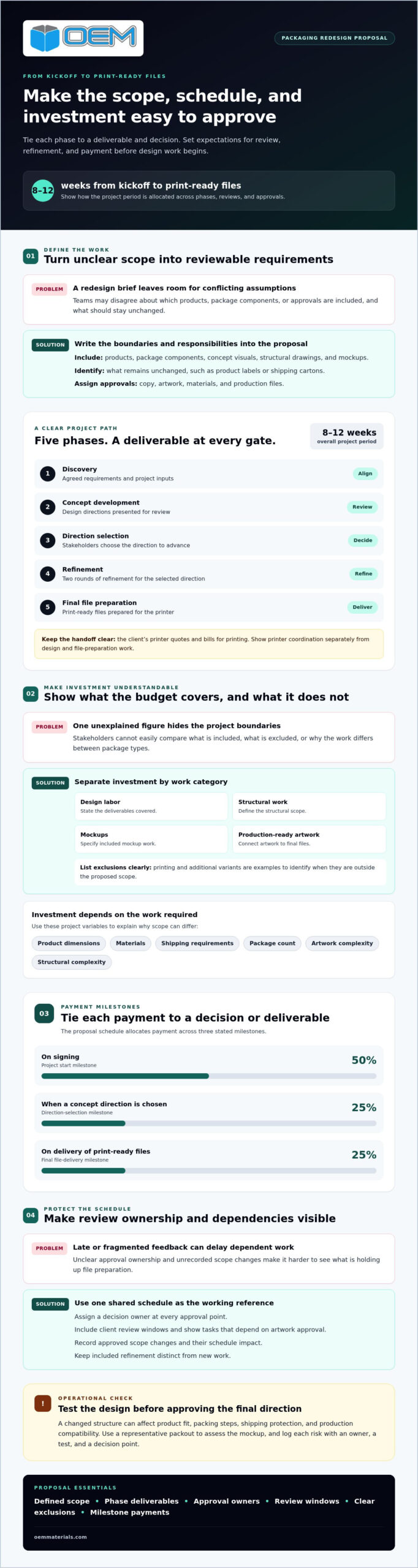
A useful schedule connects design work to approval milestones. Most packaging projects take 8 to 12 weeks from kickoff to print-ready files. The proposal should show how that period is allocated. Start with discovery, then concept development, review, refinement, and final file preparation. Name the decision owner at every approval point. This makes schedule dependencies visible before work begins.
Map each phase to a deliverable and decision. Discovery produces agreed requirements and project inputs. Concept development presents directions for review, and the selected direction moves into refinement. Final preparation produces print-ready files for the printer. Include client review windows, since late or fragmented feedback can delay dependent tasks. Treat printer coordination as a separate handoff, because the client’s printer quotes and bills for printing.
Present the investment as a clear scope, not as a single unexplained figure. Separate design labor, structural work, mockups, and production-ready artwork, and explain which deliverables each category covers. List exclusions, such as printing or additional variants, so stakeholders can compare project boundaries accurately. The investment depends on product dimensions, materials, shipping requirements, package count, and artwork or structural complexity. A fragile item needing a fitted insert requires different design work from a simple carton refresh.
State payment milestones beside the schedule. The proposal payment schedule requires 50% on signing, 25% when a concept direction is chosen, and 25% on delivery of print-ready files. Tie each payment to its stated milestone. This gives procurement and finance teams a usable forecast. If the schedule changes, update the milestone dates and related deliverables together.
Tools can help keep the schedule and budget legible:
- Microsoft Project: Maps dependencies, milestones, and approval gates.
- Smartsheet: Tracks assignments, due dates, and review status.
- Excel: Organizes scope categories and compares planned effort.
- Trello: Shows concept tasks moving through review stages.
Use one shared schedule as the working reference. If artwork approval slips, show which file-preparation tasks depend on it. Record approved scope changes and their schedule impact. Distinguish included refinement from new work so payment milestones remain tied to the original deliverables, rather than becoming vague billing checkpoints. Share the schedule with design, procurement, operations, and the printer before kickoff.
Executive summary
Place the executive summary at the front of the proposal. It gives decision-makers a quick view of the project’s purpose and the approval requested. Focus on the business problem, recommended direction, and decision needed. For example, describe inconsistent product identification and explain how the redesign addresses it. Lead with the business case, not design language alone, so operations and finance leaders can assess the rationale.
Build the summary from verified project inputs. Name the product line, sales channel, and operating constraint. Explain what the current package does not support. A warehouse team may need a more consistent packout, while a retail team may need clearer product differentiation. Separate documented pain points from assumptions so readers can see what supports the recommendation.
State the proposed scope in plain language. Summarize the package components under review, the design direction, and the expected deliverables. Identify what falls outside the project. For example, a redesign may update graphics while retaining the existing package structure. This distinction helps approvers understand the change without first reading technical detail.
Connect brand values to visible design choices. If durability is central, explain how the structure and material selection support that message. If simplicity matters, show how hierarchy and copy reduce visual clutter. Link each design rationale to an agreed brand attribute. Avoid broad claims such as “more sustainable” unless you can explain the supporting evidence and criteria.
Make the decision request explicit. State whether leadership must approve a direction, authorize concept development, or agree on project boundaries. Name the decision owner and the information needed to decide. Identify key operational checks, such as packout fit, handling, and printer compatibility. This helps executives understand what approval covers and what work follows.
Tools can turn source material into a clear summary:
- PowerPoint: Presents the recommendation, rationale, and decision request in a visual sequence.
- Google Slides: Supports shared review and comments across departments.
- Microsoft Word: Keeps a concise written version alongside the full proposal.
- Excel: Organizes baseline measures, such as damage reports or packing steps.
Keep the executive summary consistent with the detailed proposal. Use the same project name, scope terms, and approval language throughout. If a chart shows current damage patterns, label its source and date. If a visual compares concepts, identify the recommended option and explain why. This alignment prevents a polished summary from promising work excluded from later sections.
Before circulation, ask someone outside design to review the summary. A procurement manager should understand the requested decision, and an operations lead should recognize the relevant workflow. Revise any phrase that needs verbal explanation. The result should work as a decision tool, not merely a condensed design presentation.
Packaging proposal presentation templates
A packaging redesign proposal example can be formatted as a PDF for easy review and sharing. Build the content in a presentation file, then export a fixed copy for stakeholders. Keep editable source files separate so the proposal text and approved artwork remain manageable.
Build the template around a clear sequence. Open with the product line and redesign objective. Show the current package, then explain the operational or brand issue. Present the recommended direction and its rationale. Close with scope, deliverables, the decision requested, and next steps. This order helps procurement, design, and operations follow one clear argument.
Use one slide for each decision area. A current-state slide can show package photos and known constraints. A concept slide can pair a rendering with material and structure notes. A comparison slide can assess concepts against agreed criteria, such as brand alignment, product fit, and packing workflow. Mark assumptions separately from tested results.
Make visuals useful and easy to interpret. Label each package view with its orientation, component, and revision status. Side-by-side comparisons work well for showing graphic or structural changes. Add callouts when a proposed opening, insert, or label affects handling. Arrows, for example, can show how an operator removes a product without obscuring the brand presentation.
Make the template easy to review. Reserve a consistent area for open questions, decision owners, and approval status. Use the same concept names across slides, meeting notes, and follow-up files. “Concept A” is clearer than “the blue version.” Tie comments to a specific visual or requirement.
Useful tools support different stages:
- Microsoft PowerPoint: Builds a structured proposal with editable layouts and speaker notes.
- Google Slides: Supports shared comments and collaborative review.
- Adobe Illustrator: Prepares detailed artwork and packaging visuals.
- Adobe Acrobat: Exports a stable PDF and supports document comments.
- Figma: Organizes digital layouts and visual comparisons for review.
Keep the live presentation focused. The proposal recommends keeping stakeholder presentations under 15 minutes. Use that time for the problem, recommended direction, supporting evidence, and requested decision. Move detailed specifications into an appendix. This keeps the meeting useful for executives while preserving technical material for engineers and production teams.
Before sending a PDF, check that fonts, images, and labels display correctly. Confirm the revision date and file name, such as “Product Line Redesign Proposal, Rev A.” Remove internal comments and outdated concepts. A final review by design and operations can catch mismatched visuals or obsolete scope language before distribution.
Stakeholder presentations and mockup testing
Bring design, procurement, operations, and marketing into the same review. Each team sees different risks. Marketing checks brand consistency across product lines. Operations considers packout sequence and operator access. Procurement considers sourcing and component handling. Assign one decision owner to consolidate feedback, preventing conflicting comments from becoming competing design instructions.
Use the presentation to define what the mockup must prove. Show how the product enters and leaves the package. Observe whether inserts stay in position during normal handling and whether labels remain visible after packing. For a multi-part item, ask an operator to pack it using the proposed configuration without verbal coaching. Record points of confusion and extra handling.
Provide a structured feedback form after each review. Ask stakeholders to identify the panel, component, or workflow step behind each comment. Separate required corrections from preferences. “The part shifts during packout” describes a testable issue. “The layout feels busy” needs a more specific observation before it can guide a revision. This distinction makes feedback easier to act on.
How should teams compare packaging redesign concepts and measure success? Use one scorecard based on agreed project goals, then assess every concept against the same criteria. After launch, compare relevant operating measures, such as damage reports, packing time, material use, or customer complaints, with a baseline.
These tools help capture useful evidence:
- Microsoft Forms: Collects consistent stakeholder ratings and comments.
- Excel: Organizes test observations by concept and requirement.
- Miro: Lets reviewers annotate package views during discussion.
- Test log: Records the mockup version, product configuration, task, and observed result.
Keep mockup comparisons controlled. When practical, change one design variable at a time. If an insert changes product positioning, keep the outer package consistent during that test. Record differences in handling or fit. A packaging kit can show how components are grouped for a repeatable packout. Use test findings to guide adjustments and retain the tested version for reference.
Close each review by recording the decision, its owner, and the next action. If a stakeholder proposes a different direction, document the business need behind it. For packaging requirements connected to a redesign, request a quote.
OEM Materials & Supplies: Corrugated Boxes
OEM Materials & Supplies helps turn an approved packaging direction into material selections and components. In Orange County, Los Angeles, San Diego, and Riverside, manufacturers can work with the company on corrugated boxes, protective inserts, and coordinated packaging kits. These solutions connect design decisions with the components used for packing and shipping.
For example, a box may need foam packaging to hold a product securely during transit, while a packaging kit can group components for a repeatable packout. When discussing your needs with OEM Materials & Supplies, share product dimensions, weight, shipping requirements, and expected usage. These details help shape a practical recommendation that addresses brand goals as well as handling and protection.
Contact OEM Materials & Supplies to discuss corrugated boxes or related packaging requirements.
Move the Approved Direction Toward Implementation
Use a packaging redesign proposal example as a working decision document, not a file that ends at approval. Once stakeholders select a direction, carry its requirements into production planning. Keep approved artwork, structural details, and test observations aligned as teams prepare the transition. This continuity helps preserve design decisions during handoff.
Assign a clear owner to maintain the approved specifications. Make sure purchasing, operations, and design can access the same current files. If the product or shipping conditions change, record the change and assess its effect on the package before revising materials. A controlled handoff gives the redesign a practical path beyond the presentation.
For packaging requirements tied to your product and operations, request a quote from OEM Materials & Supplies. Share the product dimensions, weight, shipping requirements, and annual usage to help frame the discussion. A well-prepared next step keeps the approved direction connected to real packaging needs and gives your team a clear starting point for implementation.
Frequently Asked Questions
How can packaging design proposals be aligned with a company’s brand identity and values?
Map brand principles to the moments customers encounter the package. A company that emphasizes precision, for example, can assess whether its packaging feels organized from delivery through product removal. Review the full package family, not just one hero panel. Consistent naming, visual hierarchy, and finishes across product sizes can reinforce recognition while keeping required product information distinct.
How can sustainability be integrated into packaging design while appealing to consumers?
Make sustainability understandable through practical packaging choices and clear disposal guidance. Consider whether components are easy to separate and whether instructions explain what to do with each one. Evaluate materials against product protection and the package’s actual end-of-use pathway. Consumer testing can reveal confusing claims or disposal steps. Clear, accurate explanations are more useful than broad environmental language without context.
How can typography and color psychology influence consumer behavior in packaging design?
Typography and color shape what customers notice first, but their impact depends on viewing conditions and audience expectations. Test label readability at the package’s actual size, including under warehouse or retail lighting. Check that color distinctions remain clear for customers with color-vision differences. Use type weight and spacing to establish emphasis, then verify the hierarchy in printed samples and online product images.
What are some best practices for presenting a packaging design proposal to stakeholders?
Set the meeting purpose before inviting reviewers. Tell participants which decision they need to make and what information to bring, such as production constraints or customer feedback. Give each stakeholder a defined review role to keep discussion focused. After the meeting, distribute a decision record capturing approvals, unresolved concerns, and accountable owners. This creates a traceable record for later project reviews.
What are the key elements to consider when creating an effective packaging design proposal?
Include intended package configurations, artwork ownership, file formats, and version-control methods. Specify how the design will account for product variations, language requirements, and future SKU changes. Clarify who supplies approved copy and who releases final artwork to production. These details help prevent handoff problems, such as using an outdated file or applying a design to a product variation that was never evaluated.
What innovative materials can be explored in packaging design to enhance functionality and aesthetics?
Material exploration can include paper-based cushioning, molded fiber components, reusable containers, or hybrid structures that combine protective materials. Compare options using sample builds that reflect the product’s actual shape and handling path. Review appearance, assembly, storage, and disposal together. A visually distinctive surface may suit a customer-facing package, while a reusable format may better fit a controlled return loop. Choose materials for the use case, not novelty alone.
What metrics can be used to evaluate the success of a packaging design after implementation?
Track transition indicators alongside customer and operating outcomes. Useful measures include obsolete packaging inventory, order fulfillment errors linked to package selection, and time needed to convert production lines to the new format. Review them by product family and shipment channel to identify differences in performance. Set the review method before launch so teams can distinguish packaging effects from unrelated changes in product mix or process.
What role does target audience research play in shaping a packaging design proposal?
Audience research helps distinguish assumptions from actual use patterns. Interview people who purchase, receive, store, or open the product, since each group may value different information. A distributor, for instance, may need quick product identification, while an end user may prioritize clear setup instructions. Use those findings to decide what information deserves prominence and which package interactions need testing before the design is finalized.