
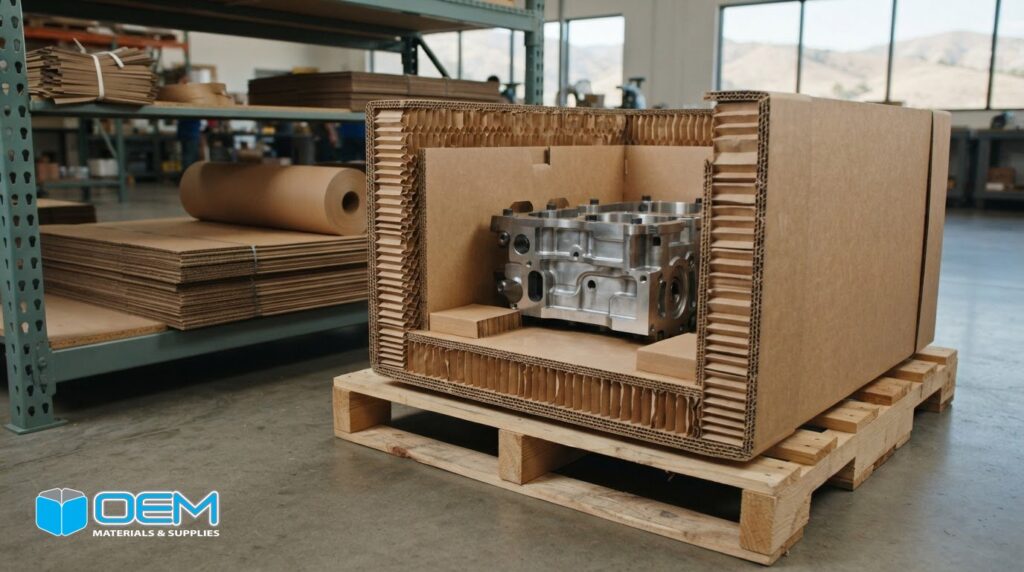
Paper-based honeycomb materials are typically 100% recyclable, making recyclable honeycomb crating in Riverside a potential option for shipments that need protective packaging with a paper-based material stream. The right choice still depends on the product’s dimensions, weight, handling needs, and shipping conditions.
Packaging teams need protection that fits the load without adding unnecessary material or packing steps. This guide explains how honeycomb crating is constructed, what to assess for a shipment, and how local recycling acceptance can shape end-of-use planning. It also covers how to compare packaging formats and identify the project details needed for a practical recommendation.
Key Takeaways
- Understand how paper honeycomb structure supports protective crating and what details matter when matching it to a shipment.
- Compare the product’s size, weight, handling needs, and shipping conditions when assessing packaging options.
- Plan for end-of-use by checking which paper-based packaging materials local recycling programs accept.
- Consider corrugated boxes when a box format better fits the product and shipping requirements.
- OEM Materials & Supplies offers corrugated boxes and other packaging options for businesses assessing their shipping needs.
Recyclable honeycomb crating riverside
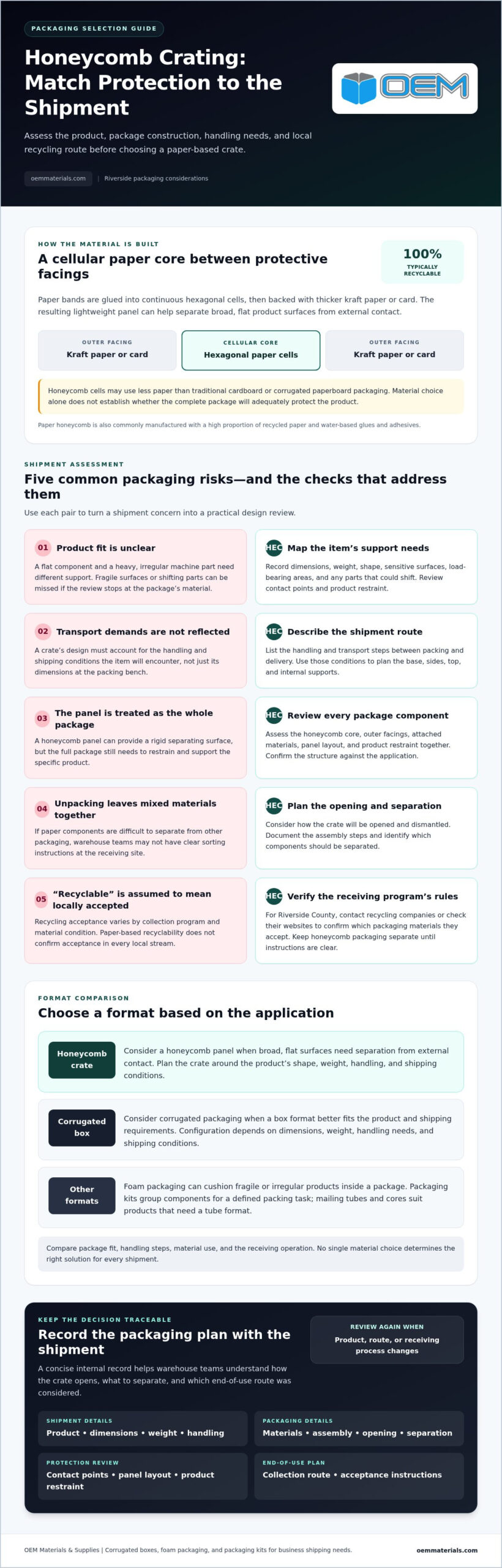
Paper honeycomb crating combines a cellular paper core with protective outer sheets. The core is made by gluing paper bands into continuous hexagonal cells, then backing them with thicker kraft paper or card. This creates a lightweight panel used in protective packaging. For shipments with broad, flat surfaces, a honeycomb panel can separate the product from external contact. The crate design still needs to account for the item’s shape, weight, handling, and shipping conditions.
Paper-based honeycomb materials are typically 100% recyclable. They’re also commonly manufactured with a high proportion of recycled paper and water-based glues and adhesives. These characteristics make them relevant to businesses reviewing packaging materials and end-of-use handling. They don’t determine whether a particular shipment is protected adequately. A procurement team should assess the packaging structure against the product and route, then consider what happens to the material after unpacking.
Honeycomb cells may use less paper than traditional cardboard or corrugated paperboard packaging. This can matter when a design needs a rigid panel without solid paperboard construction. However, material choice alone does not establish whether the complete package will protect the product. A flat component and a heavy, irregular machine part, for example, need different support. Review contact points, panel layout, and product restraint before choosing a crate design.
For recyclable honeycomb crating in Riverside, assess packaging performance separately from local recycling acceptance. Start with the product’s dimensions, weight, fragile surfaces, and any parts that could shift in transit. Then plan the base, sides, top, and internal supports around those needs. Finally, consider how the package will be opened and separated. A crate that is easy to dismantle can simplify sorting at the receiving site.
Use these practical checks when assessing a honeycomb packaging concept:
- Product fit: Note the shape, surface sensitivity, and load-bearing areas that need support.
- Shipment conditions: Describe the handling and transport steps the package will encounter.
- Package construction: Review the honeycomb core, outer facings, and any attached materials together.
- Unpacking: Consider whether warehouse staff can separate the paper components from other packaging.
- End-of-use: Identify where the material will be sorted and which local program or recycler may accept it.
That last step matters in Riverside County. Recycling acceptance varies by collection program and material condition, so paper recyclability alone does not confirm local acceptance. Riverside County advises residents to contact recycling companies or check their websites to confirm which packaging materials they accept. Businesses should apply the same approach to their chosen collection route. Keep honeycomb packaging separate until the receiving program’s instructions are clear.
Riverside County Waste Resources lists its address as 14310 Frederick Street, Moreno Valley, California 92553. The address identifies the department’s listed location, not a promise that a particular packaging material is accepted there. For recycling decisions, distinguish between an address, a program’s acceptance rules, and the handling instructions at the facility receiving the material. That distinction helps avoid treating “recyclable” as identical to “accepted in every local collection stream.”
Document the packaging choice alongside the shipment details. An internal record can identify the product, package materials, assembly steps, and planned end-of-use route. Warehouse teams handling a paper honeycomb crate can use it to understand how the package opens and which components to separate. Review the design whenever the product, shipping route, or receiving process changes. This keeps protection requirements and recycling plans aligned.
OEM Materials & Supplies: Corrugated Boxes
OEM Materials & Supplies provides corrugated boxes for businesses whose products and shipping requirements call for a box rather than a honeycomb crate. Corrugated packaging can serve as an outer container for parts, components, and finished goods moving through warehouse and distribution operations. Choose the configuration based on the item’s dimensions, weight, handling needs, and shipping conditions.
For fragile or irregular products, foam packaging can cushion the item inside its package. Packaging kits bring components together for a defined packing task, while mailing tubes and cores suit products that need a tube format. These options give purchasing and operations teams alternatives to compare for package fit, handling steps, and material use.
Contact OEM Materials & Supplies to discuss your packaging requirements.
Set Your Packaging Requirements for the Next Shipment
Use your next packaging review to turn product and shipping requirements into a clear purchasing specification. Record the item’s dimensions and weight, note sensitive surfaces or components, and describe the handling steps between packing and delivery. These details help your team compare a crate concept with other formats based on the actual application.
For businesses evaluating recyclable honeycomb crating in Riverside, match the protective format to the shipment and receiving operation. OEM Materials & Supplies offers corrugated boxes, foam packaging, and packaging kits for different packaging needs. Share the product details and shipping conditions that shape your decision so the options can be assessed for your application.
Contact OEM Materials & Supplies to discuss your packaging requirements and move your review toward a practical next step.