
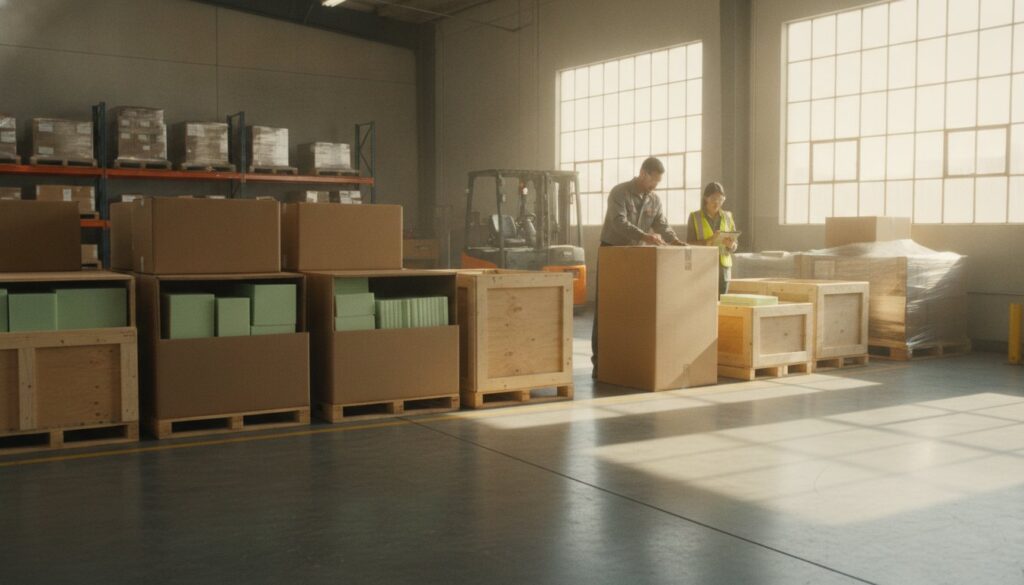
Switching to recycled filler and calling it a sustainability strategy isn’t enough anymore. For industrial manufacturers shipping precision components, heavy assemblies, or sensitive equipment, the real challenge with sustainable industrial packaging options isn’t finding something that looks green on paper. It’s finding materials and systems that perform under the same demanding conditions as the single-use plastics they’re meant to replace.
That concern is legitimate. Procurement managers and packaging engineers across aerospace, automotive, and medical device manufacturing have seen eco-friendly alternatives fail during transit, arrive without adequate cushioning specifications, and ultimately cost more in damage claims than the materials saved. The pressure to reduce packaging waste is real, and so is the pressure to maintain a zero-damage shipping record.
This article cuts through the surface-level advice. You’ll learn how industrial OEMs can evaluate high-performance sustainable materials, build circular packaging programs that reduce total cost of ownership, and make smarter sourcing decisions without compromising product protection. The path forward isn’t about swapping one material for another. It’s about engineering the right solution from the start.
Key Takeaways
- Evaluating sustainable industrial packaging options requires measuring performance under real transit conditions, not just reviewing material certifications or recycled content claims.
- High-performance corrugated and wood packaging can meet rigorous industrial standards when sourced with the right specifications, including verified stacking strength and certified material origins.
- Protective packaging alternatives to traditional foam exist and can be engineered to match cushioning performance, but the right choice depends heavily on product weight, fragility, and shipping frequency.
- Vendor-Managed Inventory and Just-In-Time delivery models reduce packaging waste at the supply chain level, not just at the material level, making logistics strategy a core part of any sustainability plan.
- A structured packaging audit and rapid prototyping process allows industrial OEMs to transition to sustainable materials without exposing their operations to damage risk or production delays.
Defining Sustainable Industrial Packaging Options for Manufacturers
Sustainability means something very different on a factory floor than it does in a corporate ESG report. For industrial manufacturers shipping precision aerospace components or medical assemblies, sustainable packaging isn’t about optics. It’s about engineering systems that reduce material waste, support circular recovery, and still protect products through the full transit cycle. That’s the standard against which every sustainable industrial packaging option must be measured.
The most practical framework for industrial buyers centers on three operational pillars:
- Recyclability: Materials that can re-enter a recovery stream after use, reducing landfill contribution without requiring complex sorting infrastructure at the receiving facility.
- Reusability: Assets designed for multiple transit cycles, including returnable containers and plastic pallets, which reduce per-shipment material consumption over time.
- Resource Reduction (Right-sizing): Packaging engineered to the exact dimensions and protective requirements of the product, eliminating excess material at the source rather than managing it downstream.
Southern California manufacturers face an additional layer of pressure here. California’s regulatory environment around packaging waste, extended producer responsibility, and single-use plastics has accelerated timelines for industrial OEMs operating in Los Angeles and Orange County. The shift away from single-use plastics isn’t just a values decision for these facilities. In many cases, it’s a compliance requirement that procurement teams are actively engineering around right now.
The Shift from Linear to Circular Industrial Supply Chains
A circular packaging system is one where materials are continuously recovered and repurposed rather than discarded after a single use. In heavy manufacturing and distribution, this means designing packaging assets with end-of-life recovery in mind from the start. Reusable plastic pallets are a straightforward example: they replace single-trip wood alternatives and accumulate cost and environmental advantages over dozens of transit cycles. The circular model doesn’t eliminate packaging; it restructures how materials flow through the supply chain.
Beyond Biodegradability: The Importance of Durability
A damaged product is the least sustainable outcome in any shipping scenario. The carbon footprint of manufacturing, packaging, and shipping a component twice far exceeds the footprint of using a more robust material the first time. That’s why high-strength corrugated boxes, engineered to verified stacking and burst strength specifications, remain central to responsible industrial packaging. Biodegradability is a useful property, but it’s irrelevant if the packaging fails before delivery. Durability and sustainability aren’t competing priorities. They’re the same requirement, approached from different angles.
High-Performance Corrugated and Wood Packaging Solutions
Corrugated and wood packaging represent two of the most mature, well-understood material categories in industrial shipping, and they’re also two of the most misunderstood when sustainability enters the conversation. The assumption that higher recycled content automatically means better environmental performance ignores a critical variable: structural integrity. For aerospace components, automotive assemblies, and medical device shipments, a box that fails mid-transit isn’t a sustainable outcome by any measure.
Recycled Content Standards for Industrial Shipping Containers
Standard industrial corrugated boxes commonly incorporate a blend of virgin and recycled fibers, with post-consumer waste content varying by grade and manufacturer. The practical challenge is that recycled fibers are shorter than virgin fibers, which affects how the material performs under compression. Edge Crush Test (ECT) ratings, which measure a container’s resistance to top-to-bottom stacking forces, can decline as recycled content increases if the flute construction and liner weights aren’t adjusted to compensate.
This isn’t an argument against recycled content. It’s an argument for specifying it correctly. A corrugated container engineered with the right combination of recycled liner and medium, appropriate flute profile, and verified ECT rating can meet the same performance benchmarks as a virgin-fiber equivalent. The key is working from performance specifications first, then selecting materials that satisfy them, rather than selecting materials based on recycled content percentage alone. OEM Materials’ Corrugated Packaging Guide outlines the strength specifications industrial buyers should be evaluating before any material decision is made.
Custom die-cut designs also play a direct role in reducing material waste. When a box is engineered to the exact dimensions of the product it protects, the need for supplemental void fill drops substantially. Less filler material, less corrugated board, and a tighter pack all contribute to a lower total material footprint per shipment. That’s sustainable materials management applied at the design stage, where it has the most leverage.
Sourcing decisions also matter. FSC (Forest Stewardship Council) and SFI (Sustainable Forestry Initiative) certifications confirm that the virgin fiber content in a corrugated container originates from responsibly managed forests. For industrial OEMs with supplier sustainability requirements or ESG reporting obligations, these certifications provide a verifiable chain of custody that recycled content claims alone can’t offer.
Sustainable Wood Crates and Export Compliance
Heavy industrial shipments that exceed the structural limits of corrugated often require custom wood crates, and the sustainability profile of those crates depends heavily on how the wood is sourced and treated. Heat-treated lumber, which satisfies ISPM 15 compliance requirements for international export, avoids the chemical preservatives associated with older treatment methods. That’s both a regulatory requirement for cross-border shipments and a cleaner material choice.
The longevity advantage of a well-built custom crate is significant. A crate engineered for a specific component, with appropriate blocking, bracing, and load-bearing specifications, can complete multiple transit cycles before material degradation becomes a concern. That extended service life distributes the environmental cost of production across more uses, improving the overall sustainability profile compared to a single-trip container. Southern California manufacturers shipping to ports in Los Angeles or San Diego can also explore regional wood recovery and recycling programs that divert decommissioned crates from landfill streams.
If you’re evaluating corrugated or wood packaging specifications for a current program, request a packaging review with your product dimensions, weight, and shipping frequency to get recommendations grounded in your actual requirements.
Sustainable Protective Packaging: Foam and Pallet Comparisons
Material selection at the protective layer is where many industrial sustainability programs stall. The corrugated outer container gets engineered carefully, and then a generic foam insert or single-use wood pallet undermines the entire program. For manufacturers evaluating sustainable industrial packaging options at the component level, the inner packaging and load-handling materials deserve the same engineering discipline applied to the outer container.
Recyclable Engineered Foam for Sensitive Components
Polyethylene (PE) and polyurethane (PU) foams both appear frequently in industrial protective packaging, but they perform very differently at end of life. PE foam is a closed-cell, thermoplastic material that re-enters standard industrial recycling streams with relative ease. PU foam, which is thermoset, is considerably harder to recycle and often ends up in landfill regardless of the facility’s intentions. For manufacturers shipping sensitive electronics, precision optics, or medical assemblies, switching from PU to PE foam where protective specifications allow is one of the more direct improvements available without redesigning the entire package.
Custom-molded inserts take that improvement further. When foam packaging is engineered to the exact geometry of the component it protects, material consumption drops substantially compared to generic block-and-brace configurations. Precision-cut foam minimizes total package size and shipping weight, which reduces both material cost and the cubic volume billed by carriers on dimensional-weight pricing. That’s a measurable operational benefit alongside the sustainability gain.
The protective performance of a custom insert also reduces the cushioning redundancy that drives material overuse. When the foam is doing its job precisely, there’s no need to compensate with extra layers or oversized cavities. Less material, better protection, smaller package. Those outcomes align directly with responsible materials management at the design stage.
Multi-Trip Plastic Pallets and Load Stabilization
The ROI case for high-density polyethylene plastic pallets in closed-loop systems is straightforward: a pallet that completes dozens of transit cycles distributes its production footprint across each use, driving the per-trip environmental cost well below that of a single-use wood alternative. The financial return follows the same logic. Upfront cost is higher; total cost over the asset’s service life is lower. Results vary depending on shipment frequency, handling conditions, and recovery logistics, but closed-loop programs with consistent return rates consistently demonstrate this advantage.
Load stabilization materials compound the sustainability calculation. Optimized stretch film application, guided by proper wrapping technique, reduces film consumption per pallet without sacrificing load integrity. Edge protectors reinforce pallet corners and allow tighter film tension with less total wrap, which means fewer layers of film achieve the same containment force. That combination, edge protection plus optimized film application, reduces stretch film waste at the load level rather than relying on material substitution alone.
For industrial OEMs managing high-volume outbound shipments from Southern California facilities, these adjustments at the pallet level aggregate into meaningful reductions in material consumption across an annual shipping program. If you’re ready to evaluate your current protective packaging configuration, connect with OEM Materials’ custom packaging design team with your component specifications and shipping volume to get a grounded assessment.
Reducing Environmental Impact through Logistics and VMI
Material selection gets most of the attention in sustainability conversations, but the logistics layer of a packaging program carries an environmental footprint that rarely appears in material audits. How often packaging is delivered, how much inventory sits idle in a warehouse, and how efficiently loads are built all determine the real-world carbon impact of an industrial packaging operation. For manufacturers evaluating sustainable industrial packaging options, logistics strategy isn’t a secondary consideration. It’s a primary lever.
The Environmental Benefits of Packaging VMI Programs
Dead inventory is one of the more overlooked sources of packaging waste in industrial facilities. When corrugated boxes, foam inserts, or stretch film accumulate beyond near-term production requirements, materials age, get damaged in storage, or become obsolete when product specifications change. The result is waste that was never shipped, never protected anything, and never had to fail in transit to cost the operation money and materials.
Vendor-Managed Inventory addresses this directly. A VMI program shifts inventory monitoring and replenishment responsibility to the supplier, who maintains appropriate stock levels based on actual consumption data rather than periodic purchase orders. Delivery frequency is optimized around real demand, which consolidates freight runs and reduces the number of individual shipments arriving at a facility each month. Fewer trips mean lower transportation-related emissions, and tighter inventory levels mean less material sitting in storage waiting to become waste.
For Southern California manufacturers operating in Los Angeles or Orange County, working with a local packaging partner compounds these benefits. Shorter delivery routes reduce per-shipment fuel consumption compared to sourcing from distant distribution centers. That geographic advantage is straightforward, and it’s one that a regional supplier relationship makes consistently available rather than situationally.
Right-Sizing and Engineering Support
Package volume has a direct relationship with freight efficiency. Carriers price dimensional weight alongside actual weight, which means oversized packaging increases freight cost even when the product itself is light. Eliminating unnecessary air from a shipment through custom packaging design reduces both material consumption and the cubic volume billed per shipment. Those two outcomes reinforce each other across every unit shipped.
Engineered redesigns consistently demonstrate this relationship. When a packaging configuration is rebuilt around actual product geometry rather than a generic box-and-fill approach, material usage drops and pack efficiency improves. The magnitude of that improvement depends on the starting configuration, product complexity, and shipping volume, so results vary by program. What doesn’t vary is the direction: right-sized packaging uses less material, ships more efficiently, and reduces the per-unit environmental cost of every outbound order.
Assembly and kitting services extend this logic into warehouse operations. When packaging components arrive pre-staged and organized for production line use, the labor and material waste associated with ad-hoc packing processes decreases. For insights into how professional packaging solutions can streamline your warehouse floor, read more. That’s a reduction in operational waste that doesn’t require a new material certification or a supplier audit to achieve.
If you’re ready to evaluate how logistics structure and packaging design interact in your current program, contact OEM Materials with your shipping volume and product specifications to get a grounded assessment of where consolidation and right-sizing improvements are available.
Implementing a Sustainable Transition for Industrial OEMs
Knowing which sustainable industrial packaging options exist is one thing. Building a structured plan to implement them without disrupting production schedules or exposing shipments to damage risk is another challenge entirely. For aerospace, automotive, and medical device manufacturers, the transition requires discipline: a clear audit baseline, a phased rollout, and supplier relationships that can support engineering decisions rather than just fulfill purchase orders.
Start with a packaging audit before changing anything. Map every packaging component currently in use across your outbound shipments, including outer containers, protective inserts, void fill, pallet types, and load stabilization materials. Identify where waste accumulates most visibly: oversized boxes with excess void fill, single-use foam configurations that could be redesigned, or high-volume SKUs where material consumption is consistent enough to justify custom engineering. That audit creates the prioritization framework for everything that follows.
Rapid prototyping is the next step, not full-scale conversion. Testing a redesigned corrugated configuration or a custom foam insert on a limited production run generates real performance data before any broad commitment is made. Damage rates, pack times, and freight costs from that pilot run give procurement teams defensible numbers to bring to internal stakeholders. That evidence-based approach is particularly important in regulated industries where packaging qualification processes are formal and documented.
Collaborating with local Southern California suppliers shortens both the supply chain and the feedback loop. When your packaging partner is close enough to visit a facility, review a prototype in person, and respond quickly to specification changes, the transition timeline compresses. That geographic proximity also reduces the transportation footprint of your packaging supply chain itself, which is a measurable sustainability gain that doesn’t require any material substitution. This logic of regional partnership extends to other operational needs; for example, businesses across the region often rely on Yeahgor Commercial Wraps & Decals to maintain a professional and consistent fleet appearance throughout San Diego County.
Setting measurable ESG targets for packaging gives the program accountability. Track metrics that reflect operational reality: total packaging material consumed per unit shipped, percentage of materials recovered or recycled, and damage rates across transitioned SKUs. Vague goals don’t drive decisions. Specific, trackable targets do.
Evaluating Supplier Compliance and Technical Expertise
Ask direct questions before committing to any packaging partner. What certifications cover their virgin fiber content? Can they provide ECT ratings and burst strength documentation for corrugated configurations? Do their foam materials meet the recyclability requirements of your receiving facilities? For aerospace and medical programs, verify that proposed materials won’t introduce contamination risks or conflict with existing packaging qualification protocols. Engineering support during the transition isn’t optional in those sectors; it’s a requirement for a compliant handoff.
Developing a Phased Implementation Plan
Begin with high-volume, low-complexity components where packaging redesign carries the least qualification risk. Monitor damage rates and cost-to-serve metrics through the first several shipment cycles before expanding the program. When you’re ready to request a formal assessment, have your product dimensions, weight, fragility classification, and annual shipping volume ready. That data allows OEM Materials’ team to develop recommendations grounded in your actual operational requirements rather than generic specifications.
If you’re ready to move from audit to action, connect with OEM Materials’ custom packaging design team with your current packaging configurations and target sustainability metrics. A structured review of your program can identify where material reductions, logistics improvements, and smarter sourcing decisions intersect to lower your total cost of ownership while building a packaging operation that meets the demands of 2026 and beyond.
Engineering a More Efficient Packaging Operation
A successful transition to sustainable industrial packaging options requires moving beyond material substitutions. True sustainability in a manufacturing context is achieved through engineering precision and logistics optimization. By right-sizing corrugated containers to eliminate void fill and implementing multi-trip assets like plastic pallets, industrial OEMs can protect their bottom line while meeting rigorous environmental standards. These strategies don’t just reduce waste; they lower the total cost of ownership across the entire supply chain.
For aerospace and medical device manufacturers in Southern California, these improvements are most effective when supported by specialized engineering and local VMI capabilities. Reducing your carbon footprint is a long-term commitment that rewards a structured, data-driven approach. When you’re ready to modernize your program, providing specific data points such as product dimensions, weight, fragility, and annual usage will help ensure an accurate recommendation tailored to your facility’s needs.
Ready to optimize your supply chain? Contact OEM Materials & Supplies for a comprehensive packaging review and quote. We’re here to help you build a more resilient and efficient operation for the years ahead.
Frequently Asked Questions About Sustainable Industrial Packaging Options
What are the most common sustainable industrial packaging options for heavy machinery?
The most practical options for heavy machinery include engineered wood crates built from FSC-certified or heat-treated lumber, high-density polyethylene plastic pallets designed for multi-trip use, and heavy-duty corrugated containers specified to verified Edge Crush Test ratings. The right combination depends on the component’s weight, dimensions, and whether the shipment is domestic or international. For cross-border freight, heat-treated wood crates satisfy ISPM 15 compliance requirements while avoiding chemical preservatives.
Load stabilization materials also matter at this scale. Edge protectors reinforcing pallet corners, combined with optimized stretch film application, protect heavy loads without requiring excessive material. The goal is engineering each element to the specific load rather than defaulting to oversized or overly generic configurations.
Can recycled corrugated boxes handle the same weight as virgin fiber boxes?
Yes, but the specification has to be engineered correctly. Recycled fibers are shorter than virgin fibers, which can reduce compression resistance if the flute profile and liner weights aren’t adjusted to compensate. A corrugated container built with the right combination of recycled liner and medium, appropriate flute construction, and a verified ECT rating can match the performance of a virgin-fiber equivalent. The critical step is working from performance requirements first, then selecting materials that satisfy them.
Recycled content percentage alone isn’t a reliable performance indicator. Procurement teams should request documented ECT and burst strength ratings for any corrugated configuration under evaluation, regardless of the material’s sustainability credentials.
Are plastic pallets more sustainable than wood pallets in the long run?
In closed-loop programs with consistent return rates, high-density polyethylene plastic pallets generally carry a lower per-trip environmental cost than single-use wood alternatives. A plastic pallet completing dozens of transit cycles distributes its production footprint across each use, which improves its overall sustainability profile over time. The upfront cost is higher, but total cost of ownership over the asset’s service life tends to be lower. Results vary depending on shipment frequency, handling conditions, and how reliably pallets are recovered and returned.
The sustainability advantage diminishes in open-loop distribution where return logistics aren’t practical. For those scenarios, responsibly sourced wood pallets remain a reasonable option. The right choice depends on your specific supply chain structure, not a blanket material preference.
How does ‘right-sizing’ packaging contribute to environmental goals?
Right-sizing reduces material consumption at the source, which is the most efficient point of intervention in any sustainability program. When a corrugated box or foam insert is engineered to the actual dimensions of the product it protects, the need for supplemental void fill drops substantially. Less cushioning material, less board, and a tighter pack all reduce the total material footprint per shipment without requiring any change in material type or supplier.
Freight efficiency improves alongside material reduction. Carriers price dimensional weight alongside actual weight, so eliminating unnecessary cubic volume from a package directly lowers shipping costs. That financial benefit compounds across every unit shipped annually, making right-sizing one of the more straightforward ways to connect sustainable industrial packaging options to measurable cost reduction.
What is the most eco-friendly foam option for protecting sensitive electronics?
Polyethylene (PE) foam is generally the more sustainable choice for sensitive electronics compared to polyurethane (PU) foam. PE foam is a closed-cell thermoplastic that re-enters standard industrial recycling streams with relative ease. PU foam is thermoset, which makes it significantly harder to recycle and more likely to end up in landfill regardless of a facility’s recovery intentions. Where protective specifications allow the substitution, switching from PU to PE is a direct improvement without requiring a full packaging redesign.
Custom-molded PE foam inserts take that further. Precision-cut foam engineered to the exact geometry of the component minimizes material consumption, reduces total package size, and eliminates the cushioning redundancy that drives overuse in generic block-and-brace configurations. Better protection and less material aren’t competing outcomes when the insert is designed correctly from the start.
How can a VMI program help my company reduce packaging waste?
A Vendor-Managed Inventory program reduces waste by aligning packaging stock levels to actual consumption rather than periodic purchase orders. When inventory is monitored and replenished by the supplier based on real demand data, materials don’t accumulate beyond near-term production requirements. That prevents the aging, damage, and obsolescence that turn excess stock into waste before it ever protects a product. Delivery frequency is also optimized, which consolidates freight runs and reduces transportation-related emissions.
For Southern California manufacturers, working with a local VMI partner compounds these benefits. Shorter delivery routes reduce per-shipment fuel consumption compared to sourcing from distant distribution centers, and tighter inventory management reduces the square footage dedicated to packaging storage on the production floor.
Are there sustainable alternatives to traditional stretch film for load stabilization?
The most practical near-term improvement isn’t necessarily a material substitution; it’s optimizing how conventional stretch film is applied. Proper wrapping technique combined with edge protectors at pallet corners allows tighter film tension with fewer layers, achieving the same containment force with less total film. That operational adjustment reduces stretch film consumption per pallet without requiring a change in material sourcing or equipment.
Thinner-gauge, high-performance stretch films are also available and can deliver equivalent load containment with less material by weight. The right approach depends on your load profile, pallet configuration, and handling conditions. Evaluating film performance against your specific shipment requirements is a more reliable starting point than selecting a material based on a general sustainability claim.
How do I ensure sustainable packaging meets medical device regulatory requirements?
Start by confirming that any proposed material change doesn’t conflict with your existing packaging qualification protocols. Medical device packaging is subject to formal validation requirements, and substituting a foam type, corrugated grade, or barrier material typically triggers a requalification process. Engineering support during the transition isn’t optional in this sector; it’s a compliance requirement. Work with a packaging partner that can provide documented material specifications, including recyclability data and any relevant certifications, to support your qualification documentation.
For foam materials specifically, verify that the proposed alternative won’t introduce contamination risks or off-gassing concerns for the components being protected. PE foam is generally compatible with medical device applications, but the specific grade and density must be evaluated against your product’s requirements. Involve your regulatory and quality teams early in the material selection process rather than treating packaging as a procurement-only decision.