
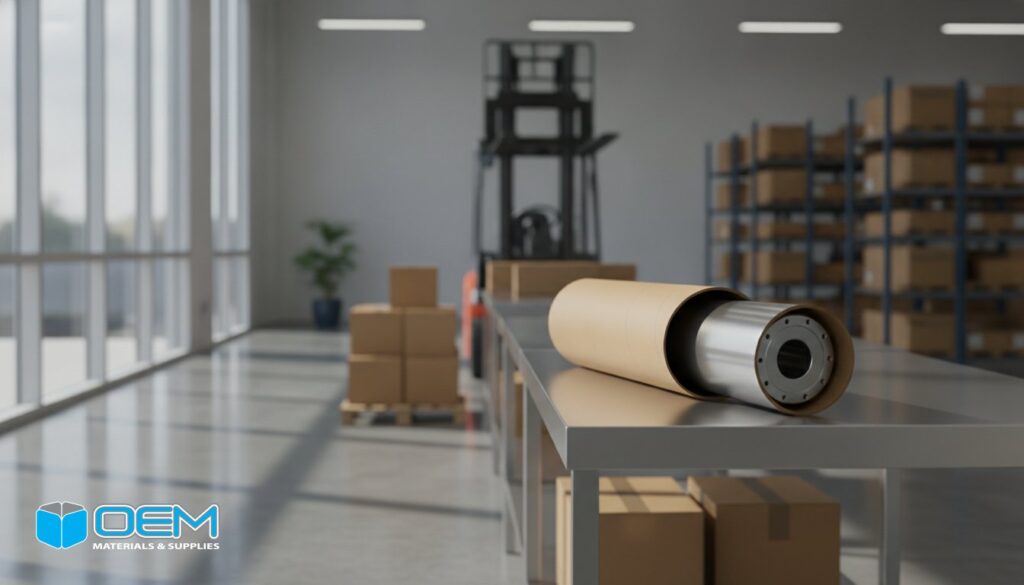
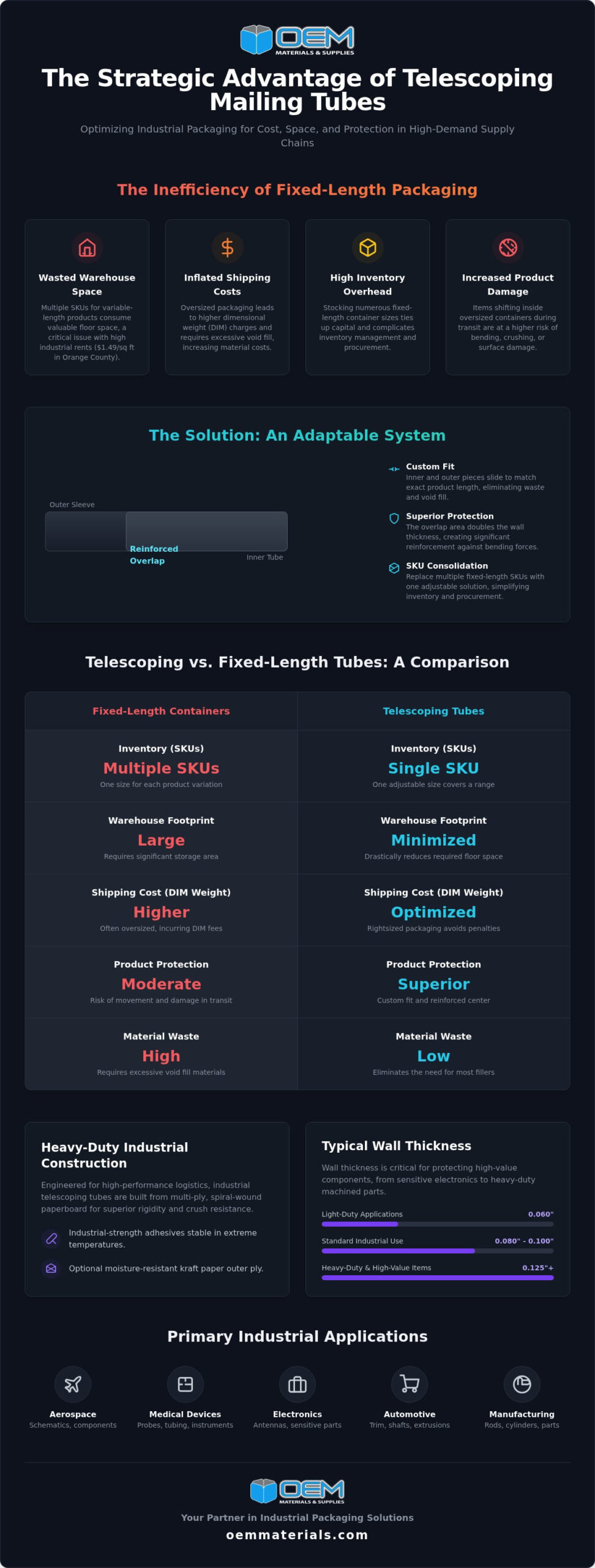
How many unique SKUs of packaging are currently occupying valuable floor space in your warehouse simply because your product lengths vary by a few inches? For operations managers in Los Angeles and Orange County, maintaining a massive inventory of telescoping mailing tubes and fixed-length containers is often an inefficient use of capital. You likely already recognize that oversized packaging leads to higher dimensional weight charges and increased risk of product damage when items shift during transit. High industrial rents, which reached an average of $1.49 per square foot in Orange County by early 2026, make warehouse optimization a financial necessity.
This guide explains how adjustable mailing solutions offer a strategic remedy by conforming to the exact length of your components. We’ll show you how these heavy-duty tubes reduce inventory overhead, lower shipping costs, and provide superior protection for specialized items in the aerospace and medical device sectors. We also examine how rightsizing your packaging helps meet the rigorous requirements of California SB 54 while streamlining your Southern California supply chain through better material optimization.
Key Takeaways
- Understand how the two-piece adjustable system of telescoping mailing tubes provides a custom fit for variable-length items to eliminate manual cutting and material waste.
- Learn how consolidating multiple fixed-length tube sizes into a single adjustable SKU reduces warehouse footprint and inventory overhead in high-cost Southern California markets.
- Discover why heavy-duty spiral-wound paperboard construction is essential for protecting sensitive aerospace schematics and medical components from crush damage during transit.
- Identify how Vendor Managed Inventory (VMI) programs and custom design services can streamline procurement and ensure consistent supply for local manufacturing operations.
- Explore the role of material optimization in meeting California SB 54 standards while reducing total shipping costs through rightsized packaging strategies.
Understanding Telescoping Mailing Tubes and Their Industrial Utility
Industrial efficiency relies on adaptable tools. Standard mailing tubes often fail when components vary in length, leading to wasted space and increased material costs. Telescoping mailing tubes solve this by utilizing a two-piece adjustable design. This system consists of an inner tube and an outer sleeve that slide together to create a customized fit. This design is a standard in specialized shipping. Understanding Telescoping Mailing Tubes involves recognizing how this sliding mechanism provides both length flexibility and reinforced structural integrity where the two sections overlap. For manufacturers in Los Angeles and Orange County, these mailing tubes and cores are essential for shipping variable-length parts like hydraulic cylinders or specialized extrusions without maintaining a massive inventory of fixed-length containers.
The Anatomy of an Adjustable Mailing Tube
A telescoping system typically includes an inner tube, a slightly larger outer sleeve, and heavy-duty plastic or metal end caps. The overlap area doesn’t just provide length adjustment; it acts as a structural reinforcement. By doubling the wall thickness at the center, the tube gains significant resistance against bending forces during transit. Industrial security is paramount when shipping high-value items. While a friction fit is often sufficient for lightweight goods, we recommend securing the seam with heavy-duty tape or staples for heavy industrial components. This ensures the tube remains at the set length even when subjected to the vibrations of long-distance trucking or rough handling in distribution centers.
When to Choose Telescoping Over Fixed-Length Tubes
Assessing your product variability is the first step in determining if these tubes are cost-effective for your operation. If your product line includes items that differ in length by several inches, stocking one telescoping SKU instead of five fixed-length sizes can drastically reduce your warehouse footprint. This is a critical advantage in Southern California, where industrial space is at a premium. Matching the tube length to the product size also helps you avoid “shipping air.” Dimensional weight (DIM weight) charges can significantly inflate your logistics budget if you use oversized packaging. By collapsing the tube to the exact size of the product, you reduce billable weight and eliminate the need for excessive cushioning materials to fill the void at the ends of the container. This rightsizing approach is a practical way to lower total cost of ownership while ensuring your items arrive without damage.
Heavy Duty Construction and Material Specifications
Industrial-grade telescoping mailing tubes are engineered for high-performance logistics rather than simple document storage. Unlike commodity retail tubes, industrial versions utilize heavy-duty spiral-wound paperboard to achieve specific structural targets. This construction method involves layering multiple plies of high-density fiberboard at precise angles to create a rigid sidewall that resists buckling and radial compression. For manufacturers in Los Angeles and Orange County, choosing the right material grade is the difference between a successful delivery and a costly product return.
Wall thickness typically ranges from 0.060 inches for light-duty applications to over 0.125 inches for heavy-duty industrial needs. Selecting the correct thickness is vital for protecting high-value items like precision-machined shafts, medical probes, or automotive trim. Adherence to mailing and shipping regulations is also a factor, as specific sidewall strengths are required for fiberboard containers to be accepted by commercial carriers without additional surcharges or damage risks. For harsh shipping environments, we often recommend an outer ply made of moisture-resistant kraft paper to maintain structural integrity during transit through humid coastal climates.
Material Science of Spiral-Wound Paperboard
The bonding process for these tubes uses industrial adhesives that remain stable during extreme temperature shifts. This stability is particularly important for goods moving through Inland Empire distribution centers where warehouse temperatures can fluctuate significantly. High-quality adhesives prevent delamination, ensuring the tube doesn’t lose its shape under the weight of stacked pallets. The total number of plies directly correlates to the burst strength of the tube, with each additional layer increasing the material’s resistance to internal and external pressures.
Industrial Closures and End-Cap Security
Standard plastic end caps are efficient for blueprints and lightweight extrusions. However, heavy industrial parts often require metal-reinforced ends or deep-recessed caps that prevent the contents from punching through the closure during sudden stops. Ensuring a secure fit is critical to prevent accidental extension of the telescoping sections during transit. For sensitive electronics, you might consider integrating specialized custom foam packaging inserts to suspend the item securely within the tube. If you’re shipping variable-length components that require specific crush ratings, you can request a quote for a customized prototyping session to verify the necessary duty level for your application.
Comparing Telescoping Tubes to Fixed-Length Shipping Containers
Fixed-length tubes demand absolute precision at the procurement stage. If you stock 24, 36, and 48 inch tubes, you’re locked into those specific dimensions. Telescoping mailing tubes provide a range of lengths within a single product, allowing your shipping team to adapt on the fly. This versatility eliminates the need for warehouse staff to manually cut tubes to size. Manual cutting is not only labor-intensive but also creates safety hazards and cardboard debris on the shipping floor. By switching to an adjustable system, you simplify the workflow and improve the overall safety of your packaging environment.
Operational Impact on Warehouse Management
Managing multiple SKUs for identical products of varying lengths complicates the picking process and increases the risk of errors. Consolidating these requirements into one adjustable solution reduces the number of picking locations your team must maintain. This simplification speeds up the kitting process, especially for complex orders involving multiple component sizes. To further optimize these operations, many Southern California manufacturers utilize packaging VMI programs. These programs ensure that your adjustable tube stock is replenished based on actual usage, preventing stockouts without tying up capital in excessive inventory.
Protection and Damage Mitigation
Fixed-length containers often leave empty space at the ends, leading to the “shaker effect” where the product slides back and forth during transit. This movement is a primary cause of damage to sensitive ends, precision threads, or polished surfaces. The adjustable nature of telescoping tubes allows for a snug fit that pins the product in place, effectively eliminating internal movement. Additionally, the overlapping wall design provides double the protection against side-impact forces compared to standard single-wall tubes. For high-value shipments requiring maximum durability, integrating edge and corner protectors can provide an extra layer of mechanical reinforcement for the most vulnerable parts of your cargo.
While the per-unit price of an adjustable tube may be higher than a standard fixed-length container, the total operational savings often justify the investment. You must account for the reduction in labor hours spent on manual modifications, the lower cost of void fill materials, and the significant decrease in product damage claims. In regions like Orange County and Los Angeles, where warehouse space costs are among the highest in the nation, the ability to store fewer SKUs directly translates to improved bottom-line performance. The total cost of ownership favors the adjustable solution when product variability is a factor in your daily shipping volume.
Industrial Applications Across Southern California Manufacturing Sectors
While retail catalogs often market tubes for posters or maps, Southern California’s industrial base requires a much more robust approach. Telescoping mailing tubes serve as critical protective containers for high-precision components throughout Los Angeles and Orange County. These sectors include aerospace engineering, medical device manufacturing, and industrial textiles, where variable product lengths are the standard rather than the exception. Using an adjustable system allows these manufacturers to maintain high protection standards without the logistical burden of stocking dozens of fixed-length containers.
Aerospace and Defense Logistics in Orange County
Tier 1 and Tier 2 aerospace suppliers frequently handle large-format engineering schematics and classified blueprints that must remain rolled to prevent damage to the substrate. The adjustable nature of these tubes ensures that documents of any width are held securely without excessive shifting. During the prototyping phase, engineers in the Los Angeles area often ship mechanical rods or structural components that change in length between design iterations. A telescoping solution allows these teams to use a single packaging format for multiple development stages. This flexibility helps firms meet rigorous defense shipping standards while maintaining a lean, organized warehouse.
Electronics and Medical Device Protection
In San Diego and Orange County, medical device manufacturers utilize these tubes to protect long, sterile components such as specialized catheters or surgical probes. For these sensitive applications, we provide cleanroom-compatible materials that prevent particulate contamination. When shipping sensitive electronics, integrating telescoping mailing tubes with anti-static liners is a standard practice to mitigate electrostatic discharge risks. For maximum security, we recommend pairing these tubes with custom foam packaging to suspend fragile items and provide high-level vibration dampening during transit.
Manufacturers in the Inland Empire also rely on these containers for industrial textiles and automotive trim pieces. Handling rolls of fabric with varying widths or mechanical linkage rods requires a container that can expand to fit the longest part while collapsing to save space on shorter items. This flexibility is vital for the automotive supply chain across Southern California, where just-in-time delivery requires packaging that is ready for any part configuration. If your operation handles high-value components with variable dimensions, request a quote to discuss a tailored packaging strategy for your specific production line.
Optimizing Procurement with Vendor Managed Inventory and Custom Design
Procurement efficiency for telescoping mailing tubes extends beyond the per-unit price. For high-volume manufacturing facilities in Orange County and Los Angeles, the true cost of packaging includes storage, handling, and the risk of stockouts. Integrating these adjustable containers into a packaging VMI program allows your team to focus on production while your supplier manages inventory levels on-site. This proactive approach ensures that your shipping department never faces a bottleneck due to missing supplies, even during peak production cycles.
Just-in-Time (JIT) delivery is a vital strategy for Southern California distribution networks. By sourcing from a local partner, you can significantly reduce the amount of floor space dedicated to packaging materials. This is an essential tactic given the high cost of industrial real estate in the region. Instead of receiving monthly bulk shipments that clog your aisles, JIT allows for smaller, more frequent deliveries that match your weekly production output. This keeps your warehouse lean and your capital liquid.
Custom Engineering for Unique Dimensions
Standard sizes cover many industrial needs, but heavy machinery and specialized components often require unique specifications. Our custom packaging design services include prototyping tubes with specific diameters and wall thicknesses to handle extreme weights. Beyond structural integrity, we offer branding and labeling options that facilitate industrial identification and professional presentation. Customizing the inner and outer dimensions of your telescoping mailing tubes ensures that even the most unusually shaped parts receive a precision fit that prevents mechanical failure or shifting during transit.
The Financial Benefits of Local Sourcing
Sourcing your materials within Southern California provides immediate financial and environmental advantages. Reducing the distance between the manufacturer and your facility lowers freight costs and decreases your operational carbon footprint. Local sourcing also provides a level of agility that national vendors cannot match. If you experience an urgent production increase at a facility in Riverside or San Diego, a local partner can provide rapid support and expedited delivery to keep your lines moving.
For a more comprehensive look at selecting the right partner, consider our guide on choosing a wholesale industrial packaging supplier for Southern California manufacturers. This regional focus ensures your supply chain remains resilient against port congestion and national transit delays. Working with a partner who understands the local logistical landscape is the most effective way to optimize your packaging spend and ensure consistent protection for your products.
Strategic Logistics for Southern California Manufacturers
Integrating telescoping mailing tubes into your supply chain is more than a packaging choice; it’s a strategic move to optimize warehouse space and reduce total shipping costs. Consolidating multiple fixed-length containers into a single adjustable SKU eliminates manual cutting labor and minimizes inventory overhead. This is particularly valuable for the aerospace and medical sectors in Los Angeles and Orange County, where precision and material efficiency are non-negotiable.
OEM Materials & Supplies provides the technical expertise needed to engineer these solutions for your specific production requirements. We offer local delivery throughout Southern California, along with value-added services like vendor-managed inventory (VMI) and just-in-time (JIT) delivery to keep your operations lean. Whether you need custom engineering for heavy machinery parts or rapid prototyping for new product lines, our team is ready to assist.
Contact OEM Materials & Supplies for a custom mailing tube quote to discuss your specific dimensions, weights, and annual usage. We look forward to helping you streamline your industrial packaging process.
Frequently Asked Questions
How do telescoping mailing tubes work?
These tubes utilize a two-piece design where an inner tube slides into a slightly larger outer sleeve. This allows your team to slide the sections together until the container matches the exact length of the product inside. Once adjusted, the overlap provides extra structural support at the center of the package. This adjustable mechanism is ideal for shipping variable-length items like mechanical rods or architectural blueprints without stocking multiple containers.
Are telescoping tubes strong enough for heavy industrial parts?
Industrial-grade telescoping mailing tubes are engineered for durability using multi-ply spiral-wound paperboard. The overlapping section where the two tubes meet effectively doubles the wall thickness, which significantly increases crush resistance and prevents bending. For heavy parts like automotive shafts or hydraulic cylinders, we recommend using tubes with a wall thickness of 0.125 inches or higher to ensure the container maintains its integrity under high stress during transit.
Can telescoping mailing tubes be reused for multiple shipments?
These tubes are designed for multiple uses provided the structural integrity of the paperboard remains intact. The heavy-duty construction allows them to be collapsed for storage and extended again for future shipments of different-sized items. If the ends are secured with removable tape rather than staples, the tubes can often be reused for internal transfers between facilities in Los Angeles and San Diego without requiring new packaging materials.
What is the maximum length a telescoping tube can reach?
The maximum length depends on the specific diameters and the required overlap for structural stability. Standard industrial models can often extend to 120 inches or more; however, we recommend maintaining a minimum overlap of 6 to 12 inches to prevent the tube from snapping or bowing. For exceptionally long or heavy components, our engineering team can prototype custom lengths and diameters to meet your specific manufacturing requirements in Orange County.
Do I need special tape or equipment to seal telescoping tubes?
No specialized machinery is required to seal these tubes, though industrial-strength packaging tape is necessary for a secure closure. Once the inner and outer sections are adjusted, applying a heavy-duty tape around the seam prevents the tube from extending during transit. For high-security shipments or very heavy parts, some operations use industrial staples or crimped metal ends to ensure the contents remain pinned and protected regardless of the handling conditions.
Are telescoping tubes recyclable in standard industrial programs?
Yes, these tubes are fully recyclable in standard industrial fiberboard and paperboard programs. Because they are constructed from natural wood fibers and industrial adhesives, they meet the sustainability requirements of many Southern California organizations and help businesses comply with California SB 54 regulations. We recommend removing any plastic end caps or heavy-duty metal closures before placing the paperboard sections into your recycling bins to ensure clean material recovery.
Can telescoping tubes be customized with company branding?
Customization is available for high-volume production lines and specialized industrial applications. We can apply custom outer plies that feature your company logo, part identification numbers, or specific handling instructions. Branding your telescoping mailing tubes helps with warehouse organization and reinforces your brand identity when shipping high-value components to Tier 1 aerospace suppliers or medical device laboratories throughout Southern California and across the country.
How do I determine the correct diameter for my product?
To find the correct diameter, measure the widest point of your product and add a clearance of at least 1/8 to 1/4 inch. This extra space allows for easy insertion and accommodates any protective liners or anti-static bags your product might require. If you are using internal cushioning like custom foam inserts, ensure the tube diameter is large enough to house both the part and the foam while maintaining a snug fit.