
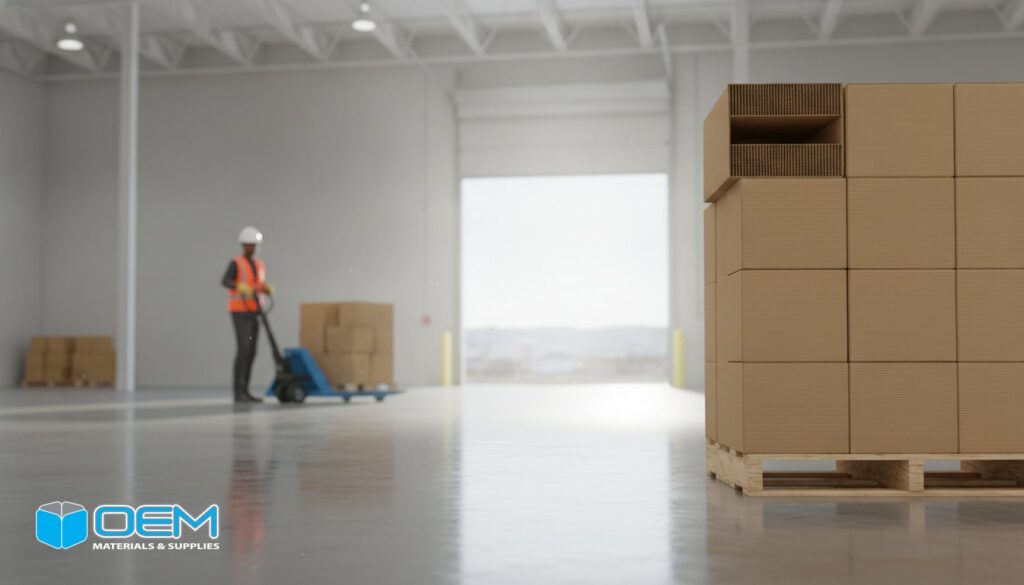
A single pallet collapse in a high-stack warehouse can cost your operation thousands in damaged inventory and lost labor hours. For manufacturers in Los Angeles and throughout Southern California, relying on standard shipping containers for heavy-duty industrial components is a risk that often leads to structural failure. Utilizing double-wall corrugated boxes provides the necessary reinforcement to withstand the vertical compression of modern logistics. These containers offer a critical middle ground for procurement managers and engineers who need more durability than a single-wall box but want to avoid the excessive costs of triple-wall alternatives.
You likely recognize that protecting sensitive electronics or aerospace equipment requires more than just a basic cardboard exterior. This article explains how double-wall corrugated boxes deliver the structural integrity and stacking strength required for heavy-duty industrial shipping and logistics. We will analyze the technical advantages of multi-flute construction, discuss compliance with ASTM D4727 standards, and provide a framework for optimizing warehouse stacking height. This overview ensures your packaging strategy remains cost-effective while targeting a goal of zero shipping damage.
Key Takeaways
- Understand why double-wall corrugated boxes provide the necessary compression strength for high-stack warehousing and heavy industrial parts.
- Compare the technical differences between B/C and A/C flute profiles to select the optimal balance of cushioning and puncture resistance for your specific product.
- Evaluate the total cost of ownership by weighing material costs against the significant reduction in shipping damage and related insurance claims.
- Learn how Southern California manufacturers in the aerospace and medical sectors use custom designs to protect high-precision components during transport.
- Discover how local vendor-managed inventory programs in Los Angeles and Orange County reduce warehouse overhead and prevent critical packaging stockouts.
Understanding Double-Wall Corrugated Boxes and Their Industrial Role
Standard single-wall boxes are sufficient for lightweight consumer goods, but industrial logistics demand a higher level of structural integrity. Double-wall corrugated boxes represent a specialized packaging tier designed to survive the rigors of heavy-duty transport and long-term warehousing. Unlike standard materials, these containers are engineered to provide maximum puncture resistance and vertical compression strength, making them the preferred choice for the Los Angeles manufacturing sector. When your shipment involves heavy components or high-value assets, the box isn’t just a container; it’s a structural component of your supply chain.
The Structural Composition of Double-Wall Board
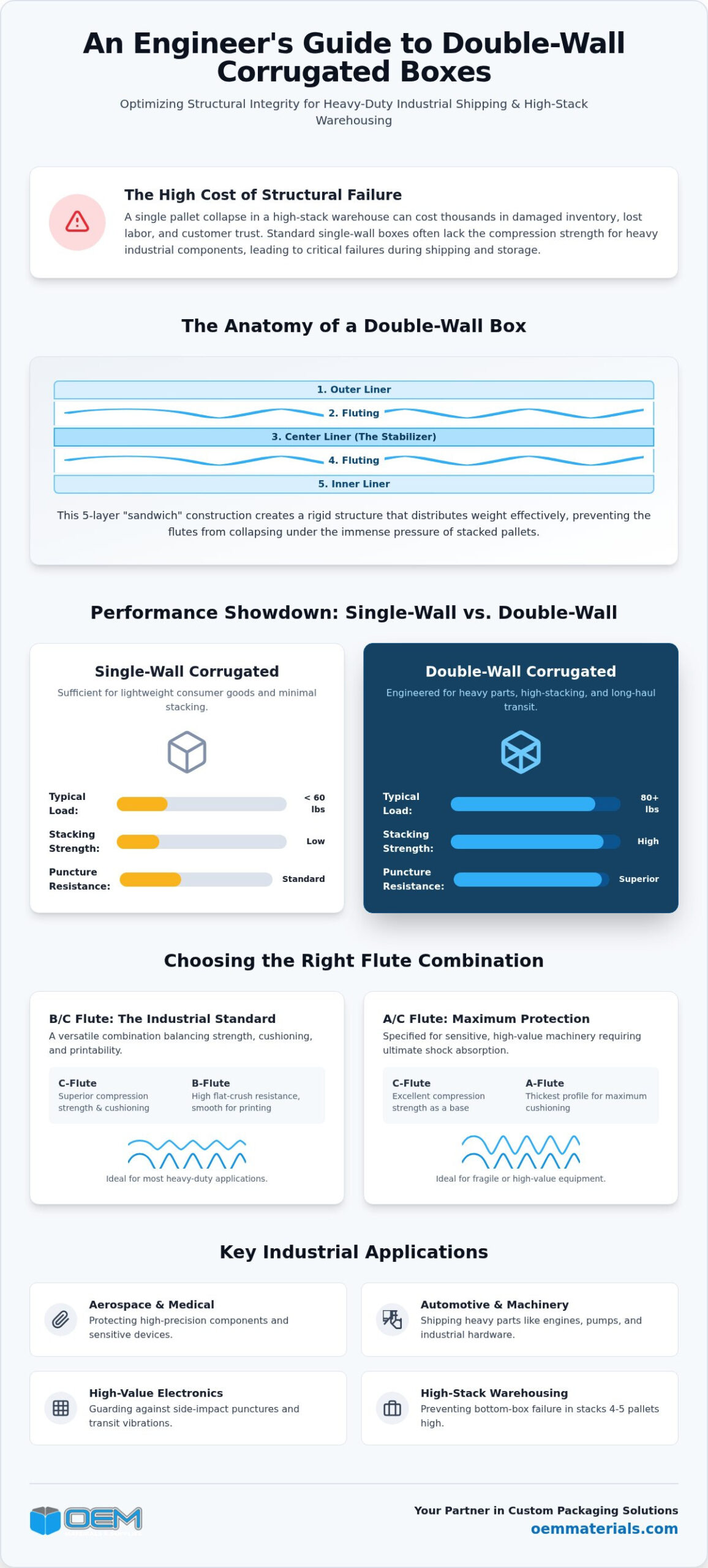
The architecture of a double-wall board is a sophisticated five-layer sandwich. It consists of an outer liner, a layer of fluting, a center liner, a second layer of fluting, and an inner liner. This design utilizes Corrugated fiberboard technology to create a rigid structure that distributes weight more effectively than single-layered alternatives. The additional center liner acts as a stabilizer, preventing the flutes from collapsing under the pressure of stacked pallets. For aerospace or medical device manufacturers shipping precision components, this structural stability is non-negotiable. The liners also provide a smooth substrate for high-resolution industrial labeling and offer a baseline of moisture resistance during transit.
When to Specify Double-Wall for Your Shipments
Transitioning from single-wall to double-wall corrugated boxes often occurs when product weight exceeds 60 to 80 pounds. While single-wall containers might technically hold the weight, they often fail during the vibration and impact of long-haul trucking or ocean freight. You should consider double-wall specifications if your supply chain involves high-density items like automotive engines, industrial pumps, or high-value electronics that require an extra buffer against side-impact punctures. Warehousing scenarios where boxes are stacked four or five pallets high also necessitate this upgrade to prevent bottom-box compression failure.
In the competitive manufacturing landscape of Orange County and Los Angeles, box failure isn’t just a logistical hiccup; it’s a threat to customer trust and bottom-line profitability. Strategic box selection identifies these logistical challenges early. If your products face multiple touchpoints at regional distribution centers in the Inland Empire or San Diego, the reinforced walls provide the necessary protection against frequent forklift handling and conveyor system stress. Upgrading to a double-wall structure is a practical solution for operations targeting zero-damage shipping goals.
Technical Specifications: Fluting, Liners, and Stacking Strength
Engineering a high-performance shipping container requires a granular understanding of how its internal components react to physical stress. The Fibre Box Association provides the foundational standards for liner and medium components that dictate box performance. For double-wall corrugated boxes, the specific combination of flute profiles and liner basis weights determines whether a pallet arrives intact or collapses under its own weight in a Los Angeles warehouse.
Flute Combinations and Performance Characteristics
Flutes are the S-shaped waves between the liners that provide rigidity. In double-wall construction, manufacturers often combine two different flute sizes to leverage the strengths of each. The B/C flute combination is the most common industrial standard. The B-flute layer offers high flat-crush resistance and a smoother surface for clear industrial printing. The C-flute layer provides superior vertical compression strength and cushioning. Together, they create a versatile board that handles heavy parts while resisting side-impact punctures.
Operations requiring maximum protection for sensitive machinery may specify an A/C flute combination. The A-flute is the thickest standard profile, offering the highest level of cushioning to absorb shocks during long-haul transit. Regardless of the combination, the vertical orientation of these flutes is critical. If the flutes aren’t aligned vertically when the box is formed, the container loses a significant percentage of its stacking strength, leading to catastrophic failure in high-stack environments. Maintaining this alignment is essential for pallet stability across Southern California supply chains.
Burst Test vs. Edge Crush Test (ECT) for Double-Wall
Industrial buyers must choose between two primary testing standards to validate box strength. The Mullen Burst Test measures the force required to puncture the box wall, which is essential for shipping heavy, loose items like fasteners or metal castings. A 275# or 350# burst rating is typical for heavy-duty applications. In contrast, the Edge Crush Test (ECT) measures the stacking strength of the board. This is the most relevant metric for modern palletized logistics where warehouse space is optimized by vertical stacking.
Standard double-wall corrugated boxes often start at a 48 ECT rating. For more demanding applications in the automotive or aerospace sectors, 51 ECT or 61 ECT ratings are used to ensure the bottom box on a pallet can support substantial weight without buckling. If you aren’t sure which rating fits your load, you can request a technical consultation to analyze your product weight and stacking requirements. Selecting the correct ECT prevents overpaying for over-engineered boxes while eliminating the risk of structural collapse.
Performance Analysis: Double-Wall vs. Single-Wall Packaging
Choosing between single-wall and double-wall corrugated boxes involves more than a simple price comparison. While a standard 32 ECT single-wall box is sufficient for light loads, it lacks the structural rigidity needed for high-density industrial applications. Double-wall board, typically starting at 48 ECT, offers a significant increase in vertical compression strength. This allows for more aggressive stacking without the risk of the bottom layer bowing or collapsing. For operations in the Inland Empire where warehouse space is at a premium, this vertical capability directly impacts the bottom line.
Stacking Strength and Warehouse Optimization
Vertical compression strength is the primary differentiator. A double-wall structure distributes the load across two layers of fluting and three liners, creating a much higher safety factor. In the variable humidity of Southern California coastal regions, box strength can degrade significantly. Using a higher-rated double-wall board compensates for this environmental loss, ensuring that pallet stacks remain stable. This optimization allows managers to maximize their vertical cubic footage, effectively increasing warehouse capacity without expanding the physical footprint. It’s a strategic move for any facility looking to improve throughput efficiency.
Protection Against Puncture and External Impact
The dual-flute architecture acts as an internal shock absorber. When shipping heavy automotive components or machined aerospace parts with sharp edges, a single-wall box is easily breached from the inside out. Double-wall corrugated boxes provide the necessary thickness to contain these items securely. This resistance also extends to external threats. Forklift tines and automated sorting equipment in Los Angeles distribution centers are common sources of package failure. The reinforced walls absorb impact energy more effectively, protecting the high-value contents from costly cosmetic or functional damage.
Total cost of ownership is the most accurate metric for this evaluation. While the initial material cost for double-wall board is higher, the reduction in damage claims and returned goods often yields substantial packaging cost savings. When you factor in the labor required to process a single damaged shipment, the investment in superior corrugated boxes becomes a clear financial advantage. Pallet stabilization is further improved when these boxes are paired with high-quality edge protectors and stretch film, creating a unified load that resists shifting during transit.
Industry-Specific Applications for Heavy-Duty Corrugated Boxes
Southern California’s industrial landscape is defined by high-stakes manufacturing, spanning from aerospace hubs in Los Angeles to medical device clusters in Orange County. Generic packaging solutions rarely meet the rigorous standards of these sectors. Double-wall corrugated boxes provide the structural foundation required for multi-material protection strategies that prioritize asset safety and supply chain efficiency. When standard containers fail under the weight of industrial components, these reinforced structures ensure that your products remain secure from the assembly line to the final destination.
Aerospace and Electronics Protection
Precision is the primary requirement for aerospace components. High-value machined parts cannot tolerate even microscopic surface damage or vibration-induced fatigue. By integrating heavy-duty double-wall corrugated boxes with custom-engineered foam packaging, manufacturers create a protective environment that immobilizes the product. This combination is particularly effective for shipping flight-critical sensors and electronic assemblies that require both cushioning and structural rigidity.
For electronics, managing electrostatic discharge (ESD) is a parallel priority. Utilizing ESD-shielding liners or anti-static foam within a double-wall container provides a dual layer of protection: physical impact resistance and electrical isolation. This ensures that sensitive components arrive at San Diego or Los Angeles assembly lines in perfect functional condition. The increased wall thickness also allows for better integration of specialized shielding materials without compromising the box’s stacking integrity during air freight or ground transit.
Automotive and Heavy Machinery Logistics
Automotive logistics involve some of the highest-density loads in the manufacturing sector. Sub-assemblies, engine components, and heavy metal fasteners exert extreme internal pressure on packaging walls. In these scenarios, a standard box often fails. Many Tier 1 suppliers adopt a hybrid packaging strategy, nesting double-wall corrugated boxes within wood crates for long-distance freight or export. This provides a clean, manageable internal environment while the crate handles the external structural load.
To prevent the box from bursting under the weight of metal parts, the use of edge and corner protectors is a technical necessity. These reinforcements distribute the vertical and horizontal tension across the container’s frame, allowing for stable palletization. This is especially critical for high-density loads moving through the Inland Empire logistics corridors, where frequent handling and transport vibration can cause standard packaging to buckle.
Medical diagnostic equipment and laboratory instruments also benefit from the puncture resistance of double-wall board. These devices often feature irregular dimensions and significant weight, requiring a rigid exterior that resists impacts from forklift tines or automated conveyor systems. To optimize your industry-specific logistics and reduce product damage, contact us for a custom packaging quote. Please provide your product dimensions, weight, and annual usage to receive a tailored recommendation from our engineering team.
Strategic Sourcing and Inventory Management in Southern California
Sourcing industrial packaging from a local corrugated packaging box manufacturer in Orange County or Los Angeles provides a distinct logistical advantage. It reduces lead times and shipping costs compared to national catalog resellers that ship from distant hubs. For high-volume users of double-wall corrugated boxes, proximity allows for a more responsive supply chain that adapts to sudden production fluctuations. This local presence is essential for maintaining the stability of manufacturing operations across the Inland Empire and San Diego County.
Vendor-Managed Inventory (VMI) for Packaging Supplies
Implementing packaging VMI programs is a practical solution for manufacturers looking to optimize their cash flow and warehouse efficiency. These programs shift the responsibility of inventory tracking and replenishment to the supplier. Automated replenishment based on actual usage rates ensures you don’t face stockouts during critical production runs. This model significantly reduces the administrative labor required for procurement and eliminates the need for excessive on-site storage in expensive Southern California industrial space. By outsourcing the management of your packaging stock, your team can focus on core manufacturing processes without the distraction of inventory shortages.
Custom Design and Prototyping Services
Industrial OEMs often require more than a standard stock size to ensure product safety. Utilizing custom packaging design ensures that the dimensions of your double-wall corrugated boxes are optimized for your specific product and pallet configuration. This precision prevents inefficient packing and reduces the amount of secondary cushioning materials required. Rapid prototyping allows engineers to test the actual structural integrity of a box before committing to high-volume production. It’s a critical step for the aerospace and medical device sectors where product safety is non-negotiable. Collaborating with local experts allows for face-to-face design consultations that solve complex shipping challenges quickly.
Just-in-time (JIT) delivery models are equally essential for facilities in San Diego or Riverside where floor space is limited. Instead of storing months of packaging inventory, you receive frequent, smaller shipments that move directly to the packing line. This methodical approach to inventory management minimizes overhead and maximizes operational efficiency. Whether you’re shipping heavy automotive parts or sensitive electronics, a local partner understands the specific demands of the SoCal transit environment and provides the expertise to protect your assets effectively.
Optimizing Your Industrial Supply Chain
Selecting the right shipping container is a technical decision that directly impacts your operational bottom line. By utilizing double-wall corrugated boxes, manufacturers in Los Angeles and Orange County can significantly reduce product damage while maximizing vertical warehouse space. These containers provide the essential stacking strength and puncture resistance required for high-density loads in the aerospace and automotive sectors. It’s a strategic investment that pays dividends through lower return rates and improved logistics efficiency.
Working with a local partner allows you to leverage value-added services like vendor-managed inventory (VMI) and just-in-time (JIT) delivery. These programs eliminate stockouts and reduce the footprint of stored packaging materials in your facility. Our team provides custom industrial packaging design and rapid prototyping to ensure your specific components are secured throughout the transit cycle. We provide dedicated support to manufacturers across San Diego and the Inland Empire.
Contact OEM Materials & Supplies today for a quote on custom double-wall corrugated boxes. Please provide your product dimensions, estimated weight, and annual usage to help us recommend the optimal packaging solution. We look forward to helping you streamline your shipping operations.
Frequently Asked Questions
What is the maximum weight capacity of a double-wall corrugated box?
Most standard double-wall corrugated boxes safely support between 80 and 120 pounds depending on the specific ECT rating and dimensions. For industrial applications requiring higher load capacities, custom-engineered boards can be specified to handle significantly heavier components. It is essential to match the box strength to the product weight and the expected stacking height to prevent structural failure during long-haul transit or high-stack warehousing.
How does a double-wall box differ from a single-wall box in terms of strength?
A double-wall box utilizes two layers of fluted medium and three liners, whereas a single-wall box uses only one fluted layer between two liners. This additional architecture provides superior vertical compression strength and significantly higher puncture resistance. These technical advantages make double-wall the preferred choice for shipping heavy automotive parts or sensitive aerospace equipment that might breach the walls of a standard single-wall container under stress.
Can double-wall boxes be customized with specific flute combinations?
Yes, manufacturers can select specific flute combinations to tailor performance. The B/C flute combination is the most frequent industrial choice, offering a balance of crush resistance and stacking strength. For shipments requiring maximum cushioning for sensitive electronics or medical instruments, an A/C flute combination provides a thicker profile to absorb impacts. Selecting the right combination ensures the packaging meets the unique physical requirements of your specific industrial components.
Are double-wall boxes suitable for international shipping and export?
Double-wall containers are highly suitable for international shipping because they withstand the increased handling and environmental changes associated with export logistics. Their reinforced structure provides a critical defense against the vibrations of ocean freight and the pressure changes of air transport. When used for export, these boxes are often paired with wood crates or plastic pallets to create a robust, hybrid packaging solution that meets international safety standards.
How do ECT ratings apply to double-wall corrugated board?
The Edge Crush Test (ECT) measures the stacking strength of the board along its edge. For double-wall board, common ratings include 48 ECT, 51 ECT, and 61 ECT. A higher ECT rating indicates a greater ability to withstand vertical pressure, which is vital for warehouse optimization. Purchasing managers should select the ECT rating based on the total weight of the stacked pallets to ensure the bottom layer doesn’t buckle.
What industries benefit most from using double-wall shipping containers?
Industries that handle high-density, high-value, or fragile components benefit most from these containers. This includes the aerospace sector for protecting precision machined parts and the automotive industry for transporting heavy sub-assemblies. Medical device manufacturers also utilize double-wall board to secure sensitive diagnostic equipment. Any operation in Southern California that prioritizes zero-damage shipping and high-stack warehouse efficiency should consider these heavy-duty packaging solutions for their primary logistics.
How does stacking strength change in humid warehouse environments?
High humidity can reduce the stacking strength of corrugated board by as much as 50 percent as the fibers absorb moisture. Double-wall boxes provide a higher baseline safety factor, helping to mitigate the risk of pallet collapse in variable coastal climates like Los Angeles or San Diego. Using higher ECT ratings or moisture-resistant liners can further protect your inventory from the structural degradation caused by prolonged exposure to humid warehouse conditions.
Can double-wall boxes be recycled like standard corrugated materials?
Double-wall corrugated boxes are fully recyclable and can be processed through standard industrial recycling streams alongside single-wall materials. They are primarily composed of natural wood fibers, making them an environmentally responsible choice for Southern California manufacturers. It is important to remove excessive packaging tape or heavy-duty staples before recycling to ensure the material meets local processing requirements. This recyclability supports corporate sustainability goals without compromising on the industrial strength required for heavy shipping.