
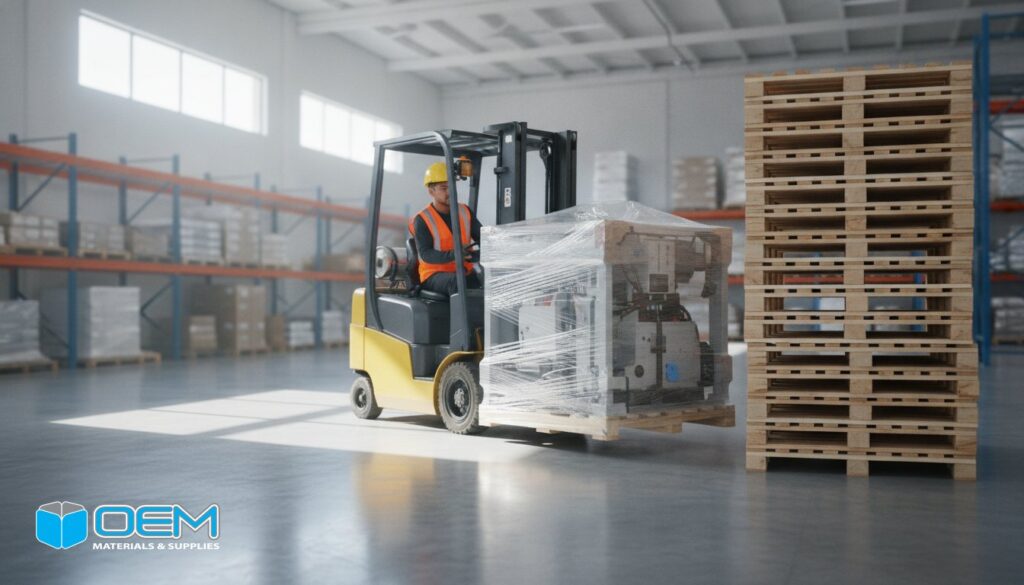
A wood pallet is not merely a shipping platform; it is a critical structural component of your industrial logistics system. For manufacturers in Los Angeles and across Southern California, selecting high-performance heavy-duty wood pallets is the primary defense against the physical stresses of long-haul transit and heavy machinery handling. You understand that a single point of failure in a pallet deck or stringer can result in catastrophic product damage and expensive insurance claims. Relying on inconsistent local suppliers often leads to shipping delays and safety risks that your operation cannot afford.
This guide provides a professional framework to specify and source pallets that protect your high-value assets and streamline your operations. You will learn how to determine precise load requirements, ensure full compliance with ISPM 15 international shipping regulations, and identify a reliable local partner for consistent quality. We will examine how engineered pallet designs and vendor-managed inventory programs can reduce shipping damage rates while lowering labor costs through more efficient handling. By shifting from a commodity mindset to an engineered approach, you ensure your supply chain remains resilient and compliant.
Key Takeaways
- Understand the critical distinction between static and dynamic load capacities to ensure your platforms safely support industrial equipment exceeding 2,000 pounds.
- Learn how to specify the correct wood species and structural designs for heavy-duty wood pallets to prevent product damage and improve transit safety.
- Ensure full compliance with international shipping regulations by identifying the specific ISPM 15 heat treatment requirements for wood packaging and export crates.
- Evaluate the operational benefits of stringer and block pallet constructions to optimize forklift handling efficiency and warehouse throughput.
- Reduce logistical overhead by leveraging local Southern California sourcing and vendor-managed inventory programs to eliminate lead time delays and inventory shortages.
What Defines a Heavy-Duty Wood Pallet for Industrial Use?
Heavy-duty wood pallets are specialized structural foundations engineered to exceed the 2,000-pound capacity threshold of standard shipping platforms. While a typical warehouse pallet handles consumer packaged goods, industrial applications in Southern California involve dense, high-value loads like automotive engines, CNC components, or aerospace assemblies. These items require a structural foundation that won’t flex or fail under concentrated pressure. Standard GMA pallets often fail in these environments because their dimensions and board thicknesses are optimized for retail volume rather than industrial weight. Choosing a pallet with the wrong specifications leads to board splintering, fastener withdrawal, and ultimately, product damage.
Static vs. Dynamic Load Capacities
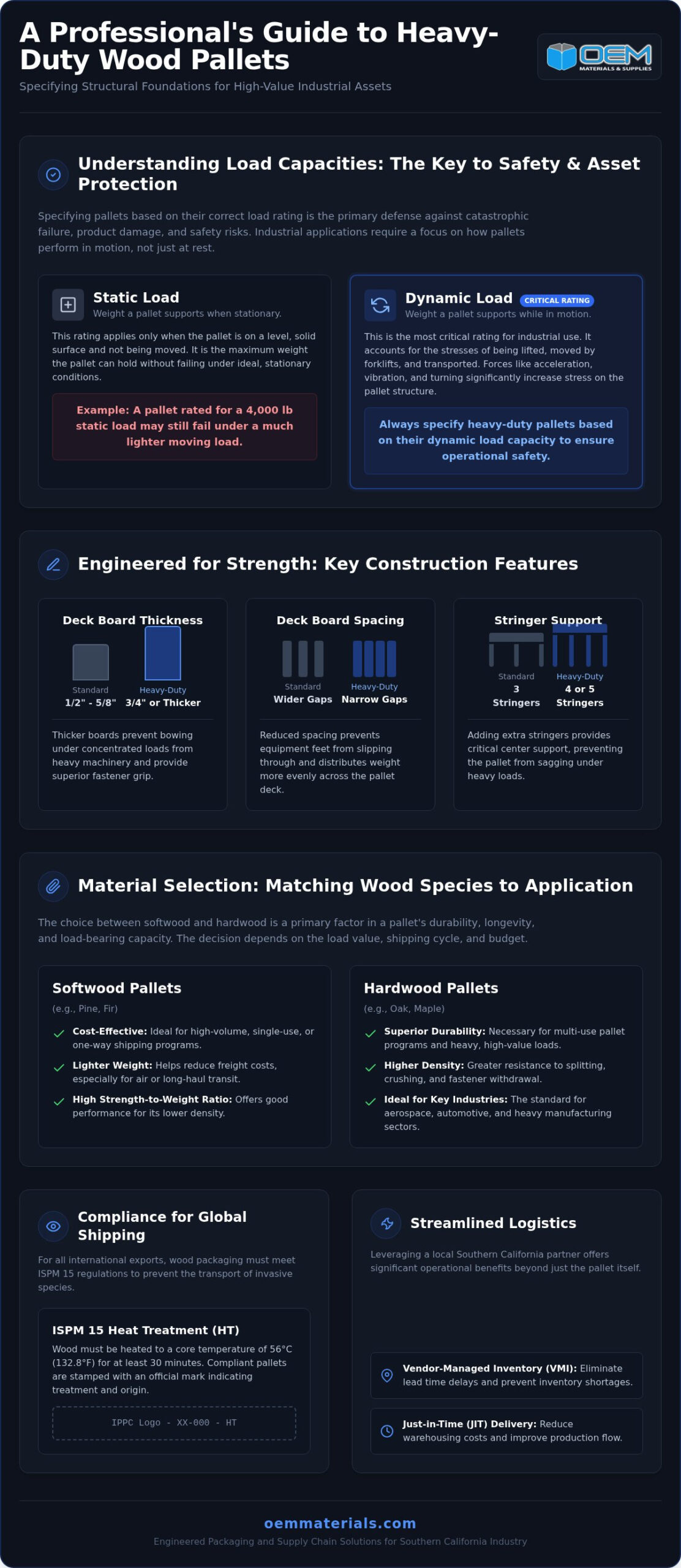
Understanding the difference between static and dynamic load is vital for warehouse safety. A pallet might be rated for a 4,000-pound static load, which refers to the weight it can support while sitting stationary on a level floor. However, that same pallet may fail when carrying only 2,000 pounds during transit. Dynamic load is the weight a pallet can support while in motion. When a forklift accelerates, turns, or hits a bump, the vertical and lateral forces on the wood fibers increase significantly. Transit vibration and rack storage also introduce structural fatigue that standard pallets aren’t designed to withstand. For high-capacity manufacturing, you must specify heavy-duty wood pallets based on their dynamic rating to ensure the safety of both your products and your personnel.
The Role of Deck Board Density
The structural integrity of a pallet depends heavily on deck board thickness and stringer count. Standard pallets typically use boards between 1/2 and 5/8 of an inch thick. In contrast, heavy-duty designs utilize boards that are 3/4 of an inch or thicker to prevent bowing under heavy machinery. Thicker boards provide better grip for fasteners, reducing the risk of boards popping loose during rough handling.
- Reduced Spacing: Narrower gaps between deck boards prevent the feet or wheels of industrial equipment from slipping through or exerting uneven pressure.
- Edge-to-Edge Coverage: Full deck coverage is often necessary for sensitive electronics or medical devices to ensure the load remains perfectly level.
- Increased Stringer Support: Adding a fourth or fifth stringer distributes weight more evenly, preventing the center of the pallet from sagging.
By increasing the density of the wood and the thickness of the components, heavy-duty wood pallets provide the rigidity needed for specialized industrial loads. This engineering prevents the shifting and tilting that frequently cause damage during the logistics cycle between Orange County and Los Angeles distribution centers.
Material Selection: Hardwood vs. Softwood Pallets
The choice of wood species is the primary factor in determining the longevity and load-bearing capacity of heavy-duty wood pallets. Material selection affects performance. While botanical classifications define hardwoods and softwoods by their seed structure, industrial buyers must focus on density and mechanical strength. Denser wood fibers provide higher resistance to splitting and crushing. This is essential when securing heavy industrial machinery or dense metal components. Selecting the wrong species often leads to premature pallet failure and increased material waste in your supply chain.
Softwood Pallets for Cost-Effective Shipping
Softwoods like Pine and Fir are the standard for high-volume, single-use shipping programs. These species are naturally lighter than hardwoods, which helps reduce freight costs when shipping by air or across long distances from Los Angeles. Despite being less dense, softwoods offer a high strength-to-weight ratio and are often more resistant to certain pests than untreated hardwoods. If your operation prioritizes initial cost savings for non-returnable loads, selecting high-quality pallets made from Southern Yellow Pine or Douglas Fir is a practical choice. These materials are readily available in Southern California, ensuring consistent supply for rapid production cycles.
Hardwood Pallets for High-Value Heavy Loads
For the aerospace and automotive sectors, the superior durability of hardwoods like Oak and Maple is necessary. These species possess high volumetric weight and exceptional fastener retention. In a heavy-duty application, the nails or screws are less likely to pull out of hardwood stringers, maintaining the structural integrity of the platform over multiple trips. While the upfront investment is higher, the long-term ROI of hardwood heavy-duty wood pallets in closed-loop distribution systems is significant. They withstand the rigors of repeated forklift impact and heavy racking without the splintering common in softer species.
Moisture content also plays a critical role in pallet performance. Green wood is easier to nail but significantly heavier and prone to warping as it dries. Kiln-dried wood offers predictable strength and reduced weight, though it may be more prone to splitting if not pre-drilled. For medical device or electronics manufacturers in Orange County, managing moisture is essential to prevent mold growth and maintain cleanroom standards. If you need assistance determining the right material for your specific load, you can speak with an engineer about your requirements to find the most efficient solution.
Structural Engineering: Stringer vs. Block Pallet Construction
While material choice provides the foundation, the structural engineering of heavy-duty wood pallets determines how effectively they interface with your material handling equipment. Industrial facilities in Southern California must choose between stringer and block architectures based on warehouse footprint and forklift access requirements. A mismatch here leads to slower loading dock speeds and increased risk of pallet damage from improper forklift entry. Selecting the right architecture is just as critical as selecting the right wood species for load safety.
Stringer Pallets: The Industrial Standard
Stringer pallets utilize parallel longitudinal boards, called stringers, to support the deck boards. Traditional designs offer 2-way entry, which provides high rigidity for heavy machinery but limits forklift access to two sides. To improve versatility, partial 4-way entry is achieved by “notching” the stringers. This allows forklift tines to enter from all four sides, though it slightly reduces the beam’s overall weight capacity compared to a solid stringer. For specialized industrial loads with non-standard footprints, custom packaging design allows for reinforced stringer layouts. We can place support beams specifically where the machine’s feet or base contact the pallet, preventing deck sagging and ensuring the load remains stable during transit.
Block Pallets: Maximum Durability and Access
Block pallets replace solid stringers with individual wood blocks, typically nine per pallet, to support the deck. This architecture provides true 4-way entry, allowing forklifts and pallet jacks to access the load from any direction. In the dense warehouse environments of Los Angeles and San Diego, where floor space is at a premium, this maneuverability is a significant operational advantage. Block pallets also provide a larger surface area for load distribution via the block supports, making them the preferred choice for heavy, dense materials that might crush the narrower footprint of a standard stringer. Most automated storage and retrieval systems (ASRS) require block designs because their consistent dimensions and multi-directional access ensure seamless integration with robotic conveyors and racking.
For heavy machinery transport, reinforced stringers are often the baseline. When a 5,000-pound component is bolted to a platform, the stringers act as the primary structural beams. Standard 1.5-inch stringers may not suffice; instead, industrial engineers often specify 3-inch or doubled-up stringers to handle the concentrated load. This structural reinforcement ensures that heavy-duty wood pallets don’t buckle under the immense pressure of industrial equipment during long-haul trucking or ocean freight. Properly engineered construction reduces the risk of structural failure and protects your high-value assets throughout the supply chain.
Compliance and Export Standards for Wood Pallets
Industrial shipments leaving the Port of Long Beach or Los Angeles International Airport must adhere to strict international phytosanitary standards. For manufacturers shipping heavy machinery or sensitive electronics, non-compliance is a logistical disaster. Heavy-duty wood pallets intended for international transit must comply with ISPM 15 (International Standards for Phytosanitary Measures No. 15). This regulation prevents the spread of wood-borne pests across international borders. Using uncertified wood packaging can lead to your entire shipment being quarantined, fumigated at your expense, or rejected and returned to the point of origin, resulting in significant financial loss and damaged customer relationships.
ISPM 15 Requirements for Global Logistics
To meet ISPM 15 standards, wood must undergo a specific heat treatment (HT) process. The wood core temperature must reach at least 56 degrees Celsius (approximately 133 degrees Fahrenheit) for a minimum of 30 continuous minutes. This process effectively eliminates pests like the emerald ash borer without the use of harmful chemicals. While some regions still allow chemical fumigation with methyl bromide, most Southern California manufacturers prioritize HT pallets due to environmental concerns and the strict safety requirements of the medical and aerospace sectors. Heat treatment is a clean, physical process that doesn’t leave chemical residues on your high-value industrial components.
Every compliant pallet is marked with a permanent IPPC (International Plant Protection Convention) stamp. This mark includes the country code, the unique producer/treatment provider code, and the “HT” abbreviation. Verifying this stamp before loading your goods is a critical quality control step. Without a legible stamp, customs officials in Europe, Asia, or South America won’t allow the shipment to enter. It’s your primary defense against costly customs delays and fines.
Documentation and Auditing
Reliability in your supply chain depends on your vendor’s ability to provide proof of compliance. A professional supplier maintains detailed records for heat treatment certification and participates in third-party inspection programs to verify their kiln processes. This level of oversight is essential for custom crates and heavy-duty wood pallets designed for high-value exports. Accurate documentation ensures that your logistical timeline remains intact and that you avoid the steep fines associated with non-compliant packaging. When you partner with an experienced supplier, you receive the peace of mind that every structural component of your packaging meets global entry requirements.
If you’re preparing a high-volume export program and need verified HT packaging to protect your assets, request a consultation with our compliance experts to ensure your shipments meet all international standards.
Sourcing Heavy-Duty Pallets in Southern California
Sourcing heavy-duty wood pallets from a regional partner provides a distinct logistical advantage for industrial operations. When your supplier is located within the Orange County, San Diego, or Riverside corridors, you immediately eliminate high freight costs and extended lead times. Local proximity allows for rapid response to production surges and on-site consultations to address specific loading challenges. This regional focus ensures your industrial supply chain remains agile and responsive to the demands of the Los Angeles and Inland Empire manufacturing sectors.
Lowering Costs through Vendor-Managed Inventory
Managing large quantities of pallets can overwhelm floor space and tie up operational capital. By implementing packaging VMI services, you shift the burden of inventory tracking to your supply partner. OEM Materials & Supplies monitors your actual usage rates and maintains stock levels at our facility, delivering only what you need when you need it. This approach prevents stock-outs and reduces the labor costs associated with manual inventory counts and procurement processing. Minimizing the footprint of empty pallets in your warehouse improves safety and frees up valuable square footage for production and staging.
Custom Solutions for Specialized Manufacturing
Standard dimensions don’t always accommodate the complex footprints of industrial equipment. For components with offset centers of gravity or delicate mounting points, we provide engineered pallet designs with reinforced blocking and specific tie-down locations. A complete protection strategy often involves integrating these platforms with edge protectors and high-performance stretch film to secure the load against lateral shifting. This holistic approach ensures every component of the packaging system works together to prevent damage during transit.
Just-in-time (JIT) delivery programs further optimize your operation by aligning pallet arrivals with your shipping schedule. This improves cash flow by reducing the amount of capital sitting in stagnant inventory on your warehouse floor. To receive a recommendation tailored to your facility, please contact us for a consultation. Providing specific data such as product dimensions, load weight, and annual usage allows our engineers to develop a high-performance solution for your heavy-duty wood pallets. We focus on providing functional remedies that address your specific logistical bottlenecks.
Optimizing Your Industrial Supply Chain
Securing heavy industrial loads requires a shift from commodity procurement to technical specification. You now understand how material density, structural architecture, and ISPM 15 compliance work together to protect high-value assets. By selecting the correct heavy-duty wood pallets, you reduce the risk of structural failure and eliminate costly customs delays at the Port of Long Beach. Precision in packaging is the foundation of a resilient logistics strategy.
OEM Materials & Supplies is a trusted partner for aerospace and automotive manufacturers throughout Southern California. We provide custom engineering for loads exceeding 5,000 lbs and offer integrated VMI and JIT programs for facilities in Riverside and Orange County. These value-added services streamline your inventory management and ensure you never face a stock-out during peak production cycles. Our team focuses on solving real-world logistical challenges through durable, compliant designs.
Ready to improve your shipping safety and operational efficiency? Contact OEM Materials & Supplies for a heavy-duty pallet quote. Please provide your product dimensions, load weight, and annual usage so our engineers can recommend the most effective solution for your facility. We look forward to helping you stabilize your supply chain.
Frequently Asked Questions
What is the maximum weight a heavy-duty wood pallet can hold?
Heavy-duty wood pallets are typically engineered to support loads exceeding 2,000 pounds, with custom-designed platforms capable of holding 5,000 pounds or more. The actual capacity depends on variables like wood species, deck board thickness, and the number of support stringers. It’s critical to distinguish between static weight and the dynamic forces experienced during forklift movement. We recommend consulting with an engineer to ensure your pallet design matches the specific weight and footprint of your industrial machinery.
What is the difference between a stringer pallet and a block pallet?
The primary difference lies in the internal support structure and forklift accessibility. Stringer pallets use long, parallel boards to support the deck, typically offering two-way entry or notched four-way entry. Block pallets utilize individual wood blocks, providing true four-way entry from all sides. This makes block designs ideal for tight warehouse spaces in Los Angeles and automated retrieval systems. While stringers are often more cost-effective for standard loads, block pallets offer superior maneuverability for high-density applications.
Are hardwood pallets better than softwood pallets for industrial use?
Hardwood species like Oak or Maple offer superior density and fastener retention, making them ideal for heavy-duty, multi-trip applications in the automotive and aerospace sectors. Softwoods such as Pine or Fir are lighter and more cost-effective for one-way international shipments where weight affects freight costs. The choice depends on your specific supply chain requirements. If you operate a closed-loop system in Orange County, the long-term ROI of hardwood often justifies the higher initial investment.
How do I know if my wood pallets are ISPM 15 compliant for export?
Compliant pallets must feature a permanent, legible IPPC stamp indicating they have undergone heat treatment. This mark includes a country code, a unique provider ID, and the HT abbreviation. Every pallet intended for international export from the Port of Long Beach must meet these requirements to pass customs inspections. We maintain rigorous records and third-party certifications to ensure our wood packaging meets all global phytosanitary standards, preventing costly delays and rejected shipments at international borders.
Can I get custom-sized heavy-duty wood pallets for my specific product?
Yes, we specialize in designing custom heavy-duty wood pallets tailored to the unique dimensions and weight distribution of your industrial equipment. Standard 48×40 pallets often fail to protect oversized or irregularly shaped loads. Our engineering team provides rapid prototyping and custom stringer layouts to ensure your product remains stable during transit. This is especially important for manufacturers in San Diego and Los Angeles who handle sensitive medical devices or high-value aerospace components requiring non-standard footprints.
What are the benefits of using a local pallet supplier in Southern California?
Partnering with a local supplier in Southern California significantly reduces lead times and freight expenses compared to national vendors. Proximity allows for value-added services like Vendor-Managed Inventory (VMI) and Just-In-Time (JIT) delivery, which are essential for facilities in Riverside and Orange County. These programs prevent warehouse clutter and eliminate inventory shortages. Local partners also provide on-site consultations to solve immediate packaging challenges, ensuring your operation remains agile and responsive to the demands of the regional manufacturing sector.
How does heat treatment affect the strength of a wood pallet?
Heat treatment does not significantly reduce the structural integrity of a wood pallet. The process involves heating the wood core to 56 degrees Celsius to eliminate pests, which also reduces the moisture content of the timber. This makes the pallet lighter and more resistant to mold growth without compromising its load-bearing capacity. For electronics and medical device manufacturers in Southern California, using kiln-dried, heat-treated materials is a standard requirement for maintaining cleanroom integrity and meeting international shipping regulations.
Should I use wood or plastic pallets for heavy industrial loads?
Wood pallets are generally preferred for heavy industrial loads exceeding 2,500 pounds because they offer higher rigidity and easier customization for non-standard footprints. They are also more cost-effective for one-way shipments. Plastic pallets are excellent for applications requiring high hygiene standards or consistent dimensions in automated systems, but they can be more expensive and harder to repair. We evaluate your specific load weight, shipping distance, and budget to recommend the most reliable platform for your Southern California operation.