
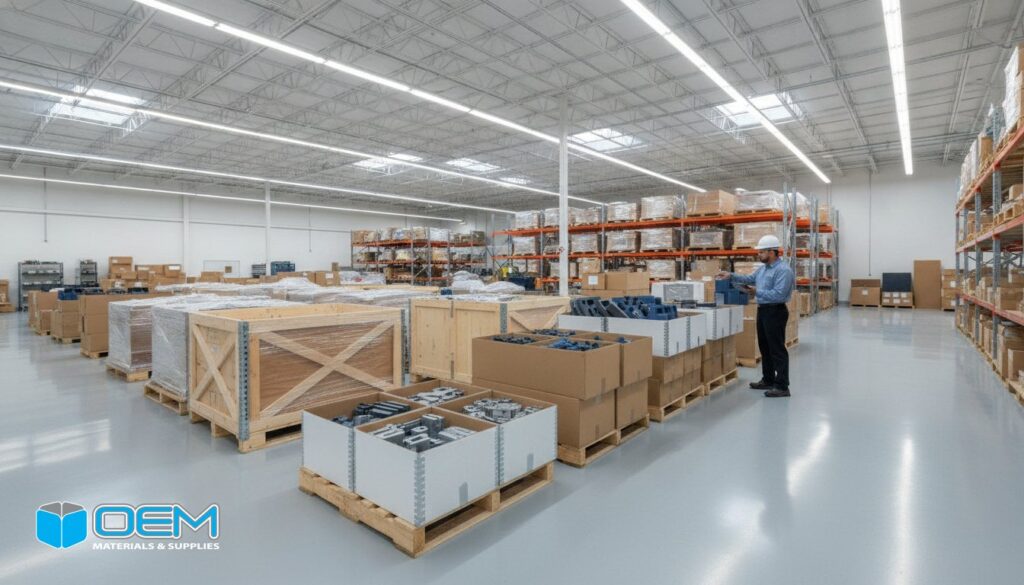
If your packaging is treated as an afterthought, it is likely the most expensive part of your production line. High rates of shipping damage and excessive labor spent on manual packing are not just logistical hurdles; they are direct threats to your bottom line and customer relationships. Finding the right packaging for manufacturers involves more than just sourcing boxes. It requires a specialized engineering approach to protection and efficiency.
You probably recognize that inconsistent inventory levels and transit losses are avoidable, yet finding a partner who understands these industrial complexities, particularly within the competitive Southern California landscape, remains a challenge. This article explains how to optimize your manufacturing supply chain through engineered packaging solutions that reduce damage and lower operational costs. We will examine how custom corrugated design, precision foam inserts, and vendor-managed inventory (VMI) programs create a more resilient logistics framework. From streamlining warehouse operations to achieving zero-damage shipping cycles, you will learn how to transform your packaging from a commodity expense into a functional extension of your manufacturing process.
Key Takeaways
- Learn how engineered foam inserts and custom structural designs eliminate transit damage for high-value components and sensitive electronics.
- Discover how optimized packaging for manufacturers reduces labor costs and material waste by replacing generic dunnage with custom-fit solutions.
- Understand the role of kitting and assembly services in streamlining warehouse operations and reducing the burden on your internal staff.
- Evaluate the logistical advantages of partnering with a local Southern California supplier for rapid prototyping and reliable vendor-managed inventory programs.
Understanding Industrial Packaging for Manufacturers
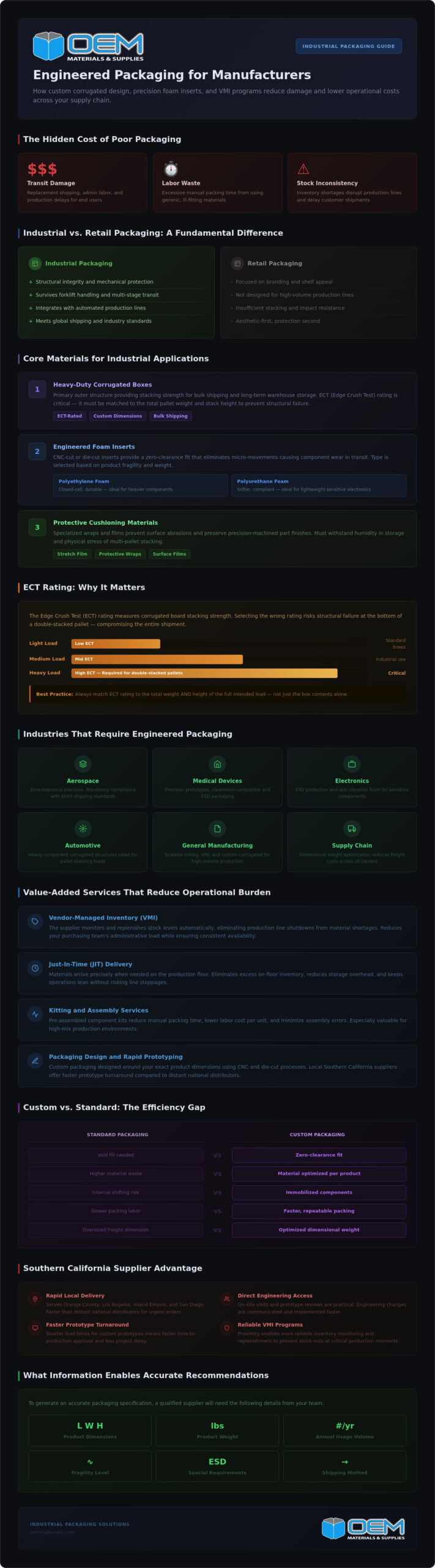
Industrial packaging for manufacturers serves a fundamentally different purpose than consumer-facing retail boxes. While retail packaging focuses on branding and shelf appeal, industrial solutions prioritize structural integrity and mechanical protection. In a manufacturing environment, the package is a tool. It must survive high-volume production lines, forklift handling, and the rigors of multi-stage transit. These solutions are designed to integrate with automated manufacturing lines and meet strict global shipping standards. Whether you are shipping medical devices or automotive assemblies, the goal is consistent: ensuring the product reaches its destination in the exact condition it left the factory.
The Role of Protective Packaging in Modern Manufacturing
Effective packaging reduces the total cost of ownership by eliminating the hidden expenses of transit damage. When a high-value component fails due to vibration or impact, the cost includes more than just the physical part. It involves administrative labor, replacement shipping, and potential production delays for the end user. Precision-engineered packaging for manufacturers balances material weight with structural strength to optimize shipping efficiency. Reducing the physical footprint of a pallet while maintaining its durability helps control freight costs, especially as carriers lean more heavily on dimensional weight pricing. Standardizing these materials ensures compliance with global shipping regulations and industry-specific requirements, such as those found in the aerospace or medical sectors. This methodical approach protects the manufacturer’s reputation and bottom line.
Key Materials for Industrial Applications
Selecting the right materials requires a technical understanding of the product’s vulnerability and the shipping environment. Common industrial solutions include:
- Heavy-duty corrugated boxes: These provide the primary outer structure and stacking strength required for bulk shipping and long-term warehouse storage.
- Engineered foam inserts: Custom-cut polyethylene or polyurethane foam isolates sensitive components from shock and vibration during transit.
- Protective cushioning materials: Specialized wraps and films prevent surface abrasions and preserve the finish of precision-machined parts.
Durability is non-negotiable. Industrial materials must withstand environmental factors like humidity in storage and the physical stress of being stacked multiple pallets high. By integrating these materials into a cohesive system, manufacturers create a reliable barrier against the variables of the global supply chain. This engineering-first mindset ensures that protection is never compromised for the sake of aesthetics.
Engineering Protection for High-Value Goods
High-value goods require more than a generic container. Effective packaging for manufacturers must account for the specific hazards of the transit cycle, including compression, vibration, and sudden impact. Engineering a solution starts with the outer shell. Utilizing custom corrugated boxes tailored to exact product dimensions prevents the internal shifting that leads to surface damage and component fatigue.
For industrial applications, the Edge Crush Test (ECT) rating is a critical metric. It measures the stacking strength of the board, which is essential when pallets are double-stacked in a warehouse or during long-haul transport. Selecting a board with an insufficient ECT rating can lead to structural failure at the bottom of the stack, risking the entire shipment. We match the ECT rating to the total weight and height of the intended load to maintain structural integrity throughout the supply chain.
Engineered Foam Packaging and Shock Absorption
Internal protection relies on material science. Effective foam packaging isolates sensitive components from external shocks. We select foam types based on the product’s fragility and weight. Polyethylene foam is a durable, closed-cell material ideal for cushioning heavier components. Conversely, polyurethane foam is softer and better suited for lightweight, highly sensitive electronics.
In sectors like aerospace and medical device manufacturing, precision is mandatory. We develop prototypes that utilize CNC-cut or die-cut foam inserts to ensure a zero-clearance fit. This level of engineering prevents the micromovements that cause component wear during transit. If you are struggling with recurring transit damage, you might consider requesting a technical consultation to evaluate your current cushioning strategy.
Heavy-Duty Crates and Pallet Systems
When products exceed the weight limits of corrugated materials, heavy-duty wood crates become the standard. These provide the rigid framework necessary for large machinery or automotive assemblies. However, the base of the shipment is just as important. In cleanroom environments, such as medical device or semiconductor manufacturing, heavy duty plastic pallets are preferred because they are non-porous and free from the debris associated with wood.
Load stabilization is the final step in engineering protection. High-performance stretch film ensures the entire unit remains unified on the pallet. Proper wrap tension prevents the load from shifting or leaning, which is a leading cause of forklift-related damage. By combining these engineered layers, the right packaging for manufacturers creates a comprehensive defense against the physical demands of global shipping.
Custom vs. Standard Packaging Materials for Manufacturing
Choosing the right packaging for manufacturers often involves a trade-off between the immediate availability of stock sizes and the long-term efficiency of custom-engineered solutions. Standard boxes are frequently oversized for industrial components, requiring excessive dunnage to fill the void. This reliance on bubble wrap, paper, or loose-fill peanuts increases material costs and adds significant labor time to the packing process. Perhaps more importantly, oversized boxes trigger higher shipping expenses due to dimensional weight (DIM) pricing, where carriers charge based on the space a package occupies rather than its actual weight.
Custom solutions eliminate these inefficiencies by matching the container exactly to the product dimensions. While custom designs may require an initial investment in tooling or dies, the reduction in freight costs and packing labor often offsets these costs over high-volume production runs. A well-designed package simplifies the assembly line, allowing warehouse staff to secure products quickly without guesswork or manual cutting of materials.
The Economics of Custom Packaging Design
Investing in custom packaging design is a strategic move to reduce material waste and improve throughput. In high-volume electronics assembly, for example, custom die-cut corrugated inserts replace multiple layers of hand-wrapped cushioning. This transition speeds up the packing line and ensures consistent protection across every unit shipped. The return on investment for custom tooling is calculated by analyzing the reduction in damage claims, lower shipping volumes, and decreased labor hours per unit. It is important to remember that specific cost savings depend on variables such as product dimensions, material choices, and your specific shipping requirements.
When to Utilize Stock Packaging Supplies
Stock materials still play a vital role in a balanced supply chain, especially for low-volume SKUs or non-sensitive items. Strategic use of stock mailing tubes and cores is often the most cost-effective way to ship industrial textiles, films, or flexible materials that can be rolled. These standard shapes provide high structural strength without the need for custom molds.
Manufacturers can also standardize their load stabilization by using stock edge and corner protectors. These components reinforce palletized goods and prevent strap indentation, regardless of the box size used. Maintaining a baseline inventory of standard corrugated sizes allows for flexibility during unexpected production spikes or for products with irregular demand cycles. A hybrid approach, utilizing custom protection for high-value core products and stock supplies for secondary needs, often yields the best operational balance for Southern California manufacturers.
Streamlining Operations with Value-Added Services
Packaging for manufacturers is often viewed as a storage challenge, but modern logistics allow it to become an operational advantage. Moving beyond a simple material supply model, manufacturers can integrate their packaging vendors directly into their production cycles. This integration supports lean manufacturing principles by ensuring that bulky packaging inventory doesn’t consume valuable floor space intended for production. Just-in-time (JIT) delivery models allow for smaller, more frequent shipments that align with daily or weekly production schedules, effectively reducing the footprint of packaging materials in the warehouse.
Vendor-Managed Inventory (VMI) for Packaging
A packaging VMI program shifts the responsibility of inventory tracking from your procurement team to your supplier. Instead of manually monitoring stock levels of stretch film or corrugated boxes, the supplier automates replenishment based on your actual production usage. This system prevents critical stockouts that could otherwise halt a shipping line. Financially, VMI improves cash flow by reducing the amount of capital tied up in sitting inventory. For manufacturers in Los Angeles, Orange County, and San Diego, local VMI programs offer the added benefit of rapid response times and reduced lead times for emergency restocks. It’s a reliable way to maintain consistent production without the administrative burden of constant reordering.
Kitting and Pre-Assembly Solutions
Kitting services further streamline operations by delivering ready-to-use packaging components directly to the assembly line. Rather than requiring warehouse staff to pull a box from one rack and a foam insert from another, a kitting provider combines these elements into a single SKU. This pre-assembly reduces the labor required at the packing station and simplifies the procurement process by cutting the number of vendors and purchase orders managed by the office. This is especially beneficial in complex sectors like aerospace or medical device manufacturing, where precision and speed are equally vital.
When you combine custom-engineered foam with a specific corrugated box and the necessary labels into one kit, you eliminate assembly errors. This ensures every product is protected according to the original engineering specifications without requiring extra training for floor staff. This methodical approach to supply chain management transforms the way businesses handle their logistics. If you are ready to reduce your warehouse labor and optimize your inventory levels, you can request a quote for a custom VMI or kitting program today to see how these services fit your annual usage requirements.
Choosing a Packaging Supplier for Southern California Manufacturers
Selecting a partner for packaging for manufacturers requires looking beyond the price per unit. For businesses operating in Southern California, geographic proximity is a strategic asset that directly impacts operational uptime. It allows for rapid prototyping and immediate response to production spikes or unexpected design changes. When your supplier is local, they understand the regional logistics network and can provide on-site support that a national catalog company cannot match. This proximity is especially critical for manufacturers in the Inland Empire and San Diego County who face unique transit schedules and warehouse constraints.
Logistical Advantages in Los Angeles and Orange County
Manufacturing hubs in Los Angeles and Orange County operate at a pace that requires extreme agility. Reduced lead times for JIT packaging ensure that your production line never waits for a shipment of corrugated boxes or engineered foam. Local partners can visit your facility to troubleshoot complex industrial packaging challenges in person. This face-to-face consultation is vital for high-stakes sectors like medical device manufacturing or automotive assembly, where even a minor measurement error can lead to significant transit damage. Additionally, shipping bulky materials like wood crates or plastic pallets over long distances is often cost-prohibitive. Sourcing these from a regional partner significantly lowers freight expenses and stabilizes your overhead by avoiding the volatility of long-haul trucking rates.
Establishing a Long-Term Packaging Partnership
A successful relationship is built on technical competence and the ability to scale with your production volume. You should seek a supplier that offers wholesale industrial packaging while providing the personalized service of a dedicated account manager. This manager acts as a knowledgeable guide who understands your specific manufacturing requirements and inventory cycles. They can help you transition from stock supplies to custom-engineered solutions as your SKUs evolve. When you are ready to evaluate a new provider, be prepared to share specific data. Providing exact product dimensions, weight, and annual usage allows for an accurate recommendation that balances protection with cost efficiency. A reliable partner doesn’t just sell you materials; they help you engineer a more resilient and efficient supply chain.
Optimizing Your Supply Chain through Engineered Packaging
Transitioning from a commodity-based approach to a precision-engineered strategy is essential for maintaining a competitive edge. By prioritizing structural integrity and material science, you can eliminate recurring transit damage and reduce the hidden costs of excessive labor. High-performance packaging for manufacturers integrates seamlessly with your production line, utilizing custom foam inserts and corrugated designs to protect sensitive aerospace or medical components. These solutions don’t just protect your product; they protect your bottom line by optimizing shipping volumes and reducing material waste.
For businesses in Los Angeles, Orange County, the Inland Empire, and San Diego, local proximity offers the added benefits of rapid prototyping and reliable vendor-managed inventory programs. Whether you need specialized electronics protection or streamlined kitting services, partnering with an experienced industrial supplier ensures your logistics are as precise as your manufacturing. We invite you to contact OEM Materials & Supplies for a custom packaging consultation. Please provide your product dimensions, weight, and annual usage so we can develop a recommendation tailored to your specific operational requirements. We look forward to helping you build a more efficient and resilient distribution cycle.
Frequently Asked Questions
What are the main benefits of custom packaging for manufacturers?
Custom packaging for manufacturers eliminates the waste associated with stock sizes and reduces transit damage. It ensures a precision fit for high-value components, which minimizes the need for excessive dunnage. This optimization lowers material costs and reduces labor time at the packing station. Additionally, custom designs improve palletization density, allowing you to ship more units per pallet while maintaining structural integrity throughout the supply chain.
How does vendor-managed inventory work for packaging supplies?
Vendor-managed inventory (VMI) automates the replenishment of your packaging supplies by shifting inventory tracking to the supplier. We monitor your actual production usage and restock items like stretch film or corrugated boxes before they run out. This system prevents stockouts and reduces the amount of capital tied up in sitting inventory. For manufacturers in Orange County and Los Angeles, it streamlines procurement by eliminating the need for manual reordering.
What is the difference between ECT and Mullen burst strength for boxes?
The Edge Crush Test (ECT) measures the stacking strength of a box, while the Mullen test measures its puncture resistance. Manufacturers typically prefer ECT ratings because they directly relate to how well a box will hold up when pallets are stacked in a warehouse. Mullen strength is more relevant for individual shipments that might face rough handling or impact. We help you choose the right rating based on your specific load requirements and transit environment.
Can custom foam inserts be reused for multiple shipping cycles?
Yes, custom foam inserts made from polyethylene or other high-density materials are designed for durability and can often be reused for multiple shipping cycles. This is common in closed-loop supply chains where products move between manufacturing facilities and sub-assembly sites. Reusability depends on the material choice and the physical stress encountered during transit. We design these inserts to maintain their shock-absorbing properties over repeated use to maximize your investment.
Do you provide on-site packaging assessments for San Diego manufacturers?
We provide on-site packaging assessments for manufacturers throughout San Diego County and the surrounding Southern California regions. Our technical experts visit your facility to analyze your current packing process, identify bottlenecks, and suggest improvements for damage reduction. These consultations allow us to see your products in their physical environment, ensuring that any custom corrugated or foam solution we develop is perfectly aligned with your specific operational challenges.
What industries benefit most from pre-assembled packaging kits?
Aerospace, medical device, and electronics manufacturers benefit most from pre-assembled packaging kits. These sectors often handle sensitive components that require complex protection, such as ESD-safe materials or precision-cut foam. By delivering kits that combine the box, cushioning, and labels into a single SKU, we reduce assembly errors on the production line. This service is essential for companies looking to lower their internal labor costs and simplify their procurement processes.
How can I reduce the dimensional weight of my shipments?
You can reduce the dimensional weight (DIM) of your shipments by utilizing custom packaging for manufacturers that matches the exact dimensions of your product. Carriers charge based on the space a package occupies, so eliminating oversized boxes and excessive void-fill directly lowers your freight costs. Our design team focuses on creating the smallest possible footprint that still provides the necessary structural protection to ensure your goods arrive without damage.
What information is needed to get an accurate packaging quote?
To provide an accurate packaging quote, we require specific data regarding your product and shipping requirements. You should prepare the following information:
- Exact product dimensions including length, width, and height
- Total weight per unit and the number of units per shipment
- Annual usage or typical order volume
- Fragility level and any specific environmental sensitivities like moisture or static
This information helps us recommend the most cost-effective materials and structural designs for your specific application.