
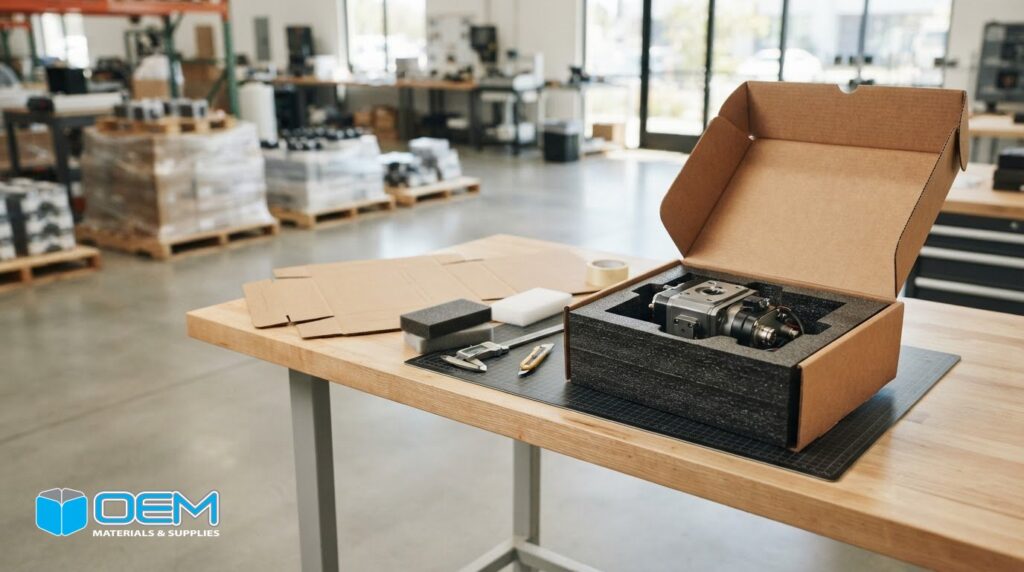
The closest fit for industrial packaging design in Southern California isn’t necessarily the company with the broadest portfolio. Compare designers on how they prototype corrugated boxes and foam inserts, develop packaging around product and shipping requirements, and show relevant project examples. Those factors reveal whether a proposed design can protect the product and work with your packing process.
For industrial packaging design in Southern California, look for a partner that can address both the outer box and the internal cushioning. A box alone may not control product movement, while foam alone does not account for the complete package. The right combination depends on the product’s shape, handling needs, and shipping conditions.
Compare prototype capabilities, protective foam options, design support, and relevant project examples. Use practical criteria to weigh corrugated, foam, and combined designs, so purchasing and engineering teams can choose based on product fit and operating needs rather than broad claims.
Key Takeaways
- Compare prototypes by looking at how the box and internal cushioning work together to protect the product and support packing.
- Use project examples to assess whether a designer has addressed packaging needs similar to your product, handling process, and shipping conditions.
- Evaluate foam inserts for product fit, restraint, and ease of packing, not just the material or appearance.
- Review the development process for how it accounts for product dimensions, weight, distribution, and the intended packaging materials.
- Match the final design to your operation’s requirements, then consider corrugated boxes, foam packaging, or packaging kits to support the solution.
Can you provide prototypes for both corrugated boxes and foam inserts?
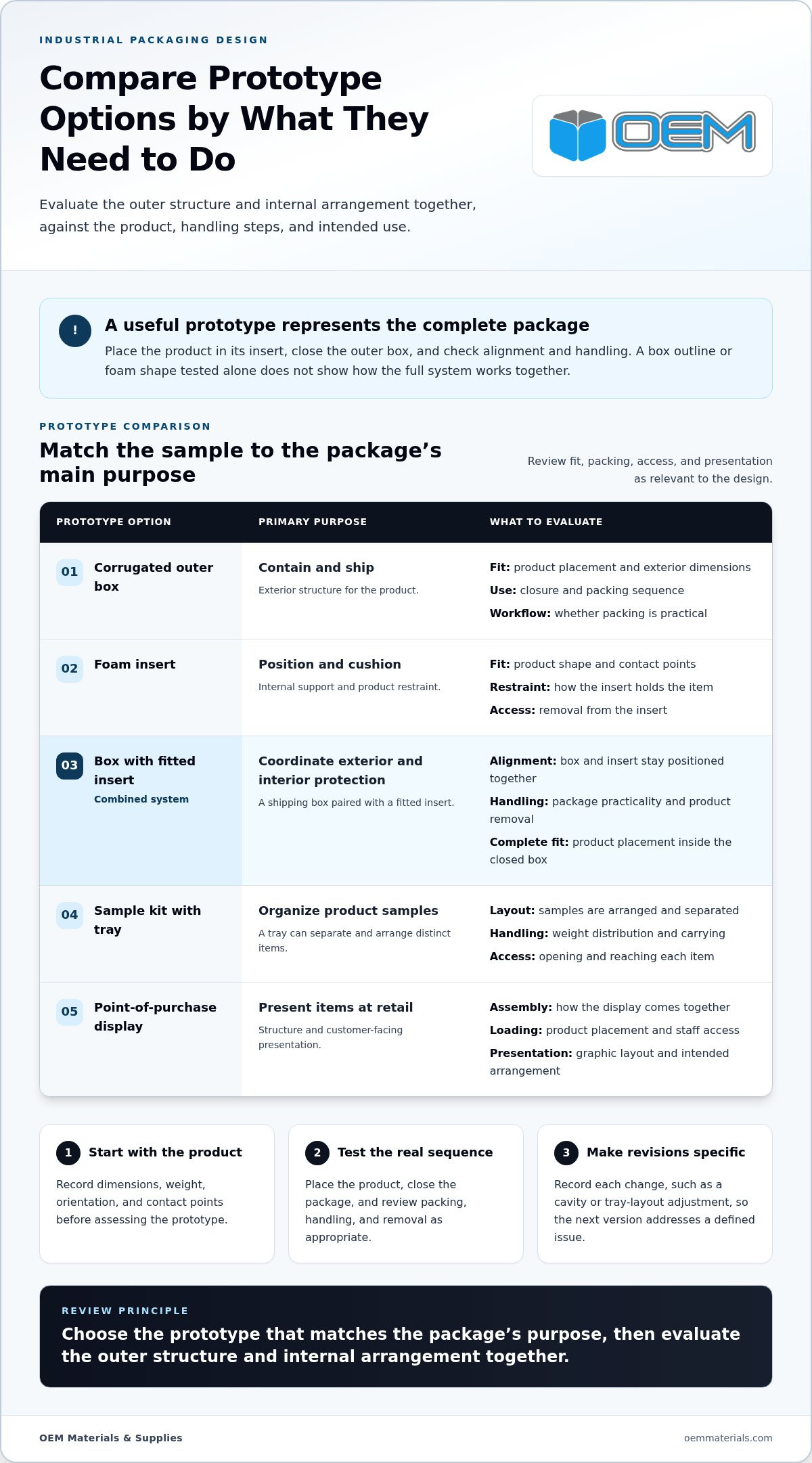
A useful prototype tests the corrugated outer box and foam insert as one packaging system. Industrial products may use corrugated board for the exterior and foam for cushioning or product restraint. Formats include a shipping box with a fitted insert, a corrugated sample kit with a tray, or a point-of-purchase display. Choose a format based on the product, handling steps, and whether the package ships or presents the item at retail.
Start with the product’s dimensions, weight, orientation, and contact points. Then assess how the box and insert hold the item during packing and removal. A prototype should represent the intended package, not just a box outline or foam shape in isolation. Place the product in its insert, close the outer box, and check whether the components stay aligned and the package is practical to handle. Record each change, such as adjusting a cavity or tray layout, so the next version addresses a specific issue.
Corrugated point-of-purchase displays need a different evaluation from shipping boxes. A display must hold products in their intended retail arrangement and present key information through its graphic layout. Test assembly, product loading, and staff access without disrupting the arrangement. A prototype can also reveal whether the structure supports the planned product placement. For a retail display, evaluate both the structure and the customer-facing presentation.
A corrugated sample kit shows how packaging components can be designed together. In a stainless-steel sample-kit example, corrugated materials and a matching tray were used to balance stability and material choice. Multiple configurations were tested for weight distribution and handling. Apply the same practical checks to your kit: arrange the samples, see how the tray separates them, and assess whether it can be carried and opened as intended. If the products have distinct shapes, the tray should keep each item organized and accessible.
For a corrugated outer box, prototype review should include the product’s fit, closure, and packing sequence. A box that fits the item but slows packing may not suit the warehouse workflow. Compare the exterior dimensions with the available shipping and storage space, then check how the insert positions the product inside. These steps help identify whether the design needs a revised box, a different tray, or a combined adjustment. A custom packaging design process can organize those decisions around the product and its use.
| Prototype option | Primary purpose | Evaluation criteria |
|---|---|---|
| Corrugated outer box | Contain and ship | Product fit, closure, packing sequence |
| Foam insert | Position and cushion | Contact points, restraint, removal |
| Box with fitted insert | Combine exterior and interior protection | Alignment, handling, complete fit |
| Sample kit with tray | Organize product samples | Layout, access, weight distribution |
| Point-of-purchase display | Present items at retail | Assembly, loading, graphic placement |
Choose a prototype that matches the package’s main purpose, then test the outer structure and internal arrangement together.
Los Angeles industrial packaging designer company matches
Packaging firms in Orange County, Los Angeles, San Diego, and Riverside differ in custom packaging scope, prototype support, graphic design, and production coordination. Pricing depends on project scope, materials, prototype requirements, and order needs. Request a quote for project-specific pricing.
Los Angeles company matches offer a useful starting point, not a complete capability assessment. As of October 16, 2026, the directory-style list included 18 companies with 1-10 employees, 16 with 11-50, three with 51-200, and two with 201-500. The median employee range was 11-50. Company size alone doesn’t show whether a team can coordinate structural design, graphics, and packaging production.
Compare firms against the work your project requires. A manufacturer shipping a delicate component may need corrugated design and internal protection. A retail launch may place more emphasis on display structure and graphics. Ask how the design connects package function, appearance, and production needs, then compare the proposed deliverables.
| Comparison criterion | What to examine | Why it matters |
|---|---|---|
| Design scope | Structural design, graphics, or both | Clarifies who coordinates the complete package |
| Prototype process | Sample formats and revision steps | Shows how teams evaluate fit and usability |
| Relevant experience | Examples resembling your product or channel | Connects portfolio work to project needs |
| Production planning | Material choices and order requirements | Links the design to operating conditions |
For packaging, labeling, and shipping requirements in California and across the United States, evaluate the product, destination, and transportation method. Account for required labels and handling information in the package design, then review the rules that apply to the specific shipment before release.
Sustainable packaging options can include molded pulp, hemp, and sugarcane materials. Compare them with corrugated structures based on product protection, package format, and distribution process. Reviewing a sample can show how material selection affects fit and handling.
Company contact data offers another comparison point, but it needs context. The Los Angeles designer list averaged 25.8 tracked professional contacts per company as of October 16, 2026. Use that figure as directory information, not as proof of design quality or production capacity. Instead, match the proposed team and workflow to your project’s specific requirements.
To narrow your options, prepare a short project brief covering the product, shipment route, package function, graphic needs, and expected order pattern. Compare proposals against the same criteria. This helps distinguish a corrugated shipping design from a retail display, even when both are described as custom packaging.
Packaging design portfolios and project examples
A portfolio can show how a designer turns product requirements into a usable package. Look beyond polished images for examples that explain the product, distribution or retail setting, design constraints, and decisions made. A photo of a formed insert is more useful when the case study also shows how the product sits inside and how the package opens.
Match each example to your own application. An electronics manufacturer might study a project that organizes several components in one package. An industrial equipment team may focus on how a large part is supported and removed. The products need not be identical if the challenges are comparable, such as separating parts, streamlining assembly, identifying contents, or balancing presentation with protection.
Read a case study for its decision trail. Identify the project requirements, options considered, and how the final format addressed those needs. If the portfolio only shows a finished package, note what it reveals about shape, access, graphic placement, or the relationship between interior and exterior components. Then discuss how the design was evaluated and revised.
For sustainable packaging, look for specific material decisions rather than broad environmental claims. A useful example identifies the selected material and its role in the package. Molded pulp, hemp, and sugarcane are alternative materials used in sustainable packaging solutions. Compare an example using one of these materials with a corrugated design, considering the package’s function, product fit, and presentation requirements. A material choice alone does not establish that the overall design is suitable.
Creative work also needs operational context. A distinctive graphic or structure may attract attention, but manufacturing teams need to understand how the design is assembled, loaded, stored, and handled. For a retail package, examine how the graphics support product identification and how the structure presents the item. For a shipping package, focus on how it organizes contents and supports the packing sequence.
Use a consistent review process for each portfolio example:
- Match the application: Compare the product type, channel, and handling needs.
- Trace the design logic: Identify the requirement behind each visible feature.
- Check practical details: Look for assembly, access, identification, and material information.
- Discuss the gaps: Ask what testing or revisions informed the final design.
These steps help separate relevant experience from attractive imagery. A useful case study connects a specific manufacturing or retail need to clear design choices, then explains how the finished package serves that application.
Foam protective inserts
A foam insert should fit the product’s shape and the way workers pack it. In an electronics assembly, separate cavities can organize components and make each item easier to identify. Begin with product dimensions, weight, orientation, and contact points. These details guide cavity placement and the support each part needs.
Map the product before choosing an insert layout. Mark delicate surfaces, protrusions, and areas that should not bear pressure. Then position the item in a sample layout and check how it enters and leaves each cavity. A handle or connector may need clearance, while a loose accessory may need its own defined location.
Foam geometry affects both protection and workflow. A close-fitting cavity can help limit movement, while a broad cutout may make removal easier for warehouse staff. For a kit with several components, arrange parts in packing order and check that labels or visual cues distinguish them. The insert should support repeatable packing, not just create a tidy display.
Review the complete package, not the foam in isolation. Place the insert in its intended outer box, load the product, close the package, and inspect the fit. Check whether the foam shifts, the product stays positioned, and staff can remove it without awkward handling. Prototype review can reveal where cavity depth, spacing, or access needs adjustment.
Use a practical design sequence:
- Document the product: Record dimensions, weight, orientation, and sensitive surfaces.
- Set the layout: Position each component and identify clearance or separation needs.
- Review packing: Have an operator load and remove the product using the proposed arrangement.
- Revise the sample: Adjust the insert where fit, access, or organization needs improvement.
For consumer-facing products, foam can also shape how a package presents the item when opened. An orderly layout can draw attention to key components, while manufacturing teams still need practical access and repeatable packing. Evaluate both the recipient’s first view and the operator’s packing steps to balance presentation and function.
Insert selection also depends on the package’s distribution role. A reusable kit may prioritize organized storage between uses, while a one-way shipment may emphasize positioning during transit. Compare these uses with the product’s handling requirements before finalizing the layout. An insert designed around the product and packing sequence gives teams a clearer basis for prototype review and packaging decisions.
Packaging design and development
Packaging development connects product requirements with materials, package structure, and fulfillment needs. For industrial packaging design in Southern California, align those decisions with how the product will be packed, stored, and shipped.
Industrial Packaging Design Services
Packaging services in Orange County, Los Angeles, San Diego, and Riverside can include package planning, structural design, material selection, and prototype development. Some projects also require graphic coordination or kits for multiple components. Structural design focuses on fit and function, while broader development connects packaging decisions with packing and fulfillment workflows.
Project duration depends on design scope, prototype revisions, material choices, and approval steps. A straightforward box project involves different development work from a multi-part kit with coordinated internal packaging. Account for these steps early so teams can plan reviews and production handoffs around the actual work.
Define the product and workflow before comparing packaging solutions. Record dimensions, weight, orientation, sensitive surfaces, and how operators handle the item. Then describe the fulfillment path, such as warehouse storage followed by parcel shipment or delivery to a manufacturing line. These details connect package structure to operating conditions and clarify which design decisions need evaluation.
Next, compare materials and formats against the project brief. A corrugated shipper may suit a product with simple packing needs, while a shaped insert can help organize separate components. A kit containing an assembly and accessories needs a layout that supports identification and an orderly packing sequence. Prototype review can expose fit or workflow issues before the design moves forward.
Damage Reduction and Shipping Costs
Reducing shipping damage starts with identifying where a product could shift, contact another part, or face pressure during handling. Design the package around those risks, using an appropriate outer structure and internal support. A presentation-focused design has different priorities, with appearance and product access potentially carrying more weight.
To assess shipping efficiency, review package dimensions, product fit, material use, and shipping method together. An oversized box can add unused space, while poor fit can leave the product inadequately positioned. A prototype helps teams evaluate these tradeoffs. Cost outcomes depend on product dimensions, materials, and shipping requirements.
Use a staged review to keep development decisions tied to operational needs. Document the product and packing sequence, compare candidate materials, and evaluate a prototype through the intended fulfillment steps. Record changes to fit, access, and handling so reviewers can assess each revision against consistent criteria.
For a project-specific starting point, request a packaging design quote with product dimensions, weight, and annual usage. Those details help frame the design discussion around the product and its operating requirements.
OEM Materials & Supplies: Corrugated Boxes
OEM Materials & Supplies helps manufacturers match corrugated boxes to product and packing requirements. Corrugated boxes provide the outer package, while foam packaging can position and cushion products inside. Packaging kits bring coordinated components together, and mailing tubes and cores suit products designed for a tube format.
Turn to OEM Materials & Supplies when translating a packaging plan into product options for an industrial operation. Share the product dimensions, weight, and annual usage to focus the discussion on fit and ongoing demand. For a box-and-insert project, include how the item is packed and handled so the packaging components can be considered together.
Contact OEM Materials & Supplies to discuss corrugated boxes and related packaging needs.
Move from packaging concept to a workable plan
The next step is to turn your packaging requirements into a clear project brief. Define how the product is handled, packed, and shipped, then identify the design decisions to review. For industrial packaging design in Southern California, this gives your team a practical basis for discussing package fit, protective support, and warehouse use.
OEM Materials & Supplies provides Corrugated Boxes, Foam Packaging, and Packaging Kits for industrial packaging needs. Share the product dimensions, weight, and annual usage to frame a project discussion around the package and your operation. A clear brief also helps purchasing, engineering, and warehouse teams align on what the packaging needs to do.
Request a quote from OEM Materials & Supplies to discuss your packaging requirements. A defined starting point can help your team move forward with confidence.
Frequently Asked Questions
Looking for a top packaging design company in Los Angeles?
For a manufacturer in Los Angeles, match the packaging firm to the product and production demands rather than relying on rankings alone. OEM Materials & Supplies supports custom packaging projects from prototypes through high-volume production programs. An aerospace supplier can define component protection needs, while an electronics manufacturer can specify how parts must be organized for assembly. Compare relevant capabilities, project scope, and production fit before choosing a partner.
Is there a cost for custom packaging prototypes in Southern California?
Custom prototype pricing is provided after a quote request and depends on project scope, materials, product dimensions, and shipping requirements. A prototype for one component differs from a coordinated package with several parts and packaging elements. To define the request, describe the product, intended use, and what the sample needs to evaluate, such as fit, packing sequence, or presentation. This gives the quote discussion a clear project basis.
Which Southern California firms specialize in industrial packaging design?
OEM Materials & Supplies provides custom packaging solutions for manufacturers in Orange County, Los Angeles, San Diego, and Riverside. Its services include designing and manufacturing corrugated packaging and engineered foam inserts, with support for prototypes, short runs, and high-volume programs. This range suits companies that need packaging development connected to production requirements. A medical device manufacturer, for example, can describe product-specific protection and assembly needs when defining a project.
How much does industrial packaging design cost in Southern California?
Project pricing depends on design scope, materials, product dimensions, prototype needs, and shipping requirements, and is provided after a quote request. A simple package concept and a multi-component design involve different development work. Prepare details about the product, how it will be packed, and the intended production scale. These inputs define the project being quoted without relying on generic market averages that may not reflect your requirements.
What should businesses look for when choosing an industrial packaging design firm?
Choose a firm whose capabilities align with your product, operational workflow, and production volume. Review whether its services connect package design with manufacturing, kitting, and supply-chain needs. Consider how the team handles prototype development and transitions designs into production. For a high-mix operation, discuss how packaging needs vary across product families. Compare project responsibilities and the handoff from design approval to recurring fulfillment.
How long does an industrial packaging design project typically take?
The material gives no typical project duration. It notes that design revisions through national suppliers can add weeks because of cross-country freight and communication delays.
What industries in Southern California need industrial packaging design?
Manufacturers of industrial equipment, electronics, and delicate components may need packaging design. Retail businesses launching products or presenting samples may also need packaging such as displays or sample kits.