
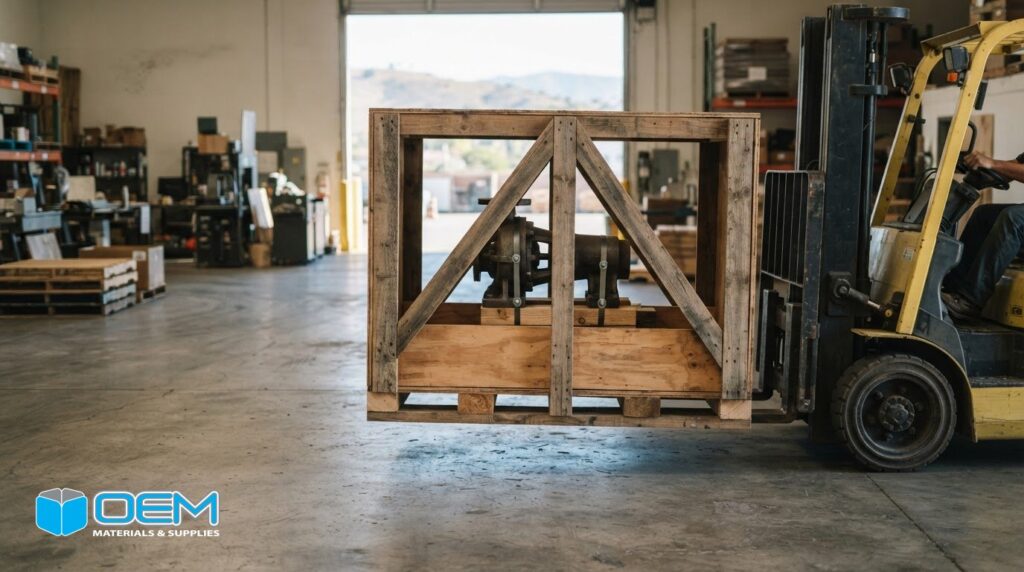
Forklift-ready crating starts with the equipment and how it will be handled, not a standard crate size. OEM Materials & Supplies designs custom industrial crates around the load’s dimensions, weight, shape, required capacity, materials, and reinforcement, including a base suited to forklift handling. The transport method also shapes the design.
That matters when industrial equipment or parts must stay protected during lifting, movement, and shipment. A crate that fits the product but overlooks its weight distribution or handling requirements can create avoidable packing and logistics problems.
This article explains how crate sizing, materials, load capacity, and reinforced bases work together in an industrial packaging plan. You’ll also learn what information guides the design and how to assess whether a crate configuration suits your product and shipping conditions.
Key Takeaways
- Match crate dimensions and shape to the equipment, while allowing room for the protective materials required by the shipment.
- Use product weight, load distribution, and handling conditions to guide capacity and reinforcement decisions.
- Design the base around forklift access and the way the crate will be lifted and moved.
- Share dimensions, weight, destination, transport method, and handling needs to inform the crate design process.
- Compare plastic and other crate options based on the packaging and handling requirements of the application.
Custom crate size, framing, load capacity, shape, and materials
Custom crate engineering starts with the product’s dimensions, weight, shape, and destination. Industrial crates may use wood, plastic, or metal, but a local manufacturer’s material options vary; on-site measuring, packing, and crating are separate service arrangements, not automatic parts of manufacturing.
Custom Crate Dimensions and Shapes
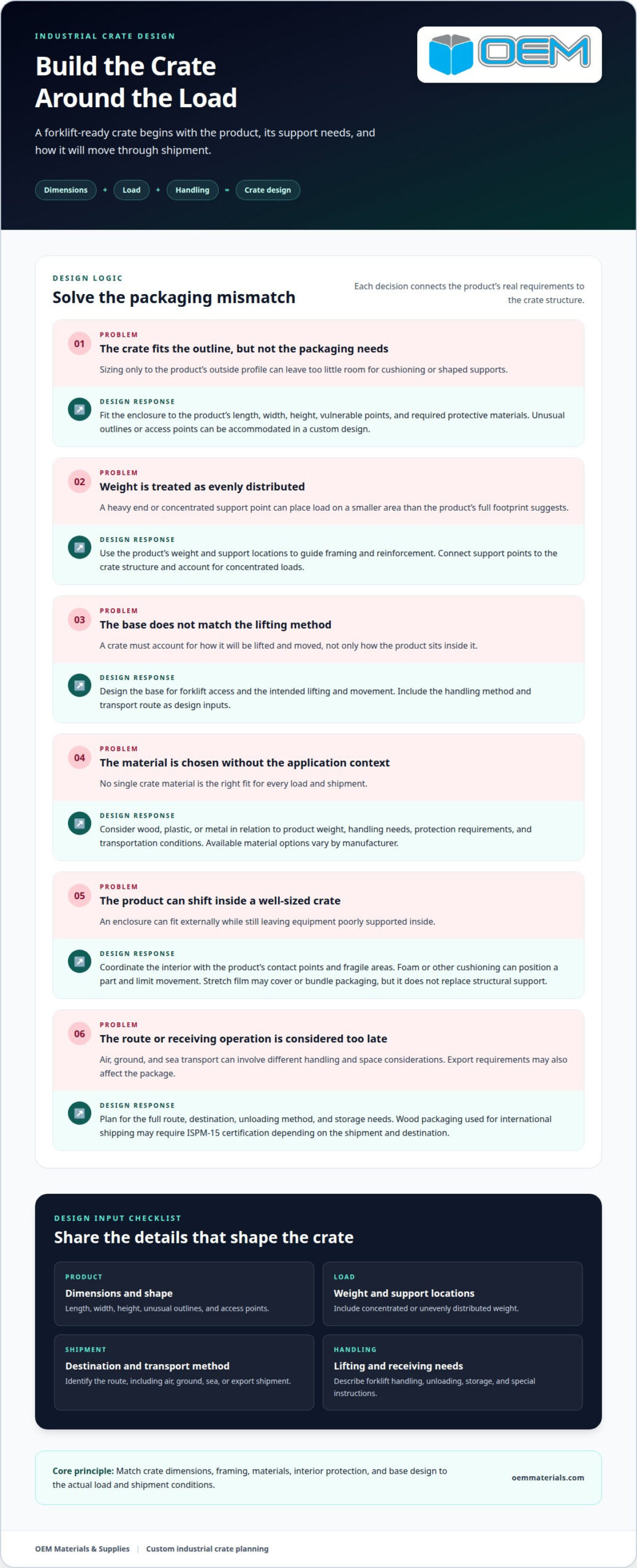
Crate dimensions should fit the equipment and its protective packaging, not just its outside profile. A long machine component, for example, may need a narrow enclosure with shaped supports, while a control cabinet may need a rectangular crate with room for cushioning. The design should account for the product’s length, width, height, and vulnerable points.
Share the product measurements alongside the destination and transport method. Air, ground, and sea transport can involve different handling and space considerations. A custom crate can accommodate an unusual outline or access point; a standard wooden crate may suit a repeat shipment with consistent dimensions.
Framing and Load Capacity
Framing supports the crate walls and transfers the product’s weight through the base. Load capacity depends on the item’s weight, how that weight is distributed, and the crate’s framing and reinforcement. A compact, dense part may need support beneath concentrated load points, while a large assembly may require framing across a wider footprint.
The design should connect the product’s support points to the crate structure. For example, a component with a heavy end should not be treated as evenly balanced across its full length. Provide the weight and support locations so the design accounts for the actual load, not just the outside dimensions.
Materials affect how a crate is built and how it fits the shipment. Wood is a common choice for custom and standard shipping crates, while plastic or metal may suit other packaging requirements. The choice should reflect product weight, handling needs, protection requirements, and transportation conditions. These factors shape the crate’s structure, not a universal material ranking.
Custom crate manufacturing also involves coordinating the enclosure with internal protection. Foam packaging or other cushioning can help position a part and limit movement inside the crate. For delicate or irregular equipment, the interior layout should match the product’s contact points and fragile areas. This helps avoid a crate that fits externally but leaves the load poorly supported.
Contract packaging can include custom kitting, shrink wrapping, and blister packaging. Kitting is useful when a shipment contains related parts that need to be grouped for a production or service task. Defining the kit contents and packing sequence helps align the crate or container with how the recipient will handle the shipment. Share the product dimensions, weight, destination, and handling requirements to guide the design.
Packaging for industrial equipment and parts
Industrial equipment packaging must protect the product and support its handling throughout shipment. A control unit, machined assembly, or replacement part may need different internal support, barriers, and outer packaging. Start with the product’s weight, vulnerable surfaces, handling method, destination, and transport conditions. These details help tailor the packaging plan to the shipment rather than relying on a one-size-fits-all approach.
For export packaging, consider the full route from the shipping location to the receiving operation. Ground, air, and sea transport can involve different handling and environmental conditions. A crate carrying a machine component may need internal blocking to limit movement, while a smaller part may need cushioning inside a protective container. The destination and how the recipient unloads and stores the shipment also affect packaging decisions.
Wood packaging used for international shipping may require ISPM-15 certification. The requirement can depend on the shipment and destination, so include the export route in the packaging plan. Discuss the wood packaging requirement before the crate is built, not after packing is complete. This helps prevent a mismatch between the container and the shipment’s export needs.
Some products also need an additional layer around the crate or packaged unit. Stretch film can bundle packaging components or help cover a shipment during handling. It does not replace structural support inside a crate. A wrapped assembly still needs appropriate blocking or cushioning if movement could damage a connector, machined surface, or other exposed feature.
Blister packaging serves a different purpose from a shipping crate. It can hold smaller parts in a shaped cavity, keeping components arranged for handling or presentation. In a contract packaging plan, blister packaging may be combined with kitting or an outer shipping container. Define the kit contents and packing sequence so the components reach the receiving operation in a usable arrangement.
Contract packaging can include custom kitting, shrink wrapping, and blister packaging. A kit might group related replacement components together, while separate protective packaging keeps each part organized. List the items, quantities, and intended use for each kit. That information helps determine the packing sequence and the outer container needed for the complete shipment.
Packaging and delivery should be planned together. Identify the destination, receiving constraints, unloading method, and special handling instructions before packing. For example, a crate that must be moved by forklift should arrive with its handling orientation clear. Packaging instructions should also identify the product, kit contents, and any required unpacking sequence.
For a practical packaging plan, assemble the product description, dimensions, weight, destination, transport method, and handling requirements. Include export details and any need for shrink wrapping, blister packaging, or custom kitting. These inputs give packaging teams a working basis for coordinating protection and delivery with the receiving operation.
Crate design and manufacturing process
A crate project moves from shipment requirements to a buildable design, then to fabrication and packing. The design team uses the product’s dimensions, weight, destination, transport method, handling requirements, and environmental protection needs as starting inputs. A machine sent by ground freight, for example, may need different access and handling provisions from equipment prepared for air transport.
First, the product information is translated into an internal layout. The drawing or specification should show how the item sits, where it contacts supports, and which surfaces need protection. A control panel with protruding connectors, for instance, may need clearance around those connections and support beneath its main frame. This step connects packing details to the crate’s usable interior dimensions.
Next, the design establishes the crate’s structure and access. The team considers how the lid or panels will open, where the product will be secured, and how handlers will approach the package. A component that must remain upright needs clear orientation cues and a packing plan that preserves that position. Access also matters if the receiver must remove the item without disturbing nearby parts.
Material selection and reinforcement follow the load and route requirements. The design should connect the product’s support points to the crate structure rather than treating the item as a uniform block. A long assembly with a concentrated load at one end, for example, needs a layout that accounts for that imbalance. Precision in these design decisions helps the finished crate fit the product and its handling plan.
Before fabrication, review the design details against the shipment inputs. Confirm that the dimensions match the product and protective materials, that the access points suit packing, and that the handling plan matches the destination’s receiving process. If the item’s weight, route, or protection needs change, adjust the design before materials are cut and assembled.
During manufacturing, the approved design guides cutting, assembly, and placement of structural components. The sequence matters: the base and frame establish the enclosure, while panels and access features complete it. For a repeat shipment, keep the approved design and packing instructions together so operations can reproduce the same arrangement instead of relying on memory.
Final packing should follow the design, not force the product into the crate. Position the equipment on its intended supports, apply the specified restraints or cushioning, and close the enclosure without shifting the load. A final review can compare the packed configuration with the agreed layout, including orientation, access, and handling marks. This ensures the crate is built around the actual shipment.
Forkliftable and reinforced crate bases
A forklift-ready base must provide access for the intended lift while supporting the packaged load. Its design connects fork entry, crate footprint, and weight distribution. A machine with a heavier end, for example, may need support positioned to keep the load stable during lifting. Base specifications should reflect the actual product, not just the crate’s outside dimensions.
Start by documenting how warehouse staff will approach and move the crate. The design process should establish fork-entry direction, clearance, lifting orientation, and where the crate will be set down. A shipment moved from the front only needs a different access plan from one handled from multiple sides. Clear handling instructions help align the base design with the receiving operation.
Reinforcement should follow the load path from the equipment through the crate base. If a product rests on defined feet or rails, the base can be planned around those contact points. A broad, flat product may distribute weight differently. Identifying support locations helps prevent a design that appears suitable externally but concentrates force in the wrong area.
The overall load includes the product and the packaging components carried with it. Provide the product’s weight and describe how it sits inside the crate. A motor mounted near one end, for example, creates a different balance than a centered load. These details help the manufacturer evaluate framing and base reinforcement as part of the complete crate design.
Forklift handling also affects crate dimensions and packing sequence. Consider whether the forks can enter without contacting the product, internal supports, or protective materials. If the load must stay upright, mark the orientation in the handling plan and ensure the base supports that position. These details reduce ambiguity between the packing floor and warehouse team.
Before production, review the base specifications against the equipment and planned lift. Cover the load’s weight distribution, fork-entry direction, support points, and delivery handling. For a repeat shipment, retain the approved drawing and packing instructions. If the equipment changes or its weight shifts, revise the design rather than reuse an outdated specification.
A useful design brief includes:
- The product’s weight and the location of its support points.
- The forklift approach direction and required access for handling.
- The crate’s orientation during lifting, transport, and unloading.
- Any internal blocking or cushioning that affects product position.
- The destination’s receiving and staging requirements.
A tall assembly with an offset center of weight, for example, needs a base plan that considers both its footprint and lifting orientation. The crate should suit the intended handling method from packing through unloading. Complete specifications give the design team a practical basis for coordinating reinforcement, access, and product support.
California plastic crate manufacturers and suppliers
Businesses in Temecula, California, can work with regional packaging suppliers serving Southern California. OEM Materials & Supplies provides industrial crates and custom packaging solutions for manufacturers, including operations in Orange County, Los Angeles, San Diego, and Riverside. The right configuration depends on whether the project needs a crate for a one-way shipment, repeated use, or a specific load. Clarify that need first, since the options serve different handling and protection requirements.
Plastic containers can suit operations that repeatedly move components between work areas, warehouses, or distribution points. Choose packaging based on how workers will load, move, stack, and access its contents. A parts container used repeatedly inside a facility, for example, has different priorities from a crate prepared for a one-way shipment.
Custom industrial crates address products whose dimensions, shape, or handling needs do not fit a standard container. A local manufacturer should gather the product’s measurements, weight, transportation method, destination, and handling requirements before recommending a design. Those details help distinguish a reusable container need from a shipment-specific crate design.
Evaluate suppliers by the questions their process covers. Consider whether their design approach accounts for the product, route, receiving operation, and forklift access. A crate intended for transfer between a Temecula production floor and a warehouse, for instance, needs an opening and handling plan suited to that movement. For export shipments, the destination and wood packaging requirements also belong in the project discussion.
Regional coverage matters for coordination, but proximity alone does not establish fit. OEM Materials & Supplies serves industrial operations in Temecula and across Orange County, Los Angeles, San Diego, and Riverside. Consider how packaging will align with receiving schedules, handling instructions, and the destination’s unloading process. These details help purchasing and warehouse teams assess the full supply arrangement.
Compare plastic and wood options against the shipment’s actual use. Plastic may suit repeat handling, while custom wooden crates can be designed around irregular equipment and specific transport requirements. The choice depends on the product, movement pattern, protection needs, and shipping conditions. Focus on how each proposed material and design addresses those criteria.
Before requesting a quote, prepare the product dimensions, weight, destination, transport method, and handling requirements. Include whether the package will make repeated trips or a single shipment, along with any forklift access needs. This concise project brief gives a California supplier a clear basis for assessing the packaging approach and helps Temecula operations compare recommendations using relevant criteria.
Southern California businesses can source custom shipping crates and reusable packaging through local and regional suppliers.
OEM Materials & Supplies: Crates
OEM Materials & Supplies provides crates for businesses packaging industrial equipment and parts. Turn to us when a shipment needs a dedicated outer container or when crate packaging must work alongside cushioning and product-specific packing materials.
The right configuration depends on the item’s dimensions, weight, destination, transport method, and handling requirements. Share those details to guide a practical packaging recommendation. Foam Packaging can cushion products inside the crate, while Corrugated Boxes or Packaging Kits may suit related parts and components packaged separately.
For a crate recommendation tailored to your shipment, contact OEM Materials & Supplies with your product and handling details.
Plan the Next Shipment Around Its Handling Needs
Use the crate decision as a checkpoint in your procurement process. Before approving a packaging approach, align engineering, warehouse, and purchasing teams on the shipment’s acceptance criteria and who will approve design changes. That coordination keeps packaging decisions connected to how the shipment will move through your operation. A Temecula industrial crate manufacturer can be part of that planning discussion.
OEM Materials & Supplies can discuss your industrial packaging requirements and help identify a practical next step for your project.
Contact OEM Materials & Supplies to discuss your project. A focused conversation can help move your packaging plan forward.
Frequently Asked Questions
What Makes a Reliable Crate Manufacturer?
A reliable manufacturer makes the project scope clear before production begins. The purchasing team should know what the quoted configuration includes, how design revisions are handled, and which party supplies any separate packing components. For example, a crate quote may not include internal cushioning unless it is part of the agreed scope. Clear documentation helps prevent mismatched expectations between procurement, packaging, and warehouse teams.
What types of industrial crates are available from Temecula-area manufacturers?
Industrial crate options may include wooden shipping crates, plastic containers, and metal enclosures. The choice depends on the application and the supplier’s manufacturing capabilities. A maintenance department shipping a replacement assembly may prioritize access for unpacking, while a production team circulating components may value a container suited to its internal handling workflow. Define how the crate will be used before narrowing the material or format.
What information is needed to get a custom crate quote?
Along with the product description, provide the requested quantity, preferred delivery date, and any packing components to include in the quote. Photos or a product drawing can clarify features that a basic description misses. Identify required labels or handling marks, too. These details distinguish the crate from the broader packaging scope and give procurement a clearer basis for reviewing the proposal.
What are typical lead times and delivery options for industrial crates in Temecula?
There is no single typical schedule for every crate order. A new design, material sourcing, order volume, and production planning all affect timing. Delivery arrangements also depend on the destination’s receiving process. A facility with limited dock access, for example, may need delivery coordinated around its unloading setup. Share the required arrival date and receiving constraints early so the project schedule can account for them.
How do Temecula industrial crate manufacturers compare on materials, customization, and service?
Compare proposals by how clearly they define the finished package, not by material names alone. Review the drawing, included components, packing scope, revision process, and delivery assumptions. One supplier may provide a crate only, while another may coordinate the crate with protective or secondary packaging. Reviewing scopes side by side helps purchasing teams identify differences that affect labor, receiving, and internal handling.
What size, weight, and load requirements affect industrial crate design?
Consider the packaged unit’s overall footprint, not only the product’s dimensions. The completed crate must fit the route through the facility, including staging areas, doorways, and storage locations. Its total handling weight also includes the crate and protective materials. A package that fits the product perfectly may still create a warehouse issue if its outer dimensions exceed available staging space.
What risks should buyers consider when choosing an industrial crate manufacturer?
One often-overlooked risk is packaging that protects the product but creates problems after delivery. A large crate can occupy valuable staging space, and unclear unpacking instructions can slow access to equipment. Consider where the shipment will be received, stored, and opened. Including those downstream steps in the purchasing decision helps assess the package as part of the operation, not just as a shipping container.