
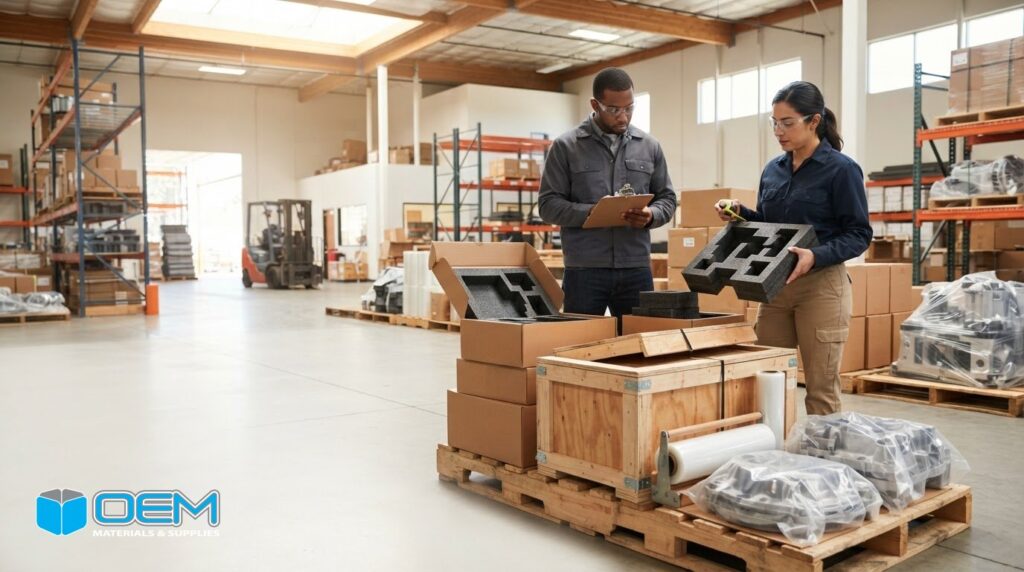
The closest supplier isn’t always the right fit. An anaheim packaging supplier may be nearby, but location alone won’t prevent product damage, simplify purchasing, or ensure materials are available at the volumes your operation needs.
Those concerns are familiar to purchasing, engineering, and warehouse teams. Packaging needs to protect products through storage and transit while fitting the way your operation handles, packs, and replenishes materials. A low unit price may not be the best value if the packaging is poorly matched to the product or several vendors leave your team coordinating a fragmented inventory.
This guide offers a practical framework for comparing Anaheim-area suppliers beyond proximity and price. You’ll learn how to assess product protection, material options, production fit, regional service, and packaging support. It also explains what to include in a quote request so suppliers can evaluate your products, processes, and expected volumes. Whether you need corrugated boxes, foam packaging, crates, stretch film, or packaging kits, start by documenting how materials need to work in your operation.
Key Takeaways
- Assess packaging against product protection, handling, production volume, and inventory needs, not location alone.
- Use consistent criteria to compare an Anaheim packaging supplier’s material range, design capabilities, and production fit.
- Look beyond unit price by considering packing labor, material suitability, stock management, and supplier coordination.
- Prepare an RFQ with product dimensions, weight, handling requirements, shipping conditions, and expected usage so suppliers can assess your needs.
- Confirm regional coverage and delivery arrangements before choosing a supplier for ongoing packaging support.
What Anaheim Manufacturers Should Expect from a Packaging Supplier
Product damage, excess packing labor, material waste, and stockouts can all disrupt production and fulfillment. The right supplier helps address these risks by matching packaging to the product and the operation, rather than simply offering a low-cost box. A useful supplier relationship should make it easier to assess materials, coordinate supply, and resolve packaging requirements as they change.
Packaging must protect products during handling, storage, and transit. These are among the essential functions of packaging, but meeting them in an industrial setting depends on product dimensions, weight, handling steps, and shipping conditions. An oversized container can take up more space or require extra material. A package with insufficient cushioning or a poor fit may leave the product exposed to damage.
Supplier fit also depends on production needs. Determine whether a supplier can support your expected volumes and discuss how it handles changes in demand. A clear ordering process and coordinated supply can help teams manage packaging inventory and reduce the risk of shortages. For example, an operation shipping products in different sizes may need to evaluate box options alongside the foam or cushioning used inside each package. OEM Materials & Supplies serves manufacturers throughout Southern California and across the United States, with offerings such as foam packaging. Anaheim buyers should confirm service coverage and delivery arrangements for their facility.
Which packaging problems should a supplier help solve?
Start with the product and its route through your operation. Share its dimensions and weight, explain how it is handled, and describe relevant storage and shipping conditions. Then identify specific problems, such as product movement inside the package, difficult packing steps, or excess material. A supplier can use those details to assess whether the packaging is suited to your requirements. Recommendations should reflect your actual products and processes, not assumptions about a typical shipment.
What does local service mean for an Anaheim operation?
Anaheim is in Orange County, but a supplier’s location or regional presence doesn’t confirm service to your facility. Ask whether it serves your site, how orders are placed, and what delivery arrangements are available. If your operation has locations in Los Angeles, San Diego, or Riverside as well, confirm coverage for each facility rather than assuming one arrangement applies everywhere. Regional coverage is not a commitment to a specific delivery date or schedule, so clarify those details before planning replenishment.
Packaging Capabilities Anaheim Buyers Should Evaluate Before Choosing a Supplier
A supplier’s catalog is only a starting point. Compare capabilities that affect product protection and daily work: material range, design support, ability to support your production program, and the ordering or inventory services your operation needs. For an anaheim packaging supplier, check each capability against your products and processes rather than assuming that a broad selection guarantees the right fit.
Corrugated boxes may suit one shipping requirement, while foam packaging, crates, plastic pallets, cushioning materials, stretch film, or edge protectors may address other needs. The appropriate combination depends on the product, packing steps, and route through your operation. If sustainability is part of your purchasing criteria, the Sustainable Packaging Coalition offers industry resources to inform your evaluation.
| Buyer requirement | Questions to ask |
|---|---|
| Material fit | Which options match the product, handling process, and shipping needs? Can the supplier explain the tradeoffs? |
| Design support | What product and shipment details are needed to assess fit, cushioning, and handling? |
| Production needs | Can the supplier discuss support for prototypes, short runs, and high-volume programs? |
| Supply coordination | How are orders placed, and which packaging items can be coordinated for our operation? |
How should you assess packaging design and product protection?
Ask how the supplier gathers product dimensions, weight, fragility, handling steps, and shipping details before making a recommendation. A useful design discussion connects those inputs to package fit, cushioning, and the way the product will be packed and moved. OEM Materials & Supplies provides custom packaging design information for buyers assessing this capability. For additional context on corrugated selection, consult a dedicated guide to corrugated packaging manufacturers and compare its criteria with your own requirements.
Can one supplier support changing production needs?
Ask suppliers about their ability to support prototypes, short runs, and high-volume production programs, then confirm what applies to your specific requirements. Map which materials need to work together at the packing station. Boxes, cushioning, and stretch film, for example, may all be part of one workflow. Don’t assume that a supplier’s stated product range confirms availability, capacity, or timing for your program. OEM Materials & Supplies serves manufacturers across Southern California; Anaheim buyers can request a packaging quote to discuss their requirements.
How to Compare Anaheim Packaging Suppliers Beyond Unit Price
A nearby supplier can simplify communication, but proximity alone doesn’t establish technical fit or dependable supply support. Compare each option against your packaging requirements and daily workflow. The lowest unit price may not be the best fit if the material increases packing time, fails to address protection needs, or complicates inventory management.
Evaluate the full operating picture: packaging performance, design support, product range, production scale, order communication, and inventory coordination. Consider how materials work together on the packing line. A box that fits the product may still need cushioning, and the packing steps required to prepare it for shipment should also be considered. Any potential savings depend on product dimensions, materials, and shipping requirements, so evaluate recommendations against your actual use case.
What should an industrial supplier comparison include?
Ask suppliers how their recommendations address product protection and handling, what design support they provide, and which materials they can supply for your needs. Discuss prototypes, short runs, and high-volume programs, then verify scope and capacity for your particular requirements. Review how orders are communicated, how inventory is coordinated, and how changes in demand are handled. The Institute of Packaging Professionals (IoPP) offers a professional industry resource, but confirm each supplier’s specific qualifications and capabilities directly.
Keep confirmed facts separate from assumptions. A supplier’s website may describe a service, but you’ll still need to confirm availability, coverage, ordering details, and how the service applies to your operation. Give each supplier the same requirements so you can compare meaningful differences rather than broad claims.
When do kitting and inventory services matter?
Kitting or assembly may be worth evaluating if preparing packaging components adds recurring work to your team’s process. Vendor-managed inventory may be relevant if monitoring stock and arranging replenishment take substantial coordination. Ask what tasks are included and how responsibilities are divided. OEM Materials & Supplies provides information about its vendor-managed inventory service. Buyers considering just-in-time packaging should also confirm the service scope, delivery arrangements, and fit with their replenishment process.
Compare service details alongside material and production fit. For Anaheim operations, verify regional coverage directly and don’t treat proximity as a promise of a specific delivery schedule. The same checks apply to manufacturers with facilities in Orange County, Los Angeles, San Diego, and Riverside. A consistent comparison helps purchasing and operations teams choose based on needs they can document and confirm.
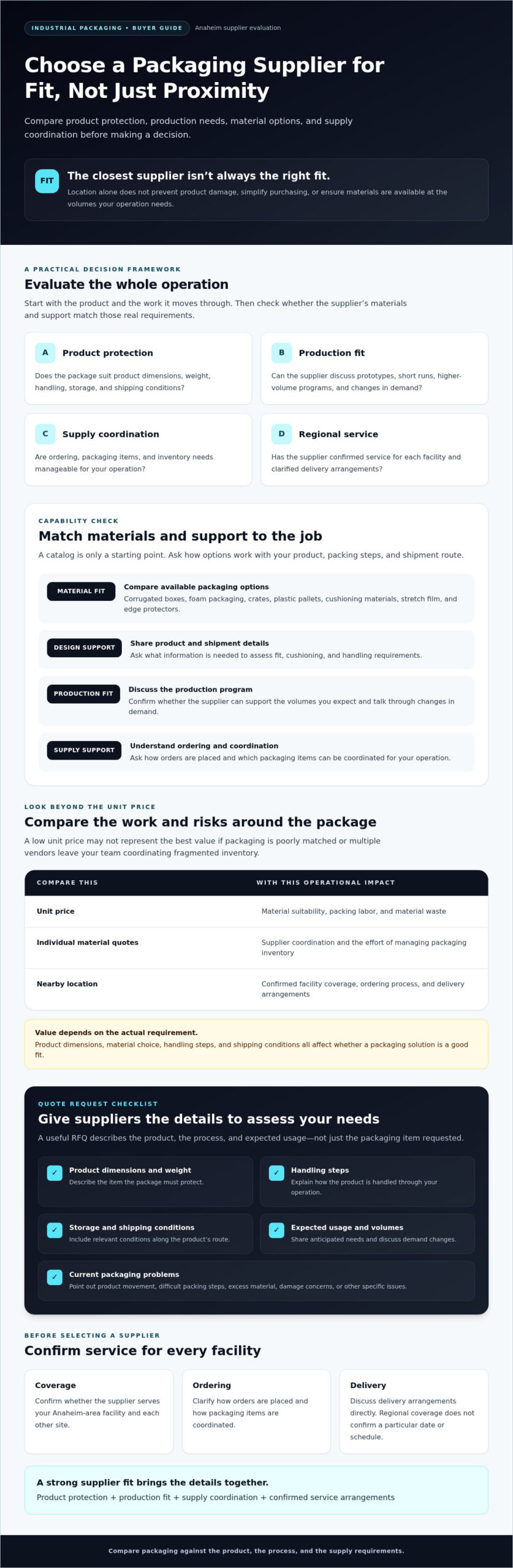
A Practical RFQ Checklist for Anaheim Packaging Buyers
A clear request for quote gives suppliers the information needed to assess packaging against your product and operation. When contacting an anaheim packaging supplier, provide the same requirements to each candidate so their recommendations are easier to compare. Separate confirmed product and shipping details from estimates, and identify unknowns upfront.
What information should you prepare for a packaging quote?
Collect the details that affect package fit, protection, and supply planning. If you have several products or packaging formats, identify each separately rather than combining them into one broad estimate. Include:
- Product data: dimensions, weight, fragility, and any known handling constraints.
- Shipping needs: how products are packed, handled, stored, and shipped, including relevant routes or conditions.
- Current packaging: materials and package formats in use, plus challenges such as damage, excess material, or difficult packing steps.
- Demand context: estimated annual usage when available, production volumes, and expected changes in demand.
- Operational requirements: packing process details, order coordination needs, and inventory concerns that affect replenishment.
Be clear about what’s measured and what’s estimated. If usage varies by product or season, describe that pattern rather than presenting one figure as fixed.
How can you evaluate a supplier’s recommendation?
Review each proposal against the requirements in your RFQ. Check that the recommended materials address stated protection and handling needs, and that the proposed package fits your packing process and production context. Ask which assumptions the supplier made, what information remains unconfirmed, and whether additional product or shipping details could change the recommendation. A quote alone doesn’t verify package performance.
If fit needs evaluation, ask whether prototype or consultation options are available and what information or samples the supplier would need. Compare proposals on a consistent basis, including materials, design rationale, ordering process, and stated limitations. Don’t treat an unconfirmed capability, delivery arrangement, or performance claim as part of the offer.
With product dimensions, weight, annual usage, and shipping requirements in hand, you can make the RFQ more useful and the supplier review more direct. Request a packaging quote from OEM Materials & Supplies with your requirements to begin a discussion about suitable options.
Choosing an Anaheim-Area Supplier for Long-Term Packaging Support
A long-term packaging relationship should fit your products, production requirements, and supply process. Compare how well a supplier’s materials address protection and handling needs, whether it can support your production program, and how clearly it confirms regional coverage and ordering arrangements. Anaheim buyers should verify service details directly rather than assume a supplier is based locally or delivers on a particular schedule.
OEM Materials & Supplies serves manufacturers throughout Southern California and across the United States. Its industrial packaging offerings include corrugated boxes, foam packaging, and crates. When comparing suppliers, assess recommendations against your product and shipping requirements. Any potential savings depend on product dimensions, materials, and shipping needs.
What can an experienced packaging partner support?
A supplier’s value comes from matching available materials to operational requirements, not simply presenting a catalog. Ask how it evaluates custom corrugated boxes, foam inserts, or crates for your products and handling process. Confirm what design assistance is available, what information the supplier needs, and which capabilities apply to your production volumes. Treat kitting, assembly, or inventory programs as separate requirements to verify when they matter to your operation.
What should Anaheim buyers do next?
Before requesting recommendations, document product dimensions, weight, fragility, handling constraints, shipping requirements, and expected usage when known. Note current packaging issues and production context so a supplier can understand how materials fit into your process. Ask which assumptions need confirmation and how proposed options address the requirements you’ve provided.
Use the same information to compare suppliers, confirm service coverage, and clarify ordering and delivery arrangements. This gives purchasing and operations teams a sound basis for evaluating long-term fit without relying on location or unverified promises.
For a quote or consultation, contact OEM Materials & Supplies with product dimensions, weight, annual usage, and relevant handling and shipping details. That information can help start a focused discussion about packaging options for your operation.
Choose Packaging Support That Fits Your Operation
The right supplier should match packaging to product protection, production requirements, and supply needs. Compare recommendations using documented product and shipping details, then confirm service coverage, ordering processes, and delivery arrangements directly. Unit price matters, but so do material suitability, packing workflows, and inventory coordination.
OEM Materials & Supplies serves manufacturers throughout Southern California and across the United States, with support for prototype, short-run, and high-volume production programs. Its capabilities include packaging design, kitting, assembly, and vendor-managed inventory. Buyers should confirm which options fit their specific requirements and verify Anaheim-area service arrangements.
If you’re evaluating an anaheim packaging supplier, prepare product dimensions, weight, shipping requirements, and annual usage when available. These details help frame a focused discussion about packaging options for your operation.
Request a packaging quote or consultation to discuss your requirements with OEM Materials & Supplies. A clear starting point can help your team assess a practical fit for ongoing packaging needs.
Frequently Asked Questions
How do I choose a packaging supplier in Anaheim?
Start with the products you ship, including their dimensions, weight, handling needs, and shipping requirements. Then compare suppliers on packaging design support, material range, production-scale fit, and supply coordination. Ask which capabilities are confirmed for your application and whether the supplier serves your Anaheim operation. A structured review helps you assess an anaheim packaging supplier based on operational fit rather than location or unit price alone.
Does a packaging supplier need to be located in Anaheim?
No. A supplier may serve Anaheim without having a facility in the city. Confirm coverage, ordering procedures, and delivery arrangements directly, then assess packaging capabilities and supply coordination. OEM Materials & Supplies serves manufacturers in Orange County, Los Angeles, San Diego, and Riverside, as well as across the United States. Confirm whether its service arrangements fit your facility and needs. Regional coverage does not establish a specific delivery schedule.
What information should I provide for a packaging quote?
Share product dimensions, weight, fragility, handling constraints, and relevant shipping requirements. Include current packaging materials and estimated annual usage if available. Describe recurring product damage, difficult packing steps, storage limits, or inventory concerns you want to address. This information gives a supplier a clearer picture of your application and helps identify details that need confirmation before it recommends packaging options.
Can one supplier provide boxes and protective packaging?
Some industrial suppliers offer several packaging categories, but confirm which materials are available and suitable for your application. Depending on product and shipping requirements, you might assess corrugated boxes alongside foam packaging, cushioning materials, or crates. A supplier should review dimensions, weight, handling, and shipping needs before recommending a combination. Don’t assume every material works for every product or that a broad catalog guarantees a suitable solution.
When should a manufacturer consider vendor-managed inventory for packaging?
Consider vendor-managed inventory when monitoring packaging stock or coordinating replenishment creates recurring work or supply concerns. Before evaluating a program, review usage patterns, storage constraints, ordering responsibilities, and the proposed process. Confirm its scope and operating details directly, including what information your team must provide. Vendor-managed inventory isn’t the right fit for every business, so compare it with your current purchasing and inventory workflow before deciding.
Can a packaging supplier help reduce material or labor costs?
A supplier may identify packaging or process changes to evaluate, such as improving package fit, reviewing material choices, or considering kitting needs. Any potential savings depend on product dimensions, materials, shipping requirements, and how your operation handles packing. Ask the supplier to explain how its recommendation addresses your documented needs and what assumptions it relies on. Treat general savings claims cautiously unless they’re supported by evidence specific to your application.
What is the difference between a packaging supplier and a packaging design partner?
A packaging supplier provides materials, while a design partner also helps assess how packaging fits and protects a product within a particular process. Some industrial suppliers, including OEM Materials & Supplies, offer packaging design support alongside packaging materials. Ask what product and shipping details are needed, what design assistance is included, and whether a prototype or further assessment is appropriate. Confirm the scope of support before moving forward.