
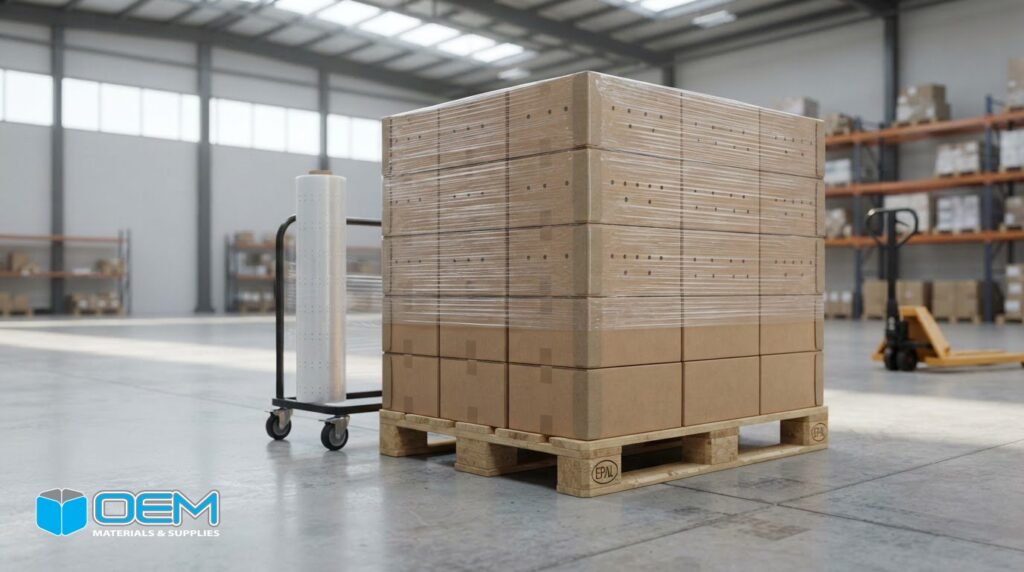
More airflow isn’t automatically better if the wrap can’t keep the load secure. Breathable pallet film has openings intended to let air move around sensitive goods, but those openings make load containment an important part of the decision. The right option depends on the product’s ventilation needs, its packaging, and the conditions it will face in storage and transit.
If you’re comparing vented film with conventional stretch film or netting, weigh airflow against restraint, application method, and fit with your existing packaging and handling process. This guide explains how to assess those factors and build a specification you can check against an actual pallet load.
You’ll learn how to determine whether ventilation is relevant to your product and route, evaluate containment alongside airflow, and plan a representative trial. OEM Materials & Supplies supports packaging design and supplies stretch film. Availability of a specific breathable film option should be confirmed. Sharing load dimensions, weight, current packaging, and shipping conditions can help frame a useful packaging discussion.
Key Takeaways
- Check whether your product and shipping conditions call for added airflow before changing the pallet wrap.
- Compare breathable pallet film, netting, and standard stretch film by airflow, containment, and fit with your application process.
- Assess stability as a complete system, including the pallet, load pattern, film, and wrapping method.
- Document the load, review supplier information, and trial a proposed option under representative conditions.
- Consider wrap alongside cartons, pallets, and workflow. OEM Materials & Supplies serves manufacturers in Orange County, Los Angeles, San Diego, Riverside, and across the United States.
What Is Breathable Pallet Film & When to Use It?
Breathable pallet film is an overwrap designed with openings or other ventilation features that allow air to move around a palletized load. The openings serve an airflow function, but they don’t guarantee that condensation, moisture exposure, or product damage will be prevented. Those outcomes also depend on the product, its packaging, and the conditions it encounters.
Consider ventilation when a product has a documented airflow requirement or when shipping and storage conditions may contribute to moisture or heat buildup. For shipments moving through Orange County, Los Angeles, San Diego, or Riverside, assess the actual route, storage, and handling environment rather than relying on location alone to determine the right wrap. Ventilation must be balanced against the containment required by the load.
How Does Breathable Pallet Film Differ From Standard Stretch Film?
Conventional stretch film wraps and helps contain a pallet load. Ventilated film has openings intended to support air movement, but their presence doesn’t establish how much airflow a particular load will receive or how securely it will be held. General background on stretch wrap can help clarify the material’s broader wrapping role.
Film construction and application method affect performance. Before selecting an option, request supplier specifications and application guidance. Check that they address your load dimensions, wrapping equipment, and application process. OEM Materials & Supplies provides stretch film options; confirm availability of a specific breathable film before specifying it.
What Shipping Conditions Can Make Ventilation Relevant?
Start with the product’s sensitivity and the packaging around it. A product or package with a defined airflow requirement may call for a ventilation review. Consider how goods are stored before dispatch, the expected transit environment, and whether the packaging itself could be affected by moisture or restricted air movement.
Don’t assume more ventilation is always better. Review product guidance and shipping requirements to establish whether airflow is needed. Then check existing damage, moisture, or handling records for recurring patterns that the current packaging may not address.
Use those records to define what a packaging change should improve, and assess any proposed option against the load’s containment needs. If there’s no documented airflow requirement or relevant issue, first confirm that ventilation addresses a real shipping concern before changing the wrap.
Breathable Pallet Film Options: Perforated Film, Netting, and Standard Wrap
Each pallet-wrapping option manages airflow and load restraint differently. The right fit depends on load geometry, secondary packaging, and handling conditions, not on ventilation alone. Use the comparison as a starting point, then check the option against your actual pallet configuration, including the shape and arrangement of the cases.
| Option | Airflow approach | Containment considerations | Application fit | Verification needs |
|---|---|---|---|---|
| Perforated or ventilated film | Openings in the film allow air movement through parts of the wrap. | Confirm that the film and application provide suitable restraint for the load. | Consider when airflow is needed alongside overwrap coverage. | Request construction details, application guidance, and relevant performance documentation. |
| Pallet netting | The open material structure allows airflow around the load. | Assess how the netting interacts with load shape, edges, and any loose items. | Evaluate for loads where an open restraint structure may suit the handling process. | Ask for guidance based on the specific load and pallet configuration. |
| Conventional stretch film | Provides more continuous coverage than open netting or perforated material. | Review wrapping pattern and application to confirm the load is adequately contained. | May fit loads that prioritize continuous coverage or use an established wrapping process. | Check application instructions and validate with the actual load. |
Perforated or Ventilated Film Versus Pallet Netting
These materials aren’t interchangeable. Ventilated film retains a film structure with openings, while netting uses an open structure. That difference affects the type of coverage around cartons, liners, or other secondary packaging. Review whether the load needs broad surface coverage, restraint around its shape, or both. Ask suppliers for specifications and application guidance that apply to your pallet configuration, including any loose or irregularly shaped items.
When Conventional Stretch Film May Remain the Better Fit
Continuous coverage may be a priority when the load’s packaging needs that barrier or the existing wrapping process has been validated for the shipment. Cartons, liners, and other packaging may already address some protection requirements, so assess the complete packaging system before changing the overwrap. OEM Materials & Supplies offers stretch film materials; confirm availability if a specific film construction is required.
For general wrapping practices, consult 3M’s Pallet Stretch Wrap Guidelines, then verify that the selected material’s instructions suit your load. Buyers comparing film categories can also review a broader stretch film selection guide.
To discuss a pallet-wrapping requirement, share load dimensions, weight, packaging, and shipping conditions through the quote request page. Confirm availability of breathable pallet film before specifying it.
Does Breathable Pallet Film Compromise Load Stability?
Not by definition, but breathability alone doesn’t show whether a pallet load is secure. A film’s openings and its ability to restrain a load are separate considerations. Airflow function and load-containment performance are separate properties, and containment must be validated for the actual pallet.
A practical review weighs a potential airflow benefit against the checks a change requires. Ventilated material may suit a documented airflow need, but buyers still need to confirm its fit with the load, wrapping equipment, and handling process. Conventional wrap may offer a more familiar application, but it may not address a verified ventilation requirement. Neither option is universally better.
What Determines Whether a Wrapped Pallet Stays Secure?
Start with the load itself. Dimensions, weight distribution, case strength, stacking pattern, and pallet condition all affect how the unit behaves. A top-heavy stack, weak cartons, overhanging cases, or a damaged pallet can create stability concerns that a film label alone won’t resolve.
Then review the wrapping process. Manual and machine application may differ, and settings, wrap pattern, and operator consistency can affect the result. Consider what happens after wrapping, including forklift movement, transfers, stacking, and shipment handling. Unusual shapes, mixed case sizes, or changing load configurations warrant packaging-engineering review and a trial using the actual setup.
How Can You Assess Moisture and Airflow Risks?
Locate the issue before selecting a material. Record where moisture appears, when it occurs, and which stages of storage or transit are involved. Check whether product packaging, temperature changes, or storage conditions could be contributing factors. For perishable shipments, Food Safety Magazine’s guidance on transporting perishable foods safely can inform a broader review of transport conditions.
Breathable pallet film shouldn’t be treated as a guaranteed fix for condensation or damage. Identify the likely cause, define what needs to change, then test the proposed wrap under representative conditions.
- Potential benefit: Openings may support airflow when a product or shipping process has a defined ventilation need.
- Required check: Confirm the load remains contained during wrapping, movement, and transit.
- Decision risk: Changing film without identifying the source of moisture may leave the underlying issue unresolved.
Document the load configuration and observed issue before making a packaging change. Note the pallet condition, case arrangement, and point in the process where the issue occurs. That gives procurement and operations teams a clear basis for comparing options and reviewing trial results.
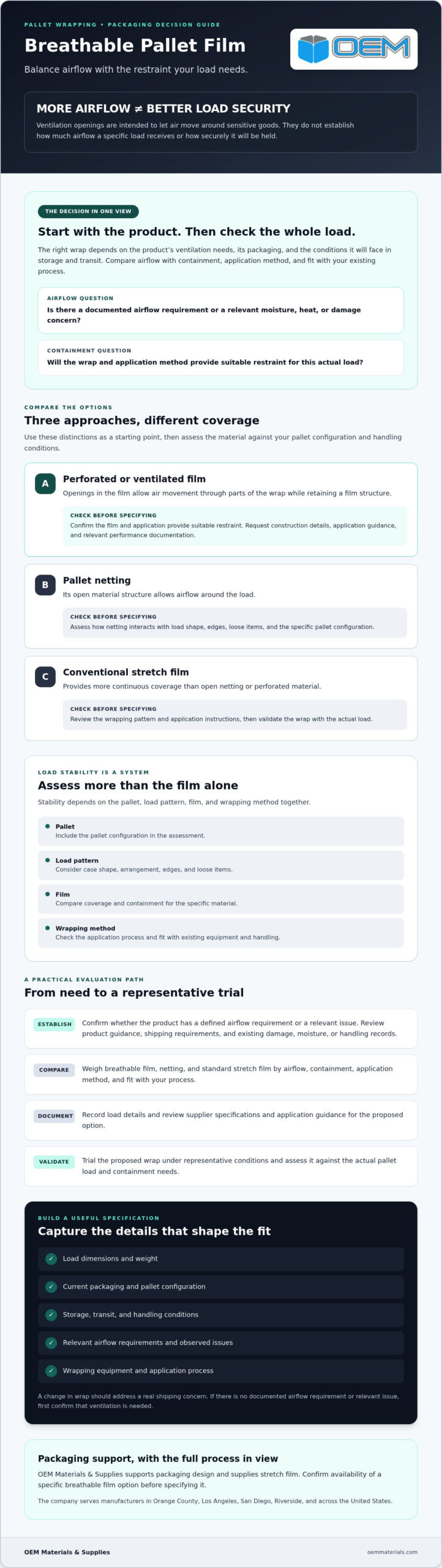
How to Specify and Validate Breathable Pallet Film for Your Load
A sound specification starts with the load and the shipping problem, not a film label. Document current conditions, establish why ventilation may be needed, compare suitable materials, and test any proposed change before rollout. Availability of a specific breathable pallet film option should be confirmed with the supplier.
What Information Should a Buyer Give a Supplier?
Share enough detail for the supplier to assess both airflow needs and load containment. Include pallet dimensions, approximate load weight, case arrangement, current wrap method, and any wrapping equipment or application constraints. Describe the product and its existing packaging, along with storage conditions, shipping route, and observed issues such as moisture, shifting, or damaged cases.
Procurement volume can also help frame the discussion. Ask the supplier for documentation on film construction, application guidance, and performance claims relevant to your load. Check that the information applies to the proposed pallet configuration and wrapping process, rather than relying on a general product description. If your load or process varies, explain which configurations need to be assessed.
How Should a Trial Be Reviewed Before a Rollout?
Compare the proposed material with the current method under representative handling conditions. Before starting, set clear review criteria so the team can assess the same outcomes consistently. Use the same load configuration and handling stages where practical, and record any differences in the application process.
- Load condition: Record the pallet configuration, case arrangement, and condition of the load before wrapping.
- Application: Note the equipment or manual method used, application instructions followed, and any process changes required.
- Handling: Observe the load during routine warehouse movement and relevant shipment stages.
- Results: Track moisture or damage observations, load movement, and any changes in handling or wrapping consistency.
Involve warehouse, operations, and quality stakeholders in the review. Their observations can reveal practical concerns that a material specification alone may miss. Keep records consistent across the current method and trial so the comparison is useful.
Scale only if the trial meets defined protection, handling, and process requirements. If results are unclear, revise the test conditions or obtain further supplier guidance before making a broader change. Buyers evaluating a pallet-wrapping requirement can submit a packaging quote request with load dimensions, weight, packaging details, and shipping conditions for discussion.
Source Pallet-Wrapping Materials With the Full Packaging Process in View
Pallet wrap works as part of a packaging system. A material change can affect how cartons stay aligned, how protective components fit, and how the finished pallet moves through storage and shipment. Evaluate the wrap alongside the cartons, pallet, edge protection, and handling workflow, not as an isolated purchase. This broader review is useful when assessing breathable pallet film because airflow needs still have to fit the load’s protection and containment requirements.
For manufacturers in Orange County, Los Angeles, San Diego, Riverside, and across the United States, OEM Materials & Supplies provides industrial packaging materials and packaging design support. Its offerings include corrugated boxes, stretch film, foam packaging, pallets, wood crates, and edge protection. If replenishment consistency is a sourcing concern, ask about vendor-managed inventory as part of the broader packaging discussion.
When Should Packaging Design Support Be Part of the Decision?
Involve packaging design support when a wrap change could affect more than the outside layer. For example, a different restraint method may interact with carton strength, pallet dimensions, or the placement of protective components. Reviewing those elements together can help identify what needs to be checked before a trial. For a wider assessment, see OEM Materials & Supplies’ custom packaging design services.
What to Include in a Useful Supplier Conversation
Prepare a concise description of the product and its packaging, pallet configuration, shipping route, current wrapping method, and any observed moisture, damage, or handling issues. Include the target outcome, such as addressing a documented airflow concern while maintaining the required load restraint. If purchasing volume or annual usage affects sourcing plans, share that information too.
Ask which material options can be evaluated, what construction and application specifications are available, and whether samples can be considered for a controlled trial. Recommendations should remain conditional on verified load requirements, review results, and confirmed product availability. OEM Materials & Supplies’ listed capabilities include stretch film and packaging design support; confirm availability of a specific breathable film option.
For a focused discussion, share your product dimensions, pallet and load weight, current packaging, shipping conditions, and annual usage. These details help frame the packaging requirement and identify what information is needed to assess suitable options.
Make Your Pallet-Wrap Specification Load-Specific
Choose breathable pallet film only when airflow addresses a defined product or shipping need. Compare ventilated film, netting, and standard stretch wrap by how they fit the load, then verify containment through a trial under representative handling conditions. For moisture concerns, identify when and where they occur rather than assuming a different wrap will resolve them.
OEM Materials & Supplies supports manufacturers in Orange County, Los Angeles, San Diego, Riverside, Southern California, and across the United States with stretch film, packaging design, and vendor-managed inventory. The company supports aerospace, automotive, medical, electronics, and manufacturing operations. Availability of a specific breathable film option should be confirmed.
For a practical packaging discussion, request a packaging quote and share your pallet dimensions, load weight, current packaging, and annual usage. These details can help frame the requirement and identify the information needed to assess suitable options. A clear, load-specific specification is a practical first step toward a better-informed packaging decision.
Frequently Asked Questions
What is breathable pallet film?
Breathable pallet film is an overwrap with openings or ventilation features intended to allow air movement around a palletized load. Its airflow function doesn’t guarantee protection from condensation, moisture exposure, or damage. Evaluate the film as part of the packaging system, including cartons, pallet condition, load arrangement, and handling. Request construction details and application guidance for the intended load before specifying a material.
Does breathable pallet film prevent condensation?
No. Breathable pallet film may allow air movement, but that doesn’t guarantee condensation will be prevented. Moisture can be related to the product, its packaging, temperature changes, or storage and transit conditions. First document where and when moisture appears, including the shipment stage involved. Use those observations to identify what needs investigation, then test any proposed packaging change under representative conditions rather than assuming ventilation alone will solve the issue.
Is breathable pallet film as strong as standard stretch film?
There isn’t a reliable answer based on the material category alone. Construction, application method, load geometry, and wrapping conditions all matter, so don’t assume ventilated film will provide the same containment as the current stretch wrap. Ask the supplier for specifications and application guidance that apply to your pallet configuration. Then compare the proposed material with the existing method in a controlled trial, checking load condition and handling.
When should a company use breathable pallet film?
Consider it when product or shipping requirements establish a need for airflow around palletized goods. Review product sensitivity, existing packaging, storage conditions, and the expected transit environment. A general belief that more ventilation is better isn’t enough to justify a change. Look for documented requirements or recurring moisture concerns, identify when they occur, and validate that the selected wrap still provides the containment the load requires.
Can breathable pallet film be used with automated wrapping equipment?
Compatibility depends on the film’s specifications, wrapping equipment, and application process. Before making a change, ask the supplier whether the material is suitable for your machine and what instructions apply. Review the current settings and wrapping pattern, then trial the proposed film on representative loads. Observe application consistency and load condition during handling. Don’t assume a film will work with automated equipment based only on its ventilation features.
What information should I provide when requesting a pallet film recommendation?
Provide pallet dimensions, approximate load weight, case arrangement, current wrap method, and wrapping equipment details. Describe the product, existing packaging, storage conditions, shipping route, and any observed moisture, damage, or load movement. Include annual usage and the outcome you need to achieve. OEM Materials & Supplies serves manufacturers in Orange County, Los Angeles, San Diego, Riverside, and across the United States. Confirm availability of a specific breathable film option.
For a packaging discussion, request a quote and share your product dimensions, load weight, current packaging, and annual usage.