
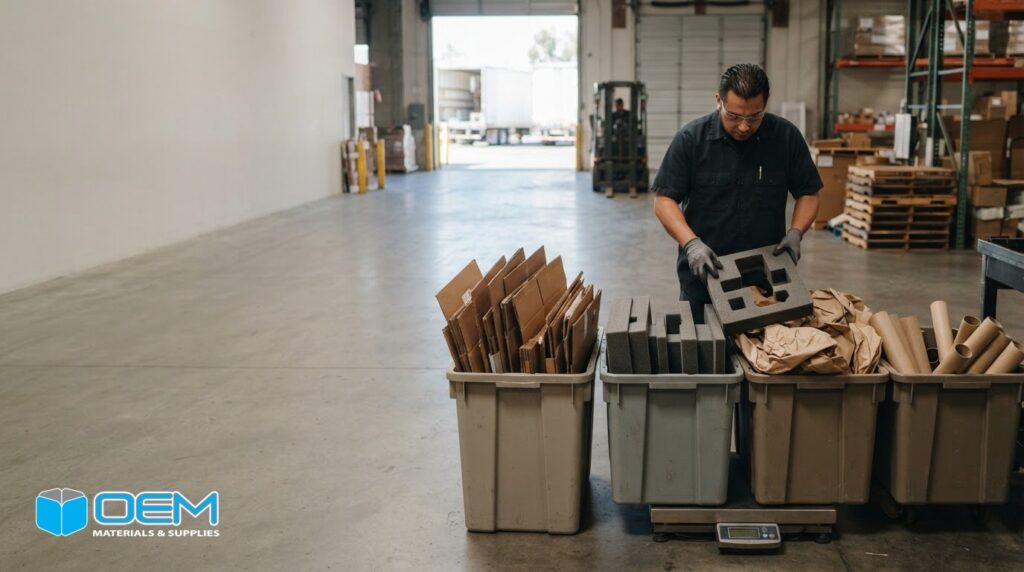
A packaging waste audit should do more than count what goes in the dumpster. To learn how to audit your packaging waste in Los Angeles, first define what the audit needs to reveal: the types and quantities of packaging discarded, where it enters the waste stream, and which materials or practices could be reduced or recovered.
It’s reasonable to focus on disposal costs, but potential savings depend on what your operation uses and discards. A useful audit establishes a baseline, identifies avoidable packaging and contamination in recycling streams, and links findings to specific changes in purchasing, packing, and waste handling.
This guide explains how to set audit objectives, map packaging waste by area and material, and estimate disposal savings using your own records and operating costs. You’ll also learn how to turn the results into a practical reduction plan that fits your products, shipping requirements, and workflow. The goal is a clear picture of where packaging waste comes from and which improvements to prioritize.
Key Takeaways
- Set audit objectives around packaging quantities, material types, contamination, and opportunities to reduce waste at the source.
- Map packaging waste by material and point of origin so recurring waste can be traced to specific processes.
- Assign clear roles across operations, purchasing, and warehouse teams to make the audit findings practical to implement.
- Estimate disposal savings from your own waste volumes, service charges, and likely changes to collection needs.
- Build a reduction plan that prioritizes using less packaging, reuse where practical, and then appropriate recycling or composting.
What is a Waste Audit and why do one?
A waste audit measures the materials an operation discards and identifies opportunities to improve. For businesses in Los Angeles, Orange County, San Diego, and Riverside, packaging findings can guide waste reduction, recovery decisions, and disposal-cost estimates.
-
Prioritize Waste Reduction and Recovery
Start by identifying packaging that can be eliminated or reduced at its source. Next, assess whether durable containers can be safely reused within your operation. Recycle packaging that cannot be reduced or reused. Compost only suitable compostable materials accepted by the local collection program.
Keep these options distinct. A recyclable label does not mean a material is accepted in every local collection stream. For each packaging type, record its intended destination and why it cannot move to a higher-priority option. This sequence helps teams focus on preventing waste before managing disposal.
California’s SB 54 implementation was planned to begin on 1st January 2027, subject to CalRecycle’s review of the program plan. Businesses can use packaging records to identify materials and quantities relevant to producer-responsibility reporting.
-
Identify Packaging and Recycling Opportunities
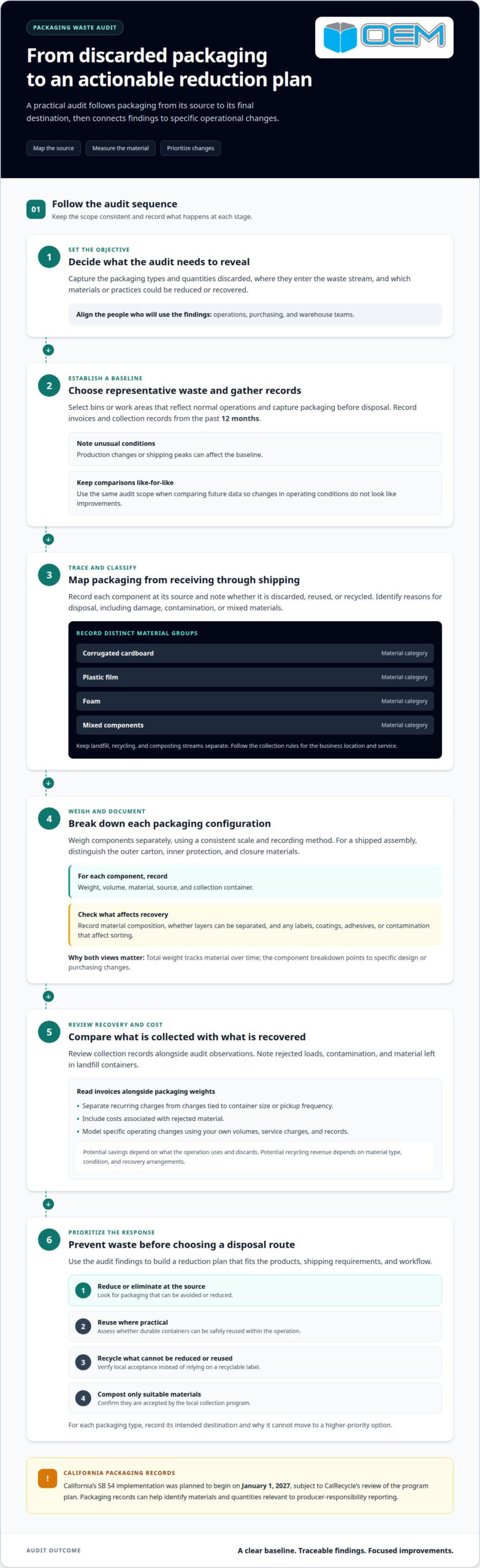
Trace packaging from receiving through production, packing, and shipping. Record each component at its source, such as an incoming carton, protective insert, film wrap, or shipping container. Note whether it is discarded, reused, or recycled, and record reasons for disposal, including damage, contamination, or mixed materials.
Compare components across similar products and shipping routes. For example, check whether a product’s inner protection and outer container serve overlapping functions. Assess opportunities to reduce excess material without compromising product protection. A packaging review can include foam packaging use when protective inserts appear in the waste stream.
Businesses in Los Angeles County should classify recyclable, compostable, and landfill packaging according to the collection rules for their location. Keep these streams separate in the audit, and record contamination rather than assuming every marked package is accepted.
-
Assess Packaging Weights and Recyclability
Weigh each packaging component separately and record its material and source. For a shipped assembly, measure the outer carton, inner protection, and closure materials as distinct items. This shows which components account for discarded material and makes comparisons between packaging configurations more useful.
Record material composition and whether components can be separated. A paper container with a bonded or attached layer may need different handling from clean, single-material paper. Do not classify packaging by appearance alone. Note labels, coatings, adhesives, and contamination when they affect sorting or recovery.
Track total weight alongside the component breakdown. Weight shows material volume over time; the component record points to specific design or purchasing changes. These measures help Los Angeles businesses maintain a packaging baseline and document changes that may matter for SB 54 reporting.
-
Review Recovery Rates and Disposal Costs
Compare the quantity placed in recycling with the quantity actually recovered. Record rejected loads, contamination, and material left in landfill containers. A recycling rate alone can hide missed recovery opportunities, so consider collection records alongside audit observations.
Review disposal invoices and service details alongside packaging weights. Separate recurring charges from costs tied to container size, pickup frequency, or rejected material. Model specific operational changes to estimate savings, then compare the result with current disposal records. Potential recycling revenue depends on material type, condition, and recovery arrangements.
Common audit mistakes include combining waste streams, estimating weights without recording the method, and treating all packaging as recyclable. These errors weaken reporting and can obscure compliance exposure. California’s SB 54 includes significant daily fines for producers that do not meet requirements, and the state can restrict sales of noncompliant products.
Waste collection, classification, and source mapping
For commercial recycling in Los Angeles, follow the collection instructions for your business location and service. Separate packaging by material and collection stream so recyclable, compostable, and landfill items are documented distinctly.
-
Collect Waste and Baseline Data
Choose a representative collection period and capture waste before disposal. Household audit guidance uses a 4-5 day window and one designated trash bin; businesses can adapt that approach by selecting bins or work areas that reflect normal operations.
Record waste-related invoices and collection records from the past 12 months alongside the audit. Note unusual production changes or shipping peaks that could affect the baseline. Keep the same scope when comparing future data, or apparent improvements may reflect different operating conditions.
-
Sort, Weigh, and Record Materials
Sort collected packaging into clear material categories, such as corrugated cardboard, plastic film, foam, and mixed components. Keep landfill, recycling, and composting streams distinct. For each category, record its weight and volume, collection container, and any observed contamination or rejected material.
Use a consistent scale and recording method for each sample. Household guidance suggests setting aside 15-30 minutes to evaluate collected trash; a workplace audit may require longer based on its volume. Document the date, location, material, measured amount, and sorting decision for every entry.
-
Map Waste Sources
Trace each discarded item to the process that generated it. Note whether it came from receiving, production, packing, or shipping, then connect the material to its work area or collection point. A carton discarded at receiving, for example, has a different source from a shipping carton removed after packing.
Use a simple floor map or department log to show collection points and their waste streams. Compare those records with material totals to identify recurring sources. This creates a useful baseline for compliance records and future comparisons.
- Check the map against actual container placement. A recycling bin beside a packing station may collect mixed waste if labels are unclear or the correct container is too far away. Record these conditions alongside the audit data rather than treating all misplaced packaging as a material-design problem.
- Review results by source and material, not just by facility total. If one area generates most of a particular packaging type, the team can investigate that process directly. Keep the sorting method and baseline consistent so later audits distinguish operational changes from measurement differences.
- Once the audit identifies packaging types and sources, use those details to request a packaging quote based on the materials and application involved.
Setting waste audit goals and assembling an internal team
Define the decision the audit should support before assigning tasks. A clear scope helps Los Angeles teams connect sustainability goals with operating priorities.
- Choose an objective tied to a specific operational need. For example, measure packaging waste from shipping, identify avoidable plastic, or assess whether recycling containers capture recoverable material. Set the audit boundary by facility, department, product line, or waste stream. A defined boundary prevents unrelated waste sources from being mixed and makes findings easier to act on.
Decide what the baseline needs to show: material types, quantities, disposal routes, or contamination. Include only measures that support the decision. If the priority is packaging reduction, record packaging separately from general waste. If the focus is collection performance, include rejected recycling and misplaced items.
- Assign a lead to coordinate the audit schedule, data collection, and final review. Operations staff can identify process changes, while warehouse staff can explain container locations and handling practices. Purchasing can provide packaging specifications or records, and facilities staff can clarify collection arrangements and disposal documentation.
Give each role a defined responsibility. For example, warehouse staff can record where packaging enters the waste stream, while purchasing reviews material descriptions. The lead consolidates findings and resolves gaps. This keeps the audit connected to daily work instead of leaving all decisions to one department.
- Set a practical scope that reflects how the facility operates. Include areas that generate or handle packaging, such as receiving, production, packing, and shipping. If one product line uses plastic film while another uses paper-based protection, record these sources separately.
Document exclusions before collection begins. A facility may focus on packaging and exclude food or office waste, provided the boundary stays consistent. Record operating conditions that could affect comparisons, such as a product change or temporary production shutdown.
- Choose measures that connect findings to action. Track packaging material and quantity by source, then compare recovered material with material sent for disposal. Record contamination when it affects recycling outcomes. Avoid setting a target before completing the baseline, or the team will lack a reliable comparison point.
Translate the objective into a decision rule. For example, flag a packaging component for review if it repeatedly appears in disposal records or cannot be separated for recovery. The team can then assess reduction, reuse, or recycling options against product protection and handling needs.
- Schedule a comprehensive audit annually to assess longer-term trends. Use the same scope, categories, and recording method each time. Assign responsibility for retaining records and reviewing results so staffing changes do not erase the baseline.
Review findings with representatives from operations, purchasing, the warehouse, and facilities. Each team may see a different cause: purchasing could identify a material change, while shipping may explain damage-related repacking. Combine these observations before approving sustainability actions or revising responsibilities.
Calculating potential disposal savings
Use audit quantities, collection records, and invoices to estimate savings. Keep disposal reductions separate from any revenue recovered through recycling.
There is no single standard cost for a packaging waste audit in Los Angeles. The scope, facility size, waste streams, staff time, measurement requirements, and analysis needs all affect the effort.
- Build a baseline from current disposal invoices and collection records. Record container sizes, pickup frequency, service charges, and fees for rejected loads. Match each cost to the responsible department or waste stream. This makes the calculation specific to your operation rather than dependent on a general industry estimate.
Use consistent periods for waste quantities and billing. If invoices cover monthly service, align audit totals with the same billing period before making comparisons.
- Estimate disposal savings from material that could realistically be diverted from landfill. Multiply the amount diverted by the relevant disposal cost per unit, using your invoice terms. Then subtract added costs, such as separate collection or handling. Keep this calculation distinct from environmental benefits, which may matter but do not appear as invoice savings.
Model each change separately. For example, calculate the effect of reducing excess packaging, improving sorting, or changing pickup frequency. This shows which operational change drives each projected cost saving.
- List recycling revenue separately. Record the material, quantity, condition, and revenue actually received through your recovery arrangement. Do not count all collected recycling as income. Contamination, material quality, and recovery terms affect whether a stream generates revenue.
Compare the result with avoided disposal charges. This distinction prevents counting the same material as both disposal savings and recycling revenue.
- Include implementation costs in the estimate. A department may need new containers, clearer sorting instructions, staff time, or adjustments to packaging processes. Compare these costs with expected savings over the same period. For medium to large businesses, waste audit investments usually pay off in 12 to 18 months, but a facility’s calculation should use its own operating data.
Also identify any process changes needed to maintain product protection. Reducing packaging can lead to damage costs if the remaining materials do not meet shipping requirements.
- Test the estimate against actual invoices after a change. A retail client reduced its monthly waste bill by 22% after adjusting service frequency. Treat that as an example, not a forecast for another facility. Compare your own before-and-after costs, waste quantities, and rejected loads.
Keep regulatory obligations separate from savings projections. Any proposed change must still meet applicable regulations and collection requirements. Document assumptions so finance, operations, and environmental staff can review the calculation.
Creating a waste reduction action plan
Turn audit findings into assigned actions, measurable targets, and review points. A useful plan links each change to a specific waste stream and operating responsibility.
- Rank findings by avoidable material, disposal impact, and operational feasibility. Start with packaging repeatedly identified in the audit, such as excess void fill or single-use protective material. Record the department, source, proposed change, and responsible person. This gives operations and purchasing a clear basis for deciding what to address first.
- Set a target that uses the audit baseline and a defined period. For example, an organization could target reducing landfill waste by 30% within 6 months. Treat that as a planning example, then select a target appropriate to your measured stream. Define the measurement method so teams count the same materials before and after changes.
- Specify the change, not just the desired outcome. If a product line discards oversized containers, review packaging dimensions and protection needs before changing the specification. If recycling bins contain mixed materials, revise signage and container placement. Audit findings can inform container sizes, pickup schedules, signage, and landfill diversion decisions.
- Assign implementation tasks to the department that controls each process. Purchasing can evaluate packaging choices and supplier specifications; warehouse teams can adjust sorting points; operations can review packing steps. Name an owner to record the change and report results. This keeps responsibility with the people able to make the adjustment.
- Test proposed changes against product protection and shipping requirements. Reducing packaging is not a successful waste-management action if it increases product damage or repacking. For example, conduct a controlled trial on one product or route, then record material use, damage observations, and handling issues before wider adoption.
- Compare results with the baseline and document what changed. Track material use, disposal quantities, recycling contamination, and relevant collection costs. If a change shifts waste into another stream, update the plan rather than counting only the original stream. Use the findings to refine actions and maintain progress toward the target.
For packaging changes identified through the audit, request a quote based on your application, product dimensions, and shipping requirements.
OEM Materials & Supplies
OEM Materials helps businesses turn packaging audit findings into practical material choices. If an audit identifies excess corrugated material, protective components to review, or inconsistent packing configurations, its corrugated boxes, foam packaging, and packaging kits offer options to assess against product dimensions and shipping requirements. Mailing tubes and cores may also suit products that need a different format.
The right adjustment depends on the item being shipped, its protection needs, and how it moves through your operation. Share your audit findings, product dimensions, weight, and shipping requirements with OEM Materials to discuss packaging options suited to the application.
Contact OEM Materials & Supplies to discuss your packaging requirements.
Put Your Audit Findings to Work
The next step in auditing packaging waste in Los Angeles, Orange County, San Diego, or Riverside is to make packaging decisions part of routine operations. Use findings to guide purchasing reviews, packing standards, and waste-handling procedures. When product dimensions, materials, or shipping requirements change, revisit the packaging choice instead of relying on an outdated specification.
Track each adjustment against your baseline. Note material use, product protection, handling, and disposal outcomes. This helps distinguish a genuine process improvement from a change that simply shifts packaging into another waste stream. Because savings depend on your materials and operating requirements, evaluate changes using your own records.
When you’re ready to assess packaging options against your audit findings, contact OEM Materials & Supplies to discuss your requirements. Include product dimensions, weight, and shipping conditions to support a practical review. A clear next step can turn audit observations into packaging decisions your team can apply with confidence.
Frequently Asked Questions
How do you conduct a packaging waste audit step by step?
To audit packaging waste in Los Angeles, define the facility and packaging scope, then select representative collection points. Collect material without mixing streams, classify components, weigh them consistently, and note each item’s source and destination. Compare findings with invoices and collection reports, identify preventable or recoverable material, and assign an owner to every action. Repeat the same measurement method later to assess whether operational changes affected the results.
How do you measure packaging waste by material, weight, and disposal cost?
Weigh each material category separately and subtract the empty container’s tare weight to calculate net waste. Record the source and unit of measurement, then match quantities to the billing basis on disposal invoices. Separate fixed service charges from charges affected by pickup frequency, container use, or material volume. This helps avoid attributing an unchanged monthly fee to a reduction in packaging weight.
What packaging waste audit records should a Los Angeles business keep?
Keep dated audit worksheets that identify the facility area, material categories, measurement method, and staff responsible for recording results. Add scale or volume-measurement notes, relevant invoices, collection reports, and records of rejected or contaminated loads. Maintain a change log with the action taken, its owner, and review status. For example, a dated note can link a revised packing process to the audit period used for comparison.
Los Angeles packaging waste audit consultants and services
Businesses can consider using professional waste auditors every 1-2 years. Huntington Park’s Public Works Department can also assist with a general waste audit.