
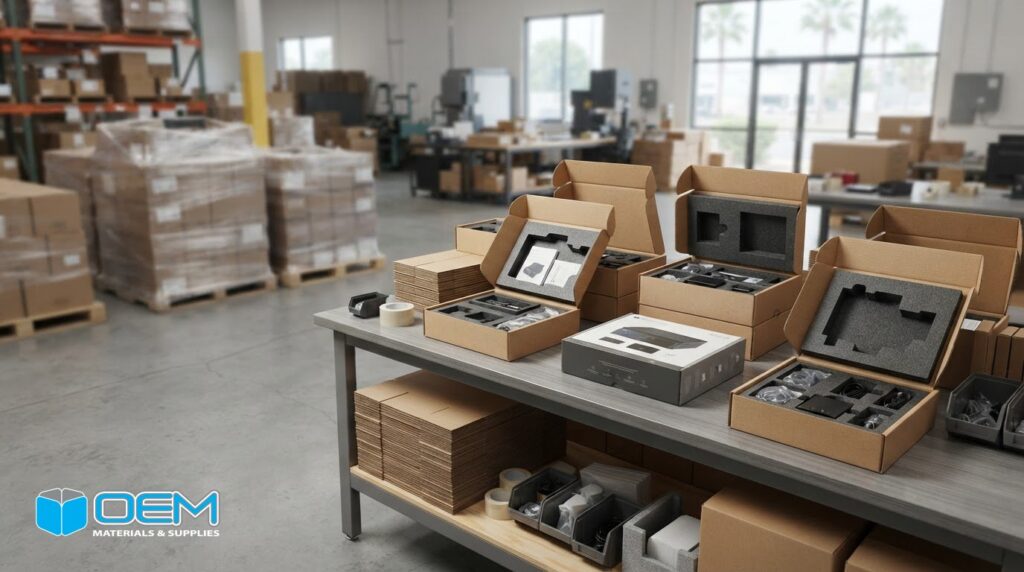
Contract packaging and kitting costs in Orange County depend on the work, materials, and production requirements rather than a universal per-unit rate. The stated minimum order for kitting and assembly is 10,000 units, and materials procurement typically adds 5-10% when included in pricing. For buyers comparing contract packaging and kitting services in Orange County, the key is understanding what each unit price covers.
The price can include more than placing products in a box. Pack configuration, component handling, assembly steps, packaging materials, and the sales channel all shape the production plan and its cost.
This guide explains how co-packing supports retail, direct-to-consumer, and subscription shipments, which tasks may be included in per-unit pricing, and how capacity and timelines affect a run. It also covers how packaging kits, corrugated boxes, and protective materials fit into a practical packing plan, helping you define requirements before requesting a project quote.
Key Takeaways
- Match the packing configuration to the sales channel, since retail, direct-to-consumer, and subscription orders can require different assembly and presentation steps.
- Compare per-unit quotes by reviewing which labor, packaging materials, component handling, and setup tasks they include.
- Align production volume and material staging with the facility’s capacity to keep the packing workflow organized.
- Build a timeline around product readiness, packaging availability, assembly requirements, and the planned production sequence.
- Use corrugated boxes, foam packaging, or packaging kits to address specific product protection and packing needs.
Co-packing for retail, DTC, and subscription channels
Contract packaging and kitting services in Orange County may include product assembly, packaging, labeling, and order preparation. Kitting combines selected components into one ready-to-ship package, such as a sample set with an instruction card and product units.
Industries and product types vary by project. Common examples include electronics components, medical device products, automotive parts, aerospace items, and other manufactured goods. Each product’s dimensions, fragility, and presentation requirements shape its packing sequence.
Retail programs prioritize consistent presentation throughout a production run. A retail kit might contain several product variations, printed inserts, and a custom corrugated carton. Define the component order, label placement, and finished-pack inspection steps before production. Clear instructions reduce ambiguity on the packing line and help keep each package aligned with the approved configuration.
Direct-to-consumer orders often need a different pack-out. A single order, for example, may require a product, protective cushioning, an instruction sheet, and an outbound shipper. The operator follows a defined sequence: confirm the order configuration, select components, pack and close the carton, then stage it for dispatch. Product dimensions and shipping conditions guide the choice of protective materials.
Subscription programs add recurring assortment changes. One month’s box may include a core product and accessories; another may require a replacement item or promotional insert. A written bill of materials identifies the contents for each version. Pack instructions should also distinguish versions clearly, so workers don’t mix components during changeovers. The stated minimum order for kitting and assembly is 10,000 units.
Material selection affects both protection and presentation. Electronics may need packaging that limits movement, while a fragile item may need fitted cushioning. Foam packaging can help support products with specific protective needs. For a multi-item set, packaging kits can group compatible materials and components around the planned pack-out.
Before production, define the channel, volume, product variants, and finished-pack requirements. Provide a sample product, component list, package dimensions, and artwork or labeling instructions. Then review a representative assembled pack against the requirements. This can reveal awkward handling, missing components, or an unclear sequence before the full run begins.
Contract packaging costs and per-unit pricing
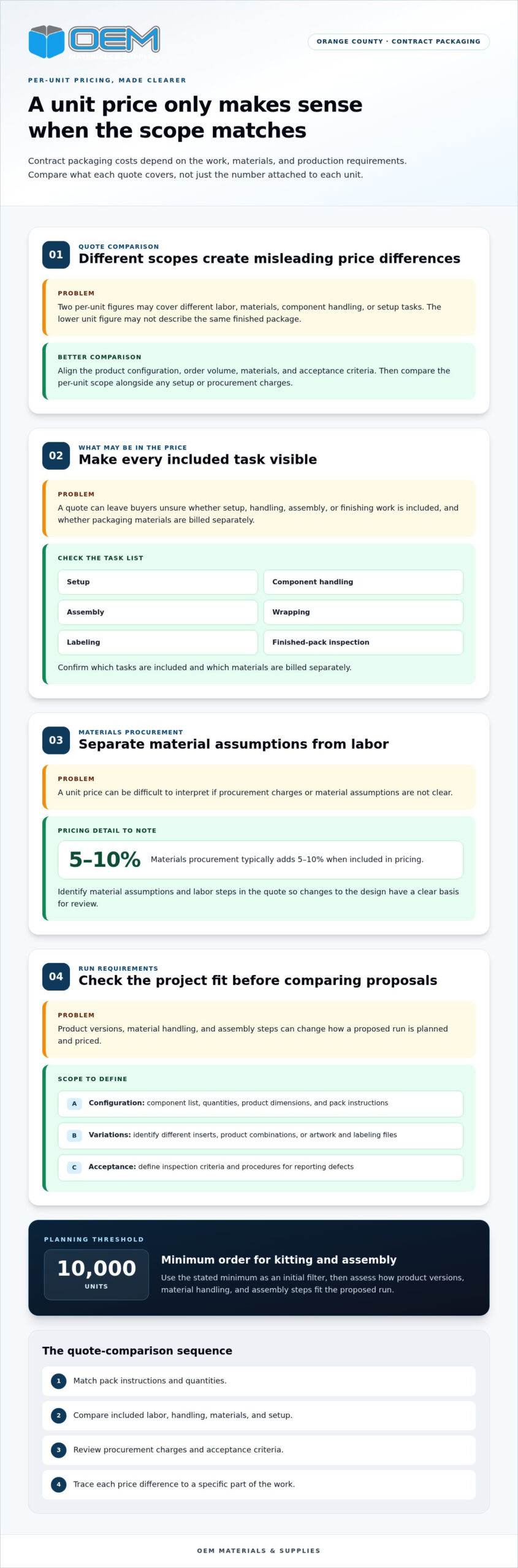
Per-unit pricing reflects the labor, materials, and process required to prepare each finished package. Compare quotes by scope, not by the unit figure alone.
Pricing Structure
A quote may separate setup, component handling, assembly, wrapping, labeling, and finished-pack inspection. Review which tasks are included and which materials are billed separately. Materials procurement typically adds 5-10% when included in pricing. For an industrial project, compare identical pack instructions and quantities so each quote describes the same work.
No single certification applies to every contract packaging project. Assess documented inspection steps, product identification, handling procedures, and records against the product requirements and customer specifications.
Food, cosmetics, supplements, and medical devices have category-specific packaging and labeling requirements in California. Applicable rules depend on the product, package function, and claims, so define those requirements before production begins.
Minimum Order Quantities
The minimum order requirement for kitting and assembly is covered earlier in this guide. Use it as an initial filter, then assess how product versions, material handling, and assembly steps fit the proposed run.
Before starting a kitting project, provide a component list, quantities, product dimensions, pack instructions, and artwork or labeling files. Include a sample of each component and identify variations, such as different inserts or product combinations. These details help the packager map the workflow and identify handling steps before production.
Outsourcing risks include incorrect components, inconsistent pack-outs, damaged products, and missed production dates. Reduce these risks with approved instructions, a representative sample, clear inspection criteria, and defined procedures for reporting defects. For example, a kit with several similar parts should specify each part’s location and quantity, not just the finished package contents.
Packaging materials also affect the quoted unit cost. A custom configuration may require different material handling than a standard carton. Product size, protection requirements, and shipping conditions guide material selection. Identify material assumptions and labor steps in the quote so later design changes have a clear basis for review.
To compare proposals, first align the product configuration, order volume, materials, and acceptance criteria. Then review the per-unit scope alongside any setup or procurement charges. This makes quote differences easier to trace to specific work instead of treating the lowest unit figure as the complete project cost.
Facility capacity and materials handling
Capacity depends on available workstations, trained labor, storage space, and the production sequence. A project may fit the floor plan but still strain material staging or outbound handling.
Orange County providers that combine kitting with fulfillment, warehousing, and shipping include all three functions in their project plans. Others may handle assembly and packing while the buyer manages storage and distribution. Define the required handoff before comparing facility capacity.
Review the planned workflow from receiving through dispatch. For a multi-component kit, the facility needs room to receive each item, stage components, assemble packs, and hold finished orders. Clarify how active production stock is separated from completed packages. This matters when several product versions share similar components.
Storage conditions and movement paths also affect handling. A bulky component may take up more staging space than the finished kit suggests. Fragile goods may need dedicated locations to reduce unnecessary transfers. For example, a product moved from receiving to a distant assembly station and then back to staging undergoes more handling than one following a direct route.
Material flow should match the production plan. Confirm how incoming components are identified, counted, and assigned to each order. Clarify how shortages, damaged cartons, or mixed product versions are isolated. A documented exception process helps prevent discrepancies from carrying through assembly and labeling.
Packaging equipment shapes the work area. Shrink wrapping, carton sealing, and label application each require suitable space and a defined sequence. A sample kit can expose awkward steps before a full run, such as a label hidden by wrapping or components that shift inside the carton. Resolve those issues in the work instructions.
Protective materials must suit the product and handling route. Cushioning materials can help limit product movement inside a package. The chosen material depends on the product’s shape, fragility, and shipping configuration. Record the approved material and placement in the pack instructions.
Use a facility review to map the project’s operating needs. Document the following before production planning:
- Component quantities, storage locations, and replenishment points
- Assembly stations, inspection steps, wrapping, and labeling sequence
- Finished-order staging area and shipping handoff
- Process for handling shortages, damaged items, and version changes
A subscription kit with changing inserts, for example, needs clear version separation and controlled material staging. A stable industrial replenishment kit may use a repeatable component layout. In both cases, capacity planning should account for the full workflow, from receiving through finished-order release.
Quote and production timelines
A reliable schedule starts with a defined scope, complete product details, and available materials. For an Orange County kitting project utilizing professional contract packaging and kitting services orange county, quote preparation and production planning can move forward once the pack configuration and responsibilities are clear.
Begin by sending the product list, component quantities, package dimensions, and assembly instructions. Include the order volume, product variations, labeling requirements, and destination requirements. A kit with two insert versions, for example, needs separate instructions for each configuration. Missing specifications leave decisions unresolved before the work plan can be finalized.
The quote review should identify the work sequence, material assumptions, and handoff points. Confirm whether the scope includes receiving components, sorting, assembly, wrapping, labeling, inspection, or staging. A quote for assembly alone differs from one that also covers material procurement and finished-order preparation. Align these tasks before comparing schedules.
Material readiness directly affects the production start. If cartons, inserts, or product components arrive separately, the schedule depends on receiving and reconciling each shipment. Match every incoming item to the component list, then record shortages or damage before assembly begins. This helps prevent incomplete kits from entering the production flow.
Pack approvals also shape timing. Review a representative finished package for component placement, label position, closure method, and protection. An insert that covers a product label, for example, may require a revised sequence. Approving the sample and written instructions before the run reduces mid-production changes.
Production planning should account for labor availability, workstation setup, material staging, and required inspection. A simple kit with one configuration follows a different workflow from an order with multiple versions and separate labels. Share the planned release date and required delivery window early so the schedule can account for each dependency.
Use a clear sequence to prepare the project:
- Send product, component, volume, and packaging specifications.
- Define assembly tasks, labeling, inspection, and shipping handoffs.
- Review the quote and resolve material or scope assumptions.
- Approve a representative pack and final work instructions.
- Coordinate component arrival and production release.
Changes after approval can affect labor planning and material use. A revised insert, carton, or product combination may require updated instructions and another sample review. Document the change, identify affected materials, and confirm the revised schedule before production continues.
For a more predictable release, keep product specifications, artwork, component lists, and approvals in one project file. The packager can then use the same revision for quoting, setup, assembly, and final inspection.
Quality checks should be built into the work plan rather than treated as a final step. Industry standards highlight that maintaining high performance requires keeping complaints to fewer than 1.5 per million packages produced. That figure underscores the value of clear instructions, consistent inspection, and recording any defects or rework during a run. Agree on how issues will be documented and who will review them before production begins, so corrective actions can be addressed without confusion.
As the run progresses, compare completed work with the approved pack and instructions. Keep communication open about component shortages, changes, or inspection findings, since each can affect the remaining sequence. Before release, confirm that the finished kits match the agreed configuration and that staging and handoff responsibilities are clear. This closes the planning loop and helps the team complete the order to the approved scope.
Which companies offer contract packaging and kitting services in Orange County, California?
Orange County projects may involve contract packagers, fulfillment providers with assembly capabilities, or packaging companies supporting a buyer’s in-house packing operation. Their roles differ. A contract packager performs defined production tasks, while a fulfillment provider may also store finished goods and prepare orders for shipment.
A manufacturer with a recurring multi-part kit, for example, may need component assembly, labeling, and finished-pack inspection. A direct-to-consumer program may also need order-by-order preparation and shipping handoff. These requirements call for different workflows, so describe the work itself before deciding which provider category fits.
Scope matters. Some projects focus on a single assembly step; others include receiving components, packaging, labeling, and staging completed units. A project brief can state which activities are needed and which remain in-house. That division helps prevent gaps, such as finished kits awaiting storage or packed goods without an assigned shipping process.
Capacity is another practical distinction. A provider handling short runs and several product versions needs a different setup from one processing a stable, repeatable configuration. Share the volume pattern, component count, and expected version changes. A kit with seasonal inserts, for instance, requires clear version separation and accurate instructions for each pack configuration.
Quality controls should fit the product and the work. A useful project scope identifies component checks, assembly instructions, labeling requirements, and acceptance criteria for finished packs. For a kit containing similar parts, specify each item’s position and quantity. This gives operators clear instructions and makes inspection more consistent.
Define material responsibilities as well. A packager may work with buyer-supplied materials, or the project may include packaging procurement. The written scope should identify who supplies cartons, cushioning, labels, and inserts. It should also explain how shortages or damaged components are reported before assembly proceeds.
Orange County buyers can map project needs against these provider roles:
- Contract packager for assembly, packaging, and specified inspection tasks
- Fulfillment provider when completed orders also need storage and shipping preparation
- Packaging supplier when the buyer manages production but needs materials suited to the pack-out
That distinction helps keep the request focused. A buyer seeking outsourced assembly should define the pack configuration and component flow. A team managing its own line may instead need packaging materials matched to product dimensions and shipping conditions. For a materials quote based on your application, submit your packaging requirements.
The relevant provider types are contract packagers, fulfillment providers with assembly capabilities, and packaging companies that support a buyer’s in-house packing operation.
Fulfillment providers with assembly capabilities may handle kitting alongside finished-goods storage and order preparation for shipment.
OEM Materials & Supplies: Corrugated Boxes
OEM Materials & Supplies helps businesses meet packaging needs with corrugated boxes, foam packaging, packaging kits, and mailing tubes and cores. These materials can support a refined pack-out, protect products in transit, or prepare components for internal kitting.
For example, a corrugated box can form the outer package, while cushioning helps limit product movement. Packaging kits can bring compatible components together for a repeatable packing process. Product dimensions, weight, and shipping requirements guide material selection.
Explore corrugated box options for your packaging application. Contact OEM Materials & Supplies to discuss materials that fit your operation.
Set Up Your Next Packaging Decision
For teams evaluating contract packaging and kitting services in Orange County, align purchasing, operations, and engineering around the project’s decision criteria. Agree on who approves the final pack configuration, who releases production, and how changes will be communicated. Clear ownership helps prevent conflicting instructions from reaching the production floor.
Before moving forward, identify the outcome your team needs to control, such as consistent pack presentation, fewer handling steps, or a defined inspection process. Use that priority to guide discussions and keep the project scope focused on operational requirements.
Share your project goals with OEM Materials & Supplies to begin a focused discussion. Contact the team about your packaging requirements. A clear decision process gives your next packaging project a strong starting point.
Frequently Asked Questions
Need Contract Packaging at Scale?
OEM Materials & Supplies supports packaging projects from prototypes to high-volume production programs. Scale depends on more than unit count: a stable product configuration differs from a high-mix program with frequent changes. Before planning, define expected demand, product variations, and how often components or pack instructions change. For aerospace, automotive, medical, and electronics programs, these details help align packaging and assembly requirements with the production plan.
How much do contract packaging and kitting services cost in Orange County?
Pricing depends on the project and is provided after a quote request. Key cost factors include product dimensions, packaging materials, assembly steps, order volume, inspection requirements, and shipping needs. A kit requiring multiple components and separate labeling, for example, involves different work from a simple pack-out. To make a quote useful, specify the finished configuration and identify which materials or tasks are part of the requested scope.
How do Orange County packaging companies compare on turnaround time and capacity?
Compare providers by matching your production pattern to their workflow, not by turnaround claims alone. A stable, repeat-order program differs from high-mix production requiring frequent changeovers. Review how the proposed schedule accounts for incoming materials, assembly, inspection, and shipping handoffs. For an Orange County operation serving customers across Southern California, consider how finished goods move to the next distribution point and how schedule changes are handled.
How do I request a quote from an Orange County contract packaging company?
Start by describing the production challenge and the result your team needs from the project. Note recurring defects, excessive handling, pack-out inconsistencies, or constraints in the current workflow. Include the required services and identify who will approve the proposed configuration. This focuses the discussion on the right scope and gives purchasing, operations, and engineering a shared basis for evaluating the quote.