
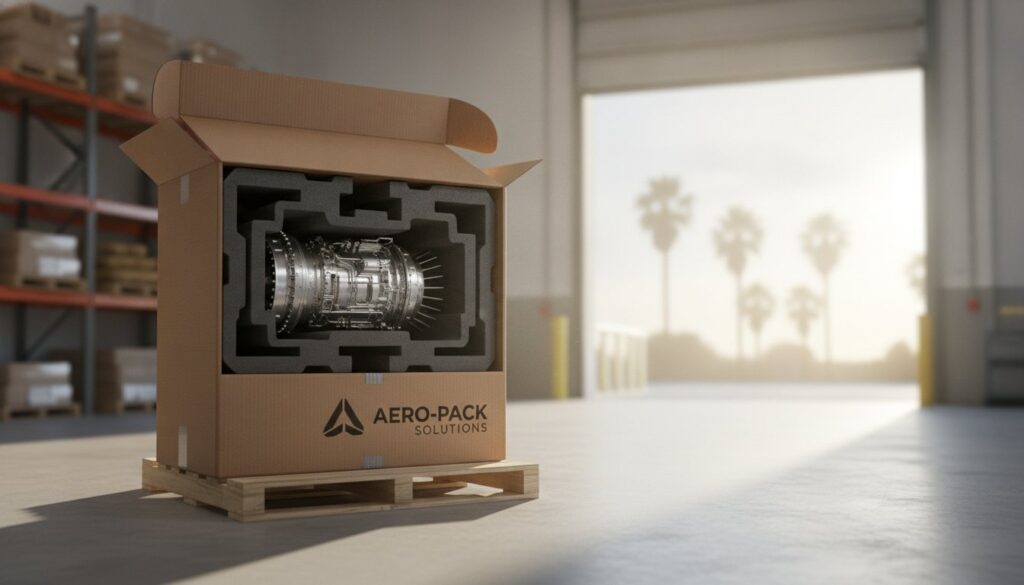
Industrial packaging is a branch of engineering where performance testing is far more critical than graphic aesthetics. Many manufacturers in Southern California treat the shipping container as an afterthought, only to realize the true cost when damage rates climb or labor costs spike on the packing line. If your current solution feels like a gamble every time a pallet leaves the dock, you’re facing a common logistical hurdle. We recognize that procurement and operations managers face constant pressure to reduce shipping damage while maintaining strict ISTA and ASTM compliance for sensitive components.
This article explains how custom industrial packaging design los angeles protects your high-value medical, aerospace, or electronic parts through rigorous engineering and testing protocols. You’ll learn how to optimize your Southern California supply chain by right-sizing materials to manage the 139 dimensional weight divisor now standardized across major carriers. We will examine the technical steps required to standardize your packaging for automated lines and ensure your shipments arrive intact every time, regardless of the transit environment.
Key Takeaways
- Industrial packaging is a functional engineering discipline that balances product protection with material and labor efficiency to reduce the total cost of ownership.
- Rigorous ISTA and ASTM testing protocols are essential for ensuring compliance and preventing transit damage in high-stakes sectors like aerospace and medical manufacturing.
- Optimized custom industrial packaging design los angeles accounts for local logistics variables, such as the specific vibration profiles found on Southern California freeways.
- Strategic material selection during the design phase helps manage shipping expenses by right-sizing packages for the universal 139 dimensional weight divisor.
- Selecting a packaging partner based on technical engineering and prototyping capabilities ensures a solution that scales efficiently with your production requirements.
The Fundamentals of Custom Industrial Packaging Design
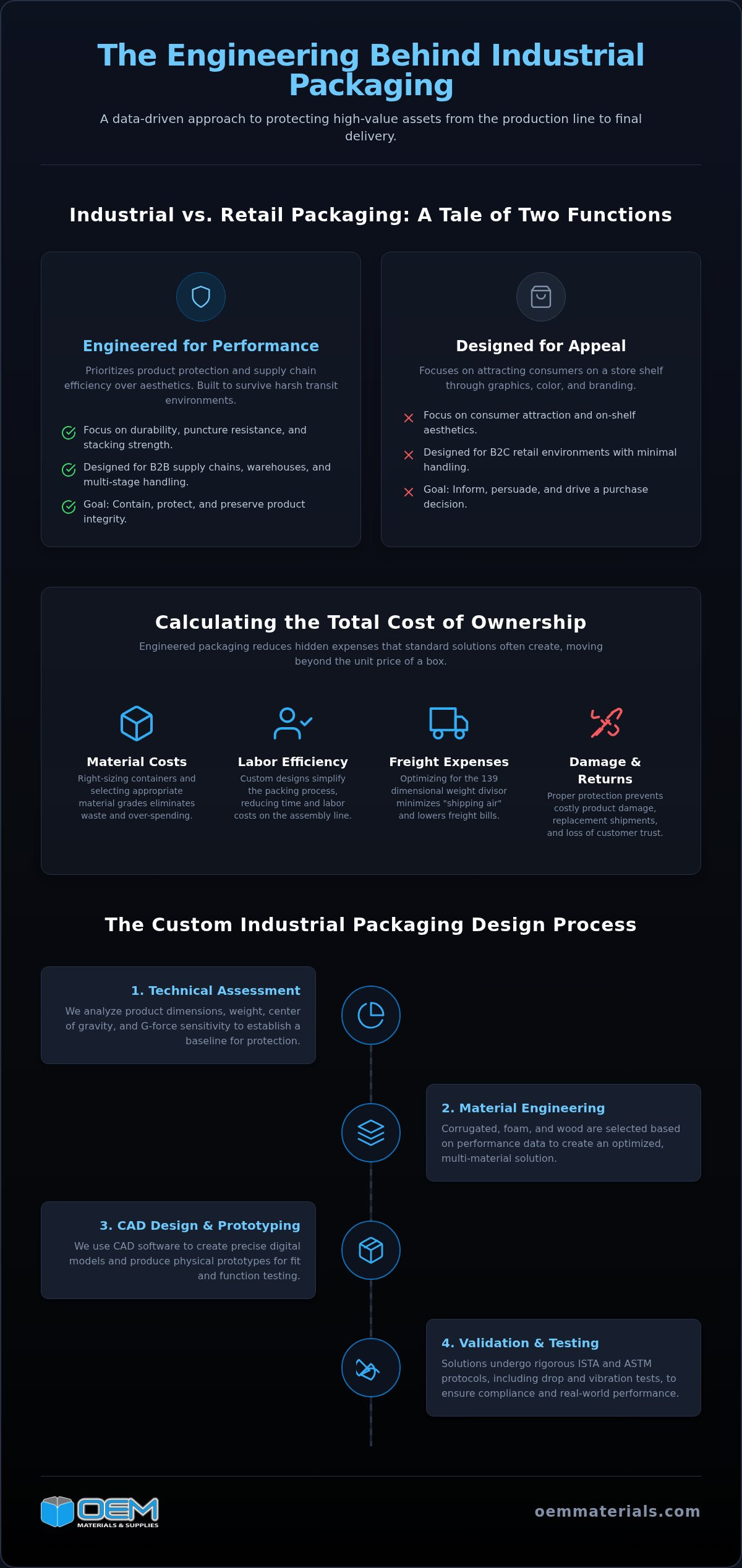
Industrial packaging design is a functional engineering discipline that prioritizes product protection over aesthetic appeal. Unlike retail solutions, industrial designs must withstand the rigorous demands of the B2B supply chain, including multi-stage handling and high-density stacking. The primary objective is to balance structural integrity with material and labor efficiency. Achieving this balance ensures that the packaging supports the manufacturing process rather than becoming a logistical bottleneck. It’s about protecting the value of your work from the moment it leaves the assembly line.
Relying on stock containers for specialized components often results in inadequate protection or excessive shipping costs. Investing in custom industrial packaging design los angeles provides a solution engineered for the specific fragility of your parts. This approach is central to The Fundamentals of Packaging in a manufacturing context. By developing a container specifically for your product, we eliminate the risks of internal movement and structural collapse that lead to transit damage. Customization allows us to choose the right material grades for the job, rather than forcing a product into a box that doesn’t fit.
Industrial vs. Retail Packaging Design
Retail packaging is designed to attract consumers on a shelf; industrial packaging is designed to survive a warehouse. We focus on durability, puncture resistance, and stacking strength. Material selection is based on the technical requirements of the journey. Whether a part travels by sea or spends weeks in a high-humidity storage facility, the design must maintain its protective properties. We prioritize functional verbs like contain, protect, and preserve to ensure the product arrives ready for use. This structural focus is what separates industrial engineering from commercial graphic design.
The Economic Impact of Engineered Packaging
The real cost of a package includes more than the unit price of the box. You must account for the total cost of ownership, which includes labor, freight, and the expense of replacing damaged goods. Engineered solutions aim to reduce these costs by optimizing the billable weight of each shipment. It’s a strategic method for improving operational margins and reducing the waste associated with damaged returns.
By utilizing professional custom packaging design services, manufacturers can right-size their containers to avoid shipping air. However, it’s important to clarify that actual results and cost reductions depend on specific variables. Factors such as product dimensions, the specific materials selected, and individual shipping requirements will determine the final economic impact. A well-engineered design transforms the shipping container from a simple expense into a tool for supply chain stability and long-term reliability.
Engineering and Design Process for Industrial Goods
The engineering process begins with a technical assessment of the physical properties of your product. We don’t start with a box; we start with data. Discovery involves mapping product dimensions, identifying the center of gravity, and determining the G-force sensitivity of sensitive components. This technical profile dictates the material selection and structural requirements of the final solution. Our approach to custom industrial packaging design los angeles is rooted in physics, ensuring the packaging performs under the specific stress of your distribution environment.
Material engineering is the next critical phase. We evaluate the performance characteristics of corrugated, foam, and wood to create a hybrid solution. A heavy aerospace assembly might require a timber base for structural support, while a medical device requires high-density foam to isolate it from vibration. We use CAD design and structural prototyping to visualize these assemblies before any material is cut. This allows us to simulate how the package will respond to the specific hazards outlined in ISTA Testing Protocols. Iterative refinement is standard. We use feedback from initial drop and vibration tests to adjust material thickness or insert placement, ensuring the design is fully validated before production begins.
Custom Corrugated and Foam Integration
Most industrial failures occur because the internal cushioning doesn’t match the outer container’s strength. We design multi-material solutions where custom corrugated boxes serve as the protective envelope and industrial foam inserts provide the necessary deceleration during a drop. This integration prevents product migration inside the box, which is a leading cause of damage for heavy or irregularly shaped parts. If you’re managing complex assemblies, you can request a quote to see how an integrated design improves your protection levels.
Prototyping for High-Volume Production
Rapid prototyping is essential for maintaining production timelines in Southern California’s fast-moving manufacturing sectors. We produce functional prototypes that allow your team to test fitment and assembly line compatibility. This stage identifies potential bottlenecks in your kitting process before you commit to high-volume manufacturing. Designing for efficiency means ensuring the packaging is easy to assemble and load. A well-engineered prototype transitions seamlessly into a high-volume program, reducing labor costs and ensuring consistent quality across thousands of units. This methodical progression from design to prototype ensures that your custom industrial packaging design los angeles is both protective and operationally viable.
Standardized Testing Protocols for Industrial Validation
Standardized testing is the bridge between a CAD drawing and a field-ready solution. In the aerospace and medical sectors, failure isn’t just a financial loss; it’s a regulatory and safety liability. Validation ensures that the structural integrity of the container matches the fragility of the internal components. By subjecting prototypes to simulated transit hazards, we identify potential failure points before they manifest in your supply chain. This technical validation is a core component of professional custom industrial packaging design los angeles, providing the documented proof required for high-stakes manufacturing.
The International Safe Transit Association (ISTA) provides the framework for these simulations. ISTA standards focus on the shipping environment, categorizing tests based on the transit method and package weight. Complementing these are the ASTM D4169 testing protocols, which provide the technical procedures for evaluating how shipping units withstand the distribution cycle. Together, these standards allow us to replicate the mechanical and atmospheric stresses your product will face. This data-driven approach removes guesswork from the design process, ensuring every material choice is backed by empirical evidence.
Testing data also informs material reduction strategies. If a prototype passes a vibration test with zero signs of stress, it may be over-engineered. We use performance data to right-size the packaging, reducing material volume without compromising safety. This optimization lowers shipping costs and aligns with sustainability goals by eliminating unnecessary waste. When you invest in custom industrial packaging design los angeles, you’re investing in a solution that has been scientifically proven to perform at the lowest possible weight and cost.
Common Industrial Packaging Tests
- Drop testing: This replicates manual and mechanical handling impacts. We test multiple orientations, including corners and edges, to ensure the cushioning system provides adequate deceleration for sensitive electronics or medical optics.
- Vibration testing: Road and rail transport create constant, low-frequency vibrations that can loosen fasteners or cause surface abrasion. We simulate these resonance profiles to validate the fit of internal foam inserts.
- Compression testing: Stacking strength is critical for warehouse efficiency. We calculate the maximum load a pallet can support over time, factoring in humidity and duration to prevent box failure in the stack.
Environmental and Atmospheric Testing
Material integrity changes based on the environment. High humidity can reduce the stacking strength of corrugated boxes by over 50 percent, while extreme temperatures can alter the performance of protective foams. We test for these variables to ensure your packaging remains functional in diverse climates. For manufacturers in the medical sector, this includes specialized testing for sterile device packaging to ensure the microbial barrier remains intact. For a deeper look at how material properties influence these outcomes, see The industrial guide to foam inserts for detailed engineering insights. This comprehensive validation ensures that your components arrive in pristine condition, regardless of the transit environment.
Regional Logistics Factors in Los Angeles and SoCal
Logistics in Southern California presents unique challenges that standardized packaging often fails to address. The region is home to the Ports of Los Angeles and Long Beach, which handled a combined 868,221 loaded import TEUs in May 2026. This high volume of activity means goods are frequently subjected to multiple touchpoints during drayage and transloading. For manufacturers, custom industrial packaging design los angeles must account for these repetitive handling cycles to prevent structural fatigue before the product even leaves the local area.
The transit environment is equally demanding. Southern California freeways have specific vibration profiles caused by heavy congestion and varied road surfaces. Standard testing protocols are a baseline, but local expertise allows for designs that account for the constant stop and start of the 405 or the 5 freeway. Additionally, coastal proximity in areas like El Segundo or Long Beach means higher ambient humidity. Since corrugated materials can lose significant stacking strength in moist conditions, we engineer solutions with specific liners or coatings to maintain integrity in these micro-climates. This localized engineering ensures your custom industrial packaging design los angeles performs under real-world SoCal conditions.
Supply Chain Efficiency in Southern California
Industrial real estate in Los Angeles remains a premium, with average asking rents reaching approximately $1.30 per square foot in mid-2026. This makes internal warehouse space too valuable to waste on bulky packaging inventory. By leveraging packaging VMI services, manufacturers can reduce their on-site footprint. We manage the inventory levels and provide just-in-time delivery across Orange County, Riverside, and San Diego, ensuring you have the materials you need without the overhead of excess storage.
Local Sourcing for Rapid Turnaround
Working with a regional partner provides a distinct advantage when production schedules shift. A local design lab allows for immediate prototype adjustments and physical fitment tests that remote vendors cannot match. Reducing lead times is critical for aerospace and medical device manufacturers who operate on tight deadlines. For a deeper understanding of how local manufacturing impacts your procurement, consult our corrugated packaging box manufacturers guide. This proximity ensures that your packaging evolves as quickly as your product development cycle. To optimize your local logistics and reduce transit damage, you can request a quote for a site-specific packaging audit.
Partnering with a Local Industrial Packaging Specialist
Selecting a packaging supplier is a strategic decision that affects your entire production line. While many vendors compete on the unit price of a corrugated box, a professional partner focuses on engineering capability and total operational cost. A cheaper container often results in higher labor costs during assembly or increased damage rates during transit. We prioritize a solutions-based approach that addresses these hidden expenses. By investing in custom industrial packaging design los angeles, manufacturers can standardize their packing processes and reduce the manual labor required for complex kitting.
A full-service provider manages the entire lifecycle of the package, from initial CAD drawings to final assembly. This integration ensures that every component, whether it is a custom foam insert or a timber crate, fits perfectly and performs as intended. This level of coordination is essential for high-stakes industries where precision is non-negotiable. It transforms the packaging from a commodity purchase into a functional part of your manufacturing workflow, allowing your team to focus on production rather than logistical troubleshooting.
Custom Packaging Design Services
Specialized industries like aerospace and automotive require more than standard cushioning. You need access to custom packaging design services that understand the specific fragility and regulatory requirements of your components. We integrate custom crates and pallets into the overall design strategy to ensure heavy or oversized parts remain secure throughout the supply chain. This holistic approach prevents the compatibility issues that often arise when sourcing containers and inserts from multiple vendors. Our expertise in custom industrial packaging design los angeles allows us to create cohesive systems that protect your product from the factory floor to the final destination.
Requesting a Quote and Prototype
Initiating a project requires specific data to ensure accurate engineering and cost modeling. When you contact a specialist, have your product dimensions, weight, and annual usage ready. This information allows us to select the appropriate material grades and cushioning densities for your specific application. The timeline from initial concept to a production-ready prototype depends on the complexity of the assembly; however, local sourcing significantly accelerates this cycle. Consulting with an expert early in the product development phase helps you solve damage challenges before they impact your shipping schedule. This proactive strategy ensures your packaging is fully validated and ready for high-volume production when your product launches.
Optimizing Your Southern California Supply Chain
Effective industrial packaging is an engineering asset that directly impacts your bottom line. By prioritizing technical validation and data-driven material selection, you eliminate the guesswork that leads to transit damage and operational inefficiencies. A successful custom industrial packaging design los angeles strategy accounts for the specific vibration profiles of regional freeways and the humidity of coastal environments, ensuring your products arrive in pristine condition.
OEM Materials & Supplies provides specialized expertise for the aerospace, medical, and electronics sectors. Our full-service capabilities range from structural engineering and rapid prototyping to comprehensive VMI and kitting programs. With strategic Southern California locations, we ensure rapid JIT delivery to keep your production lines moving without the burden of excess inventory. We invite you to contact OEM Materials & Supplies for a custom packaging design consultation to audit your current specifications. Providing your product dimensions, weight, and annual usage allows our engineers to develop a solution tailored to your specific logistical requirements. We look forward to helping you build a more resilient and cost-effective supply chain.
Frequently Asked Questions
What is the difference between ISTA 1A and ISTA 3A testing?
ISTA 1A is a basic integrity test designed for individual packaged products weighing 150 pounds or less. It provides a baseline for protection but does not simulate real-world distribution hazards. ISTA 3A is a more advanced general simulation test for small parcel delivery systems. It subjects the package to more rigorous shocks, vibrations, and atmospheric changes that occur in the actual shipping environment.
How long does the custom industrial packaging design process take?
The initial design and structural prototyping phase typically takes one to two weeks depending on the complexity of your product. Projects requiring formal validation through ISTA or ASTM testing protocols will take longer to account for lab time and data analysis. Working with a partner for custom industrial packaging design los angeles allows for faster physical fitment tests and immediate prototype adjustments.
Can custom packaging design help reduce my shipping costs?
Yes, engineered design reduces shipping expenses by optimizing the dimensional (DIM) weight of your shipments. Carriers currently use a 139 divisor to calculate billable weight; therefore, reducing the cubic volume of a box directly lowers your freight costs. Right-sized packaging also eliminates the need for expensive void-fill materials and reduces the labor required for packing.
Do I need custom foam inserts for my industrial product?
Custom foam inserts are necessary if your product is fragile, high-value, or sensitive to G-force impacts. Foam provides specific deceleration during a drop and isolates components from the constant vibration of truck and rail transit. This level of protection is standard for aerospace electronics, medical devices, and precision automotive parts that cannot risk surface abrasion or internal calibration shifts.
What industries in Los Angeles benefit most from custom packaging design?
The aerospace, medical device, and electronics sectors benefit most due to their high-value components and strict regulatory requirements. These industries require documented proof of protection and compliance with international shipping standards. Manufacturers across the Inland Empire, Orange County, and San Diego County utilize custom industrial packaging design los angeles to ensure their sensitive parts survive the complex Southern California logistics network.
How does custom design impact warehouse space and labor efficiency?
Optimized packaging design improves labor efficiency by simplifying the kitting and assembly process for warehouse staff. Standardized designs reduce the number of packaging components, which speeds up the packing line and reduces the risk of human error. When paired with a VMI program, custom design also reduces your on-site storage footprint by ensuring you only stock the materials you need for current production.
What information should I provide to get an accurate packaging design quote?
You should provide the exact product dimensions, total weight, and estimated annual usage. It is also helpful to identify the product’s fragility level and the primary shipping method. This data allows engineers to determine the appropriate material grades and cushioning densities required to protect the item without over-engineering the solution.
Can you design packaging for high-volume automated assembly lines?
Yes, we engineer packaging for structural uniformity to ensure compatibility with robotic pick-and-place systems and automated conveyors. This involves maintaining tight tolerances for corrugated dimensions and foam placement to prevent equipment jams. Proper design ensures that the packaging supports your automation goals rather than creating bottlenecks on the production floor.