
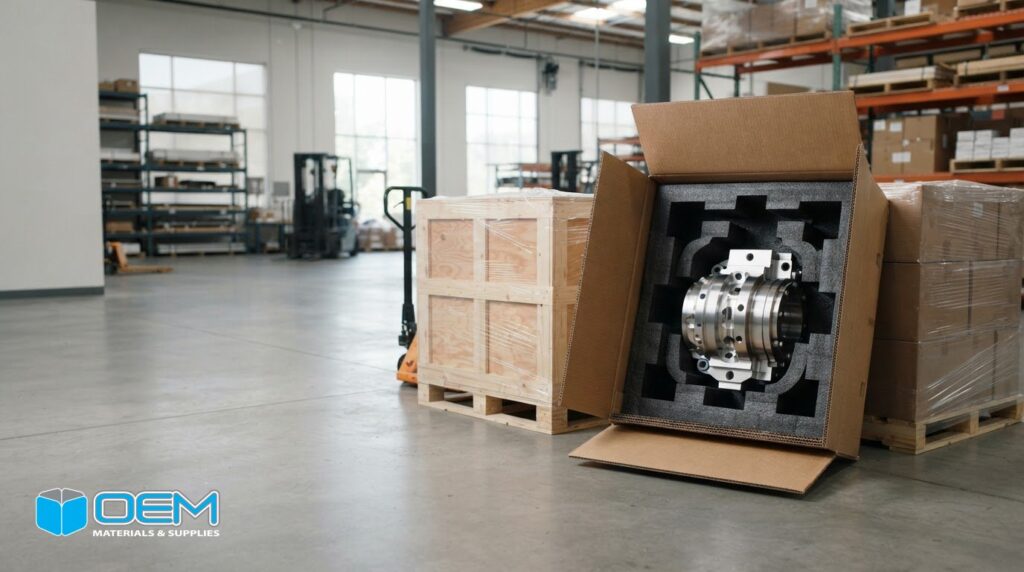
The strongest custom industrial packaging design examples start with the shipment, not the artwork. Packaging design combines a protective structure, suitable materials, and clear visual elements to support a product through handling, storage, and transport. For equipment shipments across Southern California, the design must account for product weight, fragility, and the conditions the package will face.
That practical focus matters: a package that looks right but lets the product shift in transit or slows warehouse handling is not doing its job. Good design connects product protection with efficient packing and easy opening.
This article explores custom industrial packaging design examples, showing how structure, corrugated materials, and visual elements work together for industrial products and shipments. See how decisions differ for heavy equipment, fragile components, and repeat shipments, and what to assess when reviewing a packaging concept.
Key Takeaways
- Packaging design brings the protective structure, materials, and visual information together to support equipment through shipping and handling.
- Match the package structure and cushioning to the product’s weight, fragility, and transportation conditions.
- Corrugated packaging can be configured for industrial shipments with handling, storage, stacking, and transport in mind.
- Clear labels and purposeful graphics can make packages easier to identify and handle across warehouse and distribution workflows.
- Examples for machinery and automotive parts show how boxes, foam inserts, and packaging kits can address different protection needs.
What is Packaging Design?
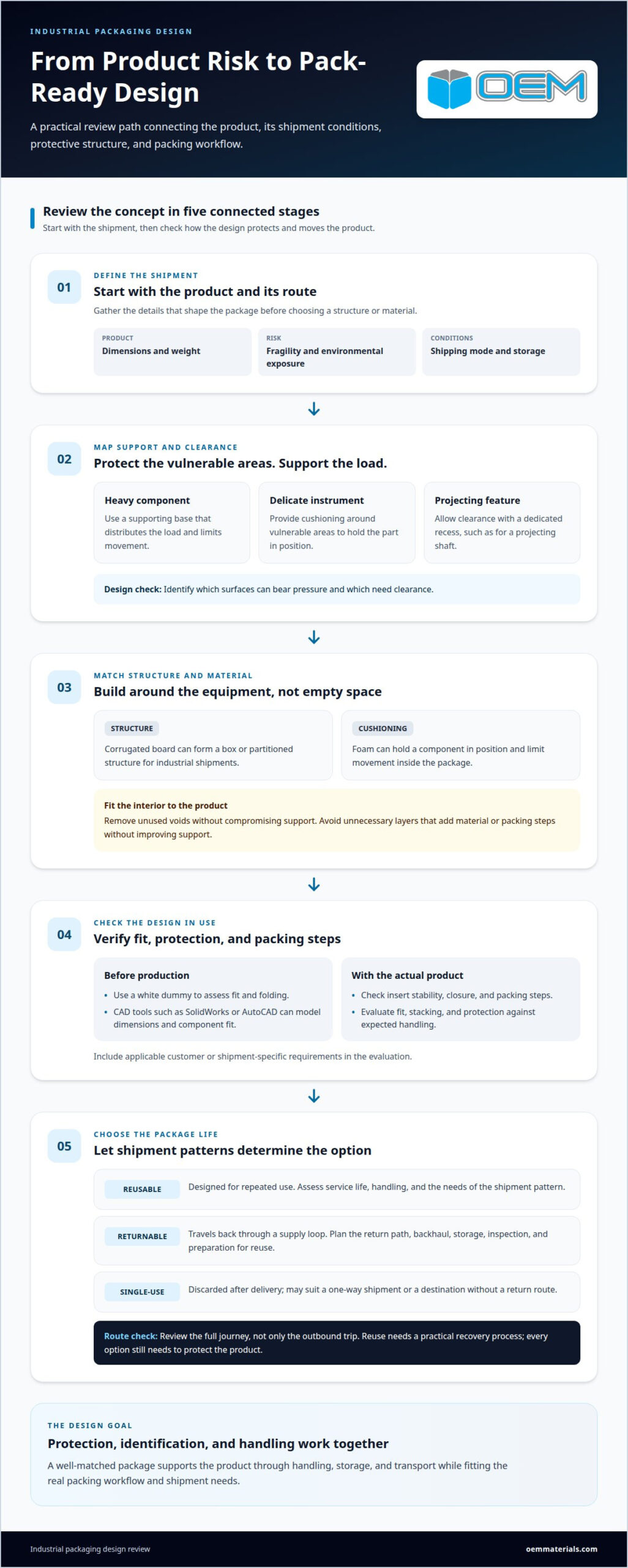
Packaging design defines how a product is contained, protected, identified, and handled. For industrial shipments, it connects the product’s dimensions and risks with the materials and structure needed to protect it, as well as the work involved in packing and unpacking.
Structural Design and Material Selection
Structural design defines a package’s physical layout, while material selection determines the walls, supports, and protective features. Together, they affect fit, handling, shipping, and material use. A heavy component needs support that limits movement; a delicate instrument needs cushioning around vulnerable areas. The package should fit the equipment rather than leave unnecessary space around it.
Designers consider product weight, fragility, environmental exposure, shipping mode, and storage conditions. Corrugated board can form a box or partitioned structure, while foam can hold a component in position. CAD tools such as SolidWorks or AutoCAD can create accurate three-dimensional models, clarifying dimensions and how components fit before production.
Reusable, Returnable, and Single-Use Options
Reusable packaging is designed for repeated use, returnable packaging travels back through a supply loop, and single-use packaging is discarded after delivery. A returnable container can suit regular shipments between known facilities when collection and backhaul are built into the logistics plan. Single-use packaging may suit one-way shipments or destinations without a return route. Choose based on shipment patterns and handling needs.
Assess the full route, not just the outbound trip. Reusable packaging needs a return path, storage space, and a process for inspection and preparation before reuse. Single-use packaging avoids return handling but still needs to protect the product and fit the shipment. For example, a manufacturer moving parts between nearby facilities may circulate containers, while equipment sent to a new destination may need one-way protection.
Efficiency starts with matching package dimensions to the product and the shipping unit. An oversized box can require extra fill and occupy more warehouse or transport space. A poorly fitted insert can allow movement, while unnecessary layers add material and packing steps. Designers can compare a product’s shape with the interior layout, then remove unused voids without compromising support. This is where custom packaging design can align structure with the actual packing workflow.
Sustainability depends on material choice, package life, and handling needs. Recyclable materials can help reduce environmental impact, while reuse can extend a package’s service life when return logistics make it practical. Neither works in isolation: returnable packaging needs a recovery route, and recyclable single-use packaging must still protect the product. Strong custom industrial packaging design examples balance protection, material use, and end-user needs.
Structural design based on product weight and fragility
Package structure should reflect the equipment’s weight, vulnerable features, and route through storage and shipping. A design that supports a metal assembly may not protect a delicate control panel. Match the structure to the product’s load points and expected handling conditions.
Identify where the product can bear pressure and which surfaces need clearance. A heavy component may need a base that distributes its load, while a projecting shaft may need its own recess. Foam Packaging can hold fragile parts in position and limit movement inside a larger package. These choices protect the product without adding layers that do not improve support.
What packaging tests and standards apply to industrial shipping containers? Test selection depends on the package, product, and shipping conditions. Evaluate fit, closure, stacking, and protection against expected handling, and account for applicable customer or shipment-specific requirements.
Common risks include movement inside the package, unsupported weight, exposed edges, and designs that slow packing. A loose insert can let a fragile component shift, while an oversized box can require extra void fill and complicate handling. Assess the product, package, and packing sequence together to catch these issues.
Sustainability and production efficiency depend on the structure and materials working as one system. An insert shaped around a component can reduce unused space and excess cushioning. A consistent package layout can also make loading and closing easier for operators. Recyclable materials can help reduce environmental impact, but the package must still provide the support the shipment needs.
Printing choices affect identification, usability, and production cost. A simple printed mark can show orientation or handling points, while more complex graphics involve additional artwork and print considerations. Keep critical handling information legible and visible to warehouse staff. Choose print coverage to serve a clear communication need, not appearance alone.
Prototype and production timelines depend on design complexity, materials, sample revisions, and manufacturing requirements. A white dummy can help evaluate fit and folding before production. Then check insert stability, closure, and packing steps using the actual product. Resolving these details early can prevent avoidable changes during a production run.
For a design involving fragile parts, share the product dimensions, weight, and shipping conditions when requesting a packaging quote. That information helps align the structure, materials, and protection requirements with the shipment.
Corrugated packaging for industrial equipment and mass shipments
Corrugated packaging provides an outer structure sized around equipment, components, or grouped parts. A box for a pump housing, for example, can use a fitted interior to limit shifting. A shipment of smaller assemblies may use partitions to keep pieces separate. The design should also support practical handling, storage, stacking, and transport.
Map the product’s outer dimensions and identify features that need clearance. A control panel with protruding switches needs space around them, while a compact metal bracket may fit closely in a partitioned box. These examples show why internal layout matters as much as exterior dimensions. A package that fits the product can reduce unused space and unnecessary packing material.
For repeat shipments, consistency matters on the packing line and in the warehouse. A defined box shape and repeatable closure help operators pack the same product in the same sequence. Clear exterior identification can distinguish similar shipments, such as right-side and left-side assemblies. A consistent package also makes planned storage and stacking easier.
Interior components can organize mixed parts and limit contact during transit. A corrugated divider can separate several components in one shipment, while a fitted insert can hold an irregular item. Fragile components may need cushioning at vulnerable areas. For a heavy part, the base and support points should match where the load rests, rather than relying on empty space or loose fill.
For mass shipments, consider how packages move through manufacturing and distribution. A box should be practical to lift, place, close, and stack within the operation’s workflow. For example, a package moving from an assembly station to a warehouse should not require workers to reposition loose parts before closing it. Thoughtful openings and closures make packing and receiving more consistent.
Exterior markings should help workers identify contents and orientation without slowing routine handling. A clear part description or directional mark can distinguish equipment cartons in a mixed shipment. Keep markings visible on surfaces that remain exposed after stacking. If straps or adjacent cartons cover a label or printed area, workers may need to move packages to find shipment information.
Before approving a corrugated design, assess the assembled package with the actual product. Check fit, closure, internal movement, and how units stack together. A trial shipment can show whether operators can repeat the packing sequence and receiving staff can access the contents efficiently. Use these observations to refine the design for product protection and day-to-day throughput.
Packaging design elements, including color, typography, imagery, shape, and structure
Visual design helps workers identify a package, interpret its markings, and handle it correctly. For industrial shipments, color, typography, imagery, shape, and structure should support identification and use. A carton for a machine component, for example, can prioritize clear part information over promotional graphics.
Color can distinguish product families or indicate package orientation across a warehouse. A manufacturer might use one consistent color band for electrical assemblies and another for mechanical parts. Color should reinforce written information, not replace it. This helps workers identify items when lighting, print quality, or viewing angles make color alone unreliable.
Typography determines whether package information is readable during routine handling. Use a clear typeface for part numbers, product names, and handling instructions. Place key text on a visible panel, away from folds and closures. A large part identifier on the outward-facing side, for example, helps receiving staff match a carton with its paperwork.
Imagery and graphics can explain product orientation or the unpacking sequence. A simple line drawing can show which side faces upward, while an interior diagram can indicate where a component sits. Use images that clarify a task. Decorative graphics that compete with part numbers or handling marks can make critical information harder to find.
Package shape also communicates function. A long, narrow carton signals a different product format than a compact square box. Die-cut openings or access panels can make components easier to remove without disturbing adjacent parts. The shape must still suit stacking and storage, so a convenient opening should not compromise how packages fit together.
Structure and graphics work best when planned together. An instruction printed across a seam may split when the carton opens. A label positioned over a fold can wrinkle or become difficult to scan. Map printed areas against panels, seams, and closures before approving the layout so key information remains intact on the assembled package.
Digital display printing can add graphics and images to packaging materials. For a prototype, use the intended artwork to review contrast, alignment, and legibility on the actual package surface. Check corners and folds, where distortion can affect instructions or identifiers. Review the package as workers will see it.
Industrial packaging differs from retail packaging because its primary visual role is often identification and handling. A retail box may emphasize shelf presentation, while a shipment carton may need a visible item code and orientation mark. Design each element for its audience, from the packing operator to the receiving team opening the delivery.
Before production, review a physical sample with the actual graphics, folds, and closures. Confirm that workers can find the part number, interpret handling marks, and open the package without obscuring other information. These checks connect visual design to daily packaging tasks and keep the finished package functional.
What are examples of custom protective packaging for heavy machinery and automotive parts?
A hydraulic pump assembly can use a fitted base and shaped supports to hold its mounting points steady. This layout places the product’s load on supported areas rather than delicate fittings. A separate cover can shield exposed surfaces from contact with other packed components. Account for the pump’s shipping orientation and how operators will lift it from the package.
For a control module, a fitted foam insert can hold the housing while keeping connectors and switches clear. Recesses around these features help prevent pressure on vulnerable points. The protective package may also include an outer corrugated box sized around the insert. The combination gives cushioning and containment distinct roles.
Automotive parts vary in shape and handling needs. A long drive shaft, for example, can sit in a channel-shaped support that limits rolling. A brake assembly may need separate compartments for smaller components such as brackets or fasteners. A custom layout keeps parts organized and makes the contents easier to identify during receiving and assembly.
Heavy machinery components may need a crate or pallet-based package when their size, weight, or handling method calls for rigid support. A machine housing with projecting fittings could use blocking around its base and clearance around the projections. Account for how lifting equipment engages the load. Clear access points help prevent workers from placing forks against vulnerable surfaces.
Surface protection matters for finished metal parts. A machined automotive component can be separated from other pieces with cushioning or dividers, reducing direct contact inside the package. For painted or finished surfaces, the interior layout should prevent parts from rubbing together in transit. The right arrangement depends on part geometry, finish, and shipping conditions.
Packaging Kits can group a box, insert, and protective components into one coordinated configuration for repeat packing. An assembly station, for example, can receive the outer container and fitted supports together, then place the same component in a defined position. This setup can reduce searching for separate materials and help standardize packing across shifts.
Before approving a design, load the actual machinery or automotive part into a sample package. Check that it seats correctly, remains supported, and can be removed without pulling on connectors or finished surfaces. A packaging quote can be based on the part dimensions, weight, and shipment requirements, which guide the protective structure and material choices.
OEM Materials & Supplies: Corrugated Boxes
OEM Materials & Supplies provides Corrugated Boxes for manufacturers managing equipment protection, repeat shipments, and warehouse handling. Turn to custom corrugated packaging when standard carton dimensions or interior layouts do not suit the product or packing process.
For components that need added restraint, Foam Packaging can position the item inside its container. Packaging Kits bring compatible components together for a repeatable packing setup. The right configuration depends on product dimensions, weight, fragility, and shipping conditions, so these details guide a practical recommendation.
Share your product details and shipment requirements with OEM Materials & Supplies to discuss a corrugated packaging solution.
Move Your Packaging Project Forward
For your next packaging review, define what the shipment must accomplish in your operation. Record product dimensions, weight, annual usage, handling points, and destination conditions. These details provide a practical basis for comparing custom industrial packaging design examples and selecting a concept for shipments in Orange County, Los Angeles, San Diego, and Riverside.
OEM Materials & Supplies offers Corrugated Boxes, Foam Packaging, and Packaging Kits for industrial shipping. A design conversation can focus on the product, packing sequence, and shipping requirements rather than selecting materials in isolation. This keeps the next decision connected to how your team packs, stores, and ships equipment.
Contact OEM Materials & Supplies to discuss your packaging requirements and share the product details that will guide the discussion. A clear starting brief helps move your project toward a packaging solution that fits its intended use.
Frequently Asked Questions
What are examples of custom industrial packaging designs for different industries?
Examples include foam-supported electronics enclosures, corrugated medical-device kits, and compartmented automotive-part cartons. An aerospace component may need a fitted insert to protect delicate surfaces, while a manufacturing line may benefit from packaging that organizes parts for assembly. Manufacturers in Orange County, Los Angeles, San Diego, and Riverside can tailor packaging to product geometry, handling needs, and the destination’s receiving process.
What materials are used in custom industrial packaging?
Common options include corrugated board for outer boxes and partitions, foam for fitted cushioning, and wood for crates supporting larger or heavier shipments. Cushioning materials can protect vulnerable areas, while stretch film helps secure unit loads. The right combination depends on storage and transport needs. For example, a corrugated carton with a foam insert separates containment from product cushioning.
How do companies choose packaging based on product size, weight, and fragility?
Assess the item’s dimensions, load-bearing areas, delicate features, and shipping route, then match the package structure to those needs. A heavy cast component needs support beneath its load points; a fragile sensor needs a stable cavity that keeps connectors clear. Product orientation also matters. The package should hold the item securely while allowing operators to pack and remove it without pulling on vulnerable parts.
How much does custom industrial packaging design and production cost?
Cost depends on product dimensions, weight, materials, design complexity, production volume, and shipping requirements. A straightforward corrugated carton and a multi-component package with a fitted insert involve different materials and production steps. For a project-specific price, submit a quote request with product details and expected usage. This information helps define the package scope and production requirements.
What are the steps to design, prototype, test, and manufacture custom industrial packaging?
Begin by documenting the product, handling needs, shipping route, and packing workflow. Develop the structure and material plan, then create a prototype or white dummy to assess fit and assembly. Check the sample’s closure, insert stability, folding accuracy, and shipping protection. Revise the design based on those observations, approve the final configuration, and move into production with clear packing instructions.