
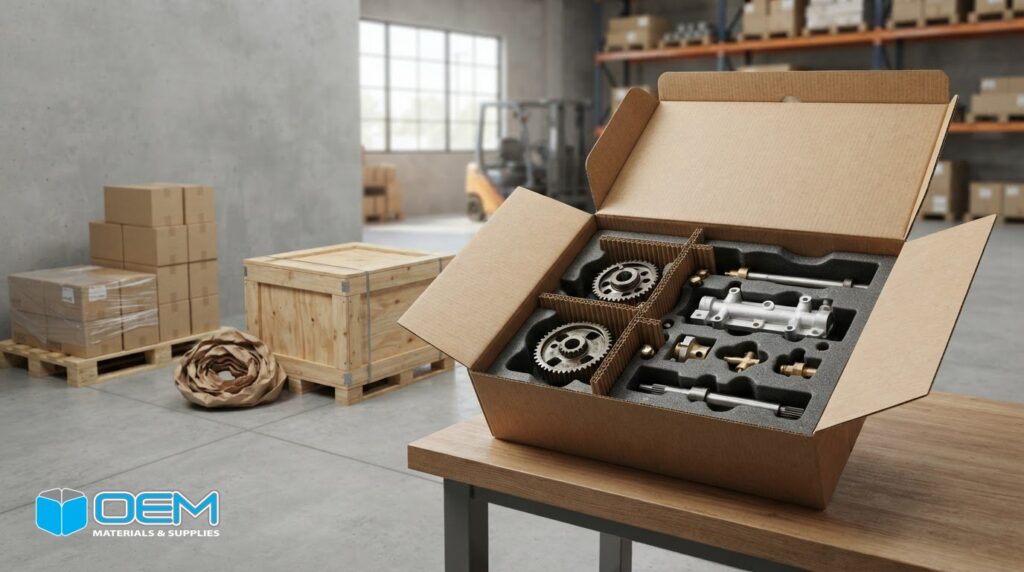
More cushioning doesn’t automatically mean better protection. The right custom protective packaging solutions match the product’s shape and vulnerability with the forces and conditions it will face in transit. Corrugated inserts, paper dunnage, foam cushioning, and custom padding each serve different needs, so the choice depends on the product, shipping conditions, packing process, and material priorities.
That decision affects more than damage prevention. Packaging that is difficult to assemble can slow packing, while excess material adds handling and disposal burdens. The goal is a protective design that secures the product without adding unnecessary complexity.
This article explains how to assess product and shipping requirements, compare cushioning materials, and weigh cost and sustainability when selecting custom protective packaging solutions. You’ll also learn how testing and packaging design can reveal weak points before they lead to recurring damage or workflow problems. Use this practical framework to choose protection that suits both the product and the operation.
Key Takeaways
- Match inserts and dunnage to the product’s shape, contact points, and movement inside the package.
- Assess shipping conditions and packing workflow alongside product fragility when comparing cushioning options.
- Choose foam or custom padding based on the support and separation the product needs, not simply the amount of material used.
- Evaluate sustainability and material use as part of the packaging design, together with protection and operating requirements.
- Compare packaging formats by how they protect the product and fit your packing process before selecting a solution.
Corrugated inserts and paper dunnage
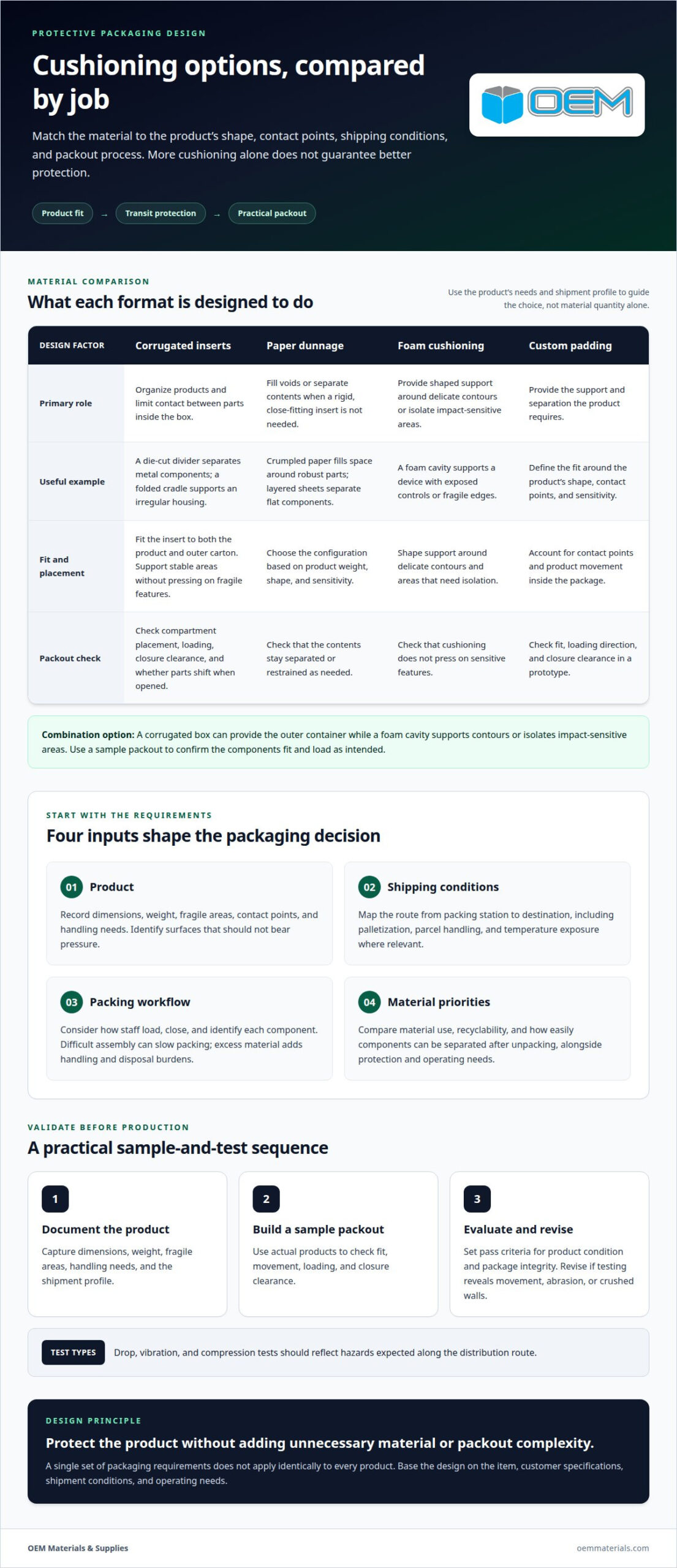
Corrugated inserts organize products inside a box and limit contact between parts during handling and transit. A die-cut divider can separate metal components, while a folded cradle can support an irregular housing. In electronics packaging, compartments keep accessories apart from the main unit. The insert should fit both the product and the outer carton, rather than simply fill unused space.
In the United States, packaging requirements vary by product, industry, and shipment; there is no single set of requirements that applies identically to every item. Start with the product’s industry requirements, customer specifications, and shipping conditions. For moisture-sensitive shipments, desiccant may be identified under MIL-D-3464 when project specifications call for it.
Design the insert around the product’s contact points. First, measure the product and identify surfaces that should not bear pressure. Next, map likely movement inside the carton, including shifts during lifting and stacking. Position compartments to support stable areas, such as a device frame, without concentrating force on a connector or display. A sample packout can reveal a loose fit, difficult loading, or interference with protective films before production.
Paper dunnage suits shipments that need void fill or separation rather than a rigid, close-fitting insert. Crumpled paper can fill open spaces around robust parts, while layered sheets can separate flat components. The right configuration depends on the product’s weight, shape, and sensitivity. A heavy machined part, for example, needs a secure base and restrained movement; lightweight accessories may need only separation from other contents.
Corrugated packaging and custom foam can work together when a product needs both structure and localized cushioning. A corrugated box provides the outer container, while a foam cavity supports delicate contours or isolates impact-sensitive areas. Review foam packaging options when designing protection around a device with exposed controls or fragile edges. This combination can also simplify packout when components have defined positions.
Corrugated boxes can also support displays or organized kits, where visibility and secure placement matter. A packaging layout should account for how staff load, close, and identify each component. For a mixed shipment, inserts can keep products in sequence and reduce shifting when the box is opened. Check the finished packout with actual products, then adjust partition depth, slot placement, and closure clearance to resolve fit issues.
Packaging analysis based on product, shipping, cost, and environmental requirements
A useful packaging analysis starts with the product and follows it through the packing line and shipment. Reviewing each stage helps identify protection needs, material choices, and design tradeoffs.
Packaging for Product and Shipping Needs
Record the product’s dimensions, weight, fragile areas, and handling needs before selecting a package. Then map its route from packing station to destination, including palletization, parcel handling, and temperature exposure where relevant—for which cargo solutions from specialists such as BubblePack Insulation Ltd can shield freight against climate extremes. A medical device with projecting connectors, for example, needs support that prevents pressure on those connection points.
Custom design and testing should follow a practical sequence: document the product, build a sample packout, and evaluate it against the shipment profile. Drop, vibration, and compression tests should reflect hazards expected along the distribution route. Set pass criteria for product condition and package integrity, then revise the design if testing reveals movement, abrasion, or crushed walls.
Common design mistakes include leaving excess room, placing cushioning against a fragile feature, and choosing a carton unsuited to the load. Each can contribute to shifting or contact damage during transit.
Cost and Environmental Requirements
Compare the entire packing process, not just material quantity. A smaller carton may reduce void fill but make loading difficult; a fitted insert may use more material while keeping parts organized. Labor, product dimensions, shipment method, and damage exposure all affect the cost tradeoff, so assess them together.
An environmental review can consider material use, recyclability, and how easily staff can separate components after unpacking. Stock flexible packaging can suit repeatable packouts, while custom formats can accommodate unusual dimensions. Minimum order quantities and lead times depend on the design, materials, and production requirements.
For a local supplier, start with your facility location and shipment destinations, then assess whether the supplier can work from product dimensions, weight, and packout needs. For manufacturers in Orange County, Los Angeles, San Diego, and Riverside, these details make the discussion specific to the operation.
Designing for Unusual Shapes and Sensitive Products
Irregular geometry calls for support at stable contact points. A component with a narrow stem and broad base, for example, may need a shaped cavity that supports the base without pressing on the stem. Share drawings or a physical sample, then review fit, loading direction, and closure clearance in a prototype.
Electronics and other sensitive products may need separation from accessories, controls, or exposed edges. A packaging design should define where each item sits and how it stays in place. Custom packaging design can help translate those product and shipping requirements into a usable packout.
Protective Cushioning Options
Foam can provide shaped support around delicate contours; molded pulp can form a fitted structure; corrugated inserts can divide or brace items; and air cushions can fill open voids. Compare materials by product shape, desired restraint, packing method, and shipment conditions, rather than treating them as interchangeable.
A fragile instrument, for instance, may benefit from a shaped foam cavity, while boxed components that need separation may suit corrugated partitions. Air cushions fill space but do not replace a design that restrains a heavy product. When matched to the shipment, wrapping, cushioning, and void fill can help limit damage and abrasion during transit.
Sustainability, customization, and industry experience
A sustainable packaging decision balances product protection with material use, packing labor, and disposal. For an electronics shipment, a fitted insert may reduce unnecessary void fill while keeping components separated. For an automotive assembly, a reusable packout may suit repeated trips between facilities. Compare each option with the actual shipping cycle, handling process, and product condition requirements.
Customization should solve a defined packaging problem. Start with the product’s dimensions, weight, contact points, and loading direction. Then consider the outer package, internal supports, and how workers will pack and unpack the item. A medical device with projecting controls, for example, needs a layout that avoids pressure on those features and keeps accessories from moving against the device.
Material selection also needs context. U.S. end markets consumed 11.2 billion board feet of softwood in 2025. That figure describes broad softwood consumption, not packaging use. For a wood crate, review the product’s weight, handling method, destination, and storage conditions. These details help determine whether a crate’s structure suits the shipment instead of treating wood as a default choice.
Industry experience matters because packaging risks differ across aerospace, medical devices, electronics, automotive, and general manufacturing. An electronics packout may need to separate delicate assemblies from accessories. A machined automotive component may need support that limits movement and protects finished surfaces. A medical shipment may need a controlled arrangement that keeps parts identifiable during unpacking.
Packaging for multiple industries calls for disciplined requirements gathering, not one design applied everywhere. Document the product family, shipment route, handling equipment, and receiving process for each application. If a facility ships both small electronic assemblies and large manufactured parts, separate packout specifications can keep the smaller item’s protection needs from being overlooked.
Industrial wood crates are worth considering for heavy, oversized, or irregular loads. Consider where lifting equipment will engage the crate, how the load will be secured, and whether internal bracing could contact sensitive surfaces. A large machine component, for example, may need blocking that restrains movement while keeping pressure away from machined faces.
A practical review follows three steps: define the product and shipment requirements, compare material and design options, then assess the finished packout in the actual workflow. Include sustainability criteria alongside protection, such as unnecessary material, component separation, and the receiving team’s disposal process. This approach helps purchasing, engineering, and warehouse teams evaluate the same design against shared operating needs.
Start with the product, then record the constraints that matter for its protection and handling. Use this information to compare provider proposals, asking how each design addresses shipment needs and how changes would be assessed. A clear review distinguishes essential protection from features that do not address a stated risk. It also makes sustainability part of the decision alongside fit and usability. When choosing a protective packaging provider, consider sustainability, customization, and industry experience. Keep the requirements and reasons for the selected approach together so the design can be reviewed if product or shipping needs change.
Foam cushioning and customized padding
Foam cushioning can support a product’s contours and separate it from the outer carton. Its effectiveness depends on fit, contact points, and how the packed item may move. A control unit with a projecting connector, for example, needs a cavity that supports its housing without loading the connector. Padding should restrain the product while keeping vulnerable features clear.
Begin the design with the product. Record its dimensions, weight, fragile surfaces, and any areas that must remain uncovered. Also identify how operators will place and remove it. A foam insert that holds a component securely but makes removal awkward can slow packing or encourage workers to pull on sensitive parts. A sample packout can reveal both fit and handling problems.
Custom padding can use shaped cavities, channels, or separate pieces to position components. A machined part with a finished face, for instance, may need support along sturdier edges rather than across the finished surface. In a kit containing a main device and accessories, individual pockets can prevent parts from contacting each other. The layout should reflect the actual contents, not an assumed product configuration.
Select foam by considering the product, shipment, and packing process together. The material’s firmness and structure affect its support, while cavity dimensions determine how closely the insert holds the item. A lightweight enclosure and a dense metal component have different support needs. Test the assembled package under representative handling and shipping conditions, then revise areas that show movement, pressure, or abrasion.
Foam also works with corrugated packaging. The carton provides an outer enclosure, while shaped foam cushions selected surfaces or holds the product in position. An electronics assembly, for example, may sit in a fitted cavity, with accessories in adjacent compartments. This arrangement can make the packout easier to repeat, provided every piece has a clear location and the closure does not press against the product.
To refine a design, inspect the product after a sample shipment or handling trial. Look for scuffs, displaced components, compressed padding, and contact marks at vulnerable points. Then adjust the cavity shape, support locations, or relationship between insert and carton. Keep the packing sequence consistent during evaluation so the results reflect the design rather than a one-off loading variation.
Document the approved configuration with a drawing or packout instructions. Specify product orientation, insert placement, and accessory locations so operators can reproduce the arrangement. A labeled component map, for example, can reduce uncertainty when similar parts share a package. Clear documentation also helps purchasing, engineering, and warehouse teams review the same protective design.
What types of custom protective packaging are available?
Choose packaging formats according to product shape and shipping configuration. Long, narrow items may suit mailing tubes or cores, while palletized loads may need edge protection and stretch film. For mixed components, a packaging kit can group required materials into one defined packout. These options address different handling stages, from containing individual items to stabilizing a load.
Mailing tubes offer an alternative to flat cartons for products such as rolled plans or long profiles. Cores serve a different function in production and shipping workflows, so distinguish the item being packaged from the material wound around a core. This format is worth considering when a conventional box would leave excessive unused space or make the item difficult to handle.
Edge protectors support exposed corners of palletized goods, while stretch film helps hold the load together. These materials support the shipment rather than replace its primary package. A pallet of boxed components, for example, may need corner protection where straps or handling could affect carton edges. Select the combination according to the load arrangement and handling process.
Packaging kits can combine a box, protective components, and other required packing materials for a specific product or production task. A kit is useful when operators need a consistent set of materials at the packing station. Define the contents and sequence clearly so the kit supports the intended workflow without unnecessary components.
Compare custom protective packaging solutions by asking what each format protects, where it fits in the shipping process, and how it will be handled. A tube, pallet wrap, or packaging kit addresses a different operational need. Product dimensions, shipment type, and packing workflow help narrow the selection before you request a quote.
For a quote based on your product and shipping requirements, submit a packaging quote request with dimensions, weight, and expected usage.
OEM Materials & Supplies: Corrugated Boxes
OEM Materials & Supplies provides custom corrugated boxes for industrial shipments that need a suitable outer container. Consider a custom carton when product dimensions, packing methods, or shipping conditions make the box an important part of the protection plan. Foam packaging and cushioning materials can support items inside, while packaging kits bring components together in an organized packout.
For example, a manufacturing team shipping a product with accessories can pair a corrugated box with protective inserts and a defined kit layout. Mailing tubes and cores address different needs, such as packaging long, narrow materials. Choose among these formats based on the product’s shape, weight, and shipping requirements, then consider how staff will pack and handle it.
Contact OEM Materials & Supplies to discuss the packaging format that fits your operation.
Put the packaging decision into operation
The next step is to turn the selected design into a repeatable process. Document the approved packout, identify who owns changes, and review the package whenever the product, shipping route, or handling method changes. This gives purchasing, engineering, and warehouse teams a shared reference instead of relying on informal adjustments at the packing station.
Use the product’s dimensions, weight, annual usage, and shipping conditions to frame the discussion. These details connect custom protective packaging solutions to the actual demands of your operation, rather than treating packaging as a standalone material choice. If a current packout causes damage, excess handling, or inconsistent loading, describe where the problem occurs and what the team observes.
OEM Materials & Supplies can discuss packaging requirements for your application. Contact OEM Materials & Supplies to discuss your packaging needs and take the next step toward a more deliberate packout.
Frequently Asked Questions
Which materials are used for custom protective packaging?
Common packaging materials include corrugated fiberboard, foam, paper, molded pulp, air cushions, stretch film, and wood. Each serves a different role. Anti-static foam can help package electronics, while corrugated partitions can organize multiple parts in one carton. A long component may fit a mailing tube, and a heavy industrial load may require a crate. Select materials based on product contact, handling, and the package’s place in the shipping system.
How do I choose the right protective packaging for my product?
Start with the product’s weight, shape, surface finish, and vulnerable features, then consider how it will be packed, moved, and received. A painted component may need separation from abrasive surfaces, while a product with loose accessories needs an organized packout. Review damage records and packing-line difficulties for evidence of weak points. Use those observations to compare package options, then evaluate a sample packout with the actual product.
What are the sustainability and recyclability options for protective packaging?
Options include reducing unnecessary material, choosing paper-based components when they meet protection needs, and designing packages that separate easily after use. For example, a corrugated carton and foam insert can be designed as distinct components rather than permanently joined. Check how the receiving facility handles each material, since local recycling programs differ. Reuse may also be practical for return shipments, such as components moving repeatedly between manufacturing sites.
What drop, vibration, and compression tests should protective packaging pass?
Drop, vibration, and compression tests should reflect hazards expected along the shipment route. Set pass criteria for product condition and package integrity, then revise the design if testing reveals movement, abrasion, or crushed walls.