
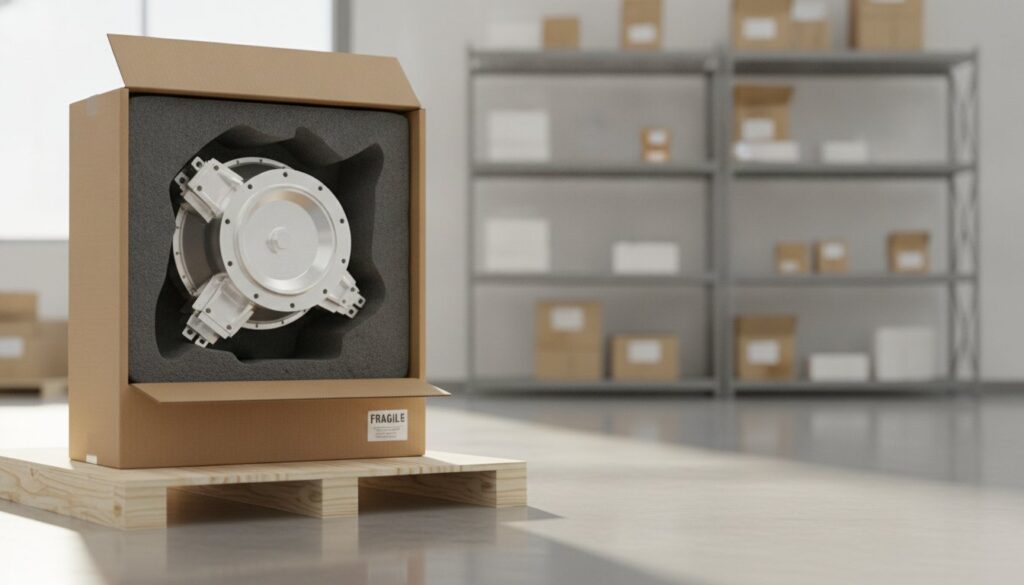
If your high-value aerospace components or medical devices arrive at a customer site with even hairline fractures, the cost of the damaged unit is often the smallest part of the financial loss. Product replacements, expedited shipping fees, and a damaged reputation can quickly erode your margins. Partnering with a specialized foam packaging manufacturer in Orange County is a strategic move to treat protective packaging as an engineered component rather than a generic commodity. You likely understand that standard off-the-shelf solutions rarely provide the precision required for complex industrial equipment, yet many operations continue to struggle with high damage rates and inefficient packing lines.
This guide explains how to identify a Southern California foam manufacturer that balances technical protection with supply chain efficiency. You will learn how to evaluate material densities and custom insert designs to achieve zero-damage shipping while simultaneously reducing labor costs on the warehouse floor. We also preview how local logistics programs, such as Vendor Managed Inventory (VMI) and just-in-time delivery, can eliminate the long lead times associated with overseas suppliers. By the end of this guide, you will have a clear framework for selecting a partner that keeps your production lines moving without interruption.
Key Takeaways
- Learn why industrial foam should be treated as a precision-engineered component to ensure maximum protection for high-value industrial assets.
- Compare the properties of Polyethylene and Polyurethane to select the correct material density for your specific product weight and fragility.
- Discover how custom-engineered foam inserts can reduce total logistics costs by decreasing packing labor and eliminating product damage.
- Identify the key technical and service capabilities to look for when evaluating a foam packaging manufacturer in Orange County.
- See how local value-added services like Vendor Managed Inventory (VMI) can provide consistent stock and reduce lead times for Southern California manufacturers.
Defining Industrial Foam Packaging for Southern California Manufacturers
Industrial foam packaging is far more than a simple filler or generic cushioning material. For high-stakes industries in Southern California, it acts as a precision-engineered component designed to mitigate specific physical risks during the distribution cycle. While consumer-grade foam might focus on comfort or basic aesthetics, industrial-grade solutions are built for shock absorption and vibration dampening. For an aerospace firm or medical device company, a specialized foam packaging manufacturer in Orange County provides a critical line of defense against the mechanical stresses of transit.
Generic cushioning often fails because it doesn’t account for the unique geometry or weight distribution of a specific product. Custom-engineered solutions, however, are designed to decelerate impacts and isolate sensitive components from external forces. This distinction is vital for local manufacturers who produce high-value assets that cannot tolerate even minor cosmetic or functional defects. By treating foam as a technical requirement rather than an afterthought, businesses can significantly reduce the hidden costs associated with product returns and rework.
The Role of Protective Foam in Modern Logistics
Logistics environments are inherently chaotic. Products face vertical drops, lateral shifting, and constant vibration. High-value assets, particularly sensitive electronics or calibrated medical instruments, require a precision fit to remain immobilized within their containers. Custom-cut foam inserts create a “nest” that absorbs energy before it reaches the product. This level of protection is unattainable with generic sheets or bubble wraps. To understand the engineering behind these solutions, you can explore our industrial guide to foam inserts, which details the material selection process.
Key Performance Indicators for Packaging Foam
Engineers and procurement managers must look beyond cost per cubic foot. True performance is measured through specific Key Performance Indicators (KPIs). One of the most vital metrics is the G-force protection level, which determines the maximum impact a product can withstand without internal failure. Additionally, static load limits define how much weight the foam can support over time without losing its structural integrity. Package cushioning materials are evaluated based on density and firmness, as these factors directly impact deceleration rates during a drop.
For high-volume manufacturing, consistency is paramount. A reliable foam packaging manufacturer in Orange County ensures that the foam’s cell structure and density remain uniform across every production run. This reliability prevents unexpected damage rates that can occur when material quality fluctuates between batches. By focusing on these technical specifications, operations managers can move from reactive damage control to a proactive, zero-damage shipping strategy.
Comparing Foam Materials: Polyethylene, Polyurethane, and Specialty Options
Material selection is the foundation of any protective packaging strategy. It determines not just the level of protection but also the physical footprint of the shipping container. Choosing the wrong density can lead to either product damage from “bottoming out” during a drop or unnecessary freight costs due to over-packaging. A technical foam packaging manufacturer in Orange County will analyze your product’s fragility and weight to recommend the optimal polymer for your specific application.
Polyethylene vs. Polyurethane: Performance Differences
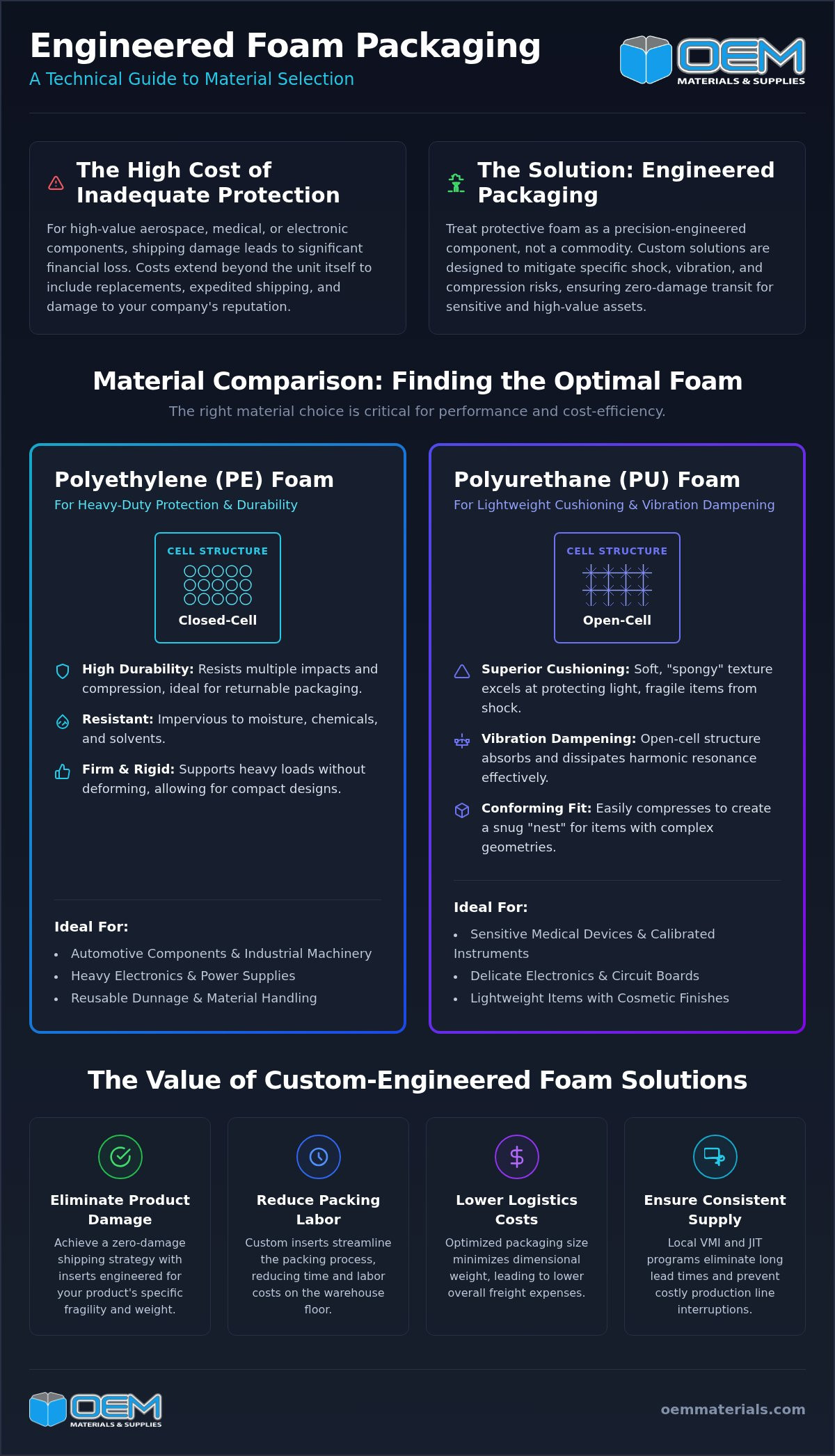
Polyethylene (PE) is a closed-cell foam characterized by its high durability and resistance to moisture and chemicals. It’s the industry standard for heavy-duty protection, such as automotive components or industrial machinery. Because it is non-abrasive and maintains its structural integrity after multiple impacts, it is ideal for returnable packaging programs. Its rigid nature allows it to support significant weight without collapsing, which helps keep the overall box size as compact as possible.
In contrast, Polyurethane (PU) is an open-cell material that provides superior cushioning for lighter, more delicate items. According to the Polyurethane Foam Association, these flexible materials are essential for absorbing energy in low-weight applications where a rigid foam would be too stiff. PU foam remains the primary choice for soft-touch cushioning in 2026. If you’re shipping sensitive laboratory equipment or optics, PU offers the necessary deceleration to prevent internal component failure.
Specialty Foams for Regulated Industries
For sectors with stringent cleanliness requirements, such as medical device manufacturing, Cross-linked Polyethylene (XLPE) is often the preferred choice. It features a smoother surface and virtually zero off-gassing or particulate shedding, making it compatible with cleanroom environments. This material is also highly resistant to the chemicals used in sterilization processes, ensuring the packaging doesn’t degrade before it reaches the end user.
The electronics sector requires specialized Anti-Static (ESD) foam to protect circuit boards and sensitive semiconductors from electrostatic discharge. These foams are chemically treated to dissipate electrical charges, ensuring that components remain functional upon arrival. Our custom foam packaging services include sourcing these specialty materials to meet rigorous industry standards for aerospace and electronics firms. When you partner with an experienced foam packaging manufacturer in Orange County, you gain access to these advanced material grades that generic suppliers often don’t stock. You can speak with an engineer to determine which material grade fits your specific dimensions and shipping requirements.
The Custom Engineering Process: From Prototype to Production
Engineering a protective solution begins with a deep analysis of the product’s physical properties. We don’t just look at dimensions; we evaluate the weight distribution, center of gravity, and the specific fragility of internal components. This data allows a foam packaging manufacturer in Orange County to determine the static load requirements and select the appropriate material density. The Custom Engineering Process involves utilizing CAD software to create precise 3D models that account for every contour of your part, ensuring a secure fit that prevents movement during transit.
Once the digital design is finalized, we move to rapid prototyping. Depending on the complexity of the geometry, we utilize CNC routing for intricate, multi-depth cavities or die-cutting for high-speed, high-volume production. CNC routing is particularly effective for small-run prototypes or complex aerospace components that require tight tolerances. As your production scales, we transition these designs to high-efficiency die-cut tools, which maintain consistency while reducing the unit cost for large orders. This seamless move from prototype to production ensures that the protection levels validated during testing remain identical in the final shipment.
Designing for Maximum Protection and Minimum Waste
Efficiency in packaging design is about more than just protection; it’s about optimizing the total shipping volume. By engineering custom inserts that fit snugly around the product, we can reduce the overall exterior dimensions of the container. This often leads to significant savings in dimensional weight charges. We frequently integrate these inserts with custom corrugated boxes to provide a complete, drop-tested solution. Validating the design through rigorous drop-testing before final production ensures that the foam performs as expected under real-world stress, preventing costly failures after the product has left your facility.
Local Manufacturing Advantages in Orange County
Proximity is a major strategic advantage for Southern California manufacturers. Working with a foam packaging manufacturer in Orange County allows your engineering team to participate in in-person design reviews and witness prototype testing firsthand. These face-to-face adjustments can shave weeks off the development cycle compared to working with overseas vendors. Our location provides rapid access to the logistics hubs in Los Angeles and San Diego, enabling just-in-time delivery that keeps your warehouse clear of bulky inventory. This local presence ensures that any design changes or urgent production needs are handled with the speed that modern manufacturing requires.
Reducing Total Logistics Costs through Engineered Foam Solutions
Many procurement teams view custom packaging as a luxury expense. However, a professional foam packaging manufacturer in Orange County can demonstrate that engineered inserts often yield a lower total cost of ownership than generic supplies. Stock foam sheets or loose-fill materials require significant manual labor to wrap and secure. A custom-cut insert allows a warehouse associate to drop the product into a pre-configured nest. This reduction in packing time directly lowers labor overhead, particularly in high-volume fulfillment environments where assembly speed is a critical metric.
Beyond labor, custom foam optimizes the external dimensions of the shipping container. By eliminating excess void space, we can often utilize smaller corrugated boxes, which reduces dimensional weight shipping fees. It is important to note that specific financial results will vary; actual savings depend on variables such as product dimensions, the material density selected, and your specific shipping requirements. For companies shipping via air or parcel carriers, these freight savings frequently offset the initial investment in custom tooling. Additionally, value-added services like kitting and assembly allow your team to receive a complete packaging unit ready for immediate use.
Inventory Management: VMI and JIT Programs
Managing bulky foam inventory takes up valuable floor space that could be used for production. Implementing Vendor Managed Inventory (VMI) ensures you never face a stockout during a peak production cycle. By utilizing Just-In-Time (JIT) delivery, you receive only the materials needed for the immediate schedule, freeing up capital tied up in excess warehouse stock. VMI programs effectively transfer the administrative burden of inventory tracking and replenishment from your purchasing manager to your supply chain partner. This local support from a foam packaging manufacturer in Orange County provides the agility needed to respond to sudden shifts in demand without maintaining a massive on-site footprint.
Lowering the Cost of Product Damage
The most expensive package you will ever ship is the one that arrives broken. Replacing a damaged unit involves the cost of the item itself, plus secondary shipping, inspection labor, and potential contract penalties. Utilizing engineered foam protects your brand reputation by ensuring items arrive intact every time, which is critical for medical and aerospace contracts. These packaging cost savings strategies focus on long-term reliability and the reduction of hidden logistics costs rather than just the lowest per-unit material price. If you are ready to evaluate your current packaging efficiency, you can request a quote and cost analysis from our technical team at OEM Materials & Supplies to identify potential savings in your supply chain.
Selecting Your Orange County Foam Packaging Partner
Choosing the right foam packaging manufacturer in Orange County involves more than comparing price per unit. A true industrial partner acts as a consultant, identifying hidden inefficiencies in your packing line and suggesting material adjustments that improve protection while lowering costs. Technical expertise is the primary differentiator. Your provider should demonstrate a deep understanding of static loading, G-force deceleration, and material compatibility for regulated industries like aerospace and medical device manufacturing. Reliability in this sector is built on consistent tolerances and the ability to meet rigorous production schedules without fail.
A local presence in Southern California is a significant logistical asset. Proximity allows for rapid onsite consultations and faster turnaround times for design revisions. Whether your distribution network centers in Orange County, Los Angeles, or the Inland Empire, a local supplier reduces the risks associated with long-distance freight and supply chain disruptions. This geographic advantage ensures that your production team has direct access to the engineers designing your inserts, facilitating a collaborative environment where complex packaging challenges are solved through precision engineering rather than guesswork.
Comprehensive Packaging Support
Efficiency increases when you consolidate your supply chain. Sourcing your custom foam inserts, corrugated boxes, and stretch film from a single vendor eliminates the communication gaps that often occur between multiple suppliers. This unified approach ensures that every component of the package is designed to work together, from the internal cushioning to the external containment. For manufacturers shipping heavy or oversized machinery, the ability to integrate foam protection with custom crates provides a complete, turnkey solution. One point of contact means higher accountability and a more streamlined procurement process for your purchasing department.
Next Steps for Custom Foam Solutions
Transitioning to an engineered foam solution requires accurate data to ensure optimal performance. Before starting the design process, gather your specific product dimensions, total weight, and any known fragility concerns. Providing your annual usage and typical shipping methods allows a foam packaging manufacturer in Orange County to recommend the most cost-effective production method, whether it involves CNC routing for low volumes or die-cutting for larger runs. We invite you to request a quote or a prototype consultation to see how technical foam engineering can stabilize your logistics. Our team is ready to analyze your current packaging requirements and provide a solution that prioritizes durability, accuracy, and operational efficiency.
Securing Your Production with Local Foam Expertise
Treating protective packaging as an engineered component is the most effective way to eliminate transit damage and streamline your warehouse operations. Selecting the correct material density and a precision-fit design doesn’t just protect the product; it reduces the labor hours required for packing and minimizes the total footprint of every shipment. When you partner with a specialized foam packaging manufacturer in Orange County, you gain the technical expertise needed for complex aerospace and medical device applications where tolerances are non-negotiable.
Our local Southern California presence ensures you receive faster prototypes and consistent inventory through our comprehensive VMI and JIT services. It’s a strategic approach that removes the risks of long lead times and inventory stockouts. By consolidating your foam, boxes, and crates with a single expert provider, you create a more resilient and accountable supply chain. We’re ready to help you transition from reactive damage control to a proactive, optimized logistics strategy that protects your brand and your bottom line.
Take the next step toward zero-damage shipping. Request a Custom Foam Quote and Prototype to begin your technical analysis. Providing your product dimensions, weight, and annual usage will allow our engineers to develop a solution tailored to your specific industrial requirements. We look forward to supporting your distribution network.
Frequently Asked Questions
How do I determine which foam density is right for my product?
Foam density selection is based on the product weight, fragility, and the surface area of the contact points. Heavier items require higher-density Polyethylene to prevent the material from bottoming out during an impact. Conversely, lightweight, sensitive items use lower-density Polyurethane for softer deceleration. We utilize fragility ratings, known as G-factors, to calculate the exact thickness and density required to protect internal components during a drop.
What is the typical lead time for custom die-cut foam inserts in Orange County?
Lead times generally range from two to three weeks for new custom orders, depending on the complexity of the tooling and material availability. Because we are a local foam packaging manufacturer in Orange County, we can often expedite prototypes in just a few business days. Established VMI customers often receive same-day or next-day delivery because we maintain their specific stock levels in our regional warehouse for immediate release.
Do you offer anti-static foam for sensitive electronic components?
Yes, we provide pink anti-static (ESD) Polyethylene and Polyurethane foams specifically for the electronics and aerospace sectors. These materials are chemically treated to prevent the buildup of static electricity, protecting sensitive semiconductors and circuit boards from discharge damage. We can custom-cut these into inserts or provide them as sheets to fit within your existing ESD-safe corrugated boxes or plastic pallets.
Can custom foam inserts be integrated into existing corrugated boxes?
Custom foam can be engineered to fit any existing container dimensions to improve protection without requiring new outer packaging. We analyze your current box size and design the foam to maximize internal volume while ensuring the product remains immobilized. This is a common solution for companies looking to upgrade their protection levels while utilizing their current stock of corrugated boxes or wood crates.
What information is needed to provide an accurate foam packaging quote?
To provide a precise quote, we require the product physical dimensions, weight, and a description of its fragility. Knowing your annual usage and typical shipping environment, such as parcel versus palletized freight, helps us recommend the most cost-effective manufacturing process. If you have a CAD file or a physical sample of the product, our engineers can use it to create a more accurate prototype and final quote.
Are there eco-friendly or recyclable foam options available for industrial use?
We offer several sustainable options, including Polyethylene foams that contain recycled content and are recyclable in many industrial streams. Some specialty foams are designed for multi-use returnable packaging programs, which significantly reduces long-term material waste. While technical requirements for aerospace or medical devices may limit material choices, we work with you to find the most sustainable option that meets your specific protection standards.
Do you provide prototyping services before moving to high-volume production?
Prototyping is a standard part of our engineering process to ensure the design meets your performance requirements. We use CNC routing to create initial samples for fit-testing and drop-testing without the need for expensive permanent tooling. Once the design is validated by your team, we transition to die-cutting or other high-volume methods to ensure consistency across the entire production run while lowering the per-unit cost.
How does Vendor Managed Inventory work for packaging supplies?
Our VMI program involves monitoring your stock levels and automatically replenishing supplies before you face a shortage. We store your custom foam inserts and boxes in our local facility, delivering them on a just-in-time basis. This system reduces your on-site storage requirements and eliminates the administrative work of placing manual orders, allowing your team to focus on production rather than managing inventory levels for packaging materials.