
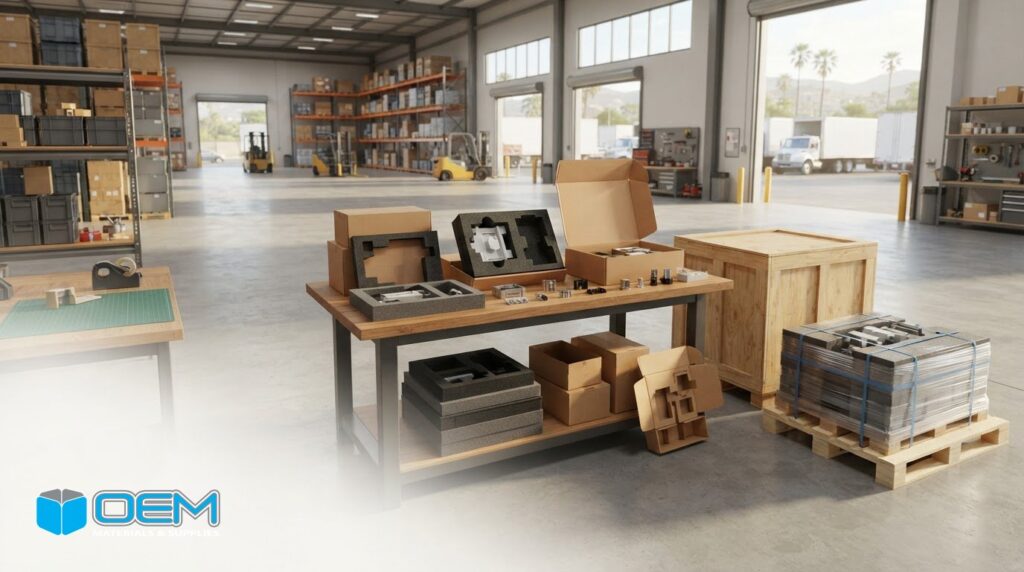
A packaging proposal that lists materials but leaves out the operating problem is difficult for management to evaluate. For custom industrial packaging design southern california projects, teams need a clear business case connecting damage, packing time, excess labor, or inventory gaps to specific requirements and design choices. Without shared assumptions, stakeholders may compare options that do not cover the same scope.
These challenges are familiar to purchasing, engineering, and operations teams. A decision-ready proposal makes the current process visible, defines what the packaging must protect or support, and gives each option a consistent basis for review. It also identifies what information is still needed before a design discussion or quote can be evaluated.
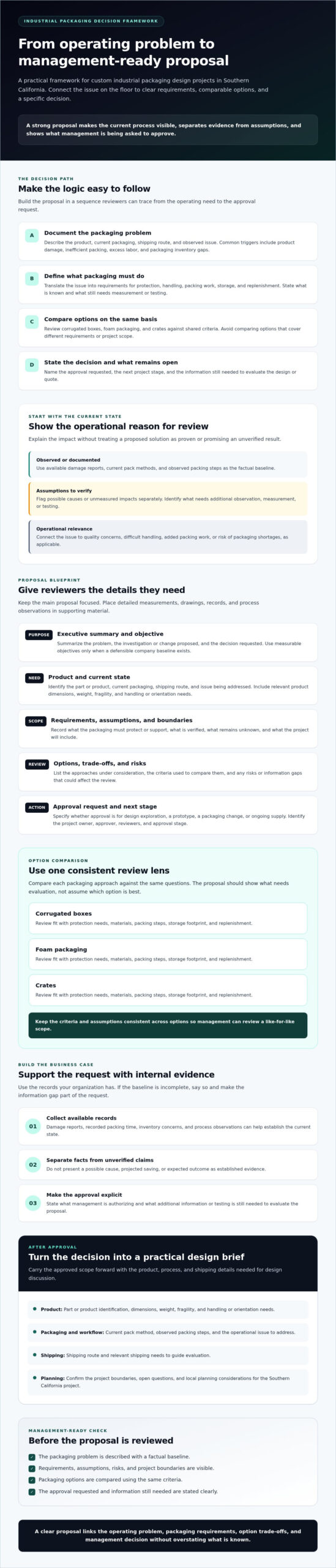
This practical framework will help you document packaging needs, compare approaches such as corrugated boxes, foam packaging, and crates, and explain the trade-offs to management. Use it to record assumptions, workflow considerations, and next steps, so your team can move from a packaging problem to a well-supported decision.
Key Takeaways
- Frame the proposal around a documented packaging problem, such as product damage, inefficient packing, excess labor, or inventory gaps.
- Use a consistent template to capture objectives, requirements, assumptions, risks, options, and the decision management needs to make.
- Compare packaging approaches against the same criteria, including protection needs, materials, packing steps, storage footprint, and replenishment.
- Build the business case from internal records, then state the approval requested and the information still needed to evaluate it.
- For custom industrial packaging design southern california projects, turn approval into a practical design brief with product details, shipping needs, and local planning considerations.
Custom industrial packaging design southern california: Why management needs a clear proposal
A packaging project proposal is a structured request for review and approval. It connects an operational problem to defined requirements, design options, assumptions, and a specific decision. For teams evaluating custom industrial packaging design southern california, that structure helps management understand why a project is needed and what approval will authorize.
A packaging proposal should show what problem needs attention, which options merit evaluation, and what decision management is being asked to make. Damage reports, inefficient packing steps, excess labor, or gaps in packaging inventory can all trigger a project. Explain the operational impact without presenting unverified savings or treating a proposed solution as proven.
Packaging serves functions beyond holding a product. Its role in protection, containment, and information transfer is outlined in this overview of the functions of industrial packaging. A formal proposal translates those needs into project scope. It differs from a product quote, which prices a defined item; a supplier overview, which describes a provider; or a purchase order, which authorizes a transaction. A proposal helps the organization decide what to explore or approve before those steps.
What management needs to decide
State whether the request is for design exploration, a prototype, a packaging change, or ongoing supply. Name the approver, project owner, and reviewers, such as engineering, quality, procurement, and operations. Define the approval stage too: discovery, testing, production, or a staged path with separate checkpoints. For background on the design process, see custom packaging design.
How to define the current packaging problem
Describe the product, current packaging, shipping route, and observed issue. Separate documented records, such as damage reports or observed packing steps, from assumptions that still need measurement or testing. Explain the operational relevance, whether it is a quality concern, difficult handling, added packing work, or risk of packaging shortages. This distinction gives reviewers a factual baseline and shows what evidence the project still needs.
For example, a manufacturer in Riverside might propose reviewing packaging for a component shipped to an assembly site. The proposal can document the existing pack method and reported handling concern, then identify what needs evaluation without assuming the cause or promising an outcome. That gives management a clear basis to authorize the next step.
What to include in a custom packaging design proposal
A useful proposal gives reviewers enough detail to assess the project without burying the decision in engineering notes. Use the headings below as a reusable template. Keep the main document focused, then place drawings, measurements, damage records, or process observations in an appendix. For general guidance on how to structure a business proposal, San José State University’s Writing Center offers a practical reference.
A concise executive summary and project objective
Start with a brief summary of the problem, the proposed investigation or change, and the decision requested. For example: “Approve design exploration for a packaging approach that addresses the documented handling issue.” State measurable objectives only when the company has a defensible baseline, such as recorded damage or observed packing time. Otherwise, describe the goal without promising a result.
Then provide a short current-state summary and project objective. Keep detailed engineering information in the appendix so managers can review the request quickly and technical teams can check the supporting evidence.
Requirements, assumptions, and project boundaries
Record the information that will guide design and option review. Note what is known, what remains unverified, and what the project will include. A supplier can help assess the design scope through custom packaging design services, using the product and shipping details your team provides.
- Product and current state: Identify the part or product, current packaging, and the issue being addressed.
- Product details: Provide dimensions, weight, fragility, and any handling or orientation needs when available.
- Shipping and operations: Describe shipment conditions, route, packing method, storage constraints, and how packaging is handled at each relevant point.
- Usage and supply: Include annual usage or order patterns when known, along with replenishment concerns.
- Options: List the packaging approaches to evaluate, such as corrugated boxes, foam packaging, cushioning materials, or crates, based on project requirements.
- Assumptions and risks: Flag missing measurements, untested conditions, supply dependencies, and questions requiring confirmation.
- Scope and decision: Specify whether the request covers design, prototype work, materials, testing, production, or replenishment, and state exactly what management should approve.
Options can be compared fairly only when they use the same product details, shipment conditions, and usage assumptions. If key information is unavailable, mark it as an open item rather than silently treating an estimate as fact. Cost and savings outcomes depend on product dimensions, materials, and shipping requirements.
For a qualified discussion or quote, share available product dimensions, weight, shipping details, and annual usage through the packaging quote request.
How to compare packaging options and explain trade-offs
A comparison is useful only when every option is assessed against the same requirements. Use one table or evaluation grid, with a column for each design approach and rows for the criteria below. This makes trade-offs visible to management instead of allowing each option to emphasize different strengths.
- Fit and protection: How does the option accommodate the product and address documented fragility or handling concerns?
- Materials: Which materials are proposed, and what requirement supports that choice? Depending on the product, options may include corrugated boxes, cushioning, foam packaging, or crates.
- Packing method: What steps must an operator perform? Consider assembly, product placement, closure, and whether the method fits existing equipment and warehouse procedures.
- Storage and handling: How will packaging be stored, moved, and prepared for use? Note space constraints and any effects on routine handling.
- Shipping and replenishment: Does the design address the shipment conditions and route? Record expected usage or order patterns when known, plus any supply or inventory considerations.
Mark each criterion as required, preferred, or still under evaluation. For instance, if a product needs a defined position within its package, document that as a requirement. If storage footprint is a concern but has not been measured, flag it for assessment rather than scoring options on guesswork. This approach helps teams evaluating custom industrial packaging design southern california weigh design performance alongside day-to-day operating needs.
Show the evidence behind each option
Label the basis for every comparison. Separate measured data from engineering estimates, supplier input, and assumptions that have not been tested. If a prototype or packing trial has taken place, include the recorded observations and conditions. Do not describe an untested design as validated.
Consider a grid comparing a corrugated design, a foam insert approach, and a crate where each is relevant to the product. Apply the same criteria to all three, and link to foam packaging options only if foam fits the needs under review. The comparison should show where evidence is available and what remains unknown, not declare a universal winner. Cost outcomes depend on product dimensions, materials, and shipping requirements.
Material selection can also involve environmental considerations alongside protection and operational needs. The U.S. Environmental Protection Agency provides guidance on evaluating sustainable packaging. Use relevant criteria for the project, then identify what further review or testing is needed before approving production use. That may include checking fit, observing the packing process, or assessing the package under the shipping conditions specified by the team.
How to build the business case and approval request
A credible business case starts with a baseline, not a savings promise. Use this sequence to show management what is happening, what a proposed packaging change may address, and what evidence is needed before a broader decision.
- Set the baseline. Gather internal damage reports, packing observations, material records, and inventory data relevant to the problem. State the period covered and how information was collected. For labor observations, describe the task measured and the conditions observed.
- Describe the operational impact. Explain how the documented issue affects product quality, packing work, handling, or supply continuity. Separate direct observations from estimates, and note gaps in the records.
- Present the proposed approach as a hypothesis. Explain what a design review, prototype, or controlled trial is intended to assess. Treat potential reductions in damage, labor, material use, or stock interruptions as unverified until supported by trial results or business data.
- Identify dependencies and owners. Name who will provide product and shipment information, review the design, coordinate a trial, and assess results. Record open questions, required resources, and any supplier or replenishment considerations.
- Request a defined next step. Ask management to approve a specific activity, such as a design review or prototype discussion, rather than an undefined project. Include a proposed review point when the team will assess findings and decide whether to proceed.
Document the baseline and potential impact
Keep the evidence traceable. If the proposal uses damage records, identify the reporting source and period. If it cites packing time, describe the observation method instead of presenting an informal estimate as a measured result. Apply the same discipline to material consumption and inventory interruptions. Present a potential benefit as a question to test, not a guaranteed outcome. Cost and savings depend on product dimensions, materials, and shipping requirements.
Make the management decision specific
State what approval enables, who owns the next step, which teams must participate, and what information remains outstanding. Define the outcomes to review before any production or broader rollout decision, such as recorded trial observations, packing workflow fit, or replenishment requirements. If ongoing supply is part of the case, include the expected usage pattern and review just-in-time packaging services as one possible replenishment consideration, subject to project requirements.
For a packaging design or supply discussion, share available product dimensions, weight, shipping requirements, and annual usage when requesting a packaging quote. These details help ground the next step in the actual operating need.
Move from proposal approval to packaging design in Southern California
Approval turns a proposal into a working design brief. The handoff should carry forward the requirements, assumptions, evidence gaps, and decision limits already reviewed by management. For teams pursuing custom industrial packaging design southern california, clear project information helps a supplier assess the packaging need and identify what should be discussed, prototyped, or quoted next.
Prepare the project information for a design review
Gather the details that define the product and its journey. Share drawings or dimensions, product weight, packing quantity, known fragility or protection needs, and the current packaging if available. Include shipping methods, destinations, handling conditions, annual usage, and any storage or replenishment constraints that could affect the design.
Be precise about what is confirmed. If dimensions are incomplete or a shipping condition has not been documented, flag it as an open item rather than presenting an estimate as a specification. Photos, current pack samples, and records of damage or packing difficulties may help explain the issue, but they do not replace measurements or project-specific technical review.
Local planning can shape the handoff. A team in Orange County may coordinate review around its production and warehouse workflow. Projects involving Los Angeles, San Diego, or Riverside may need to account for their own shipment routes, receiving locations, and supply processes. Do not assume one site’s handling conditions apply across all locations.
Set up a practical review and next step
Confirm who needs to review the project. Engineering can assess fit and design requirements; operations can evaluate the packing method; procurement can review sourcing assumptions; and supply chain staff can identify replenishment considerations. Agree on the next deliverable before the discussion ends, such as a design review, a defined prototype scope, or a quote request.
If corrugated packaging is under consideration, review the available corrugated box options as part of the sourcing discussion. The right approach depends on product dimensions, materials, shipping requirements, and the operating conditions the design must address. A quote or prototype discussion should be based on those project details, not on an assumed fit.
OEM Materials & Supplies works with manufacturers on packaging design and supply in Southern California, including Orange County, Los Angeles, San Diego, and Riverside. To move an approved project forward, request a packaging project quote and include available product dimensions, weight, packing quantity, shipping methods and destinations, known protection requirements, current packaging, and annual usage. Identify any missing data so the next discussion can address it directly.
Turn a clear proposal into the next packaging step
A management-ready proposal gives stakeholders a consistent basis to review packaging requirements, compare options, and approve a defined next step. Keep the decision grounded in documented operating conditions, and treat potential benefits as hypotheses until supported by project-specific evidence. For custom industrial packaging design southern california, clear product, shipping, and usage information can help move the approved scope into a focused design discussion.
OEM Materials & Supplies supports custom packaging projects from prototypes and short runs through high-volume programs. Depending on the project scope, packaging design can be considered alongside kitting, assembly, and vendor-managed inventory. Cost and savings outcomes depend on product dimensions, materials, and shipping requirements.
To discuss your requirements, request a packaging project quote. Include available product dimensions, weight, shipping conditions, and annual usage to support an informed review. A clear starting brief helps your team take the next step.
Frequently Asked Questions
What should a packaging project proposal include?
A packaging project proposal should explain the problem, requirements, options, and decision management is being asked to make. Include an executive summary, current packaging conditions, project objective, product and shipping requirements, options considered, assumptions, risks, and requested approval. Add supporting measurements where available and identify missing information. Keep the main proposal concise, with detailed technical notes in an appendix, so reviewers can see what approval enables and how the next step will be evaluated.
How do I present a custom packaging design project to management?
Start with the operational problem and its documented effect on product protection, labor, handling, or supply. Then describe the proposed scope and compare options using the same requirements. Separate verified facts from estimates, flag unresolved questions, and state the specific approval needed, such as a design review or prototype. Avoid presenting potential savings as certain. Any estimate should show its assumptions and rely on the organization’s own records and project-specific requirements.
What information does a packaging supplier need to prepare a proposal?
A supplier needs product and shipping details to assess the project scope. Share dimensions, weight, fragility, packing quantity, shipping methods and destinations, handling conditions, and annual usage when available. Drawings or photographs, examples of current packaging, packing-process details, and storage constraints can add useful context. Label unknown information as an open question rather than guessing. Complete inputs help the supplier discuss suitable options without treating estimates as confirmed specifications.
How can I compare custom packaging options for management?
Compare every option against the same criteria: product fit, protection needs, materials, packing steps, storage, shipping requirements, and replenishment. Record the assumptions and evidence supporting each option, along with questions that remain open. Distinguish a concept or estimate from a prototype that has been tested. This gives management a consistent view of trade-offs without treating unverified performance or savings claims as established results.
How do I estimate the business impact of a packaging redesign?
Establish a baseline using internal records, such as damage reports, packaging consumption, packing observations, or inventory interruptions. State the time period covered and how each measurement was collected. Treat projected improvements as hypotheses until a prototype or controlled trial provides evidence. Any cost or savings estimate depends on product dimensions, materials, shipping requirements, and the organization’s operational data. Keep assumptions visible so reviewers can assess the estimate appropriately.
Can a packaging proposal include just-in-time delivery or vendor-managed inventory?
Yes, include replenishment planning when stock availability or ordering is part of the project need. Describe current inventory challenges, expected usage, delivery requirements, and the teams involved. Keep packaging design decisions distinct from supply arrangements while explaining how they connect operationally. OEM Materials & Supplies offers vendor-managed inventory services. Discuss project-specific replenishment requirements with the supplier as part of planning.
What should I send when requesting a custom packaging quote in Southern California?
Provide product dimensions, weight, current packaging details, shipping methods, annual usage, and known protection or packing requirements. Include drawings or photographs if available, and identify whether the request is for a design review, prototype, or production supply. Note the facility location and delivery context, including whether operations are in Orange County, Los Angeles, San Diego, or Riverside. If you’re searching “custom industrial packaging design southern california,” mark missing information clearly so it can be confirmed.
Ready to discuss a packaging project? Request a packaging quote and include available product dimensions, weight, shipping requirements, and annual usage to help inform the next step.