
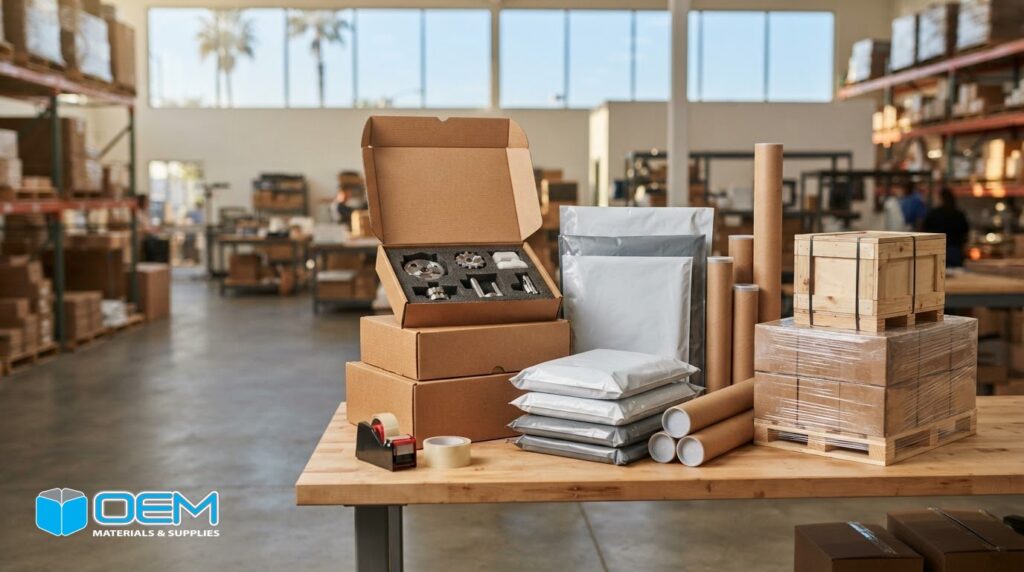
A box isn’t the right choice for every shipment. Wholesale packaging supplies should match the product: corrugated boxes suit larger items, while mailers, bags, and envelopes fit small goods.
That basic distinction matters when balancing product protection, packing time, and material use. The best format also depends on what you ship, how it is handled, and how it moves through storage and distribution.
This guide compares shipping supplies, mailing bags, tubes, cushioning, and material handling products for different industries and business needs. For businesses in Southern California, selecting packaging that fits the product and shipping process can support more consistent purchasing and fulfillment. You’ll learn how to narrow the options by shipment type and operational requirements.
Key Takeaways
- Match the package format to the product’s size, shape, fragility, and shipping path to support protection and efficient packing.
- Compare mailing bags and poly bags by the items they need to contain and the handling they’ll encounter.
- Use tubes for products suited to a cylindrical package, and consider material handling needs alongside the packaging itself.
- Assess suppliers on how well their product range fits your operating requirements, not just on individual package types.
- OEM Materials & Supplies offers corrugated boxes, foam packaging, packaging kits, and mailing tubes and cores for a range of packaging needs.
Shipping supplies for different industries
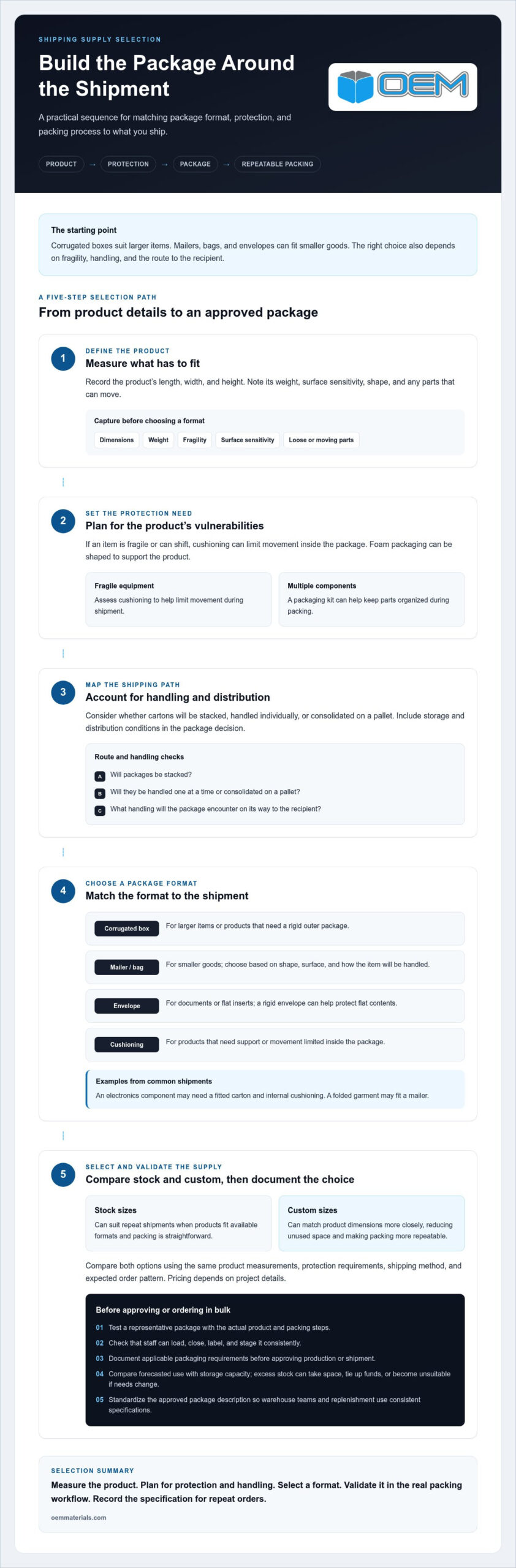
Wholesale packaging supplies work best when they match the shipment, not just the product category. Corrugated boxes suit larger items, while mailers, bags, and envelopes can fit smaller goods. An electronics manufacturer, for example, may need a fitted carton and internal cushioning for a component. A clothing seller may use a mailer for a folded garment. Choose based on product dimensions, fragility, handling, and the route to the recipient.
Start with the product and its shipping path. Measure its length, width, and height, then note its weight, surface sensitivity, and any parts that move. Consider whether cartons will be stacked, handled individually, or consolidated on a pallet. For fragile equipment, cushioning can limit movement inside the package; foam packaging can be shaped to support the product. A manufacturer shipping several components together may use an assembled packaging kit to keep parts organized during packing.
Custom and stock supplies serve different operating needs. Stock sizes can suit repeat shipments when products fit available formats and packing is straightforward. Custom sizes can match a product’s dimensions more closely, reducing unused space and making packing more repeatable. Compare both options using the item’s measurements, protection requirements, shipping method, and expected order pattern. Pricing depends on project details, so compare options using the same specifications.
Mailers, envelopes, and shipping bags suit smaller goods that do not need a rigid carton. Match the package to the item’s shape and surface: a soft mailer may work for a flexible product, while a rigid envelope can help protect flat contents. A bag can simplify packing for items that are not easily damaged by compression. Include closure method and label placement in the packing plan. These details help prepare each shipment for carrier handling and delivery.
Packaging certifications and regulations depend on the material, product, and intended use. Document applicable requirements before approving a package for production or shipment. Bulk purchasing also has practical risks: excess stock can take up warehouse space, tie up purchasing funds, or become unsuitable after product dimensions or shipping needs change. Compare forecasted use with storage capacity, and review specifications before placing a larger order.
Shipping arrangements and supplier support affect how supplies fit daily operations. Confirm package dimensions, shipment quantities, destination, and receiving constraints before comparing freight options. Get clear product specifications and consistent ordering details, especially when several facilities use the same packaging. Standardize the approved package description and share it with warehouse staff. This reduces confusion between similar sizes and helps replenishment match actual packing requirements.
Mailing bags and poly bags
Choose a bag based on the item it must contain, how it will be handled, and the presentation it needs. A folded shirt, printed insert, and small hardware part have different packing requirements. Record each item’s dimensions and shape, then compare them with the usable space inside candidate bags. A close fit helps avoid excessive empty material while leaving enough room for insertion and closure.
Mailers, bags, and envelopes serve related but distinct packing tasks. A mailer is designed to carry items through a delivery route; an envelope may suit documents or flat inserts. A bag can accommodate products with irregular shapes, such as bundled accessories. Add tape if the selected package requires a taped closure, and test the seal using the actual packing workflow. A retail team shipping a garment, for example, can compare how easily staff load and close each format.
Compare paper and plastic bags against the product and handling process, rather than choosing by habit. Paper may suit a presentation or packing process that calls for a paper format. Plastic may suit a task that needs a flexible enclosure. Check the contents, storage conditions, closure method, and label placement before standardizing either material. These checks help purchasing teams specify a suitable format for recurring orders.
Cellophane bags can suit small products where visibility is part of the presentation, such as a craft item or packaged accessory. Compare the bag’s dimensions with the product and any inserts. Do not assume that a clear appearance provides the protection a shipment needs. If the item can be crushed, scratched, or shifted, assess the complete package and handling path, not just the bag material.
Poly bags offer a flexible format for organizing or enclosing products. For a record shipment, a listed premium white LP mailer measures 12 1/2 x 12 1/2 x 1/2 inches. That example shows why product dimensions matter: a flat item needs a format suited to its footprint and thickness. For other products, compare opening size, fit, closure, and how the packed order will be handled.
Before ordering in bulk, test a representative package with the actual product and packing steps. Check whether staff can load, close, label, and stage it consistently. Record the chosen size and material in purchasing instructions so repeat orders match the approved specification. If bagging requirements are part of a larger packaging decision, use a packaging quote request to discuss the product dimensions, order pattern, and shipping needs.
Packaging products for businesses and individuals
Packaging choices range from single-item mailers to cartons and pallet wrap. Match each format to the product, packing process, and shipment volume.
Packaging Types and Categories
Common categories include corrugated boxes, envelopes, bags, cushioning, and stretch film. A 10 x 8 x 6-inch corrugated box can hold products that need a rigid outer package. A 4 x 9 x 4 1/2-inch open-top bin box suits a different packing task. Compare product dimensions, shape, and how the package will be handled before selecting a format.
Product Protection and Fulfillment
Protection and fulfillment depend on the package working with the product and packing sequence. A packing-list envelope measuring 4-1/2 x 5-1/2 inches provides a format for shipping documents. Cushioning can limit movement around a product inside a carton. Stretch film helps keep large items in place during transportation or storage. At the packing station, standardizing the selected materials helps staff repeat the same packing steps.
Prices and Pack Sizes
Compare pack sizes against expected use and available storage space. A stretch film roll listed at 16 inches wide and 1,500 feet long is described as equivalent to 80 gauge. Those specifications help buyers compare like with like. Pricing depends on the case and is provided after a quote request; product dimensions, material selection, pack size, and shipping requirements shape the quote.
Estimate supply needs by reviewing recent order patterns, identifying the packaging used for each product, and calculating replenishment from planned demand. To reduce waste and excess stock, compare pack quantities with storage capacity, product changes, and material used per shipment. For example, a team shipping several product sizes can track consumption by package format instead of treating all cartons as interchangeable.
Individual sellers and larger operations may use the same packaging categories, but their workflows differ. A seller preparing one order at a time may prioritize easy handling and a clear fit. A warehouse fulfilling mixed orders may need consistent package specifications that staff can identify quickly. In either case, test the selected format with the actual contents and closure method before making it standard.
Build purchasing records around concrete specifications. Record each package’s dimensions, material, pack quantity, and intended product. Review usage when products or shipping requirements change. This gives purchasing teams a practical basis for comparing supplies and planning replenishment without relying on rough estimates.
Edge protectors protect freight, while pallet cones prevent double-stacking. Stretch-wrap machines and dispensers speed application; tape dispensers and carton or bag sealers support consistent sealing. Strapping and seals or buckles bundle cartons, while strapping tools cut, tighten, and seal the strapping. Bubble wrap and air pillows can cushion cargo inside cartons.
Mailing tubes and material handling
Mailing tubes suit products that are long, narrow, or awkward to ship flat, such as rolled plans, posters, and printed graphics. A tube keeps the contents together in a cylindrical package. Choose its length and inside diameter based on the item and any protective wrap. The contents should fit without forcing, excessive movement, or damage during insertion and removal.
Begin by measuring the item in its rolled or coiled form. Compare its length and diameter with the tube’s usable interior, then consider how the ends will close. A loosely rolled poster may shift inside a tube, so cushioning can help limit movement. A tightly rolled drawing may need a different fit. Test the complete packing sequence with the actual product before standardizing the package.
Cores also support material handling beyond mailing. They provide a cylindrical center for materials wound around them, such as film or paper. Match the core to the winding process and the equipment handling the roll. Check the inner opening, roll width, and how the finished material will be lifted or stored. These details help prevent a mismatch between the supply and the operation.
Material-handling equipment helps teams move, stage, and weigh packed goods. Pallet, floor, and shipping scales provide weight measurements. Use the appropriate scale where the weight information is needed, such as receiving, packing, or shipment preparation. A warehouse can record package weight alongside its packing specification, giving purchasing and operations teams a consistent reference for reviewing repeat shipments.
Plan the movement path before selecting storage or handling methods. Consider where tubes will be received, stored, packed, and staged for carrier pickup. Long packages may need a designated storage location that keeps them accessible and clear of carton or pallet workflows. For example, a packing station can separate rolled prints from boxed parts, reducing unnecessary handling between order picking and dispatch.
If you are planning mailing tubes and material handling together, map each step from product preparation through shipment. Record item dimensions, tube fit, closure method, cushioning needs, and required weight measurement. Then test the package along the normal handling route. This can reveal fit or workflow issues before the specification becomes routine. Clear package descriptions also help staff distinguish similar tube sizes during picking and replenishment.
Supplier selection and service benefits
Select a packaging supplier based on how well its products and support fit your operation. Start with the items you ship, such as electronic components, medical-device parts, or automotive hardware. Then compare product range, specification clarity, ordering process, and communication. A supplier should be able to discuss practical requirements, including dimensions, cushioning, packing steps, and shipment conditions. Clear answers help purchasing teams assess fit before arranging repeat orders.
Customer service matters when an order, specification, or inventory plan changes. Consider how the supplier handles questions about carton size, alternate materials, or delivery schedules. For example, if a production team revises a component’s dimensions, packaging records may need updating before the next replenishment. Consistent communication helps purchasing and warehouse teams work from the same package description and reduces avoidable confusion during receiving and packing.
Assess the supplier’s selection against your actual product mix. A manufacturer shipping both flat panels and fragile assemblies may need different formats and protection levels. Compare product specifications to identify where standard sizes work, where product-specific packaging is needed, and which items require cushioning. A broad selection is useful when buyers can match each item to a clear application. Document the chosen format for every product family.
Service benefits can extend beyond the initial order. Consider how replenishment schedules, inventory coordination, or delivery planning could align with your consumption patterns. A warehouse using the same cartons across several production lines may benefit from tracking usage by location and package type. Design support can help teams review fit and packing steps when products change. Evaluate these capabilities against your workflow, not as standalone promises.
Compare the full purchasing process, including order accuracy, communication, receiving requirements, and how specifications are maintained. Keep a record of approved dimensions, materials, pack quantities, and intended applications. If a shipment arrives with a different specification, that record gives your team a clear reference for addressing the discrepancy. The quote depends on the project: product dimensions, material selection, quantities, and shipping requirements all affect pricing.
Before choosing a supplier, prepare a concise brief with product dimensions, weight, annual usage, shipping needs, and current packing challenges. That information supports a more useful discussion than a product name alone. If you’re ready to compare packaging options for your operation, request a packaging quote with those details.
repare a short supplier review around the needs already identified: product fit, specification records, ordering, and communication. Testimonials can offer examples of service at different scales, but compare them with your own workflow and verify that the support described is relevant to your orders. A testimonial describes packaging support for orders ranging from one box to 80,000 boxes. A customer testimonial says an online order was ready for pickup in minutes. Treat these accounts as points to discuss with a supplier, then ask how comparable order handling, pickup readiness, and communication would work for your operation. This keeps selection grounded in practical requirements rather than broad claims, and helps your team decide whether the service matches its purchasing and replenishment needs.
OEM Materials & Supplies: Corrugated Boxes
OEM Materials & Supplies provides corrugated boxes for businesses evaluating packaging options. Corrugated packaging can be combined with foam packaging or packaging kits when a product needs an outer package and interior protection. Mailing tubes and cores suit items or materials that require a cylindrical format.
For a box recommendation, start with the product’s dimensions, weight, fragility, and shipping requirements. These details help match the package to the item and its handling needs. Explore corrugated box options as part of that evaluation.
Contact OEM Materials & Supplies to discuss packaging needs for your operation.
Make Your Next Packaging Decision Count
Use your next purchasing review to connect packaging choices with how products move through your operation. A clear specification gives teams a shared reference for evaluating fit, protection, storage, and replenishment. Include product dimensions, weight, shipping requirements, and annual usage when planning a change.
Turn the review into a practical decision: identify the packaging requirements that matter most to your operation, then use them to evaluate wholesale packaging supplies. A focused specification keeps the purchasing decision tied to the application.
Bring your requirements together and discuss the next step with OEM Materials & Supplies. Request a quote to discuss your application and identify a practical path forward.
Frequently Asked Questions
What types of packaging supplies are available wholesale?
Wholesale packaging categories include corrugated boxes, cushioning, foam packaging, mailing tubes, stretch film, crates, and edge protectors. Mailers, bags, envelopes, and tape serve other shipping tasks. A manufacturer shipping long components might consider tubes, while a distributor preparing palletized goods may use stretch film. Build a product list by application, then identify the formats that suit each item and packing station.
What are the minimum order quantities for wholesale packaging suppliers?
Minimum order quantities depend on the product, its specifications, and the supplier’s ordering terms. Custom packaging and standard products may have different requirements. Before comparing suppliers, note the package dimensions, material, expected usage, and whether the specification is custom. This helps purchasing teams evaluate order quantities and warehouse capacity without assuming one minimum applies to every packaging category.
Where can small businesses buy wholesale packaging supplies in the United States?
Small businesses can source packaging from industrial suppliers serving their region or shipping nationwide. OEM Materials & Supplies serves manufacturers in Orange County, Los Angeles, San Diego, and Riverside. Prepare product and shipping requirements before discussing sourcing options. This helps focus the conversation on commercial packaging needs and the operation’s fulfillment process.
How do wholesale packaging suppliers compare on price, quality, and shipping?
Compare suppliers using the same specifications, quantities, and delivery requirements. Review material details, dimensional consistency, order accuracy, and communication practices. Shipping arrangements should fit the receiving schedule and warehouse workflow. A sound comparison looks beyond unit price to whether packaging meets product requirements and supports repeatable packing. Keep assumptions consistent so each supplier is evaluated against the same operational needs.
What packaging supplies are best for shipping fragile products?
Fragile products generally need an outer package paired with cushioning that supports the item and limits movement. Foam packaging or other cushioning can help protect a delicate part inside a corrugated box. For example, a small electronic assembly may need shaped support around exposed components. Test the packed product through normal handling steps, then adjust the internal layout if the item shifts or contacts the package walls.
Are wholesale packaging supplies available with custom printing or branding?
Yes. Corrugated boxes can be custom printed, with branding placed inside or outside in up to four colors. A company might use printed cartons to identify product lines during fulfillment. Decide which surfaces need printing and how the design should appear on the assembled box. To apply packaging options to your operation, contact OEM Materials & Supplies with your product and shipping requirements.