
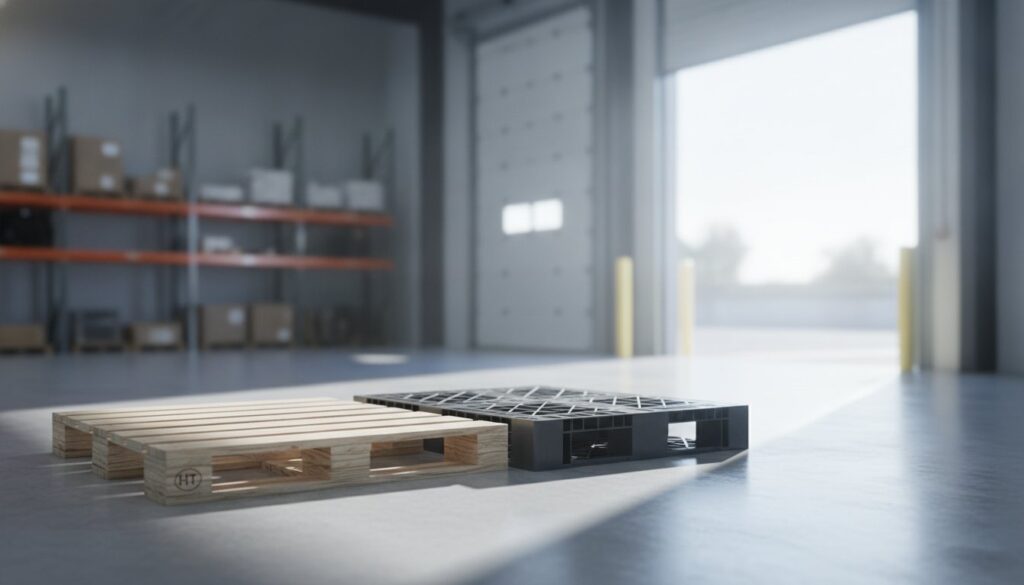
Selecting the wrong pallets is often the hidden catalyst behind rising shipping costs and catastrophic product damage. While many procurement teams treat these platforms as a simple commodity, the reality is that your choice of material and load rating dictates the safety of your entire supply chain. You likely understand the frustration of seeing a high-value shipment rejected at a foreign port due to non-compliant wood or arriving at a Southern California warehouse with crushed base layers because of structural failure.
This guide provides an authoritative comparison of pallet materials and international standards to help you optimize logistics and reduce transit risks. We will analyze the structural benefits of plastic versus wood, clarify ISPM-15 export requirements, and explain how strategic inventory management prevents production bottlenecks. By the end of this article, you will have the technical insights needed to choose a solution that protects your bottom line and improves warehouse safety from Los Angeles to San Diego. Whether you are managing medical device distribution or aerospace components, selecting the right platform is a critical step in maintaining a reliable supply chain.
Key Takeaways
- Identify the structural advantages of wood versus plastic to select the most durable material for your specific load requirements and sanitation needs.
- Ensure seamless international shipping by adhering to ISPM-15 heat treatment standards and GMA dimensional specifications to avoid customs delays.
- Eliminate inventory shortages and streamline logistics with vendor-managed inventory programs tailored for industrial pallets and packaging supplies.
- Protect high-value aerospace and medical components through custom-designed transport platforms that match unique product dimensions and weight capacities.
The Role of Pallets in Industrial Supply Chain Management
The industrial supply chain relies on the stability of the unit load. At its core, a Pallet is a horizontal platform that provides the structural foundation for the storage, handling, and transport of goods. In the distribution hubs of Orange County and the Inland Empire, these platforms are the invisible workhorses of every warehouse. Without them, the mechanical handling of bulk goods wouldn’t be possible.
Modern logistics has seen an evolution from the basic wood skids used in the early 20th century to highly engineered transport platforms. Today’s industrial solutions are designed with specific weight capacities and deflection rates in mind. This engineering ensures that a load remains stable during transit, preventing the shifting that often leads to product damage. High-quality platforms also protect your material handling equipment. Poorly constructed units can splinter or collapse, causing unnecessary wear on forklifts and automated storage systems.
Pallets vs. Skids: Understanding the Technical Difference
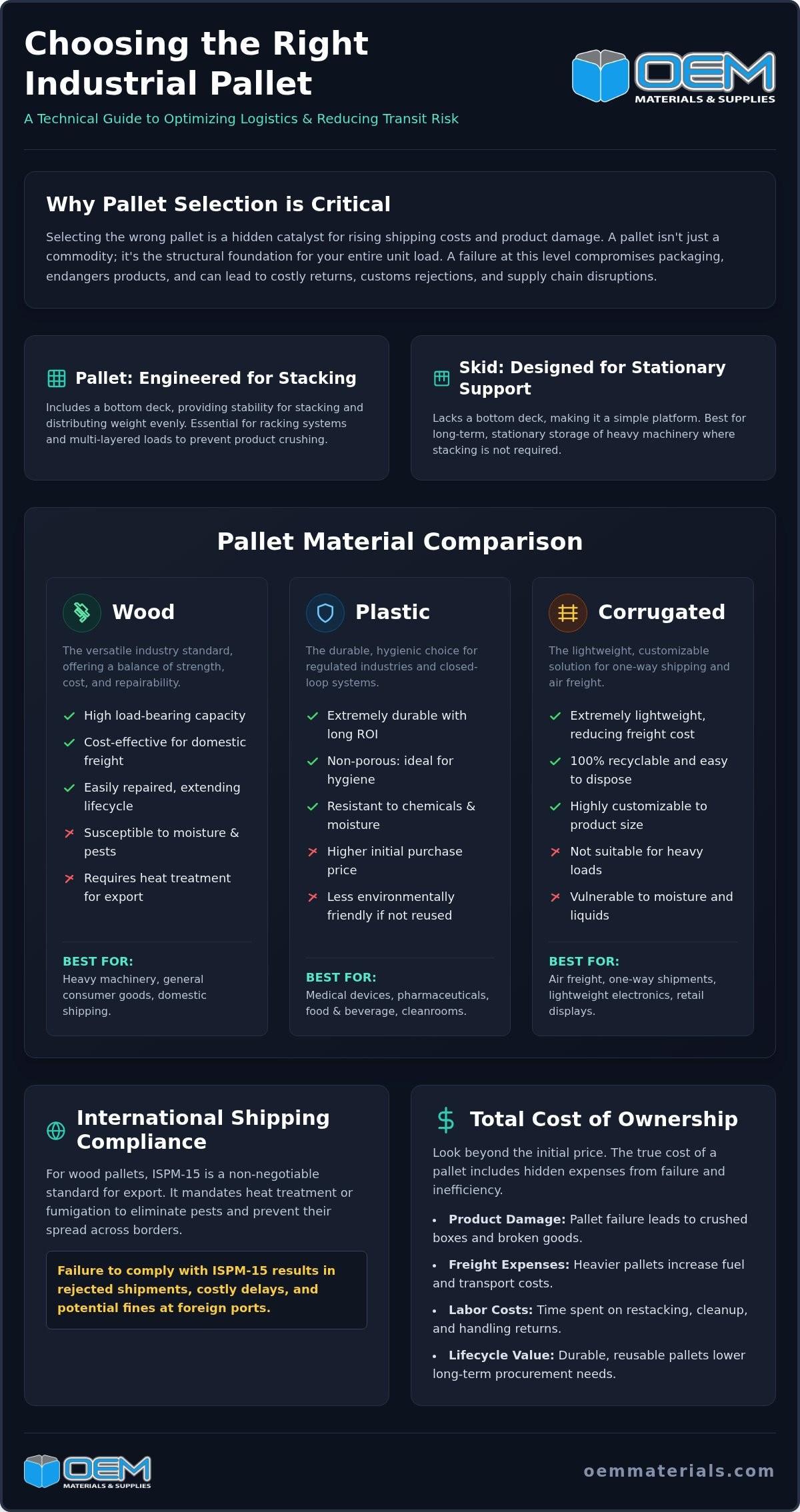
While terms aren’t always used correctly in casual conversation, pallets and skids represent different structural designs. A skid is a platform with no bottom deck boards. This design makes them ideal for supporting heavy machinery in long-term storage where the unit remains stationary on a flat floor. However, they lack the stability required for modern racking systems.
A pallet includes a bottom deck, which provides the necessary surface area for stacking multiple units. This bottom deck distributes the weight of the load evenly across the top of the unit below it. For manufacturers in Los Angeles and San Diego County handling high-density products, the bottom deck is a non-negotiable safety feature that prevents the top load from crushing the goods beneath it.
Impact on Total Cost of Ownership
Procurement professionals must look beyond the initial purchase price to understand the total cost of ownership. Pallet failure is a leading cause of secondary packaging damage. When a deck board fails or a stringer cracks, the integrity of corrugated boxes or foam packaging is compromised. This often results in expensive returns and insurance claims.
Freight expenses are also tied to your choice of platform. Excessive weight increases fuel consumption and reduces the available payload for your products. Selecting a lightweight but durable option can lower your overall shipping costs per unit. Investing in high-quality pallets reduces long-term labor costs by minimizing the time spent on manual restacking and debris cleanup in the warehouse.
Comparing Pallet Materials: Wood, Plastic, and Corrugated
Selecting the right material for your pallets depends entirely on your product’s weight, sensitivity, and final destination. While wood remains the dominant choice for domestic ground freight, specialized sectors like pharmaceutical manufacturing and aerospace often require alternative materials to meet strict contamination or weight standards. Your choice dictates not just the safety of the cargo, but also the efficiency of your material handling equipment and compliance with international trade laws.
Wood Pallets: Durability and Repairability
Wood is the versatile industry standard for a reason. Hardwood options, like oak or maple, provide the high load-bearing capacity needed for heavy machinery components. Softwood units made from pine are lighter and often serve as a cost-effective choice for general consumer goods. One of the greatest benefits of wood is its role in a circular economy. Damaged boards can be replaced or reinforced, which extends the unit’s lifecycle and reduces procurement costs over time. For domestic distribution, wood is typically the most economical solution. However, warehouse managers must strictly follow OSHA pallet stacking regulations to prevent structural collapse and ensure worker safety during high-density storage.
Plastic Pallets: Hygiene and Longevity
For medical device labs in San Diego County or cleanroom environments in Orange County, plastic is the preferred choice. These units are non-porous and resistant to chemicals, moisture, and pest infestation. Unlike wood, plastic doesn’t splinter or harbor bacteria, making it essential for pharmaceutical and food-grade applications. While the upfront cost is higher, the long-term ROI is significant in closed-loop systems where the units are returned and reused hundreds of times. They maintain a constant weight, which is critical for automated weighing systems and precision logistics. For detailed specifications on load ratings and material grades, see our Industrial Guide to Heavy Duty Plastic Pallets.
Corrugated and paper units offer a lightweight solution for air freight or one-way international shipping. They are naturally exempt from ISPM-15 regulations and can be easily recycled at the destination, reducing disposal fees for your customers. For the most extreme environments, such as high-heat automotive foundries or heavy-duty aerospace assembly lines, metal pallets provide unmatched strength and fire resistance. If you aren’t sure which material fits your specific logistics cycle, you can request a quote to discuss a custom recommendation based on your product weight and annual usage.
Navigating Pallet Standards and Export Compliance
Maintaining consistency across international borders requires strict adherence to established dimensions and treatment protocols. For procurement teams in the Inland Empire and Los Angeles, understanding these standards is the difference between a smooth delivery and a logistics nightmare. Using non-compliant pallets for global trade can lead to immediate shipment rejection at the port of entry, resulting in significant fines and delays. Standardizing your fleet ensures that every unit integrates seamlessly with automated racking systems and standard trailer widths.
The GMA Standard: 48 x 40 Pallets
The 48 x 40 inch footprint set by the Grocery Manufacturers Association (GMA) serves as the industrial baseline for North American logistics. Most warehouse racking and forklift attachments are optimized for this specific size. When sourcing these units, you’ll likely choose between Grade A and Grade B recycled options. Grade A units are in premium condition with no stringer repairs, making them ideal for high-visibility retail environments. Grade B units have been reinforced with companion stringers; they offer a cost-effective solution for internal warehouse moves where aesthetics are less critical.
Entry design also dictates operational speed. A 4-way entry pallet allows forklift tines to access the load from any side, which is essential for maximizing space in crowded shipping containers. In contrast, 2-way entry models only allow access from the front or back, which can slow down loading times in busy San Diego County distribution centers. While the GMA is the North American king, European logistics often utilize the 1200 x 800 mm Euro-pallet. Attempting to use North American dimensions in European supply chains can lead to equipment incompatibility and wasted floor space.
Export Compliance and ISPM-15 Certification
International shipping introduces biological risks that require wood packaging to meet ISPM-15 standards. This regulation mandates that all solid wood pallets undergo a heat treatment (HT) process where the core temperature reaches at least 133 degrees Fahrenheit for a minimum of 30 minutes. This heat exposure eliminates wood-boring pests that could threaten foreign ecosystems. Once treated, the wood is stamped with the IPPC certification mark, often referred to as the “wheat stamp.”
Shipping without this mark is a high-risk gamble. Customs officials at international ports regularly inspect shipments for the IPPC stamp and signs of infestation. If a single non-compliant unit is found, the entire shipment may be quarantined, fumigated at the shipper’s expense, or sent back to the United States. To avoid these costly disruptions, manufacturers must verify that their suppliers provide documented heat treatment certifications for every export-ready load. For a deeper look at these regulations, read our guide on Export Pallet Myths vs. Reality to ensure your documentation and packaging are audit-ready.
Selecting Pallets for Specific Industrial Sectors
Generic logistics solutions often fail when applied to specialized manufacturing environments. Aerospace components rarely fit on a standard 48 x 40 platform, while medical device labs cannot tolerate the particulate shedding common with low-grade wood. Understanding the specific mechanical and regulatory demands of your sector is essential for preventing product damage and maintaining facility cleanliness. In Southern California hubs like Orange County and San Diego, choosing the right pallets is a strategic decision that impacts everything from cleanroom compliance to freight safety.
Aerospace and Heavy Machinery Logistics
Aerospace components often involve irregular dimensions and extreme weight densities. Standard platforms may flex or fail under “point loads,” where the weight of a heavy metal component is concentrated on a small surface area. To mitigate this risk, many manufacturers utilize custom wood crates featuring integrated pallet bases. These engineered bases provide the structural reinforcement needed for crane lifts and multi-modal transport. When handling high-value machinery, the structural integrity of the transport base is just as important as the crate walls themselves. For a look at how these platforms support complex equipment, see our Manufacturing Packaging Solutions.
Medical and Cleanroom Standards
Sanitation is the primary driver for pallet selection in the medical and pharmaceutical sectors. Recycled wood units often harbor moisture or harbor pests, which presents a significant contamination risk. Virgin plastic platforms offer non-porous surfaces that are easy to sanitize and don’t produce the dust or splinters associated with timber. These units are often required when moving materials into sterile environments. Integrating these platforms with sterile packaging for medical devices ensures that the entire unit load meets the rigorous particulate control standards required by regulatory bodies.
Electronics and automotive sectors present their own unique challenges. Electronics manufacturers often require anti-static (ESD) plastic platforms to protect sensitive circuit boards from static discharge during transit. Vibration dampening is also a critical factor for delicate sensors. In the automotive sector, the focus shifts to pure durability. Engines and transmissions require heavy-duty units that can withstand constant exposure to oils and lubricants without degrading. If your components have unique footprints or extreme weight requirements, request a quote for a custom-engineered solution tailored to your annual usage and product dimensions.
Optimizing Your Pallet Strategy with OEM Materials & Supplies
A strategic approach to pallets goes beyond selecting a material; it requires a holistic view of your inventory management and load stability protocols. For manufacturers in the Inland Empire and Orange County, pallets are not just transport platforms but critical components of a just-in-time (JIT) production cycle. Managing these assets effectively prevents warehouse congestion and ensures that your shipping floor never grinds to a halt due to a shortage of compliant platforms. By integrating pallet procurement with broader packaging services, you can streamline your vendor list and improve operational focus.
Vendor-Managed Inventory and Logistics Support
One of the most effective ways to stabilize your supply chain is through a vendor-managed inventory (VMI) program. Outsourcing your pallet storage to a local partner reduces your on-site warehouse footprint, freeing up valuable square footage for production or finished goods. Our team monitors your usage patterns and handles replenishment automatically, ensuring you always have the right quantity of heat-treated wood or plastic units on hand. This is particularly beneficial for high-volume facilities in Los Angeles and San Diego County where floor space is at a premium.
Working with a single-source supplier for corrugated boxes, foam packaging, and pallets simplifies your procurement process. It allows for better coordination of delivery schedules and ensures that all packaging components are engineered to work together. If you’re struggling with inventory fluctuations or high carrying costs, you should request a consultation for packaging VMI services to see how a tailored program can stabilize your logistics.
Custom Engineering for Unique Loads
Standard GMA dimensions don’t always provide the necessary support for oversized aerospace components or sensitive medical machinery. Our engineers specialize in prototyping custom pallet footprints that match the specific weight distribution and dimensions of your product. This level of customization is essential for preventing the overhang or underhang issues that lead to transit damage. Custom pallets reduce the need for excessive dunnage by providing a structural fit that matches the footprint of the machinery or component exactly.
Load stability is further enhanced when you integrate your platforms with the right secondary materials. Using high-performance stretch film and edge and corner protectors ensures that the unit load remains unified during the vibrations of long-haul transport. Whether you need a standard stock order or a specialized prototype for a new product launch, our team is ready to assist. Request a quote for custom industrial pallets and provide your product dimensions, weight, and annual usage for a technical recommendation.
Strengthening Your Supply Chain with Strategic Pallet Management
Choosing the right pallets is a technical decision that directly influences your operational efficiency and cargo safety. Whether you prioritize the repairability of heat-treated wood for international exports or the hygienic longevity of plastic in a cleanroom, your choice must align with your specific load requirements and destination standards. Adhering to GMA dimensions and ISPM-15 certifications ensures that your shipments move through Southern California distribution hubs without the risk of port rejections or structural failure.
OEM Materials & Supplies has served manufacturers across Orange County, Los Angeles, and San Diego since 1999. We provide more than just inventory; we offer custom design and prototyping services to accommodate non-standard equipment and heavy-duty industrial components. By utilizing our vendor-managed inventory (VMI) and just-in-time (JIT) delivery options, you can reduce your warehouse footprint while maintaining a reliable supply of transport platforms.
To receive a technical recommendation tailored to your facility, Request a Custom Pallet Quote today. Please include your product dimensions, weight, and annual usage to help our engineers develop the most cost-effective solution for your logistics cycle. We look forward to optimizing your shipping operations.
Frequently Asked Questions
What is the standard size for an industrial pallet in North America?
The standard footprint for an industrial pallet in North America is 48 x 40 inches, established by the Grocery Manufacturers Association (GMA). This specific dimension is the baseline for most warehouse racking and forklift equipment. While other sizes exist for specific industries, the 48 x 40 unit remains the most common choice for domestic distribution. Standardizing your fleet to this size ensures maximum compatibility with third-party logistics providers throughout Southern California.
Do all wood pallets require heat treatment for international shipping?
Yes, all solid wood pallets must undergo heat treatment (HT) to comply with ISPM-15 regulations for international shipping. This process involves heating the wood core to 133 degrees Fahrenheit for 30 minutes to eliminate wood-boring pests. Processed wood materials like plywood or corrugated paper are exempt from these requirements. Shipping non-compliant solid wood into a foreign port often results in immediate rejection, fines, or costly fumigation services at the owner’s expense.
How much weight can a standard Grade A wood pallet hold?
A standard Grade A wood pallet typically supports a dynamic load capacity of approximately 2,500 pounds. The actual weight limit depends on the wood species and the structural configuration of the stringers and deck boards. Hardwood units generally offer higher weight ratings than softwood alternatives. It’s essential to verify the static load rating as well, which is often much higher, to ensure safety when stacking multiple unit loads in a high-density warehouse.
What are the advantages of plastic pallets over wood for medical manufacturing?
Plastic pallets provide superior hygiene for medical manufacturing because they are non-porous and resistant to moisture and chemical contamination. Unlike wood, they don’t produce splinters or dust that can compromise cleanroom environments. These units are also naturally resistant to pest infestation, which eliminates the need for heat treatment. For pharmaceutical labs in San Diego County, plastic is the preferred choice to maintain strict particulate control and ensure consistent, easy-to-sanitize transport platforms.
Can pallets be customized for oversized aerospace components?
Yes, pallets can be custom-engineered to support the irregular dimensions and extreme weight of aerospace components. Our team prototypes specialized footprints that prevent product overhang and ensure structural stability during crane lifts. These custom bases are often integrated directly into heavy-duty wood crates to provide a unified transport solution. Customization allows you to handle high-density metal parts or oversized machinery without the risks associated with using standard platforms for non-standard loads.
How does a vendor-managed inventory (VMI) program work for pallets?
A vendor-managed inventory (VMI) program involves your supplier monitoring your pallet usage and handling replenishment automatically. This approach ensures you always have the necessary stock on hand without over-ordering. By outsourcing storage to a local partner, you reduce your on-site warehouse footprint in crowded areas like Orange County. It creates a seamless supply chain where pallets arrive just-in-time for production, allowing your procurement team to focus on higher-level operational tasks.
What is the difference between a 2-way and a 4-way entry pallet?
The primary difference lies in the number of access points for material handling equipment. A 2-way entry design only allows forklift tines to enter from two opposite sides, usually the front and back. A 4-way entry design includes notches in the stringers, allowing access from all four sides. This versatility is critical for optimizing space in shipping containers and navigating tight warehouse aisles in Los Angeles where maneuverability is essential for fast loading.
How do I know if my pallets are ISPM-15 compliant?
You can verify ISPM-15 compliance by locating the IPPC certification mark, commonly known as the “wheat stamp,” on the side of the pallet. This mark includes the country code, a unique manufacturer ID, and the “HT” abbreviation for heat treatment. Every export-ready unit must display this permanent stamp to be accepted at international ports. If the stamp is missing or illegible, the pallet is considered non-compliant and may be stopped during customs inspections.