
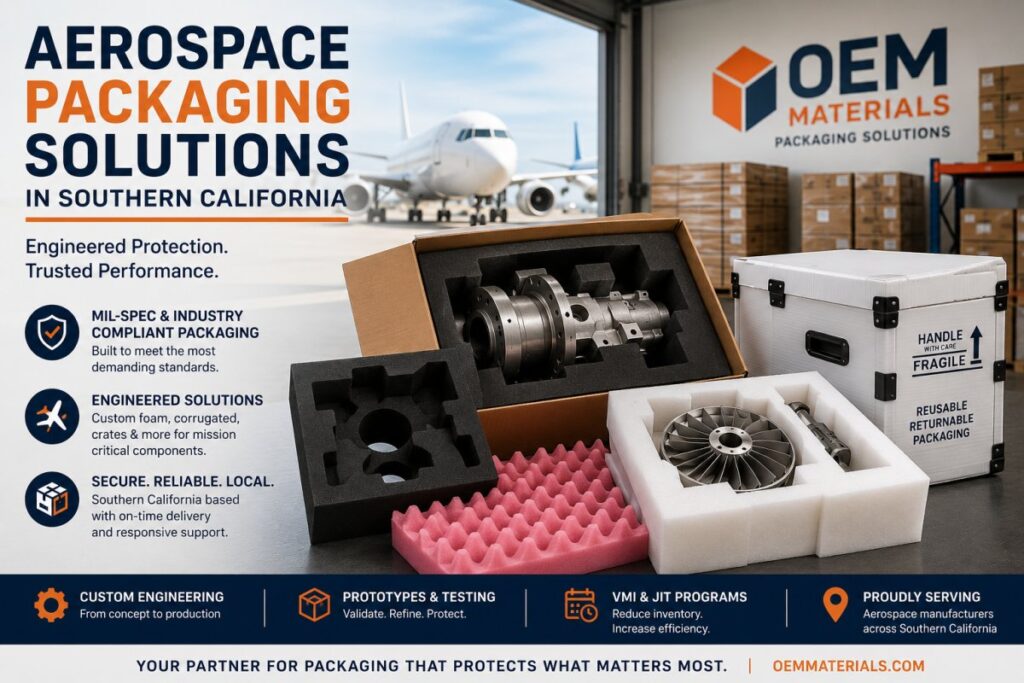
A single damaged avionics component often costs more in project delays and replacement fees than an entire year of packaging inventory. For manufacturers in Los Angeles, Orange County, and San Diego, the margin for error during transit is effectively zero. You already know that standard shipping materials cannot provide the precision required for high-value aerospace assemblies. Finding reliable aerospace packaging solutions in Southern California means balancing rigorous protection with the logistical realities of a fast-moving supply chain.
We’ve designed this engineering reference to help you protect mission-critical components using engineered solutions tailored specifically for local manufacturers. You’ll learn how to achieve zero-damage shipments while maintaining full compliance with MIL-SPEC and AS9100 standards. We will also explore how integrated services like vendor-managed inventory and custom kitting can streamline your procurement and free up valuable warehouse space for production instead of packaging storage.
Key Takeaways
- Understand why engineered packaging is necessary to mitigate specific G-force impacts on sensitive avionics and flight control systems.
- Identify the critical MIL-SPEC and AS9100 standards required for defense contractors to maintain lot traceability and regulatory compliance.
- Learn how to evaluate aerospace packaging solutions in Southern California based on engineering depth rather than simple commodity pricing.
- Discover how Vendor-Managed Inventory (VMI) can resolve warehouse space constraints in high-rent regions like Los Angeles and Orange County.
- Recognize the importance of rapid prototyping and local design reviews to ensure specialized crates and foam inserts meet exact specifications.
The Role of Specialized Aerospace Packaging in Southern California
Southern California serves as the primary engine for global aerospace innovation. With industry leaders like SpaceX and Northrop Grumman operating alongside thousands of Tier-1 and Tier-2 suppliers, the local logistics network is both dense and demanding. Moving a flight control system from an assembly plant in Irvine to a testing facility requires more than just a standard container. It requires a specialized system that accounts for the constant vibration of the regional freeway system and the varying humidity levels found near the coast.
Securing effective aerospace packaging solutions southern california manufacturers can trust involves understanding the high financial stakes of the industry. When a mission-critical component arrives out of tolerance due to improper cushioning, the cost isn’t limited to the price of the part. It includes the massive expense of a grounded aircraft or a delayed satellite launch. Engineering precision must extend through the entire supply chain. This ensures that every foam packaging insert and custom crate is built to exceed standard industrial specifications.
Why Standard Industrial Packaging Fails Aerospace Components
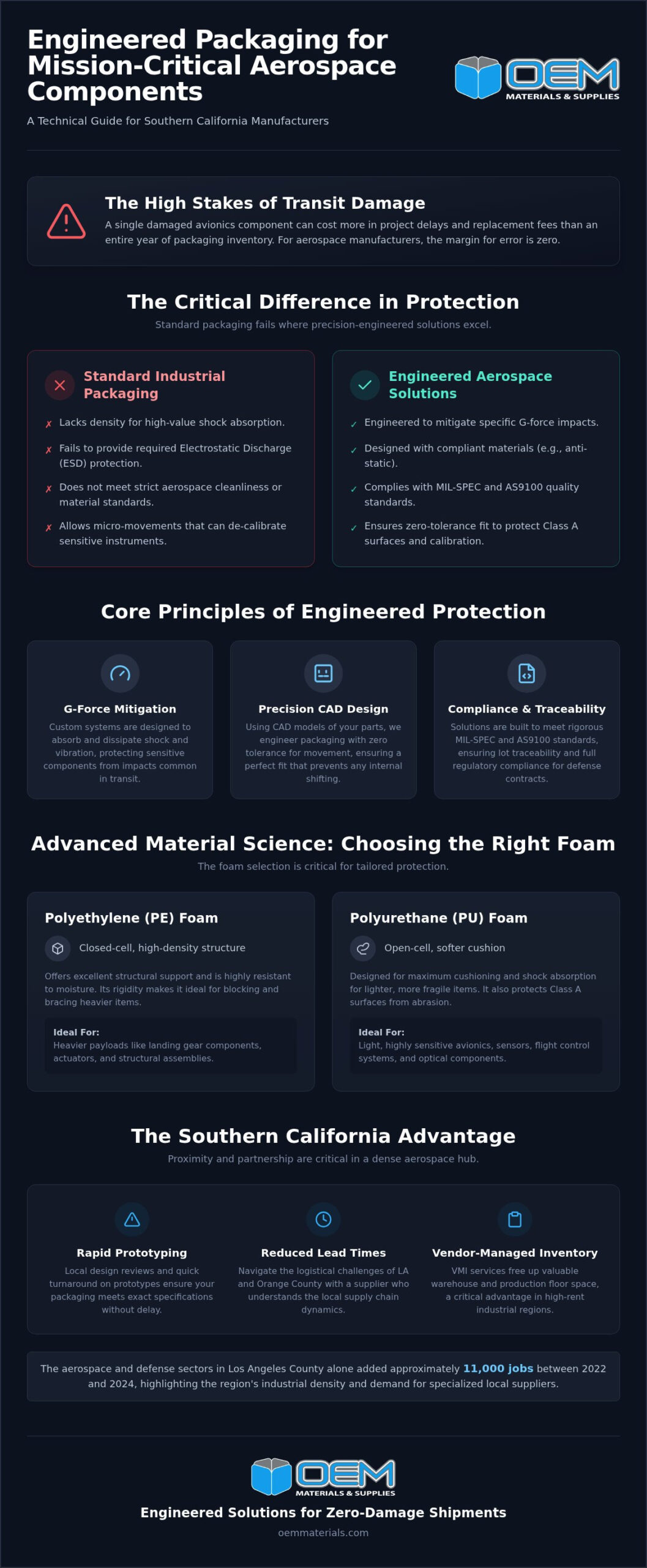
Standard brown boxes are for retail goods. They aren’t for avionics. These materials typically lack the specific density needed for high-value shock absorption. If a sensor moves even a fraction of an inch inside its container, it can lose calibration during transit. Additionally, many aerospace components require strict adherence to National Aerospace Standards (NAS) to ensure material safety and performance. Generic packaging often fails to address Electrostatic Discharge (ESD) protection or cleanliness requirements. These are non-negotiable for electronic assemblies.
The Southern California Aerospace Hub and Local Supply Chain Needs
Proximity is a critical factor when managing defense contracts with aggressive timelines. Being located near major logistical hubs like LAX and the Port of Long Beach creates unique challenges, including heavy traffic and multi-stage handling that increases the risk of damage. Local suppliers provide a distinct advantage through custom packaging design and rapid prototyping. Between 2022 and 2024, the aerospace and defense sectors in Los Angeles County added approximately 11,000 jobs, which underscores the region’s industrial density. Sourcing from a local partner reduces lead times and allows for on-site design reviews, ensuring that your packaging is as precise as the components it protects.
Engineering Custom Protection for Sensitive Avionics and Assemblies
Engineered packaging isn’t just a container; it’s a technical system designed to mitigate specific G-force impacts during transit. For manufacturers seeking aerospace packaging solutions southern california, the process starts with a thorough analysis of a component’s fragility and weight. We use CAD design to create exact digital models of the part, ensuring every cavity and support structure fits with zero tolerance for movement. This precision is essential for maintaining the integrity of sensors and flight control systems that must remain calibrated from the assembly line to the launchpad.
Effective protection requires a deep understanding of material science. Every design choice must align with the rigorous requirements established by the Defense Standardization Program. By integrating multiple materials, such as high-density foam and reinforced corrugated board, we create a multi-layered defense against shock and vibration. If you’re unsure if your current specs meet these standards, you can request a packaging review to identify potential vulnerabilities in your supply chain.
Custom Foam Inserts for Shock and Vibration Mitigation
Selecting the right foam is the most critical decision in aerospace packaging. Polyethylene (PE) foam is a closed-cell material that offers excellent structural support and moisture resistance, making it the preferred choice for heavier payloads like landing gear components or actuators. In contrast, Polyurethane (PU) foam is an open-cell, softer material designed for lighter, highly sensitive avionics that require maximum cushioning. Using custom foam packaging also protects Class A surfaces from abrasion, which is vital for optical sensors and polished metal finishes. Our designers engineer specific foam densities to cradle complex geometries, preventing internal movement that leads to part failure.
Corrugated Solutions for High-Precision Components
While wood and plastic have their place, heavy-duty corrugated boxes offer a lightweight, cost-effective alternative for many aerospace assemblies. We utilize double-wall and triple-wall corrugated board to provide the structural integrity required for stacking and long-distance transport. This material is particularly effective when paired with custom internal shielding. For a deeper look at how these materials are manufactured for industrial use, see our Corrugated Packaging Box Manufacturers: A Guide for Industrial OEMs. These solutions allow Southern California manufacturers to reduce shipping weights without compromising the safety of mission-critical hardware.
Regulatory Compliance and Material Standards for Aerospace Logistics
Compliance in the aerospace sector is a strict operational requirement. For contractors in the Los Angeles and Orange County corridors, failing to meet specific military or federal standards results in rejected shipments and contract penalties. Securing reliable aerospace packaging solutions southern california depends on a partner’s ability to navigate these complex regulatory frameworks. Every container and insert must undergo rigorous testing to ensure it meets ASTM and MIL-SPEC protocols before it ever touches a flight component.
Material certifications and lot traceability are the backbone of a secure supply chain. Every material used in the packaging process must be documented to verify its origin and performance characteristics. This level of detail is critical for managing aerospace supply chain disruptions, as it allows engineers to quickly identify and isolate non-compliant materials. Without proper documentation, even the most robust protective system is useless in a defense or commercial aviation environment.
Navigating MIL-SPEC and AS9100 Packaging Requirements
Military-grade protection often starts with MIL-STD-2073, which outlines the standard practice for military packaging. This standard dictates everything from the type of barrier materials used to the specific methods of preservation. For electronic components, ESD-safe materials are mandatory to prevent static discharge from compromising sensitive circuits. Additionally, specialized cushioning materials must often meet flame-retardant standards to comply with safety regulations for both storage and air transport. These requirements ensure that components remain functional after months in storage or hours of high-vibration transit.
ISPM 15 Certified Wood Crates for International Shipping
Domestic shipping requirements differ significantly from international logistics. When shipping oversized engine parts or fuselage sections across borders, you must use ISPM 15 certified wood. This standard requires that all wood crates and pallets are heat-treated to prevent the spread of invasive pests. Every piece of wood packaging must carry the official IPPC certification mark to pass through customs without delay. We design these heavy-duty systems to support massive payloads while ensuring full compliance with global trade regulations, preventing costly hold-ups at international ports.
Optimizing Procurement with JIT and Vendor-Managed Inventory
Southern California industrial real estate is among the most expensive in the nation. For manufacturers in the Los Angeles and Orange County corridors, every square foot dedicated to storing bulky packaging inventory is a square foot not used for production. Implementing aerospace packaging solutions southern california procurement teams can rely on requires a shift from bulk ordering to lean logistics. Transitioning to vendor-managed inventory (VMI) allows you to offload the burden of stock management to your partner. We monitor your usage levels and replenish supplies automatically. This eliminates the risk of stockouts without cluttering your floor space with months of safety stock.
This approach works in tandem with just-in-time (JIT) packaging strategies. Instead of receiving a massive shipment of custom crates at once, deliveries are synchronized with your specific production schedule. In a typical VMI workflow, the packaging partner takes full responsibility for maintaining agreed-upon stock levels through regular on-site audits or digital tracking. For a local factory, this means you no longer need to dedicate staff time to counting boxes or placing emergency orders when supplies run low. Consolidating your industrial supplies with a single partner further optimizes the process. When you source your corrugated boxes, foam, and stretch film from one vendor, you reduce the number of invoices and deliveries your team has to manage. If you’re looking to reclaim your warehouse space while ensuring supply chain continuity, contact us for a procurement review.
Improving Efficiency through Kitting and Assembly Services
Packaging efficiency isn’t just about storage; it’s about the speed of the pack-out process on the floor. Delivering pre-assembled packaging kits directly to the production line significantly reduces labor costs. These customized kits include all necessary components, such as boxes, precision-cut foam inserts, and labels. By removing the need for workers to source individual items from different warehouse locations, you streamline high-volume production runs. This ensures consistency across every shipment and prevents the bottlenecking that often occurs during the final stages of manufacturing.
Load Stabilization with Stretch Film and Edge Protection
Protecting the individual component is only half the battle. Aerospace payloads are often heavy and irregularly shaped, requiring robust load stabilization to survive the final mile. Selecting the right high-performance stretch film is necessary for maintaining pallet integrity during transit across the regional freeway system. We also utilize edge and corner protectors to prevent strap damage and crushing when pallets are stacked or tightly secured. For detailed technical specifications on material application, refer to our guide on how to optimize stretch film for pallet wrapping. These secondary materials are vital for ensuring that your engineered protection stays intact until it reaches the end user.
Selecting an Aerospace Packaging Partner in Southern California
Choosing a partner for aerospace packaging solutions southern california requires a shift in perspective. Many vendors operate as commodity resellers, focusing solely on the price per unit. For aerospace manufacturers, this approach often leads to hidden costs through product damage or regulatory rejection. A true partner functions as an extension of your engineering team. They prioritize technical depth and material performance over simple order fulfillment. In industrial hubs like Orange County and Riverside, agility is a primary competitive advantage. Working with a local supplier allows for immediate on-site consultations and a faster response to shifting production schedules.
Analyzing the total cost of ownership is more effective than comparing line-item prices. While a cheaper crate might save money upfront, a single failed shipment can result in insurance claims, liquidated damages, and a tarnished reputation with Tier-1 contractors. A strategic partner understands the specific G-force tolerances and environmental risks associated with Southern California logistics. They provide the documentation and lot traceability required to keep your supply chain compliant and your shipments secure.
Evaluating Engineering Support and Prototyping Capabilities
The value of custom packaging design becomes apparent during the prototyping phase. You shouldn’t commit to high-volume runs without verifying that the protective system performs as intended. Local design reviews allow your engineers to inspect foam cavities and crate structures alongside the packaging team. This collaborative process ensures that complex geometries are fully supported. We test prototypes against real-world shipping conditions to confirm they mitigate vibration and shock. This capability allows you to scale from initial avionics prototypes to full-rate production with confidence in your protective materials.
Total Cost Reduction through Integrated Supply Solutions
Consolidating your packaging requirements with a single integrated supplier reduces administrative overhead. Managing separate vendors for corrugated boxes, custom foam, and wood crates creates unnecessary friction in the procurement process. An integrated model streamlines everything from invoicing to delivery. This synergy reduces the likelihood of returns and ensures that all components of a packaging kit work together seamlessly. OEM Materials & Supplies positions itself as a strategic partner for Southern California aerospace manufacturers by combining engineering expertise with local logistical support. We focus on solving real-world problems like product damage and inefficient packing to improve your bottom line. Results always depend on your specific product requirements and shipping methods, but a technical approach to packaging consistently yields better outcomes than commodity sourcing.
Advancing Your Aerospace Supply Chain with Engineered Protection
Protecting mission-critical components requires a move away from generic shipping supplies and toward a system-based engineering approach. By integrating custom foam with high-strength corrugated materials, you ensure that even the most sensitive avionics remain within tolerance during transit. We’ve seen how local logistics optimization, including vendor-managed inventory, can reclaim valuable floor space in high-rent Southern California industrial zones while maintaining full regulatory compliance. Implementing robust aerospace packaging solutions southern california manufacturers can trust is about more than just containment; it’s about building a resilient supply chain that prioritizes zero-damage shipments.
We’re ready to help you reduce total packaging costs through local engineering support and integrated logistics. Contact OEM Materials & Supplies today for a custom aerospace packaging consultation to evaluate your current specifications. When you reach out, please provide your part dimensions, weight, and fragility requirements to facilitate an accurate engineering review. We look forward to becoming your dependable partner in aerospace logistics.
Frequently Asked Questions
What are the most common materials used for aerospace component packaging?
High-performance materials like polyethylene foam, polyurethane foam, and heavy-duty corrugated board are the industry standards for aerospace protection. We also utilize heat-treated wood for large assemblies and specialized cushioning materials to mitigate high-frequency vibration. These materials are selected based on the specific fragility and weight of the component to ensure it remains calibrated and damage-free throughout the Southern California logistics network.
How do I ensure my aerospace packaging is MIL-SPEC compliant?
To ensure MIL-SPEC compliance, you must adhere to MIL-STD-2073, which governs military preservation and packaging methods. It’s critical to verify that all materials, from barrier bags to cushioning, have the necessary certifications and full lot traceability. Working with an experienced partner who understands these technical protocols is the most reliable way to avoid rejected shipments and maintain your status as a qualified defense supplier.
Why is Southern California a critical hub for aerospace packaging solutions?
Southern California houses a massive concentration of aerospace and defense contractors, making it a primary center for specialized logistics. Proximity to major hubs like LAX and the Port of Long Beach requires local aerospace packaging solutions southern california teams can access quickly for rapid prototyping. Sourcing locally reduces lead times and allows for on-site design reviews that are critical for meeting aggressive defense contract deadlines and managing complex regional transit.
What is the difference between polyethylene and polyurethane foam for aerospace parts?
Polyethylene (PE) is a high-density, closed-cell foam used for heavy payloads that require rigid structural support. Polyurethane (PU) is a softer, open-cell foam designed to provide maximum cushioning for light, highly sensitive avionics. Choosing between them depends on the G-force tolerance of your part. PE prevents the payload from bottoming out, while PU absorbs the fine vibrations that can easily damage delicate internal sensors during transit.
How does vendor-managed inventory benefit aerospace manufacturers?
Vendor-managed inventory (VMI) allows manufacturers to reclaim expensive floor space by offloading stock management to a reliable partner. We monitor your packaging levels and replenish supplies automatically, which prevents stockouts of critical items like custom foam inserts or corrugated boxes. This strategy is particularly effective in high-rent Southern California industrial zones where warehouse space should be prioritized for production and assembly rather than packaging storage.
When is a custom wood crate necessary for aerospace shipping?
Custom wood crates are necessary for oversized or extremely heavy components that exceed the weight limits of corrugated boxes. We design these crates for items like engine blocks, landing gear, or fuselage sections that need rigid protection and structural integrity for crane or forklift handling. All export crates must be heat-treated and carry the IPPC mark to comply with international shipping regulations and prevent delays at border crossings.
Can custom corrugated boxes provide enough protection for avionics?
Heavy-duty corrugated boxes provide excellent protection for avionics when they’re engineered as part of a multi-layer system. We use double-wall or triple-wall board combined with precision-cut foam inserts to create a protective environment that mimics the rigidity of plastic at a lower weight. This integrated approach effectively mitigates shock and vibration while helping to reduce the total shipping weight and material costs of the assembly.
What documentation is required for shipping aerospace parts internationally?
International shipments require ISPM 15 certification for all wood packaging to pass through customs without delay. You must also provide detailed material certifications and lot traceability documentation to meet global regulatory standards for aerospace hardware. Proper identification marking, such as MIL-STD-129R for defense contracts, is also mandatory to ensure parts are tracked and handled correctly across borders, preventing costly hold-ups at international ports of entry.