
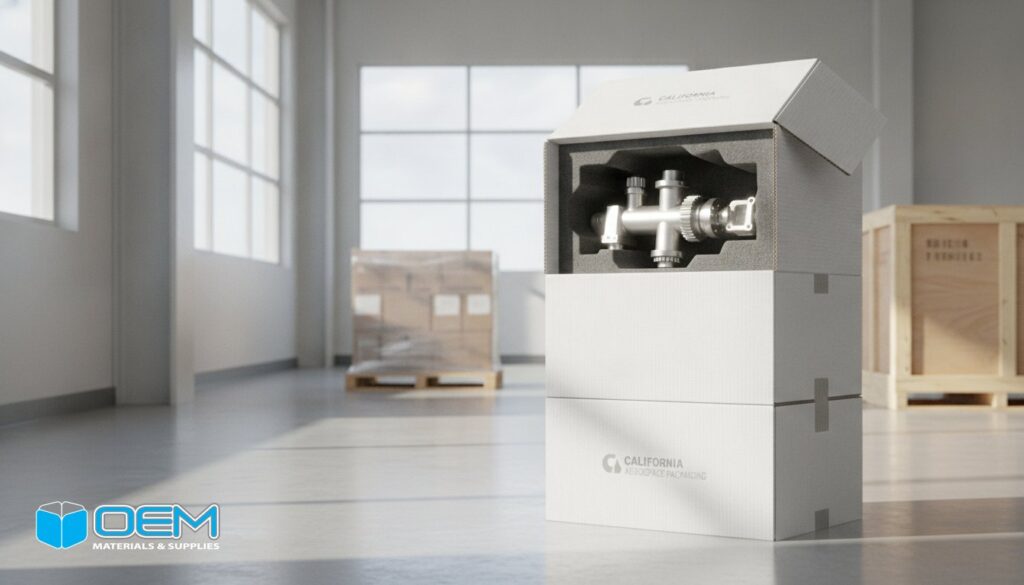
A single shipping failure on a high-value industrial component often costs more in reputation and replacement logistics than an entire year of packaging spend. For manufacturers across Los Angeles and Orange County, the box is far more than a simple container. It is the final line of defense for your engineering team’s precision work. When standard containers fail to protect specialized equipment, the resulting product damage and high labor costs can quickly erode your profit margins. Transitioning to high-performance heavy-duty corrugated boxes is a strategic move that addresses these logistical bottlenecks directly.
We understand that your operations require more than just a vendor; you need a partner who recognizes the high stakes of the Southern California manufacturing landscape. You are likely looking for ways to eliminate shipping cycles that result in damaged goods while simultaneously reclaiming warehouse space currently consumed by bulky stock inventory. It is a common challenge to balance maximum protection with the need for a lean, efficient warehouse floor that supports rapid distribution.
This guide provides the technical framework to select the right heavy-duty corrugated packaging to protect high-value industrial goods and optimize your local supply chain. You’ll learn how to evaluate material specifications for aerospace or electronics, implement custom designs that reduce packing time, and use vendor-managed inventory to ensure you always have the right protection on hand without overstocking your facility.
Key Takeaways
- Identify the critical differences between Edge Crush Test (ECT) and Mullen Test ratings to ensure your packaging provides the necessary stacking strength and puncture resistance.
- Learn how specialized heavy-duty corrugated boxes are engineered to meet the rigorous shipping standards of the aerospace and medical device industries in Southern California.
- Reduce operational overhead by implementing custom packaging design and kitting services that streamline assembly and minimize material waste.
- Improve supply chain reliability through local vendor-managed inventory (VMI) programs that prevent stockouts and optimize warehouse floor space in Los Angeles and San Diego.
Understanding Heavy-Duty Corrugated Boxes for Industrial Applications
Industrial packaging is a critical engineering component, not just a commodity. While a standard shipping container might suffice for lightweight consumer goods, manufacturers in Los Angeles and Orange County require heavy-duty corrugated boxes to handle the physical stresses of industrial transport. These containers utilize multi-wall construction, high-test liners, and heavy-weight fluting to provide superior puncture resistance and vertical compression strength. Understanding Corrugated box design principles is essential for procurement teams who must protect expensive machinery or sensitive aerospace components during long-haul transit or ocean freight.
Standard boxes often fail when subjected to the vibrations and stacking pressures inherent in industrial supply chains. Heavy-duty versions use specialized materials that maintain their structural integrity even in humid warehouse conditions or during rough handling. This reliability is vital for Southern California businesses that distribute high-value goods across the Inland Empire or through the Port of Los Angeles. When you’re shipping heavy automotive parts or medical equipment, the box’s ability to resist bursting and crushing directly impacts your bottom line.
Double-Wall vs. Triple-Wall Construction
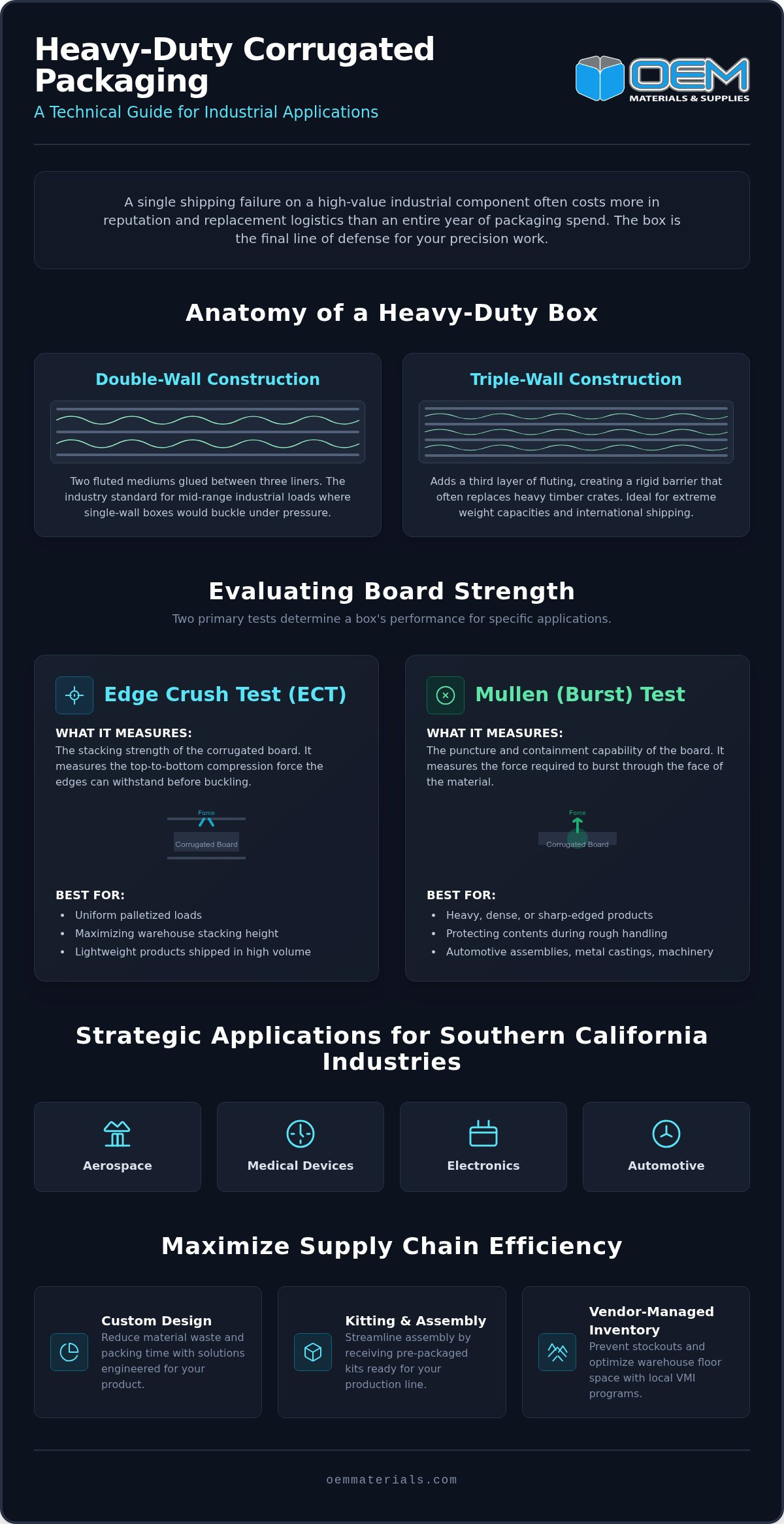
The structural integrity of a box depends largely on the number of walls. Double-wall corrugated consists of two fluted mediums glued between three liners. It’s the industry standard for mid-range industrial loads where standard single-wall boxes would buckle under pressure. For extreme weight capacities or international shipping, triple-wall corrugated is the preferred solution. It adds a third layer of fluting, creating a rigid barrier that often replaces heavy timber crates. This increased wall thickness significantly boosts stacking strength, allowing for higher pallet density in warehouse environments without risking a collapse of the bottom tiers.
The Role of Fluting in Vertical Compression
Fluting is the arched paper layer between liners that acts as the backbone of the box. In heavy-duty corrugated boxes, the choice of flute size (such as A, B, or C) determines the container’s rigidity and cushioning properties. For heavy-duty applications, we often use combinations like BC or AC fluting to maximize both vertical compression and puncture resistance. Selecting the right fluting is a technical decision based on the product’s weight and fragility. Larger flutes provide better cushioning for sensitive electronics, while smaller, denser flutes offer the flat surface strength needed for stacking stability. Using custom packaging design ensures that the fluting profile matches your specific load requirements, preventing material waste while maintaining safety standards.
Evaluating Strength: ECT vs. Mullen Test Ratings
Selecting the right heavy-duty corrugated boxes requires a technical understanding of how different testing standards impact your specific application. The Edge Crush Test (ECT) and the Mullen (Burst) Test are the two primary metrics used to define board strength, but they measure entirely different physical properties. ECT evaluates the stacking strength of the corrugated board by measuring the pressure the edges can withstand before buckling. Conversely, the Mullen Test measures the force required to puncture or burst the face of the board, which is a key indicator of material toughness and containment capability.
Industrial OEMs should prioritize Mullen ratings when shipping heavy, dense, or sharp-edged products such as automotive assemblies or metal castings. While ECT focuses on vertical load, Mullen ratings ensure the box can withstand the internal pressure of heavy components without bursting through the sidewalls. Adhering to federal standards for fiberboard packaging provides a baseline for durability, particularly when handling goods that require high puncture resistance. ECT ratings directly correlate to warehouse stacking height limits by defining the maximum top-to-bottom compression load a box can support before the sidewalls buckle.
When to Prioritize Stacking Strength
ECT is the primary metric for supply chain efficiency when your operations rely on high-density palletization and vertical storage. In regions like Los Angeles and Orange County, where warehouse floor space is expensive, maximizing vertical stacking is essential. This strength is further supported by using high-quality stretch film for pallet wrapping to stabilize the load and prevent shifting. If your supply chain involves uniform pallet loads and predictable stacking, ECT-rated boxes offer a cost-effective way to ensure stability without over-engineering the material.
When to Prioritize Puncture Resistance
Mullen ratings are critical for heavy machinery and automotive parts that may have irregular shapes or concentrated weight points. These products don’t just sit in a box; they exert outward pressure that can cause standard containers to fail. During LTL (Less Than Truckload) shipping, your freight faces frequent handling and potential impacts from neighboring cargo. High-density loads require the superior puncture resistance of Mullen-tested material to prevent sidewall failure and protect your investment. To find the right balance between these two metrics for your specific product dimensions, you can request a technical packaging review from our engineering team.
Strategic Applications Across Southern California Industries
Southern California represents one of the most diverse manufacturing corridors in the United States. Each sector, from the aerospace hubs in Los Angeles and Orange County to the medical device clusters in San Diego, faces unique logistical hurdles. Standard packaging often fails to meet the rigorous Corrugated fiberboard standards required for industrial-grade protection. Utilizing heavy-duty corrugated boxes tailored to specific industry needs prevents the costly product damage that often occurs during regional distribution or international transit.
Aerospace and Defense Packaging Standards
Aerospace manufacturers in the Los Angeles basin produce some of the most technologically advanced flight components in the world. These items are frequently high-cost and sensitive to vibration or impact. Meeting defense-grade durability requirements involves more than just a thick box; it requires a systematic approach to protection. By integrating custom foam inserts into heavy-duty corrugated boxes, engineers can secure delicate sensors and avionics within a rigid outer shell. This combination is frequently used for manufacturers shipping delicate sensors across the country where the custom-engineered solution results in a zero-damage transit cycle despite multiple carrier transfers.
Medical and Life Science Logistics
The life science sector in San Diego County operates under strict regulatory and cleanliness requirements. Packaging for medical devices must often be cleanroom-compatible while maintaining the structural integrity needed for heavy diagnostic tools or lab equipment. Heavy-duty corrugated boxes serve as the robust outer layer for these high-value shipments, ensuring that the primary sterile packaging remains uncompromised. Operations managers in this field must balance maximum protection with the need for efficient unboxing in clinical settings. Using pre-assembled packaging kits can significantly reduce the labor time required for shipping sensitive medical hardware.
Automotive and Electronics Distribution
The Inland Empire serves as a central distribution hub for automotive components where high-density loads are the norm. Protecting metal parts, such as the iron castings manufactured by Bowmanville Foundry, from physical impact requires specialized materials like high-test liners and moisture-resistant coatings. For electronics manufacturers throughout Southern California, ESD (Electrostatic Discharge) packaging is a non-negotiable requirement. Integrating anti-static materials into heavy-duty corrugated containers allows for the safe transport of circuit boards and microchips without the risk of latent electrical damage. This strategic approach to material selection ensures that every component reaches its destination in peak operational condition.
Efficiency in a manufacturing environment is a technical requirement, not just a goal. For high-volume operations, the time spent assembling a single box contributes directly to the total cost per unit. Implementing packaging kits or pre-assembled sets reduces labor hours and streamlines the packing station by providing all necessary components in one ready-to-use package. This approach eliminates the bottleneck of sourcing individual pieces and allows your team to focus on throughput rather than logistics.
By utilizing custom packaging design, manufacturers can eliminate excess material waste and ensure every cubic inch of the container is used effectively. This precision engineering also addresses dimensional weight (DIM) shipping charges. Shipping air is expensive. Right-sizing your heavy-duty corrugated boxes ensures you aren’t paying carrier penalties for oversized, under-filled containers. For exceptionally heavy loads, integrating edge and corner protectors reinforces the structural integrity of the box, allowing for safer vertical stacking and reducing the risk of sidewall compression during transit.
Vendor Managed Inventory (VMI) for Packaging
Production downtime due to a shortage of shipping materials is an avoidable operational failure. Our VMI services provide a functional remedy by placing the responsibility of stock levels on the supplier. This program optimizes your warehouse floor space by reducing the need for on-hand bulk inventory that often sits idle. For factories in Los Angeles or the Inland Empire, Just-In-Time (JIT) delivery ensures that packaging arrives exactly when the production schedule requires it. This level of synchronization supports lean manufacturing principles and frees up capital that would otherwise be tied up in stagnant stock.
Prototyping and Short-Run Production
New product launches in the medical and electronics sectors often require rapid prototyping to validate packaging performance before committing to high-volume manufacturing. Local Southern California design and manufacturing capabilities allow for significantly reduced lead times compared to overseas vendors. You can transition from a short-run of custom boxes to a full-scale production program with minimal friction. This agility is vital for maintaining a competitive edge in fast-moving industries. If you are ready to optimize your packing process, contact our team for a consultation to review your current usage and product dimensions.
Selecting the Right Heavy-Duty Packaging Partner
Choosing a supplier for heavy-duty corrugated boxes involves evaluating more than just the unit price. Industrial OEMs require a partner that understands the technical nuances of their specific supply chain and the physical stresses their products face. A full-service provider manages the entire lifecycle of the package, from initial engineering and material testing to long-term inventory management. This comprehensive approach ensures that the packaging remains a functional asset rather than a logistical burden. For a deeper look at industry standards and selection criteria, consult our Pillar Guide for Industrial OEMs to help vet potential suppliers against your operational needs.
To receive an accurate and competitive quote, procurement teams should prepare specific data points before contacting a supplier. We require exact product dimensions, total weight, and projected annual usage. These variables are critical because they determine the material grade and construction style needed to prevent structural failure. For example, knowing your annual usage allows a supplier to suggest volume-based manufacturing efficiencies or VMI programs that stabilize your unit costs. Without these metrics, you risk purchasing under-engineered boxes that lead to product damage or over-engineered solutions that unnecessarily inflate your overhead.
The Advantage of Local SoCal Expertise
Sourcing from a regional supplier in Southern California offers immediate logistical benefits that national resellers can’t match. Manufacturers in Riverside, San Diego, and Orange County can significantly lower their freight costs by reducing the distance between the packaging plant and their facility. Regional expertise is particularly valuable for companies distributing through the Port of Los Angeles or the Inland Empire’s vast logistics network. Local partners also provide on-site consultations, allowing operations managers to address warehouse challenges in person. This proximity facilitates faster response times for urgent orders and easier coordination for custom design projects.
Next Steps for Your Packaging Program
Improving your packaging cycle starts with gathering your technical specifications and identifying where your current containers are failing. Once you’ve identified your requirements, the next logical step is requesting a prototype. Testing custom heavy-duty corrugated boxes in your actual shipping environment reveals potential weaknesses, such as corner crushing or sidewall buckling, before you commit to a high-volume run. This validation process ensures the final product meets your exact durability standards and fits your existing palletization equipment perfectly. Contact OEM Materials & Supplies today for a professional consultation to optimize your industrial packaging program and protect your high-value goods.
Securing Your Southern California Supply Chain
Industrial packaging is a strategic investment in your operational efficiency. By selecting high-performance heavy-duty corrugated boxes tailored to your specific load requirements, you eliminate the high costs of product damage and inefficient warehouse handling. We’ve explored how precise material selection and custom engineering provide the necessary defense for aerospace components, medical devices, and automotive parts across Los Angeles and Orange County.
OEM Materials & Supplies has served the aerospace, medical, and automotive sectors since our inception. We provide local Southern California support to ensure rapid response times and reliable delivery for high-volume manufacturing hubs. Our custom engineering services are designed to reduce your labor costs and material waste through right-sized designs and kitting solutions. To facilitate an accurate recommendation, please have your product dimensions, weights, and annual usage data ready for our engineering team.
Contact OEM Materials & Supplies for a Custom Packaging Quote to start your transition toward a zero-damage shipping cycle. We look forward to supporting your manufacturing and distribution requirements with reliable, expert guidance.
Frequently Asked Questions
What is the weight capacity of a double-wall heavy-duty corrugated box?
Double-wall heavy-duty corrugated boxes typically support weights between 80 and 100 pounds, depending on the specific board grade and dimensions. For example, a 275# Mullen or 48 ECT double-wall box provides the structural integrity needed for dense mechanical parts. It’s essential to consider the distribution of the load and the stacking requirements in your warehouse. Heavier items or those requiring extreme vertical stacking may necessitate a transition to triple-wall materials to prevent sidewall buckling.
How do I know if I need ECT or Mullen tested boxes for my products?
Choose Edge Crush Test (ECT) ratings if your primary concern is vertical stacking strength and pallet stability in a high-density warehouse. ECT measures the board’s ability to withstand top-to-bottom pressure. Select Mullen (Burst) Test ratings if you are shipping heavy, irregular, or sharp-edged items that might puncture the box from the inside. Mullen ratings indicate the material’s toughness and containment capability. Most industrial OEMs in Southern California utilize a combination of both metrics to ensure comprehensive protection.
Can heavy-duty corrugated boxes be customized with foam inserts?
Yes, heavy-duty corrugated boxes are frequently paired with custom foam packaging to secure high-value industrial goods. We design precision-cut polyethylene or polyurethane inserts that fit the exact geometry of your components. This combination provides a rigid outer shell for stacking and a soft inner layer to absorb vibrations during transit. This is a standard requirement for aerospace sensors and medical diagnostic tools manufactured in Orange County and San Diego to ensure zero-damage shipping cycles.
What industries in Southern California use triple-wall corrugated containers?
Triple-wall containers are primarily used by the aerospace, automotive, and heavy machinery sectors throughout Los Angeles and the Inland Empire. These industries utilize triple-wall corrugated to ship extremely heavy items like engine components, large-scale electronics, or industrial pumps that would crush standard packaging. Because triple-wall board provides a high strength-to-weight ratio, it often serves as a cost-effective and lighter alternative to traditional wood crates for both domestic and international shipping applications.
How does custom packaging design help reduce shipping costs?
Custom packaging design reduces shipping costs by right-sizing the container to fit your specific product dimensions, which eliminates the expense of shipping air. This directly lowers dimensional weight (DIM) charges from carriers. Additionally, engineered designs reduce material waste and the need for excessive void fill. By optimizing the box size and strength for your specific logistics profile, you can decrease both material spend and carrier penalties while simultaneously improving pallet density during transit.
What are the benefits of vendor-managed inventory for industrial packaging?
Vendor-managed inventory (VMI) eliminates the risk of production downtime caused by packaging shortages. By allowing us to monitor and replenish your stock levels, you reclaim valuable warehouse floor space previously used for bulky inventory. This program supports lean manufacturing and just-in-time delivery for high-volume factories in Riverside and Los Angeles. VMI also stabilizes your supply chain by ensuring you always have the necessary packaging on hand without tying up excessive working capital in stagnant stock.
Are heavy-duty corrugated boxes suitable for international export?
Heavy-duty corrugated boxes are highly suitable for international export, particularly when utilizing double-wall or triple-wall construction. These materials provide the necessary puncture resistance and stacking strength to withstand the rigors of ocean freight and multiple handling points. For global shipping, we often recommend high-test liners with moisture-resistant properties to protect contents from humidity. Using corrugated materials instead of wood crates can also simplify customs compliance by avoiding certain ISPM-15 heat-treatment requirements for international transit.
How can I request a prototype for a custom heavy-duty box?
To request a prototype, you should provide our engineering team with your product’s exact dimensions, weight, and projected annual usage requirements. We use this technical data to design a custom solution that meets your specific protection needs. Rapid prototyping allows you to test the container’s performance in your actual shipping environment before committing to a full production run. This validation process ensures the packaging fits your existing palletization equipment and provides the necessary durability for your industrial components.